

An Excerpt from “A History of Samoa”
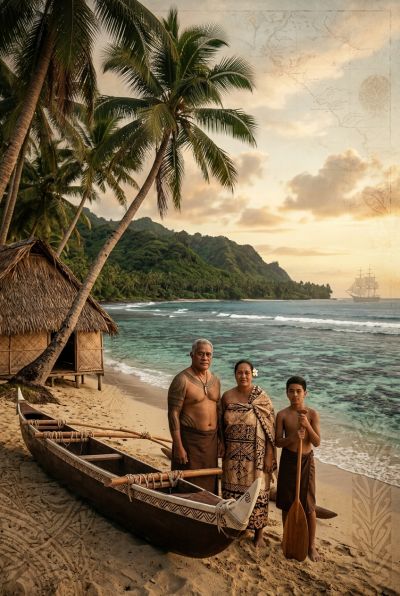
The following is an excerpt from “A History of Samoa” by William Lord, available on MixCache.com.
Introduction
The history of Samoa is a tapestry woven from ancient traditions, colonial encounters, and the resilient spirit of its people. Nestled in the heart of the Pacific Ocean, the independent state of Samoa comprises a chain of islands that have long been a crossroads of culture and change. This book delves into the rich and complex narrative of Samoa, from its earliest human settlements to its current status as a sovereign nation. The story is one of adaptation, survival, and identity, reflecting broader themes in Pacific history while retaining the unique essence of Samoan culture.
Samoa's early history is rooted in Polynesian migration, with settlers arriving from Southeast Asia and other Pacific islands over millennia. These pioneers developed a sophisticated society based on communal living, kinship ties, and the Fa'a Samoa—the Samoan way of life. This indigenous foundation is characterized by intricate social structures, oral traditions, and a deep connection to the land and sea. Understanding these origins is crucial to appreciating the resilience of Samoan culture in the face of external pressures.
The arrival of Europeans in the 18th century marked a turning point. Explorers, traders, and eventually missionaries brought new ideas, technologies, and conflicts. The late 19th century saw intense colonial rivalry among Germany, Britain, and the United States, culminating in the partition of Samoa in 1900. This division between German Samoa, American Samoa, and later New Zealand-administered Western Samoa set the stage for political and social transformations that would shape the nation's future.
The 20th century brought both turmoil and progress. World War I and the Mau movement for independence highlighted Samoan aspirations for self-rule. Despite challenges, including World War II and post-war reforms, the path to independence culminated in 1962 when Samoa became a sovereign state. This period saw the assertion of Samoan identity and the navigation of global politics while preserving cultural heritage.
In the decades since independence, Samoa has grappled with modernization, economic development, and environmental vulnerabilities. The country has made strides in education, health, and infrastructure, yet faces ongoing issues like poverty, climate change, and the diaspora's impact. Samoa's role in regional organizations and its engagement with the global community reflect a balance between tradition and progress. This book aims to provide a comprehensive overview of these dynamics, offering insights into how Samoa has preserved its past while forging a future.
Ultimately, 'A History of Samoa' is more than a chronicle of events; it is an exploration of identity, resilience, and the enduring spirit of a nation. Through examining the key periods, figures, and themes, readers will gain a deeper understanding of how Samoa has navigated its journey to independence and beyond. This introduction sets the stage for a detailed journey through the chapters that follow, each contributing to the full picture of Samoa's remarkable history.
Read “A History of Samoa” on MixCache.com →
Please log in or create an account to leave a comment.
No comments yet. Be the first to say something.