
Browse by Category
Fiction
- Action & Adventure
- African American
- Anthologies
- Children's Fiction
- Classics
- Comics & Graphic Novels
- Coming of Age
- Contemporary
- Cultural & Regional
- Drama
- Erotica
- Fantasy
- General
- Historical Fiction
- Horror
- Humor & Satire
- Literary Fiction
- Mystery, Thriller & Suspense
- Poetry
- Religious & Inspirational
- Romance
- Science Fiction
- Short Stories
- War & Military
- Westerns
- Women's Fiction
- Young Adult
Non-Fiction
- Antiques & Collectibles
- Arts & Photography
- Biographies & Memoirs
- Business & Money
- Children's Non-Fiction
-
Computers & Technology
- Artificial Intelligence
- Computer Science
- Cybersecurity & Cryptography
- Data Science & Analytics
- Databases & Big Data
- Game Development & Design
- General
- Hardware & DIY
- Mobile App Development
- Networking & Cloud Computing
- Operating Systems
- Programming
- Robotics
- Software
- Software Engineering
- User Experience (UX) & Design
- Web Development & Design
- Cooking, Food & Wine
- Crafts, Hobbies & Home
- Education & Teaching
- Engineering
- General
- Health, Fitness & Dieting
-
History
- African History
- African History - North Africa
- African History - Sub-Saharan Africa
- American History
- American History - 20th Century
- American History - Civil War
- American History - Colonial Period
- Ancient History
- Asian History
- Asian History - China
- Asian History - India
- Asian History - Japan
- Asian History - Southeast Asia
- European History
- European History - Ancient Greece
- European History - Ancient Rome
- European History - Medieval
- European History - Modern
- European History - Renaissance
- General
- Middle Eastern History
- Military History
- Military History - Aviation
- Military History - Naval
- Social & Cultural History
- World History
- Humor & Entertainment
- Industrial Technology
- Language Learning
- Law
- LGBTQ+ Non-Fiction
- Literary Criticism
- Medical Books
- Parenting & Relationships
- Philosophy
- Politics & Social Sciences
- Reference
- Religion & Spirituality
-
Science & Math
- Agricultural Sciences
- Astronomy & Space Science
- Behavioral Sciences
- Biological Sciences
- Botany & Plant Science
- Chemistry
- Earth Sciences
- Engineering - Chemical
- Engineering - Civil
- Engineering - Electrical
- Engineering - Mechanical
- Environment
- General
- Geology
- Mathematics
- Nature & Ecology
- Oceanography
- Paleontology
- Physics
- Statistics
- Self-Help
- Sports & Outdoors
- Study Aids
- Sustainability & Green Living
- Textbooks
- Transportation
- Travel
- True Crime
- Urban Planning & Development
- Veterinary Medicine
- Writing & Publishing
Jump to Section
MixCache.com Total Access
Unlimited reading and audiobooks for every book published by MixCache.com.
Included titles carry the MTA badge.
Learn more →A History of Samoa
About this book:

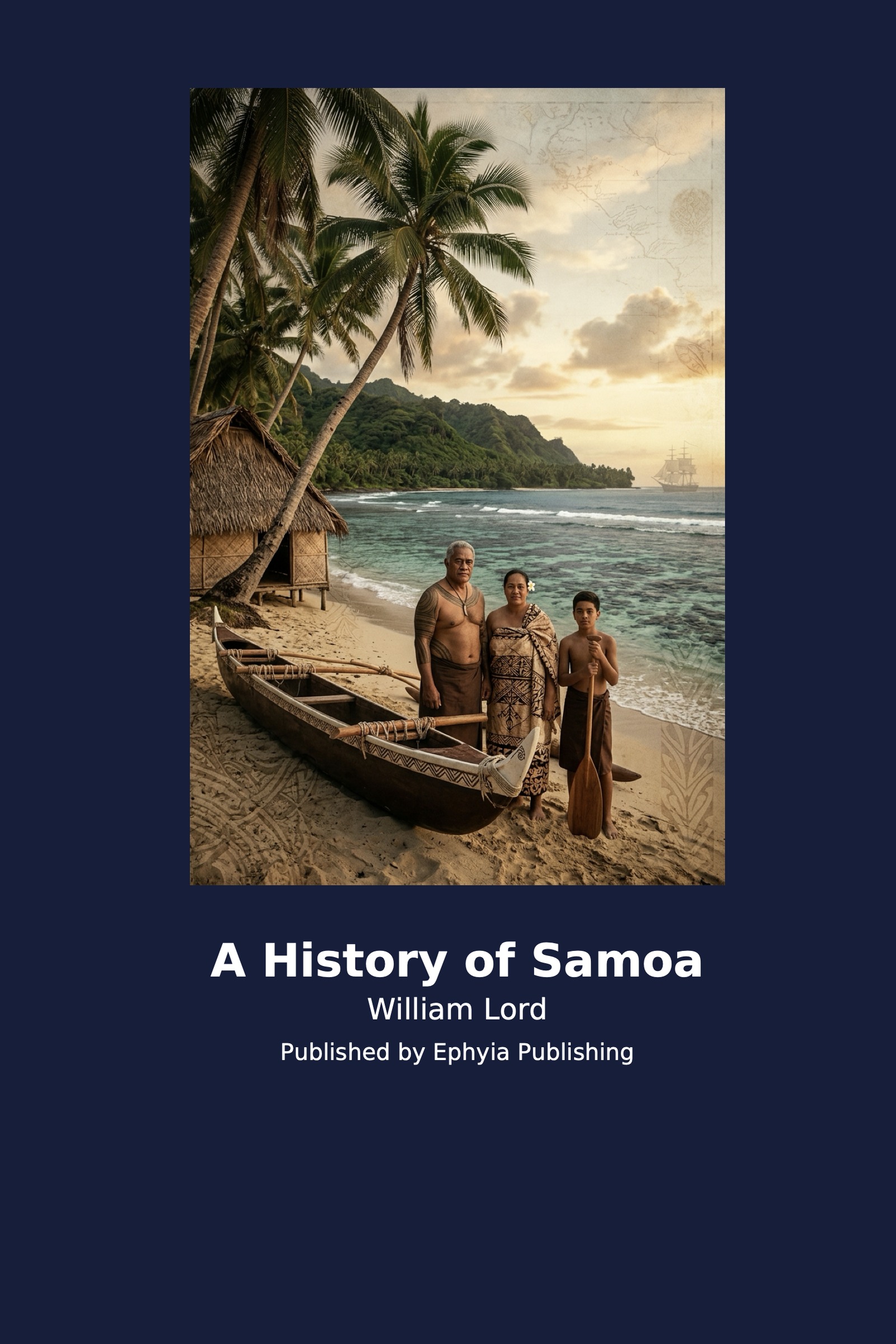
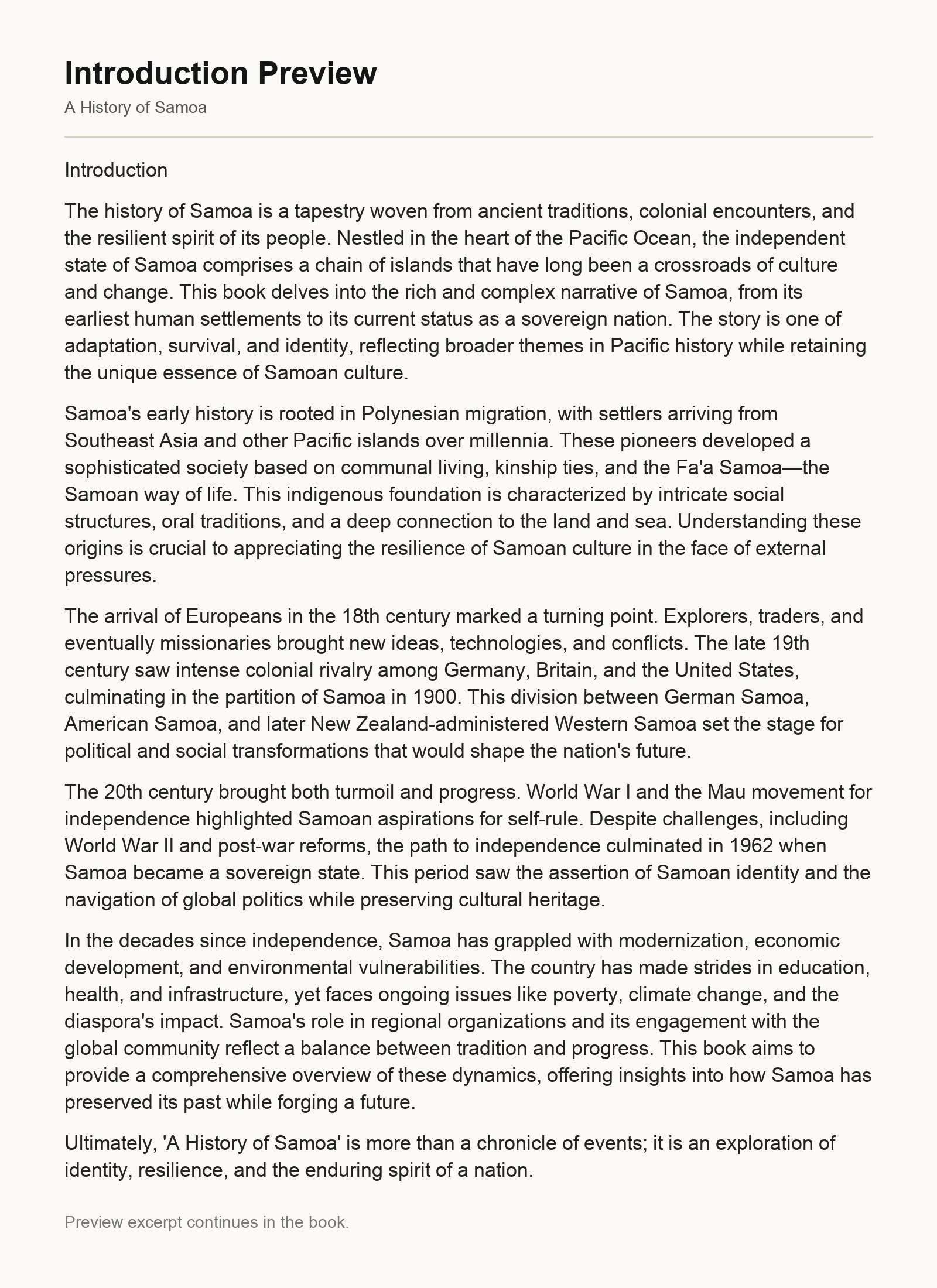
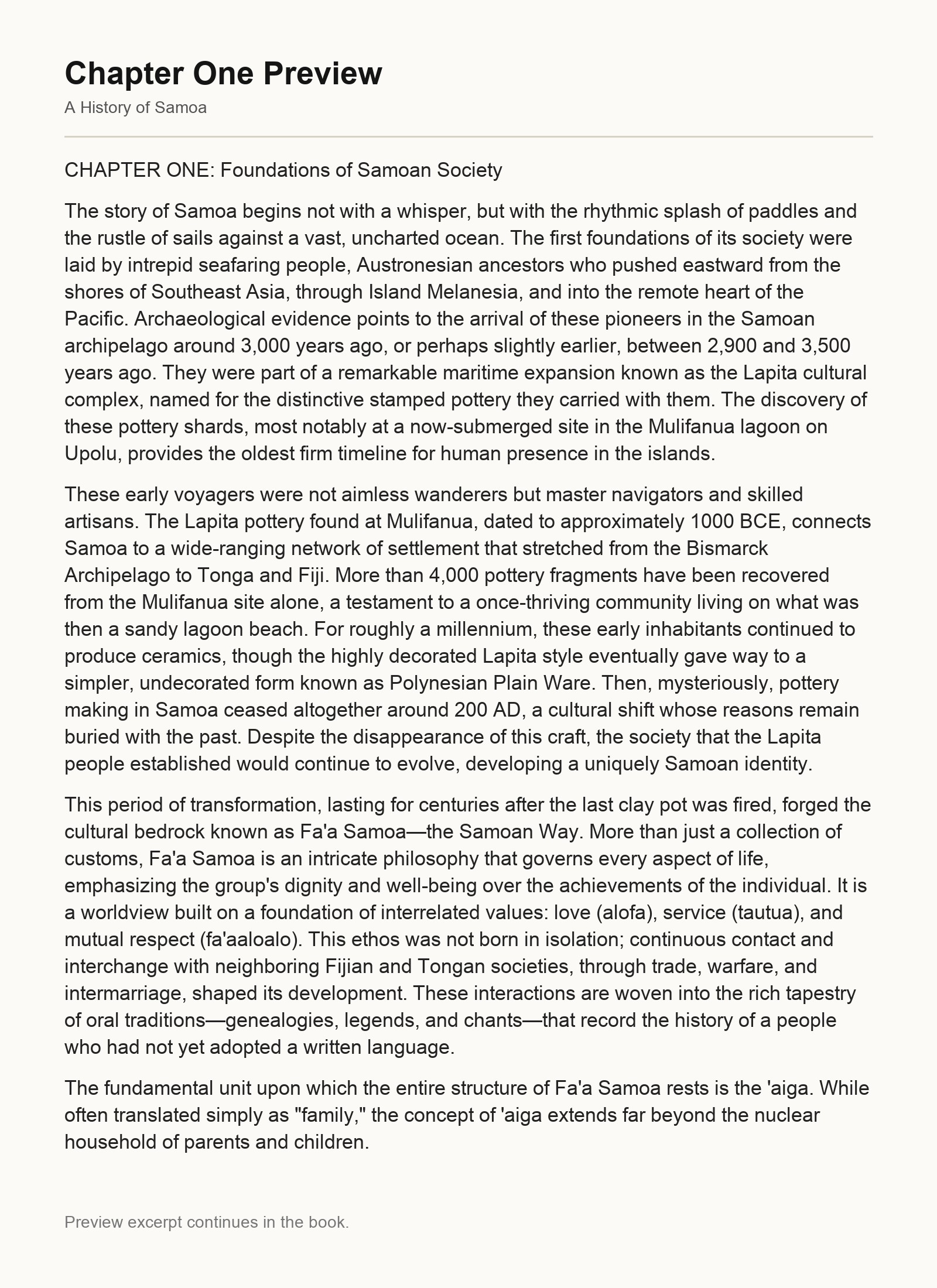
"A History of Samoa" offers readers a sweeping journey through the islands’ past, from the earliest Lapita voyagers who settled the archipelago over three millennia ago to the vibrant, transnational nation of today. The book traces how Samoan society built its foundations on the communal 'aiga, the matai chiefly system, and the guiding philosophy of Fa'a Samoa, revealing how these traditions shaped everything from land management and conflict resolution to art, navigation, and spiritual belief. Readers will gain a deep appreciation for the oral myths—creation stories, the legends of Sina and the Eel, the warrior goddess Nafanua, and the Tongan expulsion—that not only explain natural phenomena but also encode the values and political struggles that have defined Samoan identity for centuries.
The narrative then moves into the era of external contact, detailing the cautious first sightings by Dutch and French explorers, the violent encounter with La Pérouse, and the gradual influx of whalers, beachcombers, and missionaries. It shows how Christian missions introduced literacy, formal education, and a new faith that was rapidly woven into existing Samoan customs, creating a unique syncretic Christianity that remains central to daily life. The book examines the fierce colonial rivalry among Germany, Britain, and the United States, the partition of Samoa in 1900, and the lasting consequences of that division, setting the stage for the nationalist Mau movement, the devastating 1918 influenza pandemic, and the Black Saturday massacre that galvanized the push for self‑rule.
Readers will follow Samoa’s road to independence, from the post‑World War II reforms and United Nations trusteeship to the historic 1962 plebiscite and the joyous raising of the new flag at Mulinu'ū. The book explains how Samoa blended Westminster parliamentary democracy with the enduring matai system, creating a distinctive constitutional monarchy that balanced individual rights with chiefly authority. Subsequent chapters explore the nation’s political evolution, economic transformations—from reliance on copra and cocoa to the rise of fisheries, manufacturing, tourism, and remittances—and the social shifts brought by urbanization, diaspora connections, and the challenges of climate change, health crises, and cultural preservation.
Throughout, the text highlights the resilience and adaptability of Samoan culture: the revival of traditional tattooing, siapo barkcloth, voyaging canoes, and dance; the pivotal role of churches and women’s committees; and the global Samoan diaspora that sustains families and communities across oceans. By the end, readers will not only know the dates and events of Samoa’s history but also feel the enduring spirit of alofa (love), tautua (service), and fa’aaloalo (respect) that has guided the nation through colonization, struggle, and triumph, and continues to shape its future in a rapidly changing world.
What You'll Find Inside:
- The enduring strength of Fa'a Samoa - the traditional Samoan way of life centered on family (aiga), chiefly titles (matai), and communal values that has persisted through colonization and modernization.
- Samoa's complex colonial history - from initial European encounters to the 1900 partition between Germany, Britain, and the US, and subsequent administration by New Zealand under League of Nations mandate.
- The path to independence - highlighting the Mau movement's non-violent resistance, key figures like Olaf Nelson and Tupua Tamasese Lealofi III, and the peaceful achievement of sovereignty in 1962.
- Post-independence nation-building - covering political evolution from chiefly consensus to party politics, economic transformations from agriculture to services and remittances, and social shifts including urbanization and diaspora influences.
- Contemporary challenges and resilience - examining how Samoa addresses climate change, preserves cultural traditions like tatau (tattoo) and siapo (barkcloth), leverages its global diaspora, and navigates future development while maintaining cultural identity.
Who's It For:
This book is ideal for students and scholars of Pacific history, anthropology, and post-colonial studies seeking a comprehensive understanding of Samoa's journey. It will also appeal to general readers interested in indigenous cultures, decolonization processes, and how small nations maintain cultural identity while engaging with global forces. Anyone with Samoan heritage or connections to the Pacific region will find particular value in this detailed historical narrative.
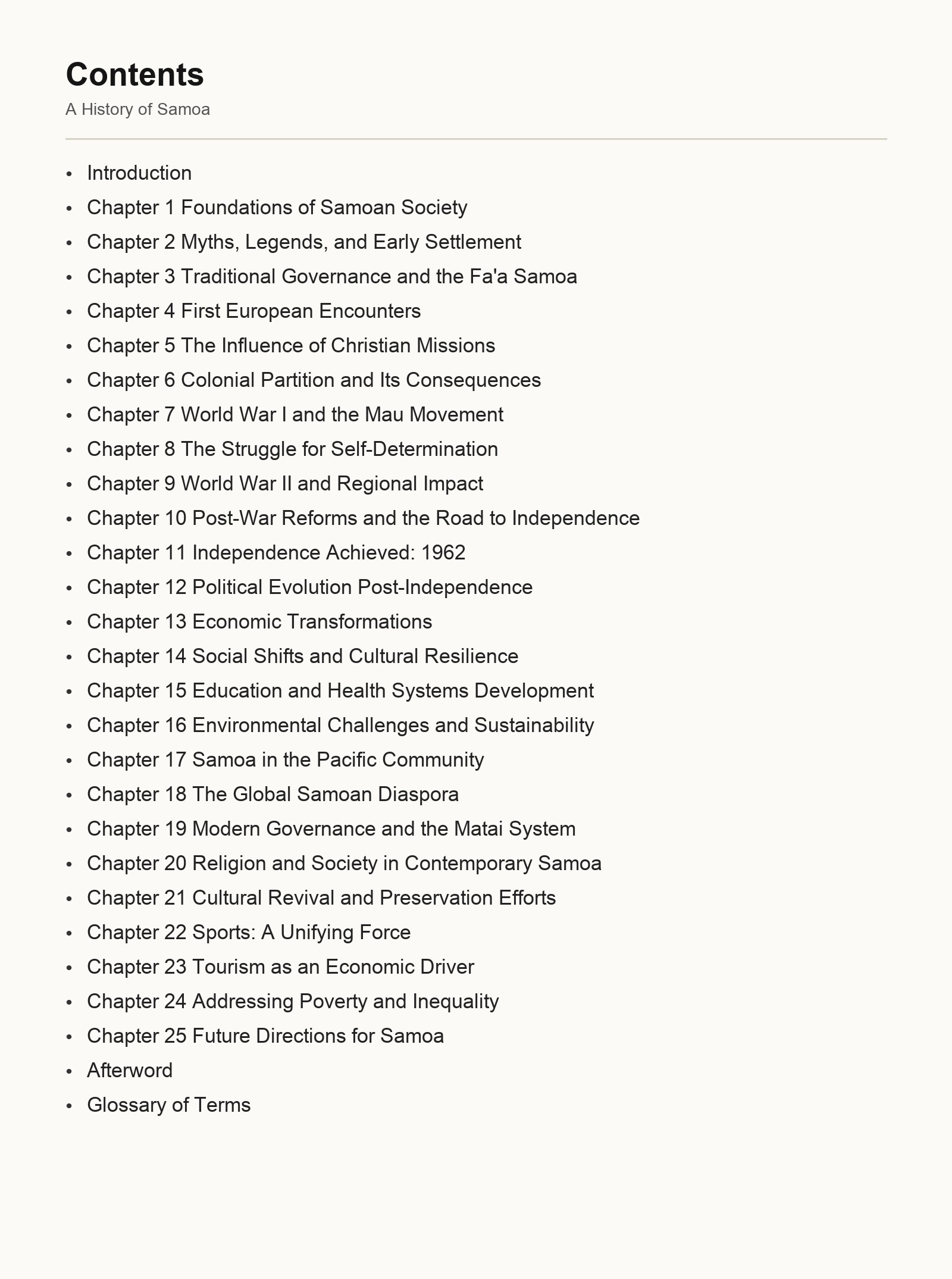
Table of Contents:
- Introduction
- Chapter 1 Foundations of Samoan Society
- Chapter 2 Myths, Legends, and Early Settlement
- Chapter 3 Traditional Governance and the Fa'a Samoa
- Chapter 4 First European Encounters
- Chapter 5 The Influence of Christian Missions
- Chapter 6 Colonial Partition and Its Consequences
- Chapter 7 World War I and the Mau Movement
- Chapter 8 The Struggle for Self-Determination
- Chapter 9 World War II and Regional Impact
- Chapter 10 Post-War Reforms and the Road to Independence
- Chapter 11 Independence Achieved: 1962
- Chapter 12 Political Evolution Post-Independence
- Chapter 13 Economic Transformations
- Chapter 14 Social Shifts and Cultural Resilience
- Chapter 15 Education and Health Systems Development
- Chapter 16 Environmental Challenges and Sustainability
- Chapter 17 Samoa in the Pacific Community
- Chapter 18 The Global Samoan Diaspora
- Chapter 19 Modern Governance and the Matai System
- Chapter 20 Religion and Society in Contemporary Samoa
- Chapter 21 Cultural Revival and Preservation Efforts
- Chapter 22 Sports: A Unifying Force
- Chapter 23 Tourism as an Economic Driver
- Chapter 24 Addressing Poverty and Inequality
- Chapter 25 Future Directions for Samoa
- Afterword
- Glossary of Terms
Author:
Published By:
Date Published:
May 25, 2026
Type:
Nonfiction
Language:
English
Also Available In:
Word Count:
51,167 words
Reading Time:
3 hours 35 minutes
Sample:
Order:
Buy the A History of Samoa ebook on MixCache.com:
Buy NowThe full ebook will be available immediately to read instantly on any device.
$5 account credit for all new MixCache.com accounts, usable toward any ebook purchase!*


Ratings & Reviews
Ask Questions About This Book
Have a question about the content? Ask our AI assistant!
Start by asking a question about "A History of Samoa"
Example: "Does this book mention William Shakespeare?"
Thinking...