
Browse by Category
Fiction
- Action & Adventure
- African American
- Anthologies
- Children's Fiction
- Classics
- Comics & Graphic Novels
- Coming of Age
- Contemporary
- Cultural & Regional
- Drama
- Erotica
- Fantasy
- General
- Historical Fiction
- Horror
- Humor & Satire
- Literary Fiction
- Mystery, Thriller & Suspense
- Poetry
- Religious & Inspirational
- Romance
- Science Fiction
- Short Stories
- War & Military
- Westerns
- Women's Fiction
- Young Adult
Non-Fiction
- Antiques & Collectibles
- Arts & Photography
- Biographies & Memoirs
- Business & Money
- Children's Non-Fiction
-
Computers & Technology
- Artificial Intelligence
- Computer Science
- Cybersecurity & Cryptography
- Data Science & Analytics
- Databases & Big Data
- Game Development & Design
- General
- Hardware & DIY
- Mobile App Development
- Networking & Cloud Computing
- Operating Systems
- Programming
- Robotics
- Software
- Software Engineering
- User Experience (UX) & Design
- Web Development & Design
- Cooking, Food & Wine
- Crafts, Hobbies & Home
- Education & Teaching
- Engineering
- General
- Health, Fitness & Dieting
-
History
- African History
- African History - North Africa
- African History - Sub-Saharan Africa
- American History
- American History - 20th Century
- American History - Civil War
- American History - Colonial Period
- Ancient History
- Asian History
- Asian History - China
- Asian History - India
- Asian History - Japan
- Asian History - Southeast Asia
- European History
- European History - Ancient Greece
- European History - Ancient Rome
- European History - Medieval
- European History - Modern
- European History - Renaissance
- General
- Middle Eastern History
- Military History
- Military History - Aviation
- Military History - Naval
- Social & Cultural History
- World History
- Humor & Entertainment
- Industrial Technology
- Language Learning
- Law
- LGBTQ+ Non-Fiction
- Literary Criticism
- Medical Books
- Parenting & Relationships
- Philosophy
- Politics & Social Sciences
- Reference
- Religion & Spirituality
-
Science & Math
- Agricultural Sciences
- Astronomy & Space Science
- Behavioral Sciences
- Biological Sciences
- Botany & Plant Science
- Chemistry
- Earth Sciences
- Engineering - Chemical
- Engineering - Civil
- Engineering - Electrical
- Engineering - Mechanical
- Environment
- General
- Geology
- Mathematics
- Nature & Ecology
- Oceanography
- Paleontology
- Physics
- Statistics
- Self-Help
- Sports & Outdoors
- Study Aids
- Sustainability & Green Living
- Textbooks
- Transportation
- Travel
- True Crime
- Urban Planning & Development
- Veterinary Medicine
- Writing & Publishing
Jump to Section
MixCache.com Total Access
Unlimited reading and audiobooks for every book published by MixCache.com.
Included titles carry the MTA badge.
Learn more →
Education In Solomon Islands
MTA
A Comprehensive Overview from Early Childhood to Higher Education
About this book:
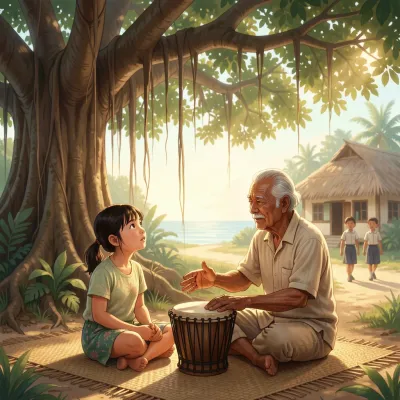
Education in the Solomon Islands has evolved from ancient, community-based traditional systems to a formal structure influenced by colonial and post-independence developments. Before Western contact, education was deeply embedded in cultural practices, with knowledge transmitted through family, elders, and practical skills tailored to island environments. The arrival of missionaries in the 19th century introduced formal schooling, emphasizing literacy, numeracy, and religious instruction, which was later supported by British colonial administration. Post-independence reforms aimed to create a unified national system, expanding access and integrating indigenous values while transitioning from mission-dominated to government-led institutions. The Ministry of Education and Human Resources Development (MEHRD) now oversees a decentralized system with provincial authorities and church partnerships, ensuring early childhood, primary, secondary, and higher education sectors function cohesively.
The education system today faces persistent geographical and resource challenges. Access disparity persists between urban centers and remote islands, with infrastructure limitations, teacher shortages, and funding gaps hindering quality in rural areas. Language policies blend indigenous vernaculars, Pijin, and English to cater to diverse linguistic needs while promoting literacy. Efforts to enhance teacher training, curriculum localization, and inclusive education for students with disabilities have gained momentum, supported by national and international partnerships. Technical and Vocational Education and Training (TVET) and the Solomon Islands National University (SINU) address workforce development and tertiary education needs, striving to reduce reliance on overseas training. Climate change and disaster resilience are integrated into curricula, reflecting the nation’s environmental vulnerabilities.
Key challenges include equitable resource distribution, teacher retention in remote areas, and addressing gender disparities, particularly in secondary education and beyond. The system grapples with outdated infrastructure, limited technology access, and the need for culturally relevant materials. External aid from donors plays a crucial role, funding infrastructure, teacher training, and curriculum reforms, though sustainability and coordination remain concerns. Inclusive education for students with special needs and rural education accessibility require ongoing investment and community engagement. Environmental awareness and sustainable development are prioritized, with schools adopting climate-resilient practices and integrating traditional ecological knowledge into learning frameworks.
Looking forward, the Solomon Islands envisions a future where education is universally accessible, technologically enhanced, and aligned with global and local demands. Goals include equitable infrastructure, digital learning initiatives, and expanded vocational pathways to meet economic needs. The aspiration is to empower every child through quality education, fostering resilience against climate impacts while celebrating cultural identity. By strengthening governance, enhancing teacher professionalism, and embedding inclusive practices, the nation aims to cultivate a skilled, adaptable workforce capable of driving sustainable development and contributing to the Pacific region’s advancement.
What You'll Find Inside:
- Traces the evolution of education in the Solomon Islands from traditional indigenous systems through missionary and colonial eras to post-independence reforms, highlighting the enduring influence of church partnerships.
- Provides a detailed examination of the current education structure—from Early Childhood Care and Education (ECCE) to higher learning—including governance roles of the Ministry of Education, provincial authorities, and church education bodies.
- Addresses persistent challenges of access and equity in remote and rural areas, such as geography, infrastructure deficits, teacher shortages, and language-of-instruction complexities across over 70 indigenous languages.
- Explores critical policy areas including curriculum development, assessment systems, teacher training and professional development, and the integration of Technical and Vocational Education and Training (TVET) for workforce readiness.
- Highlights cross-cutting themes like inclusive education for students with special needs, gender disparities, education for sustainable development, and the impact of external aid and international partnerships on national education goals.
Who's It For:
This book is ideal for policymakers and education officials within the Solomon Islands Ministry of Education and Human Resources Development, as well as provincial and church education authorities. It also serves as a vital resource for international development partners, NGO staff, and researchers focused on Pacific Island education systems. Educators and teacher trainers seeking a comprehensive understanding of the historical context, structural challenges, and future directions of Solomon Islands education will find it invaluable.
Table of Contents:
- Introduction
- Chapter 1: Historical Foundations of Education in the Solomon Islands
- Chapter 2: Traditional Education Systems Before Western Influence
- Chapter 3: The Arrival of Missionaries and Early Colonial Education
- Chapter 4: Evolution of the Education System During British Protectorate
- Chapter 5: Post-Independence Educational Reforms and Development
- Chapter 6: Structure and Governance of the Solomon Islands Education System
- Chapter 7: Early Childhood Care and Education (ECCE) Frameworks and Provision
- Chapter 8: Access and Equity in Early Childhood Education
- Chapter 9: Primary Education: Curriculum, Pedagogy, and Assessment
- Chapter 10: Challenges and Opportunities in Primary School Enrollment and Retention
- Chapter 11: Secondary Education: Structure, Streams, and Examinations
- Chapter 12: Technical and Vocational Education and Training (TVET) Landscape
- Chapter 13: Higher Education Institutions and Programs in the Solomon Islands
- Chapter 14: Teacher Training and Professional Development
- Chapter 15: Curriculum Development and Review Processes
- Chapter 16: Language of Instruction Policies and Practices
- Chapter 17: Education in Remote and Rural Areas
- Chapter 18: Inclusive Education for Students with Special Needs
- Chapter 19: The Role of Community and Parental Involvement in Education
- Chapter 20: Funding and Financing of Education in the Solomon Islands
- Chapter 21: Impact of External Aid and International Partnerships on Education
- Chapter 22: Education for Sustainable Development and Environmental Awareness
- Chapter 23: Addressing Gender Disparities in Education
- Chapter 24: Challenges and Future Directions for Educational Policy
- Chapter 25: The Future of Education in the Solomon Islands: Vision and Aspirations
Author:
Published By:
Date Published:
July 5, 2026
Type:
Nonfiction
Language:
English
Word Count:
39,188 words
Reading Time:
2 hours 45 minutes
Sample:
Order:
Order Education In Solomon Islands (Paperback) on MixCache.com:
Buy NowPrint copy is made to order and ships worldwide. Includes the ebook free, ready to read instantly.
$5 account credit for all new MixCache.com accounts, usable toward any ebook purchase!*


