Browse by Category
Fiction
- Action & Adventure
- African American
- Anthologies
- Children's Fiction
- Classics
- Comics & Graphic Novels
- Coming of Age
- Contemporary
- Cultural & Regional
- Drama
- Erotica
- Fantasy
- General
- Historical Fiction
- Horror
- Humor & Satire
- Literary Fiction
- Mystery, Thriller & Suspense
- Poetry
- Religious & Inspirational
- Romance
- Science Fiction
- Short Stories
- War & Military
- Westerns
- Women's Fiction
- Young Adult
Non-Fiction
- Antiques & Collectibles
- Arts & Photography
- Biographies & Memoirs
- Business & Money
- Children's Non-Fiction
-
Computers & Technology
- Artificial Intelligence
- Computer Science
- Cybersecurity & Cryptography
- Data Science & Analytics
- Databases & Big Data
- Game Development & Design
- General
- Hardware & DIY
- Mobile App Development
- Networking & Cloud Computing
- Operating Systems
- Programming
- Robotics
- Software
- Software Engineering
- User Experience (UX) & Design
- Web Development & Design
- Cooking, Food & Wine
- Crafts, Hobbies & Home
- Education & Teaching
- Engineering
- General
- Health, Fitness & Dieting
-
History
- African History
- African History - North Africa
- African History - Sub-Saharan Africa
- American History
- American History - 20th Century
- American History - Civil War
- American History - Colonial Period
- Ancient History
- Asian History
- Asian History - China
- Asian History - India
- Asian History - Japan
- Asian History - Southeast Asia
- European History
- European History - Ancient Greece
- European History - Ancient Rome
- European History - Medieval
- European History - Modern
- European History - Renaissance
- General
- Middle Eastern History
- Military History
- Military History - Aviation
- Military History - Naval
- Social & Cultural History
- World History
- Humor & Entertainment
- Industrial Technology
- Language Learning
- Law
- LGBTQ+ Non-Fiction
- Literary Criticism
- Medical Books
- Parenting & Relationships
- Philosophy
- Politics & Social Sciences
- Reference
- Religion & Spirituality
-
Science & Math
- Agricultural Sciences
- Astronomy & Space Science
- Behavioral Sciences
- Biological Sciences
- Botany & Plant Science
- Chemistry
- Earth Sciences
- Engineering - Chemical
- Engineering - Civil
- Engineering - Electrical
- Engineering - Mechanical
- Environment
- General
- Geology
- Mathematics
- Nature & Ecology
- Oceanography
- Paleontology
- Physics
- Statistics
- Self-Help
- Sports & Outdoors
- Study Aids
- Sustainability & Green Living
- Textbooks
- Transportation
- Travel
- True Crime
- Urban Planning & Development
- Veterinary Medicine
- Writing & Publishing
Jump to Section

Want unlimited access to all books published by MixCache.com (plus their audiobooks)? Try MixCache.com Total Access. Look for the MTA badge on book covers to identify included titles.
Access to infinite ebooks: Don't see the book you want? Suggest it and we'll create it (free!) for you from scratch with our powerful AI book writer. Then read it with MTA - besides profiting from any sales it makes!
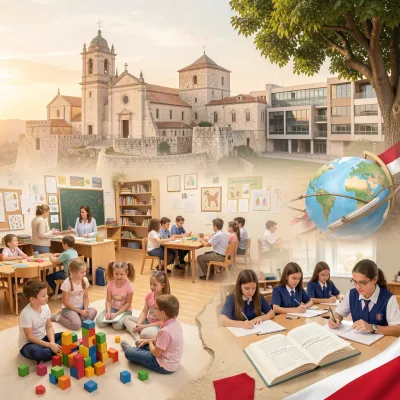
Education In Kyrgyzstan
MTA
A Comprehensive Overview from Early Childhood to Higher Education
About this book:

The book "Education In Kyrgyzstan: A Comprehensive Overview from Early Childhood to Higher Education" provides a thorough examination of the nation's educational landscape, tracing its evolution from Soviet-era foundations to contemporary reforms. After independence in 1991, Kyrgyzstan faced the challenge of restructuring its centralized education system, inherited from the Soviet Union, to reflect national identity and global standards. Key reforms include transitioning to a 12-year education system, modernizing curricula toward competency-based learning, and promoting inclusive education. The system encompasses early childhood, primary, secondary (general and vocational), and higher education, each with unique structures and challenges. The Ministry of Education and Science (MES KR) plays a central role in policy, administration, and regulation, while international partnerships and donor support are critical for funding and technical assistance.
Early childhood education (ECE) has gained prominence as foundational for lifelong learning, yet access remains uneven, particularly in rural areas. Initiatives like Jailoo Kindergartens and community-based models aim to bridge geographic and economic gaps. Primary and secondary education emphasize curriculum reform, teacher training, and active learning methods. However, disparities persist between urban and rural schools, with rural areas struggling from outdated infrastructure, teacher shortages, and inadequate resources. Vocational education and training (VET) seeks to align skills with labor market demands, while higher education institutions, both public and private, grapple with funding constraints, brain drain, and maintaining international standards through accreditation processes.
Major challenges include equity gaps, with socioeconomic status and geography significantly affecting educational outcomes. Inclusive education for children with disabilities remains underdeveloped, requiring specialized teacher training and infrastructure improvements. Language of instruction is a complex issue, balancing Kyrgyz, Russian, and minority languages while integrating digital technologies and ensuring quality across all streams. Gender equality has seen progress but still faces barriers in career choices and rural retention. The digital divide, corruption, and brain drain further strain the system, necessitating robust financial strategies and international cooperation to enhance infrastructure and resource distribution.
Future perspectives emphasize universalizing ECE, modernizing curricula to foster 21st-century skills, and strengthening VET and higher education ties with industry. Policies aim to enhance quality, equity, and inclusivity through digital integration, multilingual education, and gender-sensitive programs. Addressing teacher retention, rural-urban disparities, and sustainable funding models are priorities. The book underscores the need for strategic reforms, leveraging partnerships and governance improvements to build an equitable, globally competitive education system that empowers Kyrgyz citizens for national development and global integration.
What You'll Find Inside:
- The book traces Kyrgyzstan's educational evolution from nomadic oral traditions and madrasahs through Soviet-era universal literacy campaigns to post-independence reforms focused on national identity and modernization.
- It details the centralized yet decentralized administration of the education system, outlining the roles of the Ministry of Education and Science, regional/local departments, and the structure from preschool through higher education.
- Early childhood education is examined through policies like per-capita and voucher financing, innovative models such as Jailoo Kindergartens, and persistent urban-rural and socioeconomic access gaps.
- Secondary and vocational education challenges—including teacher quality disparities, curriculum relevance, and labor market alignment—are analyzed alongside ongoing reforms in assessment, teacher training, and public-private partnerships.
- Higher education coverage includes institutional diversity, accreditation processes, funding constraints, brain drain impacts, and the role of international cooperation in quality assurance and research development.
Who's It For:
This book is essential for policymakers and government officials involved in education reform and planning, researchers and academics studying post-Soviet education systems or Central Asian development, and educators and administrators seeking contextual insights into curriculum, teacher training, and inclusive practices. It also serves international development agencies, NGOs, and donors engaged in supporting Kyrgyzstan's educational initiatives by providing a comprehensive baseline of challenges, innovations, and policy recommendations.
Author:
Published By:
Date Published:
June 29, 2026
Type:
Nonfiction
Language:
English
Word Count:
42,156 words
Reading Time:
2 hours 57 minutes
Sample:
Order:
Order Education In Kyrgyzstan (Paperback) on MixCache.com:
Buy NowPrint copy is made to order and ships worldwide. Includes the ebook free, ready to read instantly.
$5 account credit for all new MixCache.com accounts, usable toward any ebook purchase!*