Browse by Category
Fiction
- Action & Adventure
- African American
- Anthologies
- Children's Fiction
- Classics
- Comics & Graphic Novels
- Coming of Age
- Contemporary
- Cultural & Regional
- Drama
- Erotica
- Fantasy
- General
- Historical Fiction
- Horror
- Humor & Satire
- Literary Fiction
- Mystery, Thriller & Suspense
- Poetry
- Religious & Inspirational
- Romance
- Science Fiction
- Short Stories
- War & Military
- Westerns
- Women's Fiction
- Young Adult
Non-Fiction
- Antiques & Collectibles
- Arts & Photography
- Biographies & Memoirs
- Business & Money
- Children's Non-Fiction
-
Computers & Technology
- Artificial Intelligence
- Computer Science
- Cybersecurity & Cryptography
- Data Science & Analytics
- Databases & Big Data
- Game Development & Design
- General
- Hardware & DIY
- Mobile App Development
- Networking & Cloud Computing
- Operating Systems
- Programming
- Robotics
- Software
- Software Engineering
- User Experience (UX) & Design
- Web Development & Design
- Cooking, Food & Wine
- Crafts, Hobbies & Home
- Education & Teaching
- Engineering
- General
- Health, Fitness & Dieting
-
History
- African History
- African History - North Africa
- African History - Sub-Saharan Africa
- American History
- American History - 20th Century
- American History - Civil War
- American History - Colonial Period
- Ancient History
- Asian History
- Asian History - China
- Asian History - India
- Asian History - Japan
- Asian History - Southeast Asia
- European History
- European History - Ancient Greece
- European History - Ancient Rome
- European History - Medieval
- European History - Modern
- European History - Renaissance
- General
- Middle Eastern History
- Military History
- Military History - Aviation
- Military History - Naval
- Social & Cultural History
- World History
- Humor & Entertainment
- Industrial Technology
- Language Learning
- Law
- LGBTQ+ Non-Fiction
- Literary Criticism
- Medical Books
- Parenting & Relationships
- Philosophy
- Politics & Social Sciences
- Reference
- Religion & Spirituality
-
Science & Math
- Agricultural Sciences
- Astronomy & Space Science
- Behavioral Sciences
- Biological Sciences
- Botany & Plant Science
- Chemistry
- Earth Sciences
- Engineering - Chemical
- Engineering - Civil
- Engineering - Electrical
- Engineering - Mechanical
- Environment
- General
- Geology
- Mathematics
- Nature & Ecology
- Oceanography
- Paleontology
- Physics
- Statistics
- Self-Help
- Sports & Outdoors
- Study Aids
- Sustainability & Green Living
- Textbooks
- Transportation
- Travel
- True Crime
- Urban Planning & Development
- Veterinary Medicine
- Writing & Publishing
Jump to Section
MixCache.com Total Access
Unlimited reading and audiobooks for every book published by MixCache.com.
Included titles carry the MTA badge.
Learn more →
Education In Tunisia
MTA
A Comprehensive Overview from Early Childhood to Higher Education
About this book:
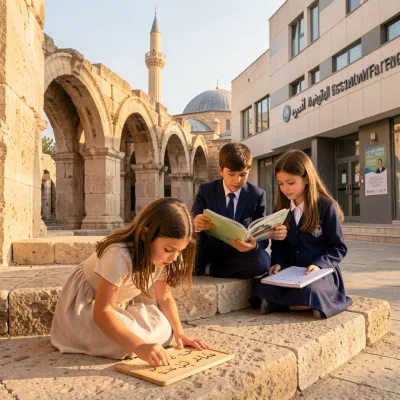
This book provides a comprehensive overview of the Tunisian educational system, tracing its evolution from ancient centers of learning like Carthage and the Al-Zaytuna Mosque through French colonial influence to the modern, post-independence system. It details the structured framework from early childhood education, where private institutions play a large role and access varies significantly, through compulsory nine-year basic education and four-year secondary schooling. The system culminates with the high-stakes Baccalaureate exam, which determines university access through a merit-based orientation process. The book highlights the bilingual nature of instruction, with Arabic as the official language and French used extensively in scientific and technical subjects, alongside a growing emphasis on English.
The text thoroughly examines vocational training and higher education, noting that Tunisia has adopted the Licence-Master-Doctorate (LMD) system to align with international standards. It explores the wide array of specializations offered in universities and institutes, from humanities and social sciences to engineering and health sciences, and emphasizes the crucial role of research and development in driving innovation and addressing national priorities. The book also addresses specialized topics such as teacher training, educational reforms, inclusive education for students with special needs, the expanding role of private education, and international cooperation efforts that facilitate student and faculty exchanges.
A significant portion of the book is dedicated to the major challenges facing Tunisian education. These include persistent youth unemployment, particularly among university graduates, which is linked to a mismatch between educational output and labor market demands. The "brain drain" phenomenon, where highly skilled Tunisians seek opportunities abroad, poses a serious threat to national development. The text also confronts regional disparities in educational access and quality between coastal urban centers and interior rural areas, as well as the complexities of gender equality and the financial sustainability of the system.
Ultimately, "Education In Tunisia" presents a nuanced portrait of a system in constant evolution, balancing its historical legacy with the demands of a globalized world. It acknowledges the nation's significant achievements in expanding access and promoting gender parity while candidly addressing ongoing struggles with employability, equity, and resource allocation. The book concludes by looking toward future perspectives, emphasizing the need for technological integration, curriculum innovation, stronger industry partnerships, and greater system adaptability to prepare Tunisian youth for the challenges and opportunities of the 21st century.
What You'll Find Inside:
- A detailed breakdown of the Tunisian education system's structure, from early childhood nurseries and Kuttabs through primary, secondary, and the Baccalaureate-exam-gated pathway to university and vocational training.
- An in-depth analysis of the bilingual dynamic between Arabic and French as mediums of instruction, and the strategic role of English, highlighting their impact on identity, pedagogy, and global competitiveness.
- Examination of critical challenges including graduate unemployment, the 'brain drain' of skilled professionals, and the persistent regional disparities in access and quality between coastal cities and interior rural areas.
- A review of ongoing educational reforms, including the shift to the LMD system in higher education, technology integration, teacher professional development programs, and policies promoting inclusive education for students with special needs.
- Exploration of the evolving roles of private education, international cooperation and exchange programs, gender equality achievements, and the systemic funding mechanisms that sustain the entire educational ecosystem.
Who's It For:
This comprehensive overview is ideal for academics, policymakers, and education researchers focusing on North African or comparative education systems. It will also greatly benefit international development professionals, NGO workers, and diplomats involved in educational reform projects in Tunisia, as well as graduate students in Middle Eastern studies or international education seeking a deep, structured understanding of a complex, post-colonial, and rapidly modernizing national education system.
Table of Contents:
- Introduction
- Chapter 1: Historical Foundations of Tunisian Education
- Chapter 2: The Structure of the Tunisian Educational System
- Chapter 3: Early Childhood Education: Nurseries and Kindergartens
- Chapter 4: Primary Education: Curriculum and Pedagogy
- Chapter 5: The Role of French and Arabic in Primary Education
- Chapter 6: Assessment and Evaluation in Primary Schools
- Chapter 7: Secondary Education: General and Technical Streams
- Chapter 8: Vocational Training and Apprenticeships
- Chapter 9: The Baccalaureate Exam and University Access
- Chapter 10: Higher Education: Universities and Institutes
- Chapter 11: Specializations and Fields of Study in Tunisian Universities
- Chapter 12: Research and Development in Higher Education
- Chapter 13: The Challenges of Youth Employment and Education
- Chapter 14: The Impact of Technology on Tunisian Education
- Chapter 15: Teacher Training and Professional Development
- Chapter 16: Educational Reforms and Policy Changes
- Chapter 17: Inclusive Education for Students with Special Needs
- Chapter 18: The Role of Private Education in Tunisia
- Chapter 19: International Cooperation and Educational Exchange Programs
- Chapter 20: Funding and Financing of Education in Tunisia
- Chapter 21: Gender Equality in Tunisian Education
- Chapter 22: Regional Disparities in Educational Access and Quality
- Chapter 23: The Brain Drain Phenomenon and Higher Education
- Chapter 24: Civic Education and Values in the Curriculum
- Chapter 25: Future Perspectives and Challenges for Tunisian Education
Author:
Published By:
Date Published:
July 6, 2026
Type:
Nonfiction
Language:
English
Word Count:
38,923 words
Reading Time:
2 hours 44 minutes
Sample:
Order:
Order Education In Tunisia (Hardcover) on MixCache.com:
Buy NowPrint copy is made to order and ships worldwide. Includes the ebook free, ready to read instantly.
$5 account credit for all new MixCache.com accounts, usable toward any ebook purchase!*