Browse by Category
Fiction
- Action & Adventure
- African American
- Anthologies
- Children's Fiction
- Classics
- Comics & Graphic Novels
- Coming of Age
- Contemporary
- Cultural & Regional
- Drama
- Erotica
- Fantasy
- General
- Historical Fiction
- Horror
- Humor & Satire
- Literary Fiction
- Mystery, Thriller & Suspense
- Poetry
- Religious & Inspirational
- Romance
- Science Fiction
- Short Stories
- War & Military
- Westerns
- Women's Fiction
- Young Adult
Non-Fiction
- Antiques & Collectibles
- Arts & Photography
- Biographies & Memoirs
- Business & Money
- Children's Non-Fiction
-
Computers & Technology
- Artificial Intelligence
- Computer Science
- Cybersecurity & Cryptography
- Data Science & Analytics
- Databases & Big Data
- Game Development & Design
- General
- Hardware & DIY
- Mobile App Development
- Networking & Cloud Computing
- Operating Systems
- Programming
- Robotics
- Software
- Software Engineering
- User Experience (UX) & Design
- Web Development & Design
- Cooking, Food & Wine
- Crafts, Hobbies & Home
- Education & Teaching
- Engineering
- General
- Health, Fitness & Dieting
-
History
- African History
- African History - North Africa
- African History - Sub-Saharan Africa
- American History
- American History - 20th Century
- American History - Civil War
- American History - Colonial Period
- Ancient History
- Asian History
- Asian History - China
- Asian History - India
- Asian History - Japan
- Asian History - Southeast Asia
- European History
- European History - Ancient Greece
- European History - Ancient Rome
- European History - Medieval
- European History - Modern
- European History - Renaissance
- General
- Middle Eastern History
- Military History
- Military History - Aviation
- Military History - Naval
- Social & Cultural History
- World History
- Humor & Entertainment
- Industrial Technology
- Language Learning
- Law
- LGBTQ+ Non-Fiction
- Literary Criticism
- Medical Books
- Parenting & Relationships
- Philosophy
- Politics & Social Sciences
- Reference
- Religion & Spirituality
-
Science & Math
- Agricultural Sciences
- Astronomy & Space Science
- Behavioral Sciences
- Biological Sciences
- Botany & Plant Science
- Chemistry
- Earth Sciences
- Engineering - Chemical
- Engineering - Civil
- Engineering - Electrical
- Engineering - Mechanical
- Environment
- General
- Geology
- Mathematics
- Nature & Ecology
- Oceanography
- Paleontology
- Physics
- Statistics
- Self-Help
- Sports & Outdoors
- Study Aids
- Sustainability & Green Living
- Textbooks
- Transportation
- Travel
- True Crime
- Urban Planning & Development
- Veterinary Medicine
- Writing & Publishing
Jump to Section
MixCache.com Total Access
Unlimited reading and audiobooks for every book published by MixCache.com.
Included titles carry the MTA badge.
Learn more →A History of Sweeteners
About this book:
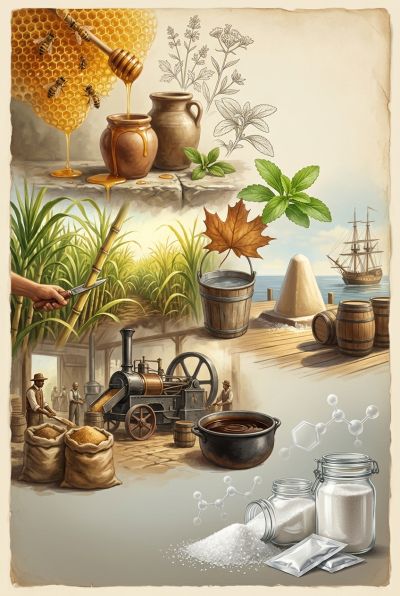
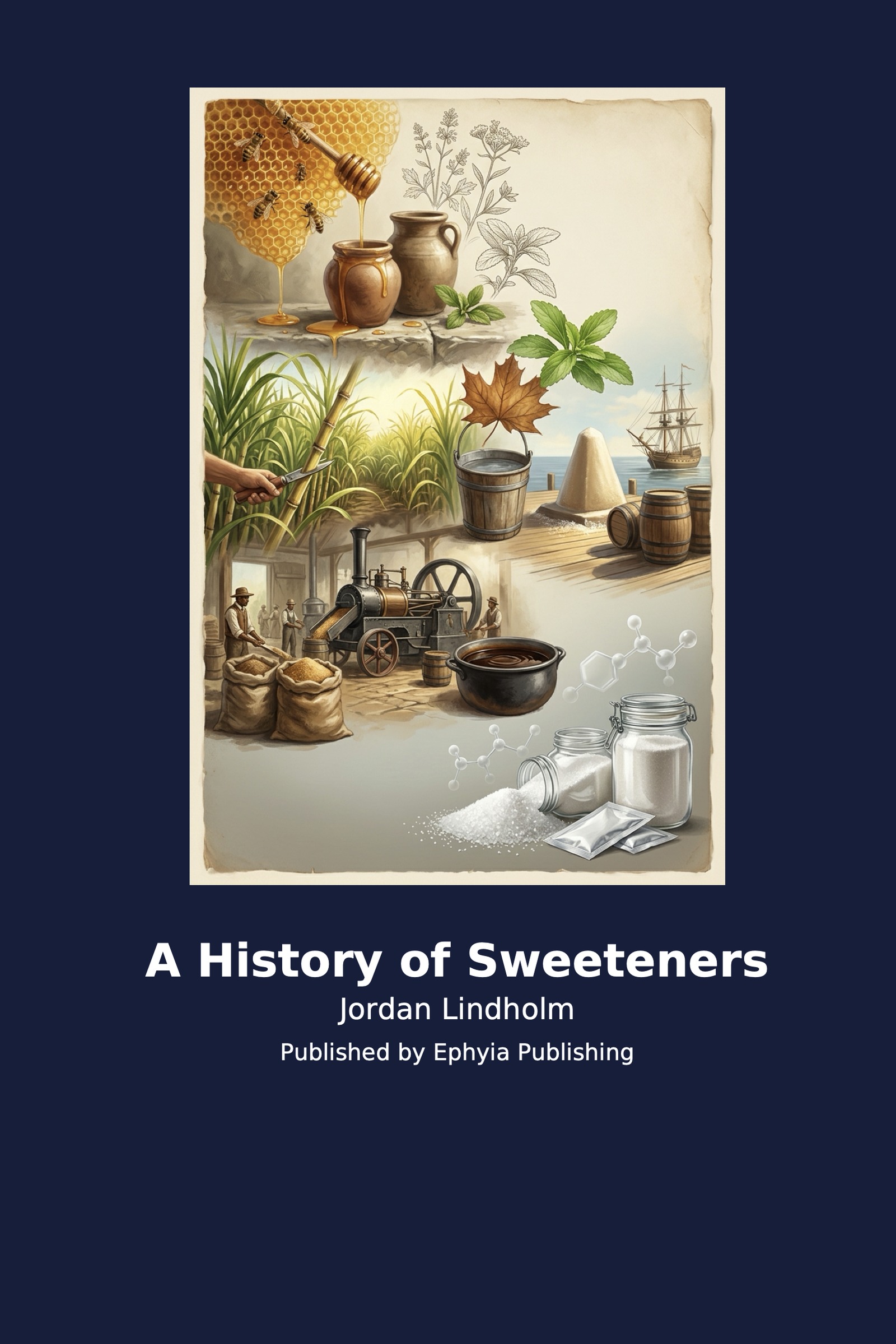
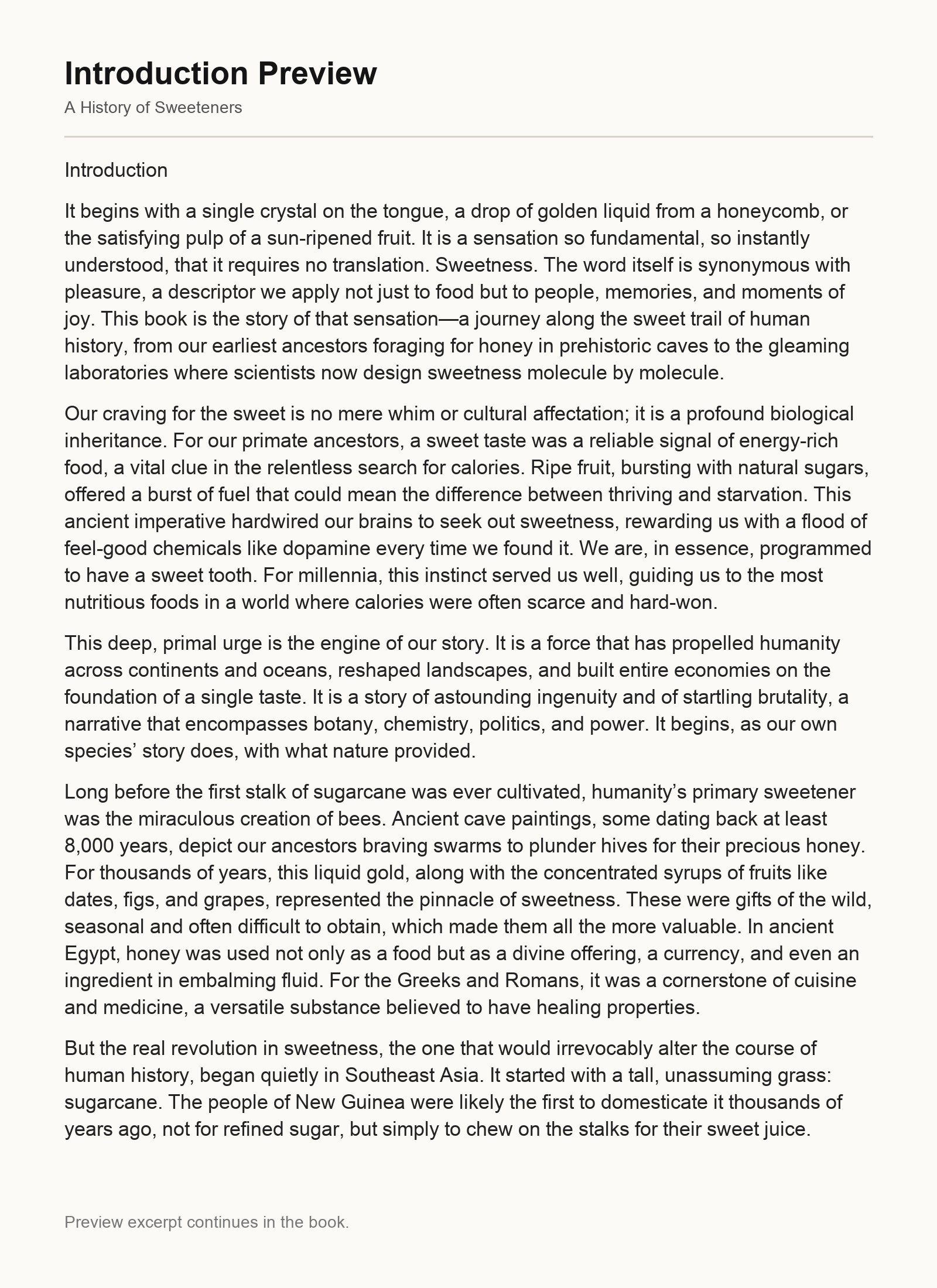
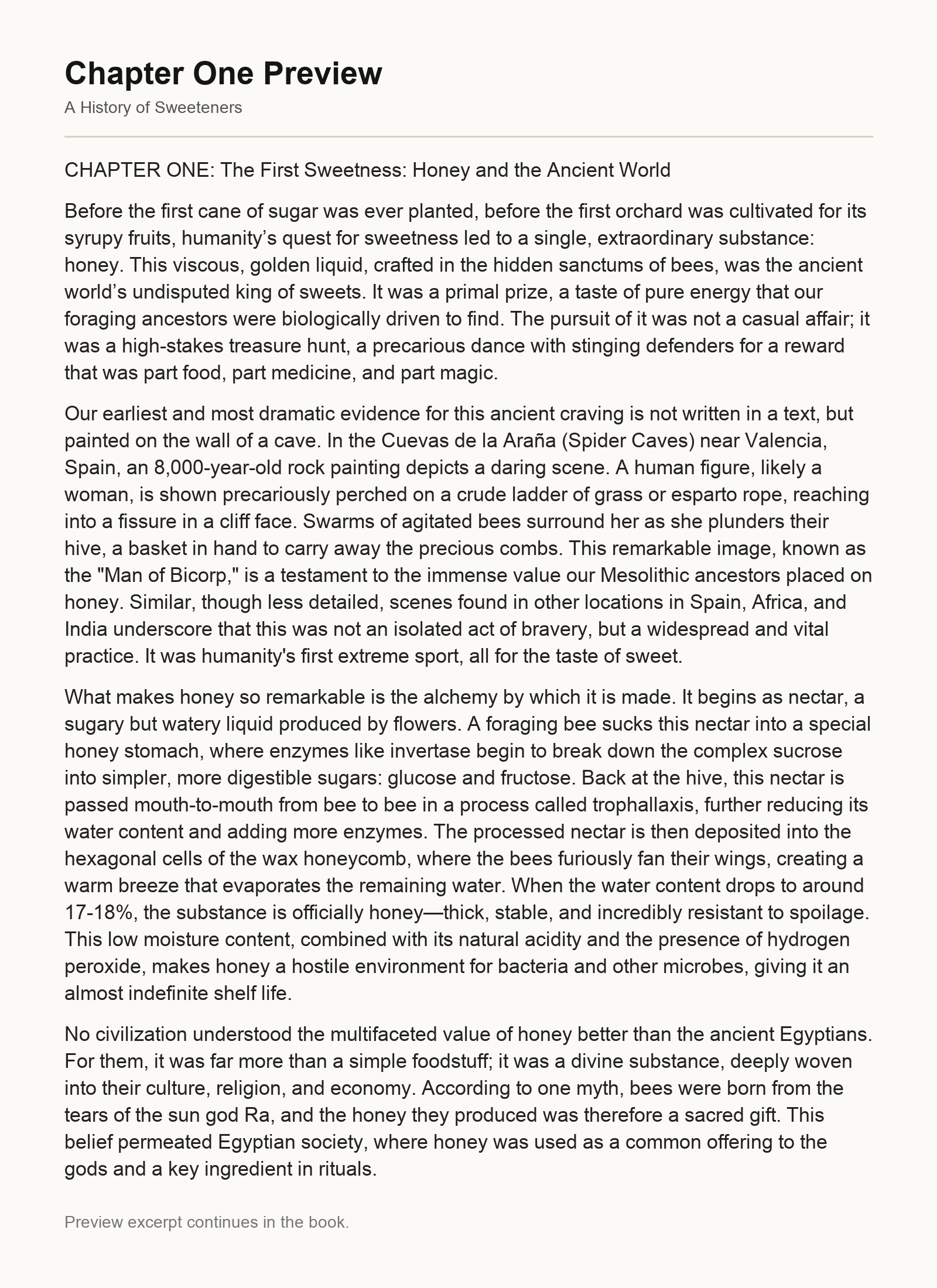
From the first honey‑laden daring of prehistoric cave painters to the high‑tech labs where sweetness is designed molecule by molecule, this book traces the extraordinary journey of a single taste that has shaped human civilization. Readers will discover how early foragers risked deadly bee swarms for golden honey, how ancient peoples turned dates, figs, and grapes into thick syrups, and how the humble sugarcane stalk became the engine of empire, wealth, and unimaginable human suffering. Each chapter reveals the ingenuity, brutality, and science behind the sweeteners that have filled our tables, from the crystallized sugar of India’s Gupta empire to the maple sap harvested by Northeastern woodlands peoples.
The narrative follows sugar’s transformation from a rare medicinal spice into the “white gold” that powered the Atlantic slave trade, fueled the Industrial Revolution, and sweetened the daily beverages of millions. It explores the scientific breakthroughs that gave us saccharin, cyclamate, aspartame, and sucralose—molecules born from coal tar, amino acids, and even the sugar molecule itself—while detailing the controversies, health scares, and regulatory battles that have accompanied each new sweetener. Readers will also encounter the rise of high‑fructose corn syrup, the natural alternatives of stevia, monk fruit, and agave, and the quiet usefulness of sugar alcohols like xylitol and sorbitol in everything from chewing gum to dental care.
Beyond economics and chemistry, the book delves into the biology and psychology of our craving, explaining why our brains are wired to seek sweetness, how the reward system responds to sugar and its substitutes, and how modern food engineers use aroma, texture, and even sound to enhance perceived sweetness while cutting calories. It examines the impact of sweeteners on our gut microbiome, the metabolic consequences of excess consumption, and the public health crises that have sparked soda taxes, labeling reforms, and a global reevaluation of sugar’s role in our diets.
Looking forward, the work investigates the cutting edge of sweetener design: rare sugars like allulose, sweet proteins produced by precision fermentation, AI‑crafted molecules, and neuro‑gastronomic devices that stimulate taste receptors directly. Readers will gain insight into how personalized nutrition, wearable glucose monitors, and biotechnology may soon tailor sweetness to individual biology, and they will reflect on the philosophical question of whether the ultimate solution lies in ever more sophisticated substitutes or in a mindful return to the subtle sweetness of whole, unprocessed foods. This is a comprehensive, engaging, and thought‑provoking exploration of how one simple sensation has driven humanity’s greatest achievements—and its deepest challenges—throughout history.
What You'll Find Inside:
- How our innate biological craving for sweetness evolved as a survival mechanism and continues to drive human behavior today
- The global historical journey of sweeteners from ancient honey harvesting to sugarcane plantations built on slavery and empire
- The scientific revolution in sweetness from accidental laboratory discoveries to modern designer sweeteners
- The health impacts of sweeteners including metabolic effects, microbiome interactions, and public health crises
- The future of sweetness through personalized nutrition, neuro-gastronomy, and biotechnology innovations
Who's It For:
This book is ideal for readers interested in the intersection of food history, science, and public health who want to understand how humanity's pursuit of sweetness has shaped civilizations, economies, and our bodies. It will particularly benefit nutritionists, food scientists, historians, and anyone curious about the cultural and biological forces behind our dietary choices, offering both a comprehensive historical account and insights into emerging sweetener technologies.
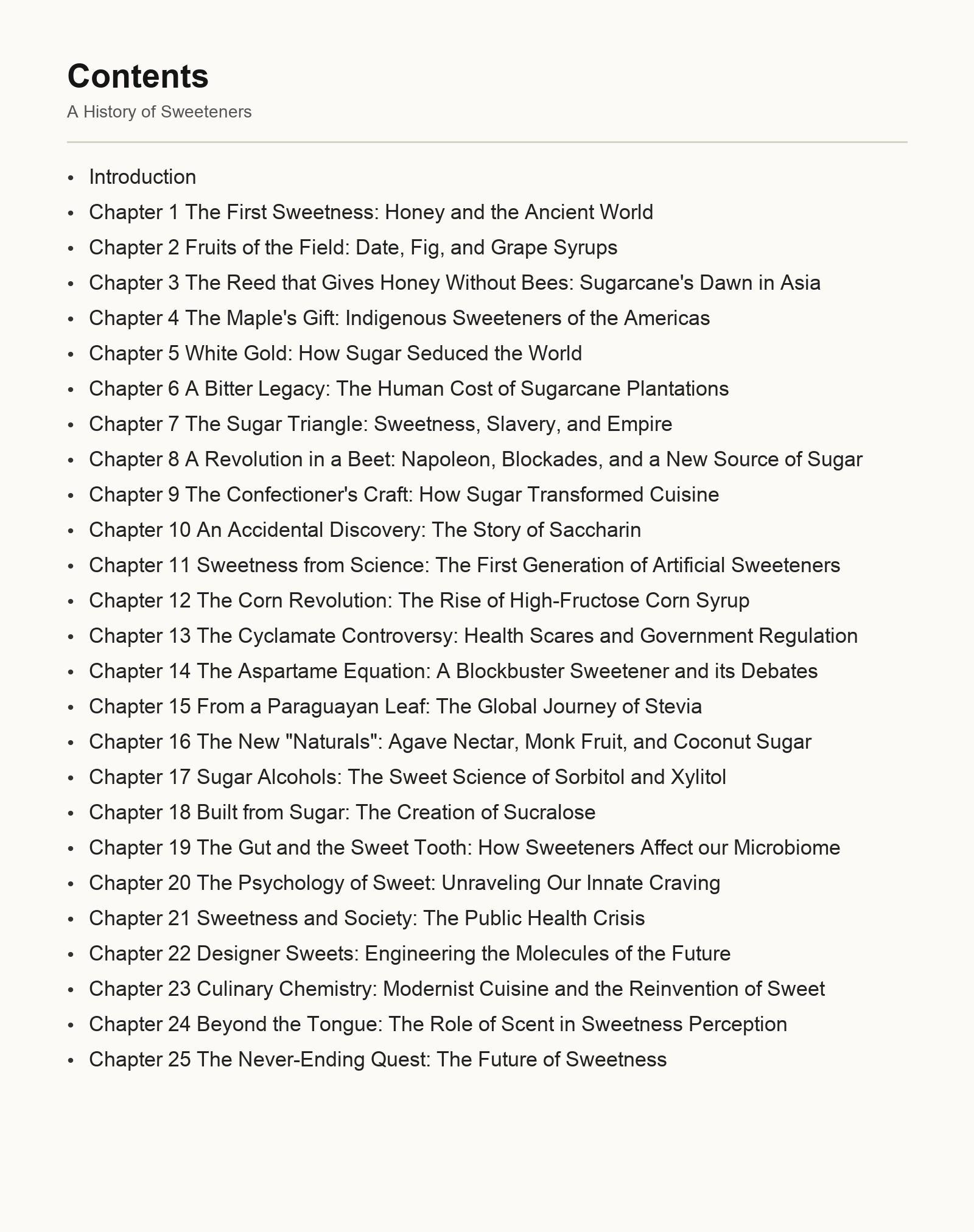
Table of Contents:
- Introduction
- Chapter 1 The First Sweetness: Honey and the Ancient World
- Chapter 2 Fruits of the Field: Date, Fig, and Grape Syrups
- Chapter 3 The Reed that Gives Honey Without Bees: Sugarcane's Dawn in Asia
- Chapter 4 The Maple's Gift: Indigenous Sweeteners of the Americas
- Chapter 5 White Gold: How Sugar Seduced the World
- Chapter 6 A Bitter Legacy: The Human Cost of Sugarcane Plantations
- Chapter 7 The Sugar Triangle: Sweetness, Slavery, and Empire
- Chapter 8 A Revolution in a Beet: Napoleon, Blockades, and a New Source of Sugar
- Chapter 9 The Confectioner's Craft: How Sugar Transformed Cuisine
- Chapter 10 An Accidental Discovery: The Story of Saccharin
- Chapter 11 Sweetness from Science: The First Generation of Artificial Sweeteners
- Chapter 12 The Corn Revolution: The Rise of High-Fructose Corn Syrup
- Chapter 13 The Cyclamate Controversy: Health Scares and Government Regulation
- Chapter 14 The Aspartame Equation: A Blockbuster Sweetener and its Debates
- Chapter 15 From a Paraguayan Leaf: The Global Journey of Stevia
- Chapter 16 The New "Naturals": Agave Nectar, Monk Fruit, and Coconut Sugar
- Chapter 17 Sugar Alcohols: The Sweet Science of Sorbitol and Xylitol
- Chapter 18 Built from Sugar: The Creation of Sucralose
- Chapter 19 The Gut and the Sweet Tooth: How Sweeteners Affect our Microbiome
- Chapter 20 The Psychology of Sweet: Unraveling Our Innate Craving
- Chapter 21 Sweetness and Society: The Public Health Crisis
- Chapter 22 Designer Sweets: Engineering the Molecules of the Future
- Chapter 23 Culinary Chemistry: Modernist Cuisine and the Reinvention of Sweet
- Chapter 24 Beyond the Tongue: The Role of Scent in Sweetness Perception
- Chapter 25 The Never-Ending Quest: The Future of Sweetness
Author:
Published By:
Date Published:
May 25, 2026
Type:
Nonfiction
Language:
English
Also Available In:
Word Count:
41,919 words
Reading Time:
2 hours 56 minutes
Sample:
Order:
Order A History of Sweeteners (Hardcover) on MixCache.com:
Buy NowPrint copy is made to order and ships worldwide. Includes the ebook free, ready to read instantly.
$5 account credit for all new MixCache.com accounts, usable toward any ebook purchase!*