

Why the Universe Might Be Quietly Doomed: A Deep Dive Into Fermi's Paradox
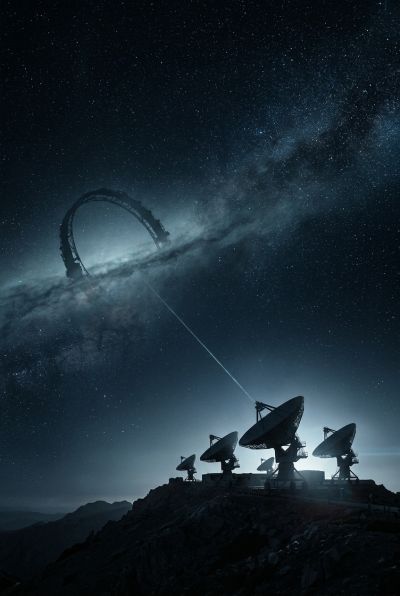
It begins with a simple lunch table question: "Dove sono tutti?" (Where is everybody?) That query, posed by physicist Enrico Fermi in 1950, launched an intellectual journey from stardust to synthetic consciousness. Dr. Alex Bugeja's Il paradosso Fermi transforms what could have been an abstract thought experiment into a visceral exploration of humanity's cosmic predicament, blending hard science with speculative philosophy in ways that feel urgently relevant to our tenuous moment in time.
What the Book Covers
The book is structured as a systematic investigation into one of science's most enduring mysteries: the apparent contradiction between the high probability of extraterrestrial civilizations and our complete lack of evidence for them. Divided into twenty-five chapters, it moves from foundational questions about stellar formation and abiogenesis to advanced topics like Kardashev-scale civilizations, megastructures, and transhumanist futures. The intended audience spans scientifically curious readers, students of astrobiology, and general audiences grappling with existential questions about humanity's future. Key chapters include detailed breakdowns of the Drake Equation, evolutionary biology pathways, and risk analysis of potential Great Filters.
The Stark Arithmetic of Cosmic Loneliness
In Chapter Two, Bugeja meticulously dissects the Equazione di Drake, revealing why this probabilistic tool doubles as a monument to human ignorance. While noting that variables like R* (stellar formation rate) are reasonably constrained, the book emphasizes how terrifyingly uncertain key factors remain. For fₗ (life emergence) and fᵢ (intelligent life), Bugeja observes we have "un solo punto dati — il nostro mondo," making estimates "un riflesso dei nostri pregiudizi filosofici più che una conclusione scientifica." The chapter's most unsettling insight comes from calculating N=2×1×0,1×0,000000001×0,001×0,1×500=0,00000001, suggesting we're likely alone in the galaxy—a statistical tombstone for cosmic company.
The Great Filter: Are We Already Past the Point of No Return?
Chapter Five crystallizes the paradox's darkest implication through the Great Filter concept. Bugeja frames this as a cosmic bottleneck where civilization faces an insurmountable obstacle—either behind us (making us miraculously rare) or ahead (suggesting universal extinction). The chilling possibility that the filter lies in our future gains traction through examining our technological adolescence: "Dalla nostra stessa tecnologia possono derivare sia i mezzi per curare ogni malattia sia la capacità di causare la nostra stessa estinzione in poche ore." This presents humanity as simultaneously promising and doomed, standing at the threshold of a test that "nessuno ha mai superato."
Simulated Reality and the Ultimate Cop-out Explanation
The Ipotesi del Planetario (Chapter Ten) offers perhaps the most unsettling solution by proposing our entire reality might be computational. Referencing Nick Bostrom's trilemma, Bugeja argues this isn't mere sci-fi speculation but serious philosophical territory. The chapter's most provocative claim links quantum mechanics to simulation theory: "L'effetto osservatore... può essere visto come il modo in cui un motore di videogioco potrebbe rendersi l'ondina solo quando il giocatore si gira per guardarla." Even more uncomfortably, the text suggests our universe's fine-tuning might be deliberate: "Le costanti sono state deliberate dai programmatori. Hanno inserito i valori giusti per garantire che la loro simulazione producesse il risultato a cui erano interessati—cioè noi."
Rare Earth: The Unlikely Perfection of Our Cosmic Address
Chapter Eleven builds a compelling case for terrestrial exceptionalism through the Rare Earth hypothesis. Bugeja details how our "posizione galattica" in a stable galactic habitable zone, our Sun’s "Riccioli d'oro" classification, Jupiter’s gravitational shielding, and Earth’s unusually large moon all represent statistical improbabilities. Most critically, the chapter identifies planetary conditions beyond mere habitability: "Il nostro indirizzo galattico". The conclusion? "Siamo il risultato di una catena di improbabilità così lunga che è, per tutti gli effetti pratici, un evento singolare nella galassia."
Technological Transcendence: Escaping Biology to Escape Detection
>The final chapters explore transhumanist futures where civilizations abandon physical expansion for internal transformation. Bugeja’s discussion of mind uploading and computational substrates suggests the Great Silence might reflect a universal shift inward rather than outward. As the book notes about post-biological beings: "Non avrebbero alcun motivo per ammassarsi su mondi caldi, umidi e rocciosi... Potrebbero semplicemente divertirsi a farlo nel proprio substrato computazionale." This reframes our cosmic search as misdirected curiosity about biological neighbors when "la frontiera ultima per una tale civiltà non sarebbe il cosmo fisico, ma il regno sconfinato dell'esperienza ingegnerizzata."
Who Should Read This
This book demands readers comfortable with scientific concepts and lengthy philosophical speculation but rewards them with a comprehensive survey of Fermi Paradox thinking. It serves students and enthusiasts seeking structured understanding over sensationalism, offering frameworks rather than definitive answers. Those expecting pop-science simplification or concrete conclusions will find it frustrating; readers drawn to existential risk assessment and deep-time thinking will find it essential.
Read “Il paradosso Fermi” on MixCache.com →
Please log in or create an account to leave a comment.
No comments yet. Be the first to say something.