

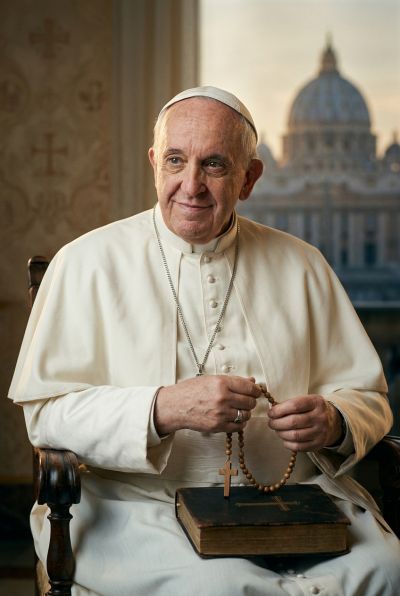
On a May morning in 1976, two Jesuit priests vanished from the streets of Buenos Aires. Father Orlando Yorio and Father Franz Jalics had been working in the Bajo Flores shantytown, living among the poor in the manner of the Gospel. Their abduction by security forces, just weeks after the military coup, plunged them into the nightmare of ESMA — the Navy Mechanics School, the regime's most notorious torture center. For five months they endured interrogation and brutality before being drugged and dumped in a field. Their superior, the 39-year-old Provincial Father Jorge Mario Bergoglio, was left to navigate a dictatorship that equated ministry to the poor with subversion.
The Provincial's Dilemma
Bergoglio had led the Argentine Jesuit province for barely three years when the generals seized power on March 24, 1976. The Society of Jesus was itself divided. Some priests embraced liberation theology and direct political engagement; others, like Bergoglio, emphasized Ignatian spirituality and popular piety while warning against overt partisan alignment. He had reportedly voiced concerns about the safety of Yorio and Jalics's immersion in the villas miserias, urging caution or even relocation as the political climate darkened. The exact nature of those conversations remains disputed. What is clear is that the two priests were seized on May 23 and 24, taken to ESMA, and subjected to the regime's systematic torture.
Bergoglio later described the period as one of 'anguish.' He claimed to have worked discreetly behind the scenes, leveraging whatever channels he could to secure their release. This included meetings with the junta's most powerful figures — General Jorge Videla and Admiral Emilio Massera, the navy chief who controlled ESMA. Approaching such men on behalf of 'subversive' priests carried mortal risk. Bergoglio maintained that his quiet interventions, rather than public confrontation, were the only plausible path to saving lives in a system where thousands simply disappeared.
The Accusations
The controversy erupted years later, fueled by Father Yorio's conviction that Bergoglio had failed them. Yorio, traumatized by his ordeal, came to believe his superior had effectively withdrawn Jesuit protection, signaling to the military that the two priests operated without institutional backing. In 2005, human rights lawyer Myriam Bregman filed a criminal complaint alleging Bergoglio's complicity. The charge was dismissed for lack of evidence, but the accusation clung. When Bergoglio was elected Pope Francis in 2013, the case exploded onto the global stage. A photograph circulated purporting to show him giving communion to Videla — later proven to depict another priest, Father Carlos Berón de Astrada.
The Defense
Father Jalics, the other survivor, offered a different account. After decades of silence, he issued a statement days after the papal election: 'Orlando Yorio and I were not denounced by Father Bergoglio.' He attributed their capture to a former lay collaborator who had joined a guerrilla group and named them under torture. Jalics acknowledged past disagreements with Bergoglio over their ministry but explicitly absolved him of facilitating the arrest. Prominent human rights figures corroborated this view. Adolfo Pérez Esquivel, Nobel Peace Prize laureate, declared: 'He never collaborated with the dictatorship… Bergoglio was no accomplice.' Graciela Fernández Meijide, who served on the truth commission CONADEP, stated that Bergoglio's name never appeared in hundreds of testimonies. Alicia Oliveira, a judge and rights advocate who knew him then, described him as 'anguished' and 'very critical of the dictatorship,' noting he had hidden people on Church property and once gave his own identity papers to a man fleeing persecution.
The Verdict of History
The episode reveals the impossible choices facing religious leaders under state terror. Public denunciation could provoke massacre; silence could be read as complicity. Bergoglio chose a perilous middle path — quiet negotiation with torturers to extract his men. That he succeeded in freeing Yorio and Jalics, when so many thousands vanished forever, suggests his strategy had effect. Yet the moral ambiguity endures. The dictatorship's victims experienced the Church's response in radically different ways. For Yorio, the memory of abandonment never healed. For Jalics, the truth was more nuanced. For Bergoglio, the episode became a crucible that shaped his later insistence on the Church's duty to the marginalized and his wariness of ideological capture. When he later called for the Argentine Church to 'put on garments of public penance' for the dictatorship years, he spoke from inside the crisis, not above it.
This is one episode in a much longer story. For the full account of Pope Francis's life and papacy, read “Pope Francis” by Hugh Newmont on MixCache.com.
Please log in or create an account to leave a comment.
No comments yet. Be the first to say something.