

The Chemicals That Won't Die: Inside Our Forever Crisis
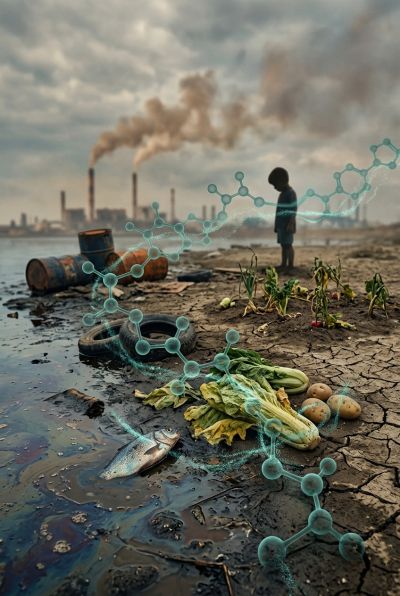
The modern world sits atop a chemical time bomb, one that's already exploded in communities across the globe while most of us remain unaware of its ticking. In Forever Chemicals, Adrian Voss maps this invisible crisis with the precision of a detective novel and the urgency of a public health bulletin, showing how a scientific marvel became humanity's most persistent poison.
The Indestructible Foundation
The book's scientific foundation rests on a single, remarkable bond: the carbon-fluorine connection that makes PFAS virtually indestructible. Voss spends the opening chapters explaining how this bond, which creates molecules "capable of forming long, stable chains" and "shrugging off nearly every corrosive chemical," became the cornerstone of an entire chemical empire. The explanation is essential because it reveals why PFAS aren't just another pollutant—they're a fundamentally different category of environmental threat. As Voss notes, this bond is "the strongest single bond in all of organic chemistry," making it "so robust to be breached" by normal environmental processes. This basic chemistry lesson becomes the lens through which the entire crisis unfolds, explaining why a spilled cup of coffee from 1975 still carries its chemical signature today.
Decades of Deceit Behind the Scenes
The book's most damning revelation emerges in its exploration of corporate malfeasance, documenting how both 3M and DuPont possessed internal evidence of PFAS toxicity for decades while maintaining public silence. Through painstaking research, Voss uncovers that DuPont's own Toxicology Section concluded in 1961 that their star product Teflon should be handled "with extreme care" and that heating it could release fumes "that were toxic to humans." Yet this knowledge remained classified as "strictly confidential" even as the company continued discharging millions of pounds of PFOA into public waterways. The narrative becomes particularly sinister when documenting how 3M's 30-year study of its own workers showed a "more than threefold increase in deaths from prostate cancer" by the late 1990s, while their public-facing stance maintained that the chemicals were benign. This corporate duplicity, revealed through litigation rather than transparency, represents the core betrayal that fueled the entire crisis.
Communities Become Laboratories
Voss shines brightest when documenting the grassroots response to contamination, showing how ordinary citizens became unwilling scientists and advocates. The book traces several community organizing stories, from Michael Hickey's Google search that led to uncovering PFOA in Hoosick Falls, New York, to Sandy Wynn-Stelt's discovery that her well water contained PFAS concentrations "750 times the national average" in Rockford, Michigan. These aren't just tragic anecdotes—they're blueprints for how communities mobilize when faced with invisible threats. The author captures how residents transition from "isolated individuals" to organized advocacy, noting that in communities like Merrimack, New Hampshire, people began sharing "private health information in a public forum, a rare sight in reserved New England communities." This transformation from victims to activists becomes one of the book's most compelling narratives, showing how grief and frustration can crystallize into political power.
The Impossible Economics of Forever
The economic toll of PFAS contamination receives extensive treatment, revealing costs that dwarf initial settlement figures. Voss calculates that American water utilities face between $120 billion and $175 billion for remediation, while individual states like Minnesota have already spent $850 million chasing contamination from a single 3M facility. The human cost calculations are equally staggering—a 2022 study found the annual health-related toll in the United States alone exceeded $5.5 billion for just five linked conditions. Most devastating is the economic destruction of farming communities, where Fred Stone in Arundel, Maine saw his "century-old farm become worthless overnight" after routine testing found PFAS levels that made his milk unsalable. These financial realities demonstrate why the crisis extends beyond health departments into congressional budget offices, where the long-term costs of chemical convenience are becoming impossible to ignore.
Searching for Safe Exits
Rather than leaving readers in despair, Voss devotes significant attention to emerging solutions, particularly the shift toward green chemistry and regulatory innovation. The book examines how the European Union's "universal PFAS restriction" proposal represents a fundamental shift from chemical-by-chemical regulation to class-based bans. This approach, built on an "essential use" framework, asks manufacturers to justify why any particular application of an indestructible chemical deserves societal permission. The author notes promising developments in destructive technologies, including new incineration methods achieving 99.9999% destruction rates, and documents how 3M's 2022 announcement to exit all PFAS manufacturing by 2025 sent "a seismic shock through the global chemical industry." These developments suggest that while we cannot undo the past, we might finally be learning to prevent its repetition.
Who should read this Anyone concerned about environmental health, regulatory policy, or corporate accountability will find substantial value in Voss's comprehensive examination. The book serves equally well as an introduction to chemical contamination for general readers and as a detailed reference for those already familiar with PFAS issues—the author provides sufficient scientific background for newcomers while including enough specific data and community case studies to satisfy advocates. Readers seeking simple solutions or feel-good environmental stories won't find them here; this is a sobering examination of how scientific innovation without adequate oversight can create generational problems. However, those willing to engage with the complexity will emerge with both a deeper understanding of modern chemistry's risks and a clearer picture of how collective action can eventually force corporate and governmental accountability.
Read “Forever Chemicals” on MixCache.com →
Please log in or create an account to leave a comment.
No comments yet. Be the first to say something.