

An Excerpt from “Malta At War”
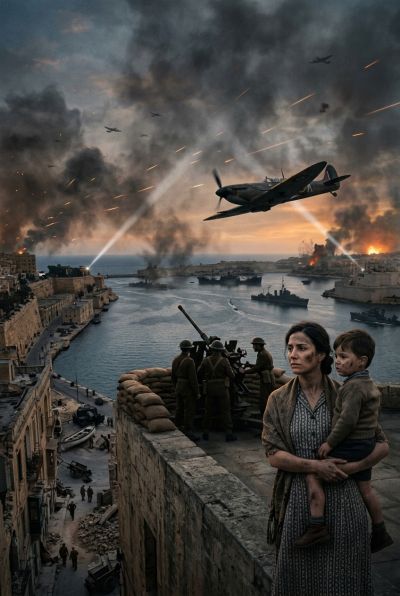
The following is an excerpt from “Malta At War” by Dr Alex Bugeja, PhD, available on MixCache.com.
Introduction
In the vast and bloody tapestry of the Second World War, certain battlegrounds stand out, not always for their size, but for their disproportionate strategic significance and the sheer human drama played out upon their soil. Few locations exemplify this more starkly than the tiny archipelago of Malta. A mere cluster of islands, dominated by the main island measuring just seventeen miles by nine, Malta became an epicentre of the conflict in the Mediterranean, a fortress besieged, an "unsinkable aircraft carrier" for the Allies, and a festering thorn in the side of the Axis powers. This is the story of Malta at war – a history of extraordinary resilience, savage aerial bombardment, desperate naval battles, and the unwavering spirit of a people caught in the crossfire of empires.
Situated almost precisely in the centre of the Mediterranean Sea, ninety-three kilometres south of Sicily and nearly three hundred kilometres north of the African coast, Malta's geography was its destiny. For centuries, it had been a coveted prize for maritime powers seeking control of this vital waterway. From the Knights of St. John who famously repelled the Ottoman siege in 1565, to Napoleon who seized it briefly, and finally to the British Empire which acquired it in the early 19th century, Malta was recognised as a key naval and military bastion. Its magnificent Grand Harbour at Valletta, one of the finest natural anchorages in the world, became a linchpin of British imperial strategy, guarding the crucial sea route through the Suez Canal to India and the Far East.
Yet, as the clouds of war gathered over Europe in the late 1930s, Britain's commitment to Malta seemed decidedly shaky. Its proximity to Fascist Italy – barely an hour's flight time – made it appear dangerously vulnerable. Pre-war assessments leaned towards the view that the island was, in practical terms, indefensible against a determined Italian assault. Planners worried about the Italian fleet, the Regia Marina, and even more so about the Italian air force, the Regia Aeronautica, operating from nearby Sicilian bases. Consequently, defensive preparations were minimal, and the headquarters of the Royal Navy's Mediterranean Fleet had been prudently moved from Valletta to the relative safety of Alexandria, Egypt, even before Italy entered the war.
This apparent lack of resolve was not lost on the Maltese people, who numbered around a quarter of a million souls packed densely, particularly around the Grand Harbour area. They watched with growing anxiety as the likelihood of conflict increased, questioning whether the British, focused on defending their own home islands and the vital Suez Canal, would truly commit the necessary resources to protect this small Mediterranean outpost. The island garrison was small, the anti-aircraft defences were inadequate, and the air cover was almost non-existent. The stage seemed set for a swift Italian conquest.
Everything changed on the 10th of June 1940. Benito Mussolini, seeking to capitalize on the stunning success of his German ally in France, declared war on Britain and France. Within hours, the first Italian bombs rained down on Malta, shattering the peacetime calm and signalling the start of a siege that would last for nearly two and a half years. The initial attacks, though frightening, were relatively ineffective, hampered by Italian inexperience and perhaps an underestimation of the task at hand. Malta, however lightly defended, was not about to crumble at the first blow.
The early defence of the island became legendary, symbolised by a handful of obsolete Gloster Gladiator biplane fighters. Cobbled together, sometimes flown by pilots with little fighter experience, these aircraft – famously nicknamed Faith, Hope, and Charity (though the reality was slightly more complex) – mounted a plucky, if often desperate, defence against overwhelming odds. They became a potent symbol of Maltese and British defiance, boosting morale when it was most needed, even as the bombs continued to fall on the airfields, the dockyards, and the densely populated Three Cities across the Grand Harbour from Valletta.
The strategic calculus shifted dramatically with the expansion of the war into North Africa. Italy's invasion of Egypt in September 1940, followed by the humiliating defeats inflicted upon them by the British counter-offensive (Operation Compass), forced Hitler to intervene. The arrival of the Deutsches Afrikakorps under Erwin Rommel in early 1941 transformed the North African campaign and, crucially, elevated Malta's importance exponentially. Rommel, the Desert Fox, quickly recognised that his campaigns in the desert depended entirely on the security of his supply lines stretching across the Mediterranean from Italy and Sicily. Malta sat squarely astride these vital routes.
British aircraft, submarines, and eventually surface ships operating from Malta could wreak havoc on Axis convoys carrying troops, tanks, fuel, and ammunition to Rommel's Panzerarmee Afrika. Rommel himself warned Berlin in May 1941: "Without Malta the Axis will end by losing control of North Africa." His assessment proved chillingly accurate. The fight for Malta was now inextricably linked to the fight for North Africa, and control of the island became a prerequisite for victory in the desert.
The Axis response was predictable: if Malta could not be easily ignored, it must be neutralised. The initial, somewhat sporadic Italian bombing campaign gave way to a far more systematic and brutal assault with the arrival of the German Luftwaffe's Fliegerkorps X in Sicily in January 1941. Commanded by experienced officers and equipped with potent aircraft like the Junkers Ju 87 Stuka dive-bomber and the Messerschmitt Bf 109 fighter, the Luftwaffe aimed to smash Malta's offensive capabilities, destroy its air defences, and pave the way for an eventual invasion, codenamed Operation Herkules.
What followed was one of the most intense aerial bombardments in history. Malta became, arguably, the most bombed place on earth during the war. Day after day, night after night, Axis bombers pounded the island. Valletta, the Three Cities, the dockyards, and the crucial airfields at Luqa, Ta' Qali, and Hal Far bore the brunt of the attacks. Thousands of tons of bombs turned historic buildings into rubble, devastated infrastructure, and inflicted terrible casualties, particularly among the civilian population who sought refuge in ancient tunnels, catacombs, and newly dug shelters carved deep into the island's limestone rock.
Life under the bombs became a grim routine of air raid sirens, explosions, dust, and deprivation. Food became scarce as Axis attacks choked off supplies. Fuel ran low. Ammunition was strictly rationed. Disease spread through the shelters. Yet, somehow, the island held on. The dockyard workers repaired damaged warships and submarines under constant threat. Anti-aircraft gunners, both British and Maltese, threw up curtains of fire against the waves of attackers. RAF pilots, flying worn-out Hurricanes and, later, the life-saving Spitfires, fought relentless duels in the sky against technologically superior German and Italian fighters.
The story of Malta's survival is also the story of the Malta Convoys – epic naval operations undertaken by the Royal Navy, often at tremendous cost, to force vital supplies through the Axis blockade. Names like Operation Excess, Operation Halberd, Operation Harpoon, Operation Vigorous, and, most famously, Operation Pedestal (the "Santa Marija Convoy" of August 1942) became synonymous with heroism and sacrifice. Battleships, aircraft carriers, cruisers, destroyers, and merchant ships fought desperate battles against Italian warships, German U-boats, and relentless air attacks to deliver precious cargoes of food, fuel, ammunition, and aircraft. The arrival of even a few ships could mean the difference between survival and surrender.
Throughout the siege, Malta was not merely a passive victim. It remained an active, crucial offensive base. RAF bombers – Wellingtons, Blenheims, Beauforts – flew perilous missions to attack Axis shipping and ports in Sicily and North Africa. The Royal Navy's submarines, operating initially from the vulnerable Manoel Island base and later forced to operate more cautiously, waged a relentless war on Rommel's supply lines. The formation of Force K, a powerful surface strike force of cruisers and destroyers based in Grand Harbour for a critical period in late 1941, dealt devastating blows to Axis convoys until losses forced its withdrawal.
The tide began to turn, slowly but perceptibly, in the spring and summer of 1942. The arrival of significant numbers of Supermarine Spitfires, flown off aircraft carriers including HMS Eagle and even the American USS Wasp, began to challenge Axis air superiority. New leadership, in the form of the experienced Air Vice Marshal Keith Park (a veteran of the Battle of Britain), brought fresh tactics to the air defence. The Axis, particularly the Luftwaffe, paid an increasingly heavy price for their attacks. Though the island reached the absolute brink of starvation and collapse in mid-1942, the partial success of Operation Pedestal provided just enough relief to keep Malta in the fight.
The climax came in the autumn of 1942. As the British Eighth Army prepared for its decisive offensive at El Alamein, Malta's air and sea forces launched renewed attacks on Axis supplies, critically starving Rommel of the fuel and ammunition he needed. The Luftwaffe made one final, desperate attempt to crush the island in October, but Park's well-drilled Spitfire squadrons inflicted prohibitive losses, forcing Kesselring to call off the offensive. Weeks later, Montgomery's victory at El Alamein, followed swiftly by the Allied landings in Northwest Africa (Operation Torch), decisively shifted the strategic balance in the Mediterranean. The siege of Malta was effectively over. Convoys began to arrive with relative ease, and the island transformed from a besieged fortress into a vital staging post for the Allied invasion of Sicily in 1943.
The cost of Malta's resistance was immense. Thousands of Maltese civilians, British and Commonwealth servicemen, and merchant seamen lost their lives. The physical destruction was staggering, with tens of thousands of buildings damaged or destroyed. Yet, the island's endurance had been pivotal. It had critically hampered the Axis war effort in North Africa, absorbed huge numbers of Axis aircraft and resources that could have been deployed elsewhere, and provided a vital stepping stone for the eventual Allied counter-offensive into Southern Europe. In recognition of the collective bravery and sacrifice, King George VI awarded the George Cross to the entire island population in April 1942 – an unprecedented honour symbolising the unique ordeal and triumph of Malta.
This book chronicles the story of Malta during those critical years, from the uneasy peace before the storm to the lifting of the siege and its aftermath. It explores the strategic decisions, the key battles in the air and at sea, the development of military technology and tactics, the critical importance of intelligence (including Ultra intercepts), and, above all, the human experience of war – the pilots battling in the skies, the sailors braving the convoys, the submariners stalking their prey, the gunners defending the harbours, the soldiers preparing for an invasion that never came, and the Maltese civilians enduring the relentless bombardment with extraordinary courage and fortitude. It is a story of Malta's darkest hour, and its finest.
Read “Malta At War” on MixCache.com →
Please log in or create an account to leave a comment.
No comments yet. Be the first to say something.