

From Timber to Jetways: Boeing's Century of Flight
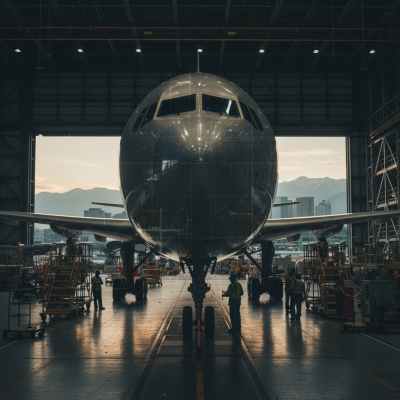
Look up at the sky on any given day, and there's a high chance a Boeing aircraft is tracing a route above you. This omnipresence isn't accidental—it's the result of over a century of industrial evolution, as detailed in Paul Mele's 'Boeing: Ritratto di un'azienda americana.' The book doesn't just chronicle a company; it maps how one firm became intertwined with the very fabric of modern connectivity and American power.
What the book is about
Spanning from William Boeing's modest seaplane experiments in a 1916 Seattle boathouse to the 21st-century frontiers of aerospace, this 25-chapter narrative traces Boeing's evolution through wars, technological leaps, and corporate transformations. Organized chronologically, it covers pivotal eras: the timber-rooted beginnings, WWII's 'Arsenal of Democracy' mobilization, the jet age birth with the Dash 80 prototype, wide-body innovations like the 747 and 777, labor dynamics in the Pacific Northwest, and recent crises including the 737 MAX tragedies and Dreamliner production challenges. Intended for aviation enthusiasts, business students, history lovers, and anyone curious about the forces shaping our modern world, the book examines not just aircraft but the human, organizational, and geopolitical forces that defined Boeing's trajectory.
From Timber to Takeoff: Boeing's Foundational Years
Long before Boeing became synonymous with jetliners, its roots were firmly planted in the Pacific Northwest timber industry. William Edward Boeing's early career as a timber magnate provided not just capital but crucial material expertise that directly shaped the company's first aircraft. As the text explains, his deep knowledge of woods like Sitka spruce—valued for their strength-to-weight ratio—proved indispensable: "La cellula era principalmente realizzata in abete del Pacifico Nordoccidentale, scelto per il suo equilibrio ottimale tra leggerezza e resistenza – le stesse qualità che lo rendeva prezioso per altre applicazioni impegnative." This hands-on understanding of structural materials, honed in logging camps and sawmills, allowed Boeing and his early partner George Westervelt to build the B&W seaplane in a modest Lake Union workshop. The founder's declaration captures the spirit: "Potremmo costruire un aereo migliore da soli, e costruirlo più velocemente." This blend of practical resource knowledge and engineering ambition set the stage for Boeing's transition from timber baron to aviation pioneer.
The Arsenal of Democracy: Boeing's Wartime Mobilization
When World War II demanded unprecedented industrial output, Boeing transformed from a significant aircraft builder into a cornerstone of the American war effort—a shift the book details with striking specificity. The chapter on WWII reveals how the company scaled production to almost incomprehensible levels, driven by programs like the Lend-Lease Act. Perhaps most vividly, it notes: "Al picco della produzione del B-17 nel 1944, il solo stabilimento di Seattle della Boeing sfornava in media 16 Flying Fortress ogni singolo giorno." This massive undertaking required not just new factories but a revolutionary workforce. As the book highlights, "Nel 1944, le donne costituivano quasi la metà della forza lavoro della Boeing negli stabilimenti dell’area di Seattle. Queste 'Boeing Belles' dimostrarono di essere più che capaci, spesso eccellendo in compiti che richiedevano destrezza e attenzione ai dettagli." The wartime experience didn't just build planes; it forged new industrial capabilities and social changes that would echo through Boeing's postwar evolution.
The Jet Gamble: How the Dash 80 Reshaped Aviation
Boeing's entry into the jet age wasn't a gradual evolution but a high-stakes wager that nearly bet the company's future. Chapters 6 and 7 detail this pivotal moment, where military needs and commercial vision converged in the Model 367-80, nicknamed the 'Dash 80.' The text underscores the risk: "Il costo era stimato in 16 milioni di dollari – una somma equivalente a quasi l'intero profitto netto dell'azienda dalla fine della Seconda Guerra Mondiale. Era, letteralmente, scommettere l'intera azienda su un unico lancio di dadi." Yet this gamble paid off through bold engineering, as seen in the rapid redesign story: "In un solo fine settimana, lavorando furiosamente nelle loro camere d'albergo, il team Boeing riprogettò completamente la loro proposta. Scartarono il concetto a turboelica e abbozzarono una nuova configurazione: un aeromobile massiccio con ali fortemente a freccia (35 gradi, simile al B-47), alimentato da otto Pratt & Whitney J57 montati in quattro gondole accoppiate sospese sotto le ali." This prototype didn't just yield the KC-135 tanker; it directly enabled the 707, launching America into the commercial jet era and demonstrating how Boeing often turned defense innovation into civilian breakthroughs.
Sky High, Ground Deep: Boeing and the Pacific Northwest Workforce
Boeing's story is inseparable from the Pacific Northwest, particularly the Puget Sound region, where its fortunes have long dictated local economic tides. Chapter 15 delves into this symbiotic relationship, revealing cycles of boom, bust, and labor strife that shaped both the company and its communities. The book documents the devastating 'Boeing Bust' of the late 1960s/early 1970s with precision: "L’occupazione Boeing nella regione del Puget Sound crollò da un picco di oltre 105.000 nel 1967 a circa 37.000 entro la fine del 1971." This wasn't just an economic statistic—it rippled through families and towns. Labor relations emerge as a recurring theme, from the WWII-era 'Rosie the Riveter' campaigns to later tensions. As noted regarding a pivotal strike: "Lo sciopero dell’IAM del 1995 fu particolarmente significativo, durando 69 giorni. Le questioni chiave includevano la sicurezza del lavoro di fronte al crescente subappalto e all’esternalizzazione." These dynamics show how Boeing's evolution was constantly negotiated with its workforce, balancing innovation against job security in a high-cost region.
Turbulence and Reckoning: Navigating 21st Century Crises
The book doesn't shy from Boeing's most difficult recent chapters, offering a candid look at challenges that tested the company's resilience and reputation. Chapter 16 examines the 787 Dreamliner's ambitious innovation—and its troubled execution—highlighting how novel materials and global supply chains created unforeseen hurdles: composite fuselage sections required new production techniques, and battery fires led to a global grounding. More severely, Chapters 21 and 22 dissect the 737 MAX crises, where technical flaws intertwined with organizational pressures. The narrative of the first accident is stark: "Il 29 ottobre 2018, il primo indizio del potenziale letale nascosto nel sistema del 737 MAX emerse dalle acque turchesi del Mar di Giava. Il volo Lion Air 610, un Boeing 737 MAX 8 quasi nuovo, partì dall'aeroporto internazionale Soekarno-Hatta di Giacarta, in Indonesia, diretto a Pangkal Pinang. Pochi minuti dopo il decollo, i piloti iniziarono a lottare con i comandi dell'aeromobile." Chapter 22 then explores the aftermath, noting how the crisis "costrinse a un periodo di profonda introspezione all'interno dell'azienda riguardo ai suoi processi ingegneristici, al suo rapporto con i regolatori e alla sua cultura della sicurezza," sparking leadership changes and renewed focus on engineering ethics—a sobering reminder that technological advancement must be matched by vigilant oversight.
Who should read this
This book will resonate most with readers who appreciate deep dives into industrial history where technology, business, and human stories intersect—think aviation aficionados eager to understand the 'why' behind iconic planes, business students analyzing corporate strategy and adaptation, or history lovers tracing America's 20th-century journey through a single corporate lens. While its chronological structure and wealth of detail make it accessible, those seeking only light aircraft trivia or promotional corporate portraits may find its candid examination of failures and complexities more substantial than expected. For anyone curious about how a company's evolution mirrors broader societal shifts—from timber roots to global aerospace leadership—it offers a nuanced, grounded perspective that avoids hype in favor of informed insight.
Read “Boeing” on MixCache.com →
Please log in or create an account to leave a comment.
No comments yet. Be the first to say something.