

An Excerpt from “A History of South Sudan”
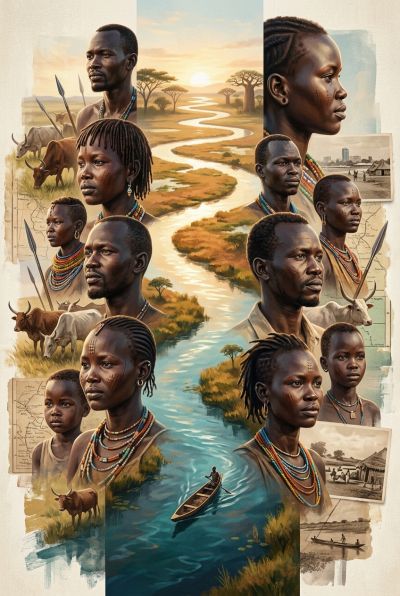
The following is an excerpt from “A History of South Sudan” by Ruben Loughborough, available on MixCache.com.
Introduction
The story of South Sudan is a testament to the enduring human spirit in the face of immense adversity. It is a narrative woven from the threads of ancient migrations, colonial subjugation, protracted and devastating civil wars, and the ultimate triumph of a people's decades-long struggle for self-determination. The birth of the Republic of South Sudan on July 9, 2011, was a moment of profound hope and jubilation, the culmination of a journey that had claimed millions of lives and displaced countless others. As the world's newest nation, it embarked on the monumental task of building a state from the ground up, a challenge compounded by a legacy of conflict and underdevelopment. This book, ‘A History of South Sudan,’ seeks to chronicle this arduous and often-painful journey, from its deep historical roots to the complexities of its contemporary existence.
Geographically, South Sudan is a land of dramatic contrasts, a vast expanse of lush savannas, immense swamplands, and tropical rainforests. Landlocked in East-Central Africa, it is bordered by Sudan to the north, Ethiopia to the east, Kenya, Uganda, and the Democratic Republic of the Congo to the south, and the Central African Republic to the west. The White Nile flows through the heart of the country, its waters feeding the Sudd, one of the world's largest wetlands—a sprawling, labyrinthine ecosystem that has both sustained life and served as a formidable natural barrier throughout history. This diverse landscape is home to a rich tapestry of more than 60 distinct ethnic groups, each with its own unique language, culture, and traditions. The Dinka are the largest of these groups, followed by the Nuer, with other significant populations including the Zande, Bari, and Shilluk. For centuries, many of these societies were decentralized, their lives revolving around pastoralism and agriculture.
The recorded history of the region that is now South Sudan is one marked by external interference and exploitation. The 19th century witnessed the invasion of Turco-Egyptian forces under the Ottoman ruler Muhammad Ali, who sought to extract slaves and natural resources from the southern territories. This period was characterized by brutal slave raids that inflicted deep and lasting trauma on the societies of the south. Following the Mahdist Revolt, the late 19th century saw the establishment of the Anglo-Egyptian Condominium, which effectively brought the entire Sudan under British colonial administration. However, British policy often treated the north and south as separate entities, investing in the modernization of the predominantly Arab and Muslim north while largely neglecting the African, and increasingly Christian, south. This "Southern Policy" sowed the seeds of future conflict by exacerbating existing cultural and religious divides and creating a significant development gap between the two regions.
As Sudan approached independence in 1956, southern leaders' fears of being marginalized within a unified, Arab-dominated state intensified. These anxieties proved to be well-founded, and the failure to establish a federal system of government that would grant the south a degree of autonomy led to a mutiny by southern army officers in 1955, igniting the First Sudanese Civil War. This brutal conflict, which pitted southern insurgents, known as the Anya Nya, against the central government in Khartoum, lasted for 17 years and resulted in the deaths of an estimated half a million people. The Addis Ababa Agreement of 1972 brought a temporary cessation to the fighting, establishing the Southern Sudan Autonomous Region and offering a glimmer of hope for a lasting peace.
This fragile peace was shattered in 1983 when then-President Gaafar Nimeiry declared all of Sudan an Islamic state under Sharia law and unilaterally abolished the autonomous southern region. This act was the catalyst for the Second Sudanese Civil War, a conflict of even greater scale and devastation than the first. The newly formed Sudan People's Liberation Army/Movement (SPLA/M), under the leadership of Dr. John Garang, rose to challenge the authority of Khartoum. The second war raged for over two decades, becoming one of the longest and deadliest conflicts in African history, with an estimated 2.5 million fatalities and millions more displaced from their homes.
The relentless struggle of the South Sudanese people, combined with international pressure, eventually brought both sides to the negotiating table. The signing of the Comprehensive Peace Agreement (CPA) in 2005 marked a watershed moment. This landmark accord not only ended the civil war but, crucially, enshrined the right of the southern Sudanese people to self-determination through a referendum to be held after a six-year interim period. In January 2011, this long-awaited referendum was held, and the outcome was an overwhelming vote for independence, with nearly 99 percent of southern Sudanese choosing to secede from the north.
The declaration of independence on July 9, 2011, was met with euphoria both within South Sudan and across the international community. However, the elation of newfound nationhood was quickly tempered by the immense challenges that lay ahead. The young country was saddled with a legacy of decades of war, including a virtually non-existent infrastructure, a population deeply scarred by violence, and an economy almost entirely dependent on oil revenues. The task of forging a national identity out of a mosaic of diverse ethnic groups, each with its own history and grievances, proved to be a formidable one.
Tragically, the promise of peace and prosperity was short-lived. In December 2013, just two years after independence, political tensions between President Salva Kiir and his former deputy, Riek Machar, erupted into open conflict. The ensuing civil war plunged the nation back into a cycle of violence, this time pitting South Sudanese against South Sudanese. The conflict took on a brutal ethnic dimension, further fracturing the fragile social fabric of the new nation. Despite the signing of a peace agreement in 2015 and a revitalized agreement in 2018, the path to a lasting peace has been fraught with obstacles and setbacks. The country continues to grapple with a severe humanitarian crisis, with widespread food insecurity, displacement, and ongoing localized violence.
This history of South Sudan is, therefore, a story of both immense suffering and remarkable resilience. It is a narrative that encompasses the complexities of identity, the legacy of colonialism, the devastating cost of conflict, and the enduring quest for a just and peaceful future. As we delve into the chapters that follow, we will explore the intricate details of this journey, from the ancient societies that first inhabited this land to the present-day challenges and hopes of the world's youngest nation. By understanding the historical forces that have shaped South Sudan, we can better appreciate the complexities of its present and the aspirations of its people for a future defined not by conflict, but by peace, stability, and the promise of a brighter tomorrow.
Read “A History of South Sudan” on MixCache.com →
Please log in or create an account to leave a comment.
No comments yet. Be the first to say something.