Browse by Category
Fiction
- Action & Adventure
- African American
- Anthologies
- Children's Fiction
- Classics
- Comics & Graphic Novels
- Coming of Age
- Contemporary
- Cultural & Regional
- Drama
- Erotica
- Fantasy
- General
- Historical Fiction
- Horror
- Humor & Satire
- Literary Fiction
- Mystery, Thriller & Suspense
- Poetry
- Religious & Inspirational
- Romance
- Science Fiction
- Short Stories
- War & Military
- Westerns
- Women's Fiction
- Young Adult
Non-Fiction
- Antiques & Collectibles
- Arts & Photography
- Biographies & Memoirs
- Business & Money
- Children's Non-Fiction
-
Computers & Technology
- Artificial Intelligence
- Computer Science
- Cybersecurity & Cryptography
- Data Science & Analytics
- Databases & Big Data
- Game Development & Design
- General
- Hardware & DIY
- Mobile App Development
- Networking & Cloud Computing
- Operating Systems
- Programming
- Robotics
- Software
- Software Engineering
- User Experience (UX) & Design
- Web Development & Design
- Cooking, Food & Wine
- Crafts, Hobbies & Home
- Education & Teaching
- Engineering
- General
- Health, Fitness & Dieting
-
History
- African History
- African History - North Africa
- African History - Sub-Saharan Africa
- American History
- American History - 20th Century
- American History - Civil War
- American History - Colonial Period
- Ancient History
- Asian History
- Asian History - China
- Asian History - India
- Asian History - Japan
- Asian History - Southeast Asia
- European History
- European History - Ancient Greece
- European History - Ancient Rome
- European History - Medieval
- European History - Modern
- European History - Renaissance
- General
- Middle Eastern History
- Military History
- Military History - Aviation
- Military History - Naval
- Social & Cultural History
- World History
- Humor & Entertainment
- Industrial Technology
- Language Learning
- Law
- LGBTQ+ Non-Fiction
- Literary Criticism
- Medical Books
- Parenting & Relationships
- Philosophy
- Politics & Social Sciences
- Reference
- Religion & Spirituality
-
Science & Math
- Agricultural Sciences
- Astronomy & Space Science
- Behavioral Sciences
- Biological Sciences
- Botany & Plant Science
- Chemistry
- Earth Sciences
- Engineering - Chemical
- Engineering - Civil
- Engineering - Electrical
- Engineering - Mechanical
- Environment
- General
- Geology
- Mathematics
- Nature & Ecology
- Oceanography
- Paleontology
- Physics
- Statistics
- Self-Help
- Sports & Outdoors
- Study Aids
- Sustainability & Green Living
- Textbooks
- Transportation
- Travel
- True Crime
- Urban Planning & Development
- Veterinary Medicine
- Writing & Publishing
Jump to Section
MixCache.com Total Access
Unlimited reading and audiobooks for every book published by MixCache.com.
Included titles carry the MTA badge.
Learn more →
Polo
MTA
A Concise History
About this book:
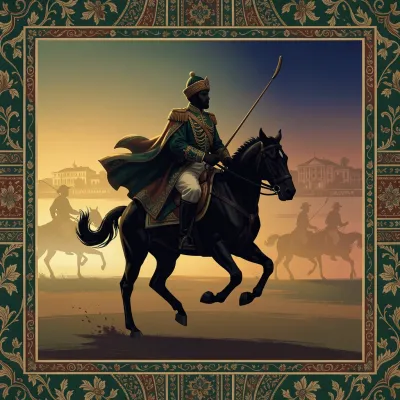
Polo, often called "the sport of kings," traces its origins to ancient equestrian games played by nomadic tribes in Central Asia around 600 B.C., where it served as military training before evolving into a royal pastime in Persia. The game, known as *chovgan*, became deeply embedded in Persian culture under nobility and military elites, spreading to regions like India and China, where adaptations such as *Sagol Kangjei* in Manipur and *jiju* in Tang Dynasty China emerged. British officers in India formalized polo in the 19th century, establishing standardized rules and introducing it to England, the U.S., and Argentina, where it gained international prominence through venues like the Calcutta Polo Club and the Hurlingham Club.
The sport’s "Golden Age" in the late 19th and early 20th centuries was marked by intense rivalries, such as the Westchester Cup between the U.S. and Britain, and the dominance of Argentine polo, fueled by exceptional breeding and players like the Harriott brothers. Innovations in equipment, such as specialized mallets and safety gear, and tactical refinements, including the "line of the ball" and ride-offs, shaped modern gameplay. Legendary figures like Tommy Hitchcock Jr. and Juan Carlos Harriott Jr. elevated the sport’s profile, while royal patronage, notably from the British Royal Family, sustained its elite image and global reach.
The 20th and 21st centuries saw polo modernize through technological advances in pony breeding and training, arena polo for accessibility, and a growing emphasis on inclusivity. Women’s polo emerged as a competitive force, alongside youth programs and diverse variations like snow and beach polo, broadening participation. Governing bodies like the Federation of International Polo (FIP) and national associations standardized rules and expanded global reach, particularly in emerging markets in Asia and the Middle East. Sponsorship, media exposure, and event management further commercialized the sport, balancing tradition with innovation while addressing challenges like accessibility and animal welfare.
Today, polo’s legacy endures as a blend of athleticism, cultural heritage, and lifestyle, symbolizing equestrian excellence and aristocratic tradition. Its impact spans historical empires to modern global communities, fostering cross-cultural connections and philanthropy. As the sport navigates modernization and sustainability, it remains a testament to the enduring partnership between humans and horses, ensuring its relevance as both a competitive pursuit and a timeless symbol of elegance and skill.
What You'll Find Inside:
- Explores the historical evolution of polo from ancient Persian and Central Asian equestrian games to its modern international form.
- Highlights the pivotal role of British officers in introducing and codifying polo in the Western world during the 19th century.
- Details the breeding, training, and unique characteristics of polo ponies, central to the sport's success.
- Examines the structure and rules of modern polo, including gameplay mechanics, positions, and international competitions.
- Discusses the sport's global expansion, inclusivity efforts, and future prospects, including women's polo and youth development programs.
Who's It For:
This book is ideal for history enthusiasts, equestrian sports fans, and sports historians seeking to understand the cultural and athletic legacy of polo. It also appeals to newcomers and players interested in the sport's rules, ponies, and global competitions. Readers curious about the intersection of tradition, innovation, and inclusivity in sports will find valuable insights into polo's evolving identity.
Table of Contents:
- Introduction
- Chapter 1 The Origins of Polo: Ancient Equestrian Games
- Chapter 2 Polo's Journey Through Persia: The Royal Sport
- Chapter 3 The Spread to the East: Polo in India and China
- Chapter 4 Polo's Arrival in the West: British Officers and the Game
- Chapter 5 Establishing the Rules: Early Codification of Polo
- Chapter 6 The Golden Age of Polo: Late 19th and Early 20th Century
- Chapter 7 Polo Pony: Breeding and Training
- Chapter 8 Equipment and Attire: From Mallet to Helmet
- Chapter 9 The Field of Play: Dimensions and Markings
- Chapter 10 Basic Rules and Gameplay: An Overview
- Chapter 11 Polo Positions and Player Roles
- Chapter 12 Famous Polo Clubs and Venues
- Chapter 13 Legendary Players of the Past
- Chapter 14 Polo and Royalty: A Continuing Tradition
- Chapter 15 The Impact of World Wars on Polo
- Chapter 16 Modern Polo: Adaptations and Innovations
- Chapter 17 International Polo Competitions and Tournaments
- Chapter 18 Polo's Governing Bodies and Associations
- Chapter 19 Women in Polo: Breaking Barriers
- Chapter 20 Youth Polo and Development Programs
- Chapter 21 Arena Polo and Other Variations
- Chapter 22 The Business of Polo: Sponsorship and Commercialization
- Chapter 23 Challenges and Controversies in Modern Polo
- Chapter 24 The Future of Polo: Growth and Global Reach
- Chapter 25 Polo's Enduring Legacy: Sport, Culture, and Lifestyle
Author:
Published By:
Date Published:
July 13, 2026
Type:
Nonfiction
Language:
English
Word Count:
35,937 words
Reading Time:
2 hours 31 minutes
Sample:
Order:
Order Polo (Paperback) on MixCache.com:
Buy NowPrint copy is made to order and ships worldwide. Includes the ebook free, ready to read instantly.
$5 account credit for all new MixCache.com accounts, usable toward any ebook purchase!*