
Browse by Category
Fiction
- Action & Adventure
- African American
- Anthologies
- Children's Fiction
- Classics
- Comics & Graphic Novels
- Coming of Age
- Contemporary
- Cultural & Regional
- Drama
- Erotica
- Fantasy
- General
- Historical Fiction
- Horror
- Humor & Satire
- Literary Fiction
- Mystery, Thriller & Suspense
- Poetry
- Religious & Inspirational
- Romance
- Science Fiction
- Short Stories
- War & Military
- Westerns
- Women's Fiction
- Young Adult
Non-Fiction
- Antiques & Collectibles
- Arts & Photography
- Biographies & Memoirs
- Business & Money
- Children's Non-Fiction
-
Computers & Technology
- Artificial Intelligence
- Computer Science
- Cybersecurity & Cryptography
- Data Science & Analytics
- Databases & Big Data
- Game Development & Design
- General
- Hardware & DIY
- Mobile App Development
- Networking & Cloud Computing
- Operating Systems
- Programming
- Robotics
- Software
- Software Engineering
- User Experience (UX) & Design
- Web Development & Design
- Cooking, Food & Wine
- Crafts, Hobbies & Home
- Education & Teaching
- Engineering
- General
- Health, Fitness & Dieting
-
History
- African History
- African History - North Africa
- African History - Sub-Saharan Africa
- American History
- American History - 20th Century
- American History - Civil War
- American History - Colonial Period
- Ancient History
- Asian History
- Asian History - China
- Asian History - India
- Asian History - Japan
- Asian History - Southeast Asia
- European History
- European History - Ancient Greece
- European History - Ancient Rome
- European History - Medieval
- European History - Modern
- European History - Renaissance
- General
- Middle Eastern History
- Military History
- Military History - Aviation
- Military History - Naval
- Social & Cultural History
- World History
- Humor & Entertainment
- Industrial Technology
- Language Learning
- Law
- LGBTQ+ Non-Fiction
- Literary Criticism
- Medical Books
- Parenting & Relationships
- Philosophy
- Politics & Social Sciences
- Reference
- Religion & Spirituality
-
Science & Math
- Agricultural Sciences
- Astronomy & Space Science
- Behavioral Sciences
- Biological Sciences
- Botany & Plant Science
- Chemistry
- Earth Sciences
- Engineering - Chemical
- Engineering - Civil
- Engineering - Electrical
- Engineering - Mechanical
- Environment
- General
- Geology
- Mathematics
- Nature & Ecology
- Oceanography
- Paleontology
- Physics
- Statistics
- Self-Help
- Sports & Outdoors
- Study Aids
- Sustainability & Green Living
- Textbooks
- Transportation
- Travel
- True Crime
- Urban Planning & Development
- Veterinary Medicine
- Writing & Publishing
Jump to Section
MixCache.com Total Access
Unlimited reading and audiobooks for every book published by MixCache.com.
Included titles carry the MTA badge.
Learn more →
Culinary Provinces: Food Histories Across China
MTA
Local tastes, trade routes, and foodways with one province per chapter
About this book:
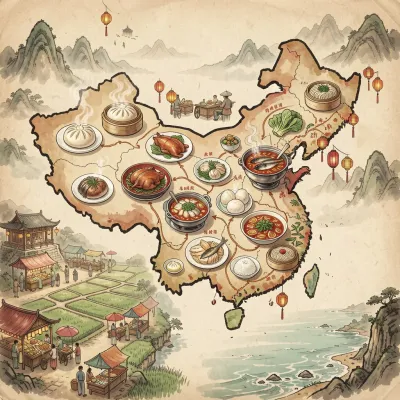
*Culinary Provinces: Food Histories Across China* is a sweeping gastronomic survey that traces the historical, geographical, and cultural forces shaping the diverse foodways of China’s twenty-five provinces and island territories. Organized with one province per chapter, the book uses local taste, trade routes, and migration patterns as lenses to understand how climate, crops, and communities have influenced the Chinese table across centuries. The work blends social history with practical kitchen insights, offering readers both narrative context and working recipes rooted in regional logic.
Across the provinces, the book emphasizes that Chinese cuisine is a commons rather than a fixed canon, constantly reshaped by caravan routes, canal barges, fishing junks, and ocean steamers that moved spices, grains, and cooking techniques across vast distances. From Beijing’s imperial kitchens and frontier influences to Shanghai’s treaty-port hybrids, and from the slow-braised arts of Anhui’s merchant culture to Fujian’s maritime broths and red-yeast ferments, these chapters reveal how trade and毎day creativity meet on individual plates. Inland, chapters follow grains such as wheat and millet along Hexi Corridor oases, while coastal routes carry Cantonese dim sum, Hainanese chicken rice, and Fujianese fish balls into global diets, documenting a complex web of diaspora and exchange.
Fermentation and preservation emerge as central themes, linking soy sauces, vinegars, cured meats, pickled greens, and rice wines to long winters, humid coastlines, and periods of scarcity. The book’s province-by-province structure highlights specific ecologies of taste: numbing peppercorn heat in Sichuan, gentle sweet-savory balances in Jiangsu, bright chili-lime-sour notes in Guizhou and Yunnan, hearty meat stews and breads in the northeast, and fresh seafood in provincial port cities. In each case, the text connects ingredients and cooking methods—red-cooking, steaming, smoking, claypot simmering—to the pragmatic needs and ritual traditions of their regions.
As both a cultural history and a practical guide, the book includes concise recipe ideas and technique primers to help cooks understand why a broth might be clarified or clouded, or how texture and seasoning express a province’s “grammar” of taste. It acknowledges that provinces are administrative conveniences within a finer-grained mosaic of rivers, dialects, and ethnic communities, following dishes across borders to show what changes and why. By weaving agrarian history, trade narratives, and market-day immediacy into a single volume, *Culinary Provinces* offers readers a comprehensive tour of how China’s landscapes are written in food, inviting scholars, chefs, and travelers alike to taste the history in every bite.
What You'll Find Inside:
- Each chapter explores a Chinese province's unique foodways, revealing how local geography, climate, and historical trade routes shaped regional cuisines from imperial kitchens to street snacks.
- Discover signature dishes and cooking techniques across China, from Lanzhou hand-pulled noodles and Sichuan mala heat to Fujian's brothy elegance and Guangdong's dim sum refinement.
- Learn how migration and cultural exchange created hybrid cuisines, with examples like Shanghainese treaty port fusion, Hainanese tropical adaptations, and Tibetan-Muslim influences in Qinghai.
- Practical kitchen insights include technique primers, ingredient substitutions, and concise recipes that explain the 'why' behind regional cooking methods.
- Connect food to broader history through crop histories, preservation methods, and the stories of merchants, minorities, and dynasties that shaped China's ever-evolving culinary landscape.
Who's It For:
This book is ideal for food historians, culinary students, and professional chefs seeking to understand the regional diversity and historical foundations of Chinese cuisine. It also serves cultural travelers and adventurous home cooks who want to explore authentic provincial dishes while learning their social and geographical context. Anyone interested in how food reflects migration, trade, and cultural adaptation will find valuable insights in this provincial journey through China's culinary landscape.
Table of Contents:
- Introduction
- Chapter 1 Beijing: Imperial Kitchens and Street Snacks on the Steppe Frontier
- Chapter 2 Shanghai: Treaty Port Hybrids and the Rise of Hu-Style Savory-Sweet
- Chapter 3 Anhui: Huizhou Merchants, Mountain Forage, and Slow-Braised Arts
- Chapter 4 Fujian: Maritime Migrations, Red Yeast Ferments, and Brothy Elegance
- Chapter 5 Gansu: Silk Road Grains, Hand-Pulled Noodles, and Oasis Spice
- Chapter 6 Guangdong: Cantonese Refinement, Dim Sum Guilds, and Diaspora Routes
- Chapter 7 Guizhou: Sour Soups, Chili Heat, and Miao-Village Ferments
- Chapter 8 Hainan: Tropical Coasts, Coconut Aromas, and Island Hainanese Lineages
- Chapter 9 Hebei: Wheat Heartland, Pantry of the Capital, and Hearty Bakes
- Chapter 10 Heilongjiang: Boreal Harvests, Russian Touches, and Preserved Bounty
- Chapter 11 Henan: Central Plains Rituals, Stews, and the Granary of Dynasties
- Chapter 12 Hubei: River-Lake Abundance, Wuchang Fish, and Breakfast Noodles
- Chapter 13 Hunan: Fire and Fragrance, Smoke-Cured Meats, and Chili Ecologies
- Chapter 14 Jiangsu: Scholar Gardens, Huaiyang Precision, and Silk-River Luster
- Chapter 15 Jiangxi: Claypot Comforts, Tea Trails, and Porcelain Portages
- Chapter 16 Jilin: Forest Game, Korean Borders, and Pickled Winters
- Chapter 17 Liaoning: Port Cities, Manchu Banners, and Seaside Brine
- Chapter 18 Qinghai: High Plateau Dairies, Barley, and Muslim Caravans
- Chapter 19 Shaanxi: Chang’an’s Legacy, Biangbiang Belts, and Caravan Bread
- Chapter 20 Shandong: Yellow Sea Fisheries, Allium Fields, and Knife Skills
- Chapter 21 Shanxi: Vinegar Valleys, Buckwheat Arts, and Temple Noodles
- Chapter 22 Sichuan: Peppercorn Buzz, Canal Rice, and Guild Halls of Taste
- Chapter 23 Yunnan: Tea-Horse Roads, Wild Herbs, and Minority Mosaics
- Chapter 24 Zhejiang: Mountain-Sea Harmony, Shaoxing Ferments, and Silk Markets
- Chapter 25 Taiwan: Island Crossings, Night Markets, and Hokkien-Hakka Weaves
Author:
Published By:
Date Published:
June 12, 2026
Type:
Nonfiction
Language:
English
Word Count:
43,632 words
Reading Time:
3 hours 3 minutes
Sample:
MixCache.com Total Access
Get unlimited access to this book + all books published by MixCache.com for $11.99/month
Subscribe to MTAOr purchase this book individually below
Order:
Buy the Culinary Provinces: Food Histories Across China ebook on MixCache.com:
Buy Now
Full ebook will be available immediately
- read online or download as a PDF file.
$5 account credit for all new MixCache.com accounts, usable toward any ebook purchase!*



Ratings & Reviews
Ask Questions About This Book
Have a question about the content? Ask our AI assistant!
Start by asking a question about "Culinary Provinces: Food Histories Across China"
Example: "Does this book mention William Shakespeare?"
Thinking...