
Browse by Category
Fiction
- Action & Adventure
- African American
- Anthologies
- Children's Fiction
- Classics
- Comics & Graphic Novels
- Coming of Age
- Contemporary
- Cultural & Regional
- Drama
- Erotica
- Fantasy
- General
- Historical Fiction
- Horror
- Humor & Satire
- Literary Fiction
- Mystery, Thriller & Suspense
- Poetry
- Religious & Inspirational
- Romance
- Science Fiction
- Short Stories
- War & Military
- Westerns
- Women's Fiction
- Young Adult
Non-Fiction
- Antiques & Collectibles
- Arts & Photography
- Biographies & Memoirs
- Business & Money
- Children's Non-Fiction
-
Computers & Technology
- Artificial Intelligence
- Computer Science
- Cybersecurity & Cryptography
- Data Science & Analytics
- Databases & Big Data
- Game Development & Design
- General
- Hardware & DIY
- Mobile App Development
- Networking & Cloud Computing
- Operating Systems
- Programming
- Robotics
- Software
- Software Engineering
- User Experience (UX) & Design
- Web Development & Design
- Cooking, Food & Wine
- Crafts, Hobbies & Home
- Education & Teaching
- Engineering
- General
- Health, Fitness & Dieting
-
History
- African History
- African History - North Africa
- African History - Sub-Saharan Africa
- American History
- American History - 20th Century
- American History - Civil War
- American History - Colonial Period
- Ancient History
- Asian History
- Asian History - China
- Asian History - India
- Asian History - Japan
- Asian History - Southeast Asia
- European History
- European History - Ancient Greece
- European History - Ancient Rome
- European History - Medieval
- European History - Modern
- European History - Renaissance
- General
- Middle Eastern History
- Military History
- Military History - Aviation
- Military History - Naval
- Social & Cultural History
- World History
- Humor & Entertainment
- Industrial Technology
- Language Learning
- Law
- LGBTQ+ Non-Fiction
- Literary Criticism
- Medical Books
- Parenting & Relationships
- Philosophy
- Politics & Social Sciences
- Reference
- Religion & Spirituality
-
Science & Math
- Agricultural Sciences
- Astronomy & Space Science
- Behavioral Sciences
- Biological Sciences
- Botany & Plant Science
- Chemistry
- Earth Sciences
- Engineering - Chemical
- Engineering - Civil
- Engineering - Electrical
- Engineering - Mechanical
- Environment
- General
- Geology
- Mathematics
- Nature & Ecology
- Oceanography
- Paleontology
- Physics
- Statistics
- Self-Help
- Sports & Outdoors
- Study Aids
- Sustainability & Green Living
- Textbooks
- Transportation
- Travel
- True Crime
- Urban Planning & Development
- Veterinary Medicine
- Writing & Publishing
Jump to Section
MixCache.com Total Access
Unlimited reading and audiobooks for every book published by MixCache.com.
Included titles carry the MTA badge.
Learn more →
Antibiotics
Inside the Epic Arms Race Between Medicine and Microbes
About this book:
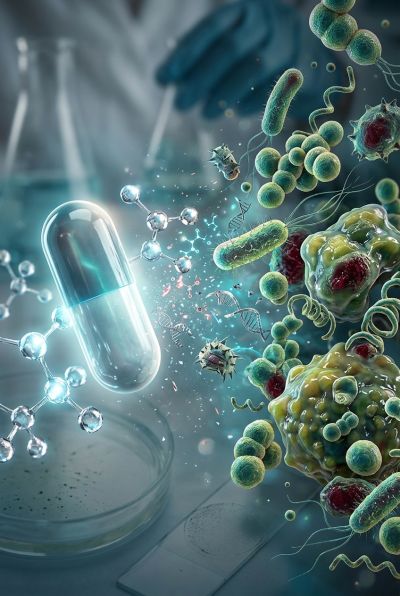
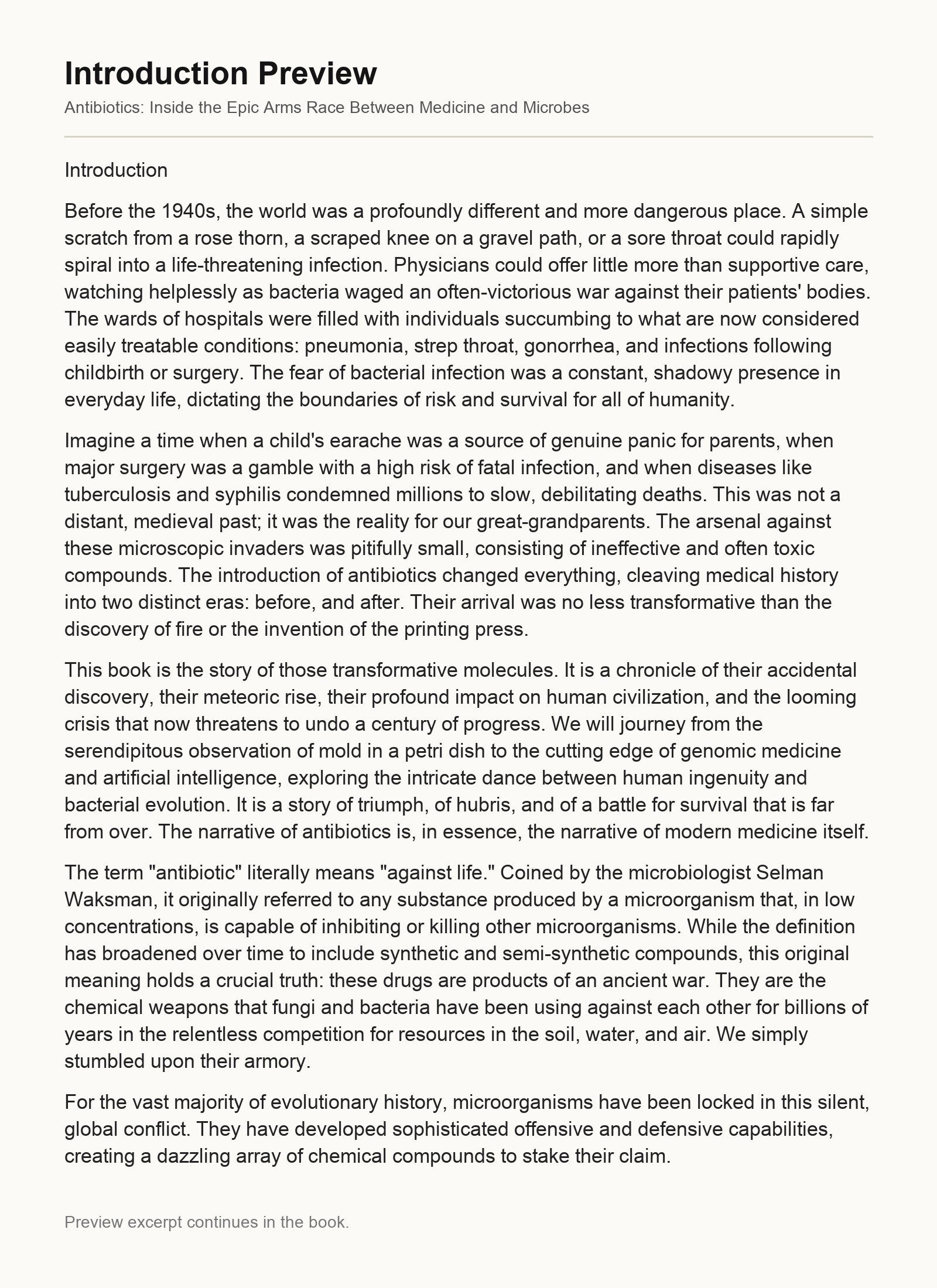
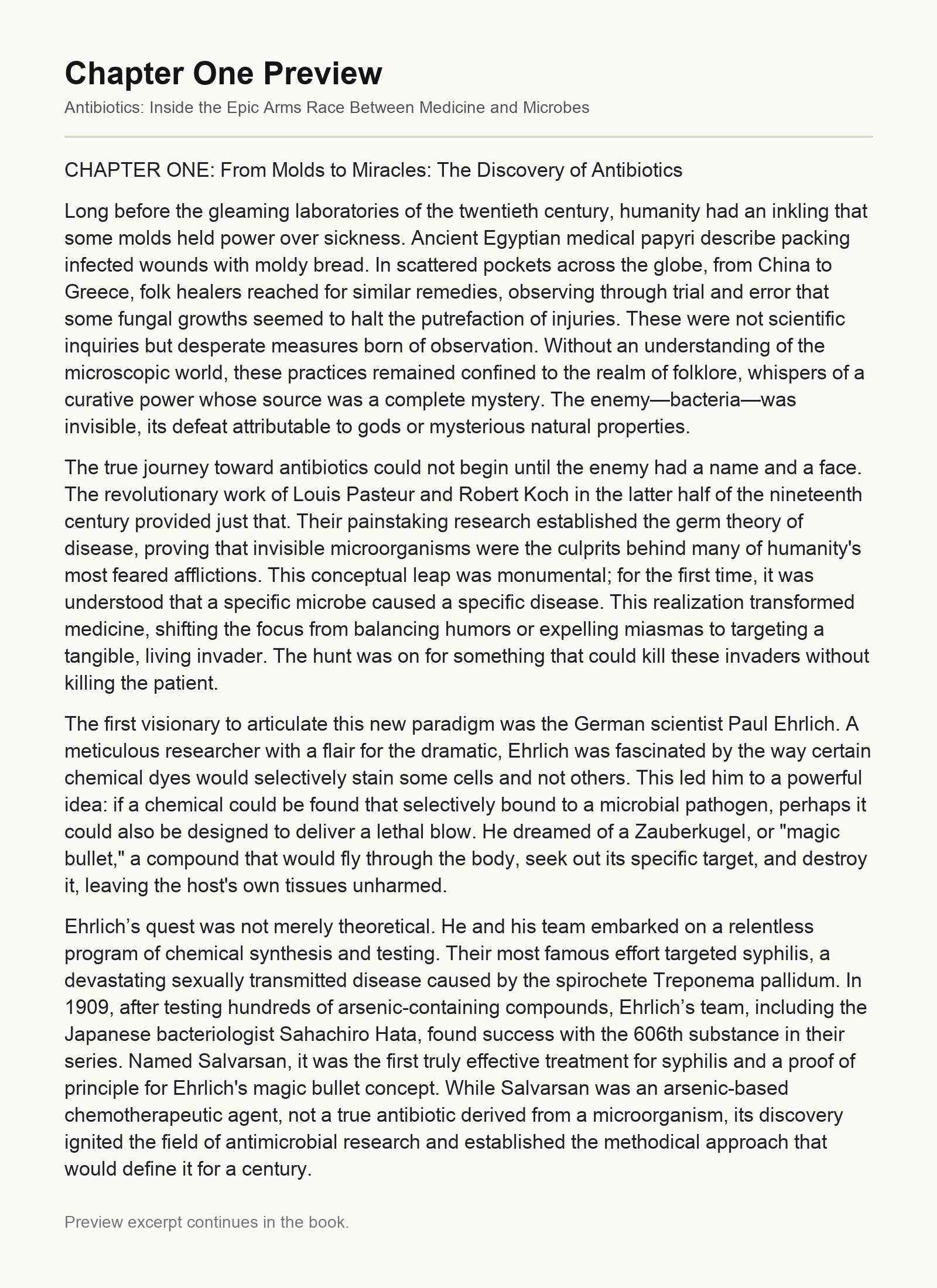
Antibiotics: Inside the Epic Arms Race Between Medicine and Microbes offers a sweeping journey from the serendipitous discovery of penicillin to the cutting‑edge strategies shaping the future of infection control. Readers will trace the historical milestones that transformed a simple mold observation into a medical revolution, explore the “Golden Age” of drug discovery, and understand how each major antibiotic class—from beta‑lamins to glycopeptides—targets bacterial machinery with remarkable precision. The book demystifies the molecular mechanisms behind cell‑wall inhibition, protein synthesis disruption, DNA interference, and metabolic sabotage, laying a solid foundation for appreciating both the power and the limits of these life‑saving medicines.
Beyond the science, the text delves into the practical art of using antibiotics safely and effectively. Chapters on pharmacokinetics and pharmacodynamics reveal how drug absorption, distribution, metabolism, and excretion interact with bacterial susceptibility to dictate optimal dosing, while clinical‑use sections guide readers through empiric versus directed therapy, de‑escalation, duration of therapy, and special considerations for pediatrics, pregnancy, and the elderly. Real‑world case studies illustrate stewardship in action, showing how prospective audits, formulary restrictions, rapid diagnostics, and antibiotic timeouts help preserve drug efficacy and reduce harm such as C. difficile infection and microbiome disruption.
A central theme is the rising tide of antimicrobial resistance, presented through the eyes of both bacterial evolution and human behavior. Readers will learn the genetic tricks bacteria employ—enzyme production, target modification, efflux pumps, and reduced permeability—as well as the societal drivers that amplify resistance: overprescription, agricultural use, environmental contamination, and global travel. The book paints a stark picture of the crisis, quantifying its human toll, economic burden, and disproportionate impact on low‑ and middle‑income nations, while explaining why the traditional antibiotic pipeline has stalled and what market failures impede innovation.
Looking ahead, the work explores a vibrant arsenal of emerging alternatives and technologies that could redefine the fight against superbugs. From phage therapy and endolysins to anti‑virulence strategies, immune‑boosting approaches, synthetic biology, and artificial‑intelligence‑driven drug design, each chapter highlights how scientists are rewriting the rules of antimicrobial warfare. Readers will also discover how genomics, metagenomics, and rapid diagnostics are enabling personalized therapy, how One Health principles connect human, animal, and environmental health, and how policy incentives such as subscription models and market entry rewards aim to revive antibiotic development.
By the end of the book, readers will have gained a comprehensive, interdisciplinary understanding of antibiotics—not merely as drugs, but as ecological agents whose stewardship is essential to the future of modern medicine. Whether a student, clinician, policymaker, or curious layperson, you will walk away equipped with the knowledge to appreciate past triumphs, confront present challenges, and contribute to sustainable solutions that keep these miracle drugs effective for generations to come.
What You'll Find Inside:
- The book traces the history of antibiotics from the accidental discovery of penicillin to the modern era of AI-driven drug design, highlighting key milestones and the evolving arsenal against bacteria.
- It explains the molecular mechanisms of antibiotic action, detailing how different drug classes target cell walls, protein synthesis, nucleic acids, and metabolic pathways to achieve selective toxicity.
- Core pharmacokinetic and pharmacodynamic principles are covered, showing how drug absorption, distribution, metabolism, and excretion interact with microbial susceptibility to optimize dosing and efficacy.
- The rise of antimicrobial resistance is examined as a global One Health crisis, driven by misuse in human medicine, agriculture, and environmental contamination, threatening modern medical advances.
- Future strategies are outlined, including rapid diagnostics, phage therapy, anti-virulence approaches, synthetic biology, and novel economic incentives to revive the antibiotic pipeline and preserve drug effectiveness.
Who's It For:
This book is intended for a broad audience including students of biology, medicine, or public health seeking a comprehensive foundation; healthcare professionals such as physicians, pharmacists, and nurses looking to update their knowledge on antibiotic use and stewardship; policymakers and researchers involved in combating antimicrobial resistance; and any curious reader interested in the scientific, historical, and societal impact of one of medicine's most transformative discoveries.
Table of Contents:
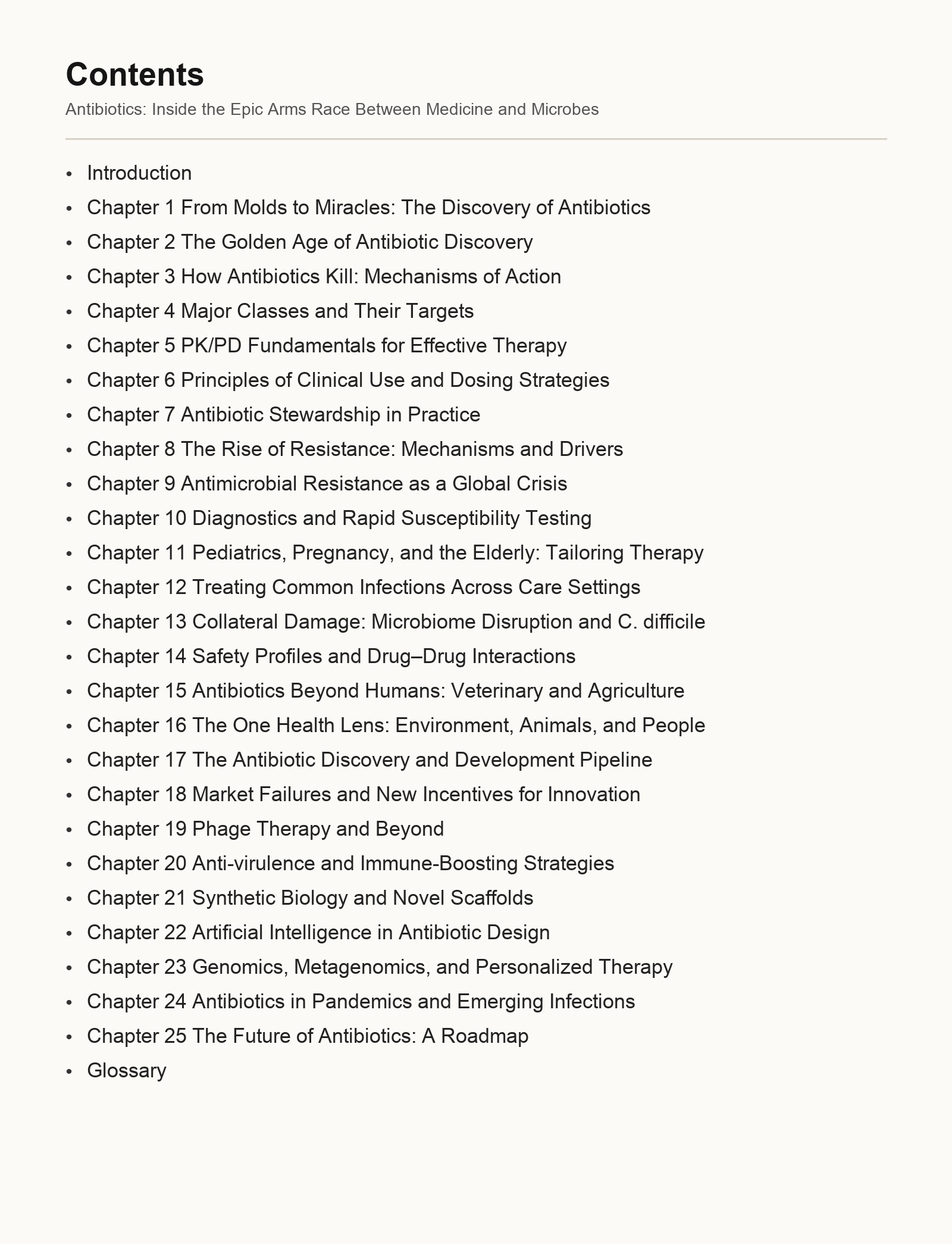
- Introduction
- Chapter 1 From Molds to Miracles: The Discovery of Antibiotics
- Chapter 2 The Golden Age of Antibiotic Discovery
- Chapter 3 How Antibiotics Kill: Mechanisms of Action
- Chapter 4 Major Classes and Their Targets
- Chapter 5 PK/PD Fundamentals for Effective Therapy
- Chapter 6 Principles of Clinical Use and Dosing Strategies
- Chapter 7 Antibiotic Stewardship in Practice
- Chapter 8 The Rise of Resistance: Mechanisms and Drivers
- Chapter 9 Antimicrobial Resistance as a Global Crisis
- Chapter 10 Diagnostics and Rapid Susceptibility Testing
- Chapter 11 Pediatrics, Pregnancy, and the Elderly: Tailoring Therapy
- Chapter 12 Treating Common Infections Across Care Settings
- Chapter 13 Collateral Damage: Microbiome Disruption and C. difficile
- Chapter 14 Safety Profiles and Drug–Drug Interactions
- Chapter 15 Antibiotics Beyond Humans: Veterinary and Agriculture
- Chapter 16 The One Health Lens: Environment, Animals, and People
- Chapter 17 The Antibiotic Discovery and Development Pipeline
- Chapter 18 Market Failures and New Incentives for Innovation
- Chapter 19 Phage Therapy and Beyond
- Chapter 20 Anti-virulence and Immune-Boosting Strategies
- Chapter 21 Synthetic Biology and Novel Scaffolds
- Chapter 22 Artificial Intelligence in Antibiotic Design
- Chapter 23 Genomics, Metagenomics, and Personalized Therapy
- Chapter 24 Antibiotics in Pandemics and Emerging Infections
- Chapter 25 The Future of Antibiotics: A Roadmap
- Glossary
Author:
Published By:
Date Published:
May 21, 2026
Type:
Nonfiction
Language:
English
Also Available In:
Word Count:
57,479 words
Reading Time:
4 hours 2 minutes
Sample:
Order:
Buy the Antibiotics ebook on MixCache.com:
Buy NowThe full ebook will be available immediately to read instantly on any device.
$5 account credit for all new MixCache.com accounts, usable toward any ebook purchase!*


Ratings & Reviews
Ask Questions About This Book
Have a question about the content? Ask our AI assistant!
Start by asking a question about "Antibiotics"
Example: "Does this book mention William Shakespeare?"
Thinking...