
Browse by Category
Fiction
- Action & Adventure
- African American
- Anthologies
- Children's Fiction
- Classics
- Comics & Graphic Novels
- Coming of Age
- Contemporary
- Cultural & Regional
- Drama
- Erotica
- Fantasy
- General
- Historical Fiction
- Horror
- Humor & Satire
- Literary Fiction
- Mystery, Thriller & Suspense
- Poetry
- Religious & Inspirational
- Romance
- Science Fiction
- Short Stories
- War & Military
- Westerns
- Women's Fiction
- Young Adult
Non-Fiction
- Antiques & Collectibles
- Arts & Photography
- Biographies & Memoirs
- Business & Money
- Children's Non-Fiction
-
Computers & Technology
- Artificial Intelligence
- Computer Science
- Cybersecurity & Cryptography
- Data Science & Analytics
- Databases & Big Data
- Game Development & Design
- General
- Hardware & DIY
- Mobile App Development
- Networking & Cloud Computing
- Operating Systems
- Programming
- Robotics
- Software
- Software Engineering
- User Experience (UX) & Design
- Web Development & Design
- Cooking, Food & Wine
- Crafts, Hobbies & Home
- Education & Teaching
- Engineering
- General
- Health, Fitness & Dieting
-
History
- African History
- African History - North Africa
- African History - Sub-Saharan Africa
- American History
- American History - 20th Century
- American History - Civil War
- American History - Colonial Period
- Ancient History
- Asian History
- Asian History - China
- Asian History - India
- Asian History - Japan
- Asian History - Southeast Asia
- European History
- European History - Ancient Greece
- European History - Ancient Rome
- European History - Medieval
- European History - Modern
- European History - Renaissance
- General
- Middle Eastern History
- Military History
- Military History - Aviation
- Military History - Naval
- Social & Cultural History
- World History
- Humor & Entertainment
- Industrial Technology
- Language Learning
- Law
- LGBTQ+ Non-Fiction
- Literary Criticism
- Medical Books
- Parenting & Relationships
- Philosophy
- Politics & Social Sciences
- Reference
- Religion & Spirituality
-
Science & Math
- Agricultural Sciences
- Astronomy & Space Science
- Behavioral Sciences
- Biological Sciences
- Botany & Plant Science
- Chemistry
- Earth Sciences
- Engineering - Chemical
- Engineering - Civil
- Engineering - Electrical
- Engineering - Mechanical
- Environment
- General
- Geology
- Mathematics
- Nature & Ecology
- Oceanography
- Paleontology
- Physics
- Statistics
- Self-Help
- Sports & Outdoors
- Study Aids
- Sustainability & Green Living
- Textbooks
- Transportation
- Travel
- True Crime
- Urban Planning & Development
- Veterinary Medicine
- Writing & Publishing
Jump to Section
MixCache.com Total Access
Unlimited reading and audiobooks for every book published by MixCache.com.
Included titles carry the MTA badge.
Learn more →A History of Oman
About this book:
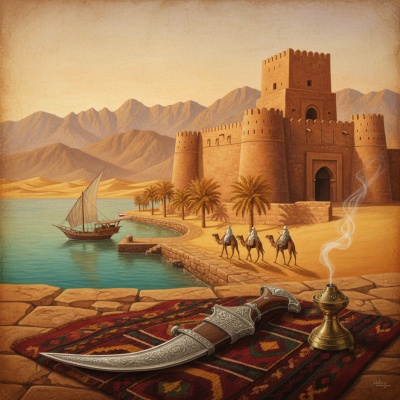
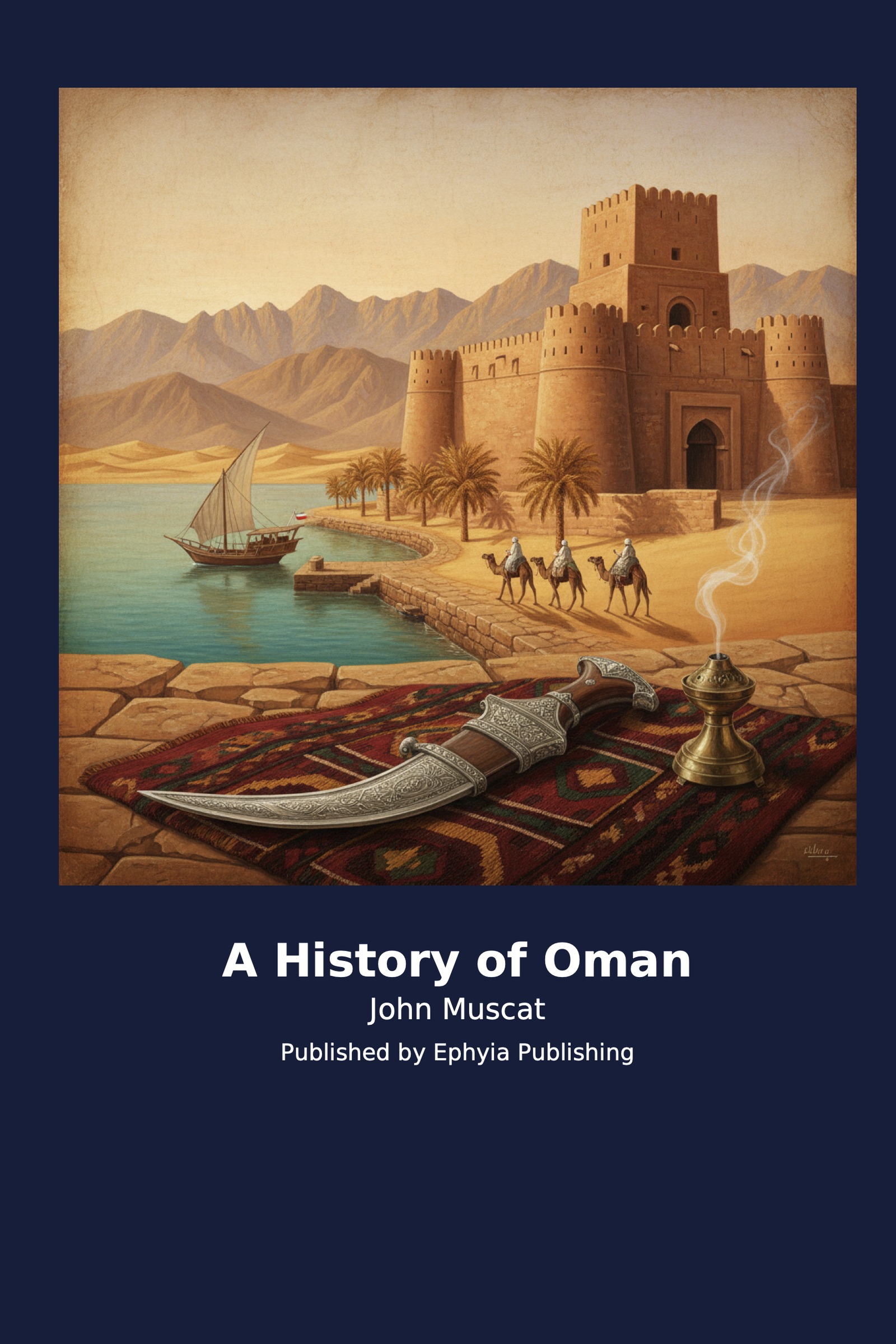
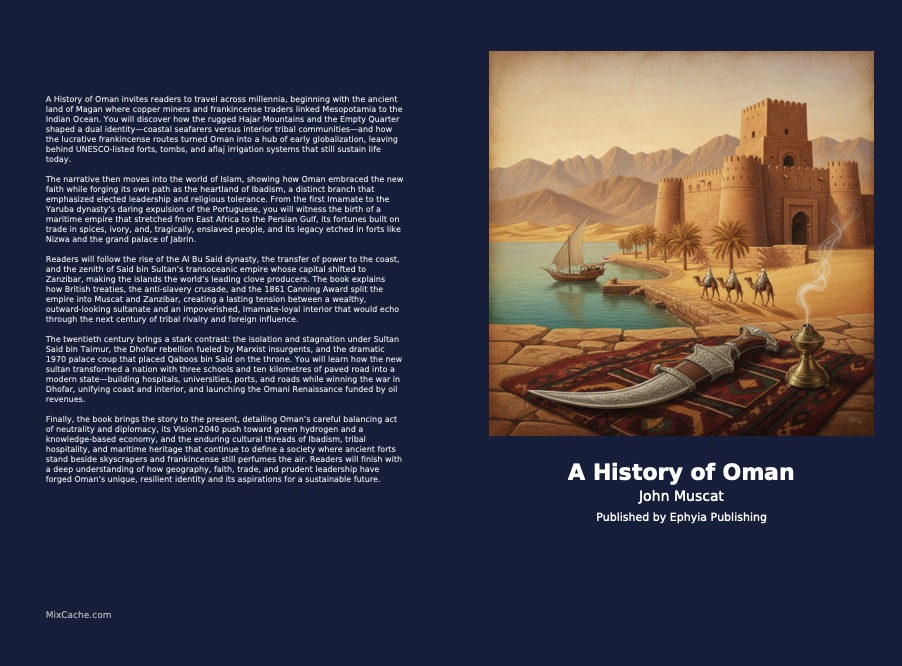
A History of Oman invites readers to travel across millennia, beginning with the ancient land of Magan where copper miners and frankincense traders linked Mesopotamia to the Indian Ocean. You will discover how the rugged Hajar Mountains and the Empty Quarter shaped a dual identity—coastal seafarers versus interior tribal communities—and how the lucrative frankincense routes turned Oman into a hub of early globalization, leaving behind UNESCO‑listed forts, tombs, and aflaj irrigation systems that still sustain life today.
The narrative then moves into the world of Islam, showing how Oman embraced the new faith while forging its own path as the heartland of Ibadism, a distinct branch that emphasized elected leadership and religious tolerance. From the first Imamate to the Yaruba dynasty’s daring expulsion of the Portuguese, you will witness the birth of a maritime empire that stretched from East Africa to the Persian Gulf, its fortunes built on trade in spices, ivory, and, tragically, enslaved people, and its legacy etched in forts like Nizwa and the grand palace of Jabrin.
Readers will follow the rise of the Al Bu Said dynasty, the transfer of power to the coast, and the zenith of Said bin Sultan’s transoceanic empire whose capital shifted to Zanzibar, making the islands the world’s leading clove producers. The book explains how British treaties, the anti‑slavery crusade, and the 1861 Canning Award split the empire into Muscat and Zanzibar, creating a lasting tension between a wealthy, outward‑looking sultanate and an impoverished, Imamate‑loyal interior that would echo through the next century of tribal rivalry and foreign influence.
The twentieth century brings a stark contrast: the isolation and stagnation under Sultan Said bin Taimur, the Dhofar rebellion fueled by Marxist insurgents, and the dramatic 1970 palace coup that placed Qaboos bin Said on the throne. You will learn how the new sultan transformed a nation with three schools and ten kilometres of paved road into a modern state—building hospitals, universities, ports, and roads while winning the war in Dhofar, unifying coast and interior, and launching the Omani Renaissance funded by oil revenues.
Finally, the book brings the story to the present, detailing Oman’s careful balancing act of neutrality and diplomacy, its Vision 2040 push toward green hydrogen and a knowledge‑based economy, and the enduring cultural threads of Ibadism, tribal hospitality, and maritime heritage that continue to define a society where ancient forts stand beside skyscrapers and frankincense still perfumes the air. Readers will finish with a deep understanding of how geography, faith, trade, and prudent leadership have forged Oman’s unique, resilient identity and its aspirations for a sustainable future.
What You'll Find Inside:
- Oman's geography as the defining force in its history, creating a tension between maritime engagement and tribal interiority that shaped its political and cultural development.
- The unique Ibadi Islamic tradition and Imamate system that established Oman's distinct religious identity and created a dual power structure between coastal rulers and interior religious leaders.
- Oman's maritime legacy from ancient copper and frankincense trade to the expulsion of Portuguese colonizers and the establishment of a vast Indian Ocean empire stretching to East Africa.
- The transformative modernization under Sultan Qaboos bin Said that unified the nation, built modern infrastructure, and leveraged oil wealth for rapid development while preserving cultural heritage.
- Oman's foreign policy of active neutrality and diplomacy, positioning the sultanate as a trusted mediator in regional conflicts through its unique relationships with global and regional powers.
Who's It For:
This book is ideal for students, researchers, and general readers interested in Middle Eastern history, Islamic studies, and the unique development of Gulf nations. It will particularly benefit those seeking to understand Oman's distinctive Ibadi tradition, its maritime heritage, and its transformation from a divided land to a modern state. The work offers valuable insights for anyone studying nation-building processes, the interplay between geography and history, or Oman's role as a diplomatic mediator in a turbulent region.
Table of Contents:
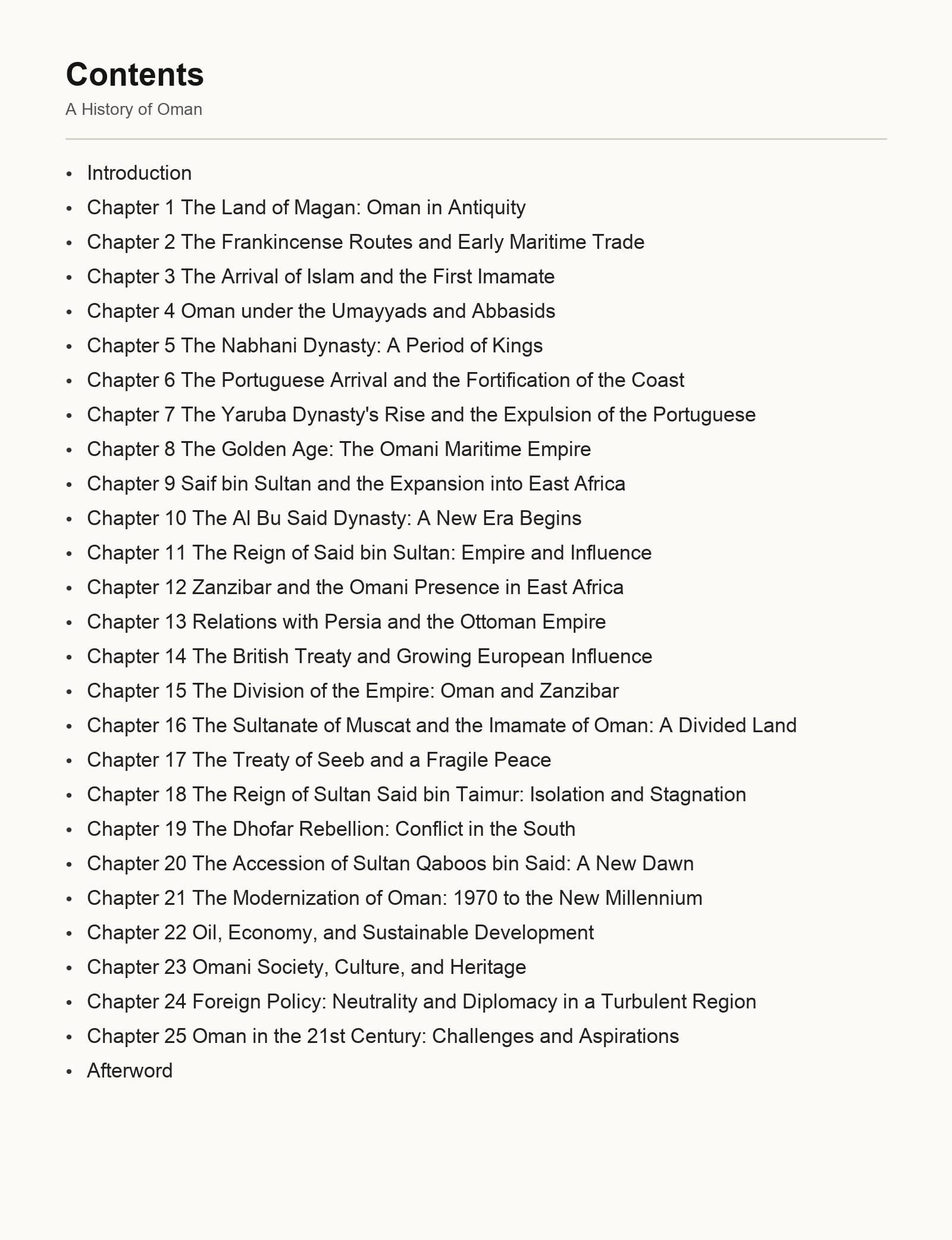
- Introduction
- Chapter 1 The Land of Magan: Oman in Antiquity
- Chapter 2 The Frankincense Routes and Early Maritime Trade
- Chapter 3 The Arrival of Islam and the First Imamate
- Chapter 4 Oman under the Umayyads and Abbasids
- Chapter 5 The Nabhani Dynasty: A Period of Kings
- Chapter 6 The Portuguese Arrival and the Fortification of the Coast
- Chapter 7 The Yaruba Dynasty's Rise and the Expulsion of the Portuguese
- Chapter 8 The Golden Age: The Omani Maritime Empire
- Chapter 9 Saif bin Sultan and the Expansion into East Africa
- Chapter 10 The Al Bu Said Dynasty: A New Era Begins
- Chapter 11 The Reign of Said bin Sultan: Empire and Influence.
- Chapter 12 Zanzibar and the Omani Presence in East Africa
- Chapter 13 Relations with Persia and the Ottoman Empire
- Chapter 14 The British Treaty and Growing European Influence
- Chapter 15 The Division of the Empire: Oman and Zanzibar
- Chapter 16 The Sultanate of Muscat and the Imamate of Oman: A Divided Land
- Chapter 17 The Treaty of Seeb and a Fragile Peace.
- Chapter 18 The Reign of Sultan Said bin Taimur: Isolation and Stagnation
- Chapter 19 The Dhofar Rebellion: Conflict in the South
- Chapter 20 The Accession of Sultan Qaboos bin Said: A New Dawn
- Chapter 21 The Modernization of Oman: 1970 to the New Millennium.
- Chapter 22 Oil, Economy, and Sustainable Development
- Chapter 23 Omani Society, Culture, and Heritage
- Chapter 24 Foreign Policy: Neutrality and Diplomacy in a Turbulent Region
- Chapter 25 Oman in the 21st Century: Challenges and Aspirations
- Afterword
Author:
Published By:
Date Published:
May 16, 2026
Type:
Nonfiction
Language:
English
Also Available In:
Word Count:
45,449 words
Reading Time:
3 hours 11 minutes
Sample:
Order:
Buy the A History of Oman ebook on MixCache.com:
Buy NowThe full ebook will be available immediately to read instantly on any device.
$5 account credit for all new MixCache.com accounts, usable toward any ebook purchase!*





Ratings & Reviews
Ask Questions About This Book
Have a question about the content? Ask our AI assistant!
Start by asking a question about "A History of Oman"
Example: "Does this book mention William Shakespeare?"
Thinking...