
Browse by Category
Fiction
- Action & Adventure
- African American
- Anthologies
- Children's Fiction
- Classics
- Comics & Graphic Novels
- Coming of Age
- Contemporary
- Cultural & Regional
- Drama
- Erotica
- Fantasy
- General
- Historical Fiction
- Horror
- Humor & Satire
- Literary Fiction
- Mystery, Thriller & Suspense
- Poetry
- Religious & Inspirational
- Romance
- Science Fiction
- Short Stories
- War & Military
- Westerns
- Women's Fiction
- Young Adult
Non-Fiction
- Antiques & Collectibles
- Arts & Photography
- Biographies & Memoirs
- Business & Money
- Children's Non-Fiction
-
Computers & Technology
- Artificial Intelligence
- Computer Science
- Cybersecurity & Cryptography
- Data Science & Analytics
- Databases & Big Data
- Game Development & Design
- General
- Hardware & DIY
- Mobile App Development
- Networking & Cloud Computing
- Operating Systems
- Programming
- Robotics
- Software
- Software Engineering
- User Experience (UX) & Design
- Web Development & Design
- Cooking, Food & Wine
- Crafts, Hobbies & Home
- Education & Teaching
- Engineering
- General
- Health, Fitness & Dieting
-
History
- African History
- African History - North Africa
- African History - Sub-Saharan Africa
- American History
- American History - 20th Century
- American History - Civil War
- American History - Colonial Period
- Ancient History
- Asian History
- Asian History - China
- Asian History - India
- Asian History - Japan
- Asian History - Southeast Asia
- European History
- European History - Ancient Greece
- European History - Ancient Rome
- European History - Medieval
- European History - Modern
- European History - Renaissance
- General
- Middle Eastern History
- Military History
- Military History - Aviation
- Military History - Naval
- Social & Cultural History
- World History
- Humor & Entertainment
- Industrial Technology
- Language Learning
- Law
- LGBTQ+ Non-Fiction
- Literary Criticism
- Medical Books
- Parenting & Relationships
- Philosophy
- Politics & Social Sciences
- Reference
- Religion & Spirituality
-
Science & Math
- Agricultural Sciences
- Astronomy & Space Science
- Behavioral Sciences
- Biological Sciences
- Botany & Plant Science
- Chemistry
- Earth Sciences
- Engineering - Chemical
- Engineering - Civil
- Engineering - Electrical
- Engineering - Mechanical
- Environment
- General
- Geology
- Mathematics
- Nature & Ecology
- Oceanography
- Paleontology
- Physics
- Statistics
- Self-Help
- Sports & Outdoors
- Study Aids
- Sustainability & Green Living
- Textbooks
- Transportation
- Travel
- True Crime
- Urban Planning & Development
- Veterinary Medicine
- Writing & Publishing
Jump to Section
MixCache.com Total Access
Unlimited reading and audiobooks for every book published by MixCache.com.
Included titles carry the MTA badge.
Learn more →
The Historical Jesus and the Early Church
MTA
Cutting-Edge Scholarship and Archaeological Evidence from the First Century
About this book:
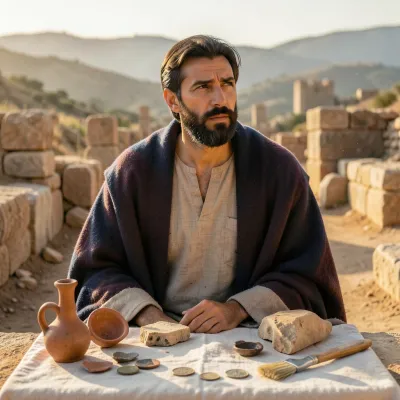
This book presents a rigorous historical investigation of Jesus of Nazareth and the origins of the early Christian movement, employing interdisciplinary methods that integrate critical analysis of literary sources with archaeological evidence. It argues that responsible historical inquiry requires situating Jesus firmly within the complex social, religious, and political landscape of first-century Roman-occupied Judea and Galilee—a world marked by Temple-centered Judaism, diverse interpretive traditions (Pharisaic, Sadducean, apocalyptic), economic stratification under Herodian client rule and direct Roman administration, and pervasive concerns about ritual purity. The authors emphasize that the Gospels, Paul's letters, and other early Christian texts are theological narratives shaped by community needs and memory, not objective biographies, and must be evaluated using historiographical criteria such as multiple attestation, contextual credibility, and embarrassment to distinguish probable historical elements from later elaboration.
Drawing on archaeological findings from sites like Capernaum, Sepphoris, Magdala, and Jerusalem, the book reconstructs the material world Jesus inhabited: modest agricultural villages contrasted with Hellenistic urban centers, thriving fishing industries on the Sea of Galilee, widespread concerns about ritual purity evidenced by stone vessels and mikva'ot, and the Temple in Jerusalem as the dominant economic and religious institution. It portrays Jesus as a Jewish teacher and healer whose mission began in the wake of John the Baptist's arrest, centered on proclaiming the imminent Kingdom of God through vivid parables and provocative aphorisms that challenged social hierarchies and religious hypocrisy. His actions—including table fellowship with marginalized figures, healings and exorcisms interpreted as signs of divine authority, and the symbolic Temple cleansing—provoked conflict with religious authorities concerned about threats to social order and their own authority, ultimately leading to his handover to the Roman prefect Pontius Pilate on charges of sedition ("King of the Jews") during the politically volatile Passover festival.
Following Jesus' crucifixion—a Roman execution reserved for rebels and provincials—the book traces the transformation of his traumatized followers into the early Christian movement through their purported encounters with the risen Christ, which Paul attests to as early as the 50s CE. It details the emergence of the Jerusalem church, initially maintaining ties to Temple worship while developing distinctive practices like house churches centered on shared meals commemorating the Last Supper, and examines Paul's pivotal role in expanding the movement beyond Jewish boundaries through his Gentile mission and theological justification by faith apart from works of the Law. The text highlights the diversity within early Christianity, noting competing traditions and leadership structures (apostles, elders, prophets), periods of persecution from both Jewish and Roman authorities, and the gradual institutionalization of communities across the Mediterranean world, all against a backdrop illuminated by archaeological evidence such as the Pilate Stone, ossuaries, inscriptions, and coins that corroborate the historical setting of the narratives. Ultimately, the book concludes that while certain elements—Jesus' existence, baptism by John, proclamation of the Kingdom, healings, conflict with authorities, crucifixion under Pilate, and the post-resurrection experiences of his followers—can be affirmed with reasonable historical confidence, many specific details remain subject to interpretation, and this grounded historical understanding enriches rather than diminishes the significance of Jesus and the early faith for contemporary reflection.
What You'll Find Inside:
- The book combines historical inquiry with archaeological evidence to reconstruct Jesus within his first-century Jewish and Roman context, using material culture to illuminate daily life and assess textual plausibility.
- It examines Jesus' core teachings about the Kingdom of God through parables and aphorisms, showing how they challenged social norms and resonated with Galilean peasants' experiences under imperial rule.
- The text applies historical criteria like multiple attestation, embarrassment, and coherence to evaluate Gospel traditions, distinguishing between earlier memories and later theological developments.
- It traces the early Christian movement from Jewish house churches in Jerusalem to Paul's Gentile mission, revealing how communities adapted Jesus' teachings across diverse social and cultural settings.
- The work clarifies what can be known historically about Jesus and the early church while explaining why this distinction matters for faith and understanding today.
Who's It For:
This book is designed for readers seeking a scholarly yet accessible understanding of the historical Jesus and early Christianity that respects both historical inquiry and faith perspectives. It will particularly benefit those troubled by simplistic or polemical treatments of Christian origins who want a nuanced, evidence-based exploration of Jesus within his first-century Jewish and Roman context. Students of religious studies, history, or archaeology, as well as thoughtful readers interested in how historical methods can illuminate religious traditions without reducing faith to mere facts, will find value in its interdisciplinary approach and balanced treatment of contested terrain.
Table of Contents:
- Introduction
- Chapter 1 Setting the Stage: Judea and Galilee under Rome
- Chapter 2 Sources and Methods: How Historians Study Jesus
- Chapter 3 The Archaeology of Galilee: Villages, Trades, and Daily Life
- Chapter 4 Synagogues, Scriptures, and Oral Traditions
- Chapter 5 John the Baptist and the Beginnings of Jesus’ Mission
- Chapter 6 The Kingdom of God: Words, Parables, and Aphorisms
- Chapter 7 Healers and Exorcists in the Ancient Mediterranean
- Chapter 8 Disciples, Women, and the Social Makeup of the Movement
- Chapter 9 Pilgrimage, Purity, and the Jerusalem Temple
- Chapter 10 Conflict and Controversy: Law, Sabbath, and Authority
- Chapter 11 From Nazareth to Capernaum: Geography of a Ministry
- Chapter 12 Miracles and Memory: Sorting History from Legend
- Chapter 13 The Final Week: Passover, Politics, and Arrest
- Chapter 14 Trial and Crucifixion in Roman Perspective
- Chapter 15 Burial, Tombs, and the Emergence of Resurrection Faith
- Chapter 16 From Trauma to Testimony: The Birth of the Jerusalem Church
- Chapter 17 House Churches and Shared Meals: Rituals of Belonging
- Chapter 18 Paul of Tarsus: Letters, Communities, and the Gentile Mission
- Chapter 19 The Jesus Traditions Behind the Gospels
- Chapter 20 Composing Ancient Biographies: Mark, Matthew, Luke, and John
- Chapter 21 Beyond the Canon: Early Gospels and Diverse Voices
- Chapter 22 Persecution, Patronage, and the Politics of Empire
- Chapter 23 Leadership and Organization: Apostles, Elders, and Prophets
- Chapter 24 Archaeological Windows: Inscriptions, Ossuaries, and Coins
- Chapter 25 What We Can Know—and Why It Matters Today
Author:
Published By:
Date Published:
May 16, 2026
Type:
Nonfiction
Language:
English
Word Count:
56,520 words
Reading Time:
3 hours 57 minutes
Sample:
MixCache.com Total Access
Get unlimited access to this book + all books published by MixCache.com for $11.99/month
Subscribe to MTAOr purchase this book individually below
Order:
Buy the The Historical Jesus and the Early Church ebook on MixCache.com:
Buy Now
Full ebook will be available immediately
- read online or download as a PDF file.
$5 account credit for all new MixCache.com accounts, usable toward any ebook purchase!*






Ratings & Reviews
Ask Questions About This Book
Have a question about the content? Ask our AI assistant!
Start by asking a question about "The Historical Jesus and the Early Church"
Example: "Does this book mention William Shakespeare?"
Thinking...