Browse by Category
Fiction
- Action & Adventure
- African American
- Anthologies
- Children's Fiction
- Classics
- Comics & Graphic Novels
- Coming of Age
- Contemporary
- Cultural & Regional
- Drama
- Erotica
- Fantasy
- General
- Historical Fiction
- Horror
- Humor & Satire
- Literary Fiction
- Mystery, Thriller & Suspense
- Poetry
- Religious & Inspirational
- Romance
- Science Fiction
- Short Stories
- War & Military
- Westerns
- Women's Fiction
- Young Adult
Non-Fiction
- Antiques & Collectibles
- Arts & Photography
- Biographies & Memoirs
- Business & Money
- Children's Non-Fiction
-
Computers & Technology
- Artificial Intelligence
- Computer Science
- Cybersecurity & Cryptography
- Data Science & Analytics
- Databases & Big Data
- Game Development & Design
- General
- Hardware & DIY
- Mobile App Development
- Networking & Cloud Computing
- Operating Systems
- Programming
- Robotics
- Software
- Software Engineering
- User Experience (UX) & Design
- Web Development & Design
- Cooking, Food & Wine
- Crafts, Hobbies & Home
- Education & Teaching
- Engineering
- General
- Health, Fitness & Dieting
-
History
- African History
- African History - North Africa
- African History - Sub-Saharan Africa
- American History
- American History - 20th Century
- American History - Civil War
- American History - Colonial Period
- Ancient History
- Asian History
- Asian History - China
- Asian History - India
- Asian History - Japan
- Asian History - Southeast Asia
- European History
- European History - Ancient Greece
- European History - Ancient Rome
- European History - Medieval
- European History - Modern
- European History - Renaissance
- General
- Middle Eastern History
- Military History
- Military History - Aviation
- Military History - Naval
- Social & Cultural History
- World History
- Humor & Entertainment
- Industrial Technology
- Language Learning
- Law
- LGBTQ+ Non-Fiction
- Literary Criticism
- Medical Books
- Parenting & Relationships
- Philosophy
- Politics & Social Sciences
- Reference
- Religion & Spirituality
-
Science & Math
- Agricultural Sciences
- Astronomy & Space Science
- Behavioral Sciences
- Biological Sciences
- Botany & Plant Science
- Chemistry
- Earth Sciences
- Engineering - Chemical
- Engineering - Civil
- Engineering - Electrical
- Engineering - Mechanical
- Environment
- General
- Geology
- Mathematics
- Nature & Ecology
- Oceanography
- Paleontology
- Physics
- Statistics
- Self-Help
- Sports & Outdoors
- Study Aids
- Sustainability & Green Living
- Textbooks
- Transportation
- Travel
- True Crime
- Urban Planning & Development
- Veterinary Medicine
- Writing & Publishing
Jump to Section

Want unlimited access to all books published by MixCache.com (plus their audiobooks)? Try MixCache.com Total Access. Look for the MTA badge on book covers to identify included titles.
Access to infinite ebooks: Don't see the book you want? Suggest it and we'll create it (free!) for you from scratch with our powerful AI book writer. Then read it with MTA - besides profiting from any sales it makes!
Reading Germany: Literature, Nationhood, and Cultural Memory
MTA
From Goethe to contemporary Turkish-German novels—how literature shaped German identity
About this book:

"Reading Germany" provides a comprehensive literary history of Germany, demonstrating how literature has profoundly shaped German identity, cultural memory, and public debate from the Enlightenment to the present day. The book argues that German literature is not merely a reflection of historical events but an active force, functioning as a "civic technology" that helps communities remember, forget, and imagine political futures. It traces key movements and moments, from Goethe's cosmopolitanism and Romanticism's invention of tradition to the seismic ruptures of 1848, the Kaiserreich's colonial gaze, and the fin-de-siècle anxieties that preceded World War I.
The narrative continues through the 20th century, exploring how Expressionism grappled with the shock of war, Weimar culture experimented with montage and mass media, and National Socialism perverted literature for propaganda. Crucially, the book examines the difficult choices of writers during the Nazi era, differentiating between exile literature—a diasporic culture of critique—and "inner emigration," a compromised strategy of subtle subversion within Germany. The post-war period is meticulously covered, from "Trümmerliteratur" grappling with rubble and moral repair to the distinct literary canons of West German pluralism and GDR Socialist Realism, culminating in the cultural upheavals of 1968 and the painful ethics of Holocaust remembrance.
The final sections bring the story to contemporary Germany, focusing on the transformative impact of reunification ("Die Wende"), the complexities of "Ostalgie," and the emergence of "migrant pages," particularly Turkish-German literature. It analyzes how these new voices have reshaped the German language through hybridity and satire, creating new forms of belonging and challenging traditional notions of national identity. The book concludes by exploring the influence of digital technology on literature, from archives and algorithms to new reading publics, and reflects on literature's vital role in countering contemporary populism, defending pluralism, and imagining a truly cosmopolitan future for Germany and Europe.
Throughout its journey, "Reading Germany" foregrounds marginalized voices alongside canonical figures, demonstrating that debates over memory, belonging, and nationhood are inseparable from struggles over access, recognition, and artistic form. It positions literature as a dynamic social practice embedded in institutions, constantly circulating and evolving, ultimately revealing Germany as a vibrant, contradictory, and endlessly fascinating transnational space where the past is always present, and the future is always being written through the power of words.
What You'll Find Inside:
- Literature functions as a civic technology that actively shapes German national identity, memory, and belonging rather than merely reflecting historical change.
- The book traces how German literature evolved from Enlightenment cosmopolitanism (Goethe) through Romantic nationalism to confront historical trauma like the Holocaust and WWII.
- It examines how marginalized voices (Jewish, Roma, Turkish-German writers) have challenged and expanded the German literary canon.
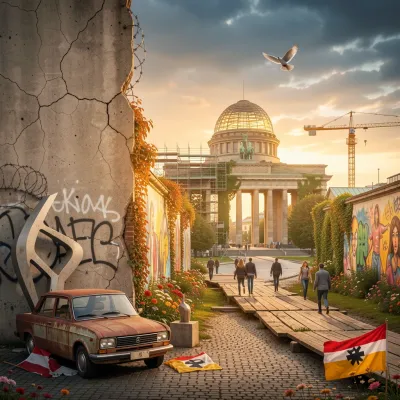
- The work analyzes literature's role in processing unification, Ostalgie, and the reconstruction of memory after the fall of the Berlin Wall.
- It explores contemporary challenges including digital transformation, populism, and new forms of cosmopolitanism in German letters.
Who's It For:
This book is designed for students and scholars of literature and cultural history who seek to understand how literary texts actively shape national identity and collective memory. It will also benefit general readers interested in German history, the politics of memory, and how literature functions as a form of cultural technology. The work's attention to power dynamics and pluralistic voices makes it particularly valuable for those studying multiculturalism, migration, and contemporary German society.
Author:
Published By:
Date Published:
January 21, 2026
Type:
Nonfiction
Language:
English
Word Count:
82,317 words
Reading Time:
5 hours 46 minutes
Sample:
Order:
Order Reading Germany: Literature, Nationhood, and Cultural Memory (Hardcover) on MixCache.com:
Buy NowPrint copy is made to order and ships worldwide. Includes the ebook free, ready to read instantly.
$5 account credit for all new MixCache.com accounts, usable toward any ebook purchase!*