
Browse by Category
Fiction
- Action & Adventure
- African American
- Anthologies
- Children's Fiction
- Classics
- Comics & Graphic Novels
- Coming of Age
- Contemporary
- Cultural & Regional
- Drama
- Erotica
- Fantasy
- General
- Historical Fiction
- Horror
- Humor & Satire
- Literary Fiction
- Mystery, Thriller & Suspense
- Poetry
- Religious & Inspirational
- Romance
- Science Fiction
- Short Stories
- War & Military
- Westerns
- Women's Fiction
- Young Adult
Non-Fiction
- Antiques & Collectibles
- Arts & Photography
- Biographies & Memoirs
- Business & Money
- Children's Non-Fiction
-
Computers & Technology
- Artificial Intelligence
- Computer Science
- Cybersecurity & Cryptography
- Data Science & Analytics
- Databases & Big Data
- Game Development & Design
- General
- Hardware & DIY
- Mobile App Development
- Networking & Cloud Computing
- Operating Systems
- Programming
- Robotics
- Software
- Software Engineering
- User Experience (UX) & Design
- Web Development & Design
- Cooking, Food & Wine
- Crafts, Hobbies & Home
- Education & Teaching
- Engineering
- General
- Health, Fitness & Dieting
-
History
- African History
- African History - North Africa
- African History - Sub-Saharan Africa
- American History
- American History - 20th Century
- American History - Civil War
- American History - Colonial Period
- Ancient History
- Asian History
- Asian History - China
- Asian History - India
- Asian History - Japan
- Asian History - Southeast Asia
- European History
- European History - Ancient Greece
- European History - Ancient Rome
- European History - Medieval
- European History - Modern
- European History - Renaissance
- General
- Middle Eastern History
- Military History
- Military History - Aviation
- Military History - Naval
- Social & Cultural History
- World History
- Humor & Entertainment
- Industrial Technology
- Language Learning
- Law
- LGBTQ+ Non-Fiction
- Literary Criticism
- Medical Books
- Parenting & Relationships
- Philosophy
- Politics & Social Sciences
- Reference
- Religion & Spirituality
-
Science & Math
- Agricultural Sciences
- Astronomy & Space Science
- Behavioral Sciences
- Biological Sciences
- Botany & Plant Science
- Chemistry
- Earth Sciences
- Engineering - Chemical
- Engineering - Civil
- Engineering - Electrical
- Engineering - Mechanical
- Environment
- General
- Geology
- Mathematics
- Nature & Ecology
- Oceanography
- Paleontology
- Physics
- Statistics
- Self-Help
- Sports & Outdoors
- Study Aids
- Sustainability & Green Living
- Textbooks
- Transportation
- Travel
- True Crime
- Urban Planning & Development
- Veterinary Medicine
- Writing & Publishing
Jump to Section

Want unlimited access to all books published by MixCache.com (plus their audiobooks)? Try MixCache.com Total Access. Look for the MTA badge on book covers to identify included titles.
Access to infinite ebooks: Don't see the book you want? Suggest it and we'll create it (free!) for you from scratch with our powerful AI book writer. Then read it with MTA - besides profiting from any sales it makes!
Two Cities, One River: The Making of Budapest, Buda, and Pest
MTA
Urban integration, thermal culture, and imperial modernity on the Danube
About this book:
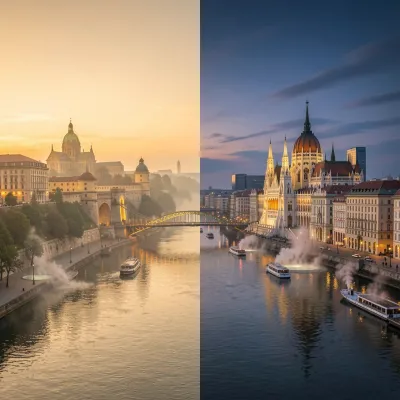
Two Cities, One River chronicles the multifaceted development of Budapest, exploring how its unique geography—defined by the Danube, Buda’s thermal hills, and Pest’s flat plain—shaped the evolution of two distinct settlements into a unified capital. The book traces their divergent medieval trajectories, Buda’s fortified royal heritage and Pest’s mercantile growth, through Habsburg modernization efforts and the pivotal 1838 flood, which catalyzed centralized planning. The narrative emphasizes key infrastructure projects like the Chain Bridge and the regulation of the Danube, which physically and symbolically bound the cities, enabling their official merger in 1873. This process of urban integration, driven by imperial ambitions and local civic resolve, transformed Budapest into a modern metropolis, with its thermal baths becoming a defining element of civic culture and identity, blending natural resources with medical, social, and commercial practices.
The book delves into the social dynamics that underpinned this transformation, examining migration, minority communities (including Jewish, German, and Slovak populations), and shifts in gender roles, particularly in public spaces like baths and boulevards. It highlights how urban planning—marked by grand boulevards, public transportation networks, and electrified infrastructure—facilitated economic growth while reproducing social stratifications. The thermal culture is portrayed as central, evolving from Ottoman legacies into regulated public health assets and later into global wellness destinations, illustrating how natural resources can be dynamically integrated into urban life. The narrative also underscores the political and cultural tensions inherent in nation-building, showing how Budapest navigated between imperial modernity and Hungarian national aspirations.
The 20th centuries brought upheaval, with war, occupation, and socialist planning reshaping the urban landscape. The socialist era introduced mass housing and centralized infrastructure, while post-1989 privatization spurred heritage restoration and tourism-driven revitalization, particularly of the thermal baths. The book situates Budapest within broader European contexts, comparing its unification, imperial influences, and post-war reconstruction to cities like Vienna, Paris, and Warsaw. It argues that Budapest’s modernity emerged not solely from top-down imperial designs but through the co-production of natural conditions, municipal ingenuity, and diverse communities, making it a unique case study in urban resilience and adaptation. Ultimately, the work demonstrates how Budapest’s identity—rooted in its riverine geography, thermal culture, and layered histories—continues to shape its global standing as a city where historical grandeur meets contemporary dynamism.
What You'll Find Inside:
- The transformative union of Buda and Pest into a unified Budapest, exploring the political, social, and infrastructural challenges of merging two distinct cities.
- The unique role of thermal baths and culture in shaping Budapest's identity, from Ottoman legacies to modern wellness tourism.
- The development of key urban infrastructure including the Chain Bridge, trams, and the continent's first underground railway, highlighting Budapest's innovative engineering.
- The profound impact of 20th-century upheavals—world wars, revolution, and socialist urban planning—on Budapest's urban fabric and social dynamics.
- Comparative analysis of Budapest's development within broader European urban contexts, examining themes of imperial influence, minority integration, and post-communist transformation.
Who's It For:
This book is essential reading for scholars and students of urban history, European studies, and architectural history, particularly those interested in Central European development. It will also appeal to historians researching imperial modernity, the social dynamics of minority communities, and the environmental history of urban planning. General readers fascinated by Budapest's unique character, its thermal culture, or its journey from two cities into a global capital will find this work both informative and compelling.
Author:
Published By:
Date Published:
June 11, 2026
Type:
Nonfiction
Language:
English
Word Count:
55,811 words
Reading Time:
3 hours 55 minutes
Sample:
MixCache.com Total Access
Get unlimited access to this book + all books published by MixCache.com for $11.99/month
Subscribe to MTAOr purchase this book individually below
Order:
Buy the Two Cities, One River: The Making of Budapest, Buda, and Pest ebook on MixCache.com:
Buy Now
Full ebook will be available immediately
- read online or download as a PDF file.
$5 account credit for all new MixCache.com accounts, usable toward any ebook purchase!*




Ratings & Reviews
Ask Questions About This Book
Have a question about the content? Ask our AI assistant!
Start by asking a question about "Two Cities, One River: The Making of Budapest, Buda, and Pest"
Example: "Does this book mention William Shakespeare?"
Thinking...