Browse by Category
Fiction
- Action & Adventure
- African American
- Anthologies
- Children's Fiction
- Classics
- Comics & Graphic Novels
- Coming of Age
- Contemporary
- Cultural & Regional
- Drama
- Erotica
- Fantasy
- General
- Historical Fiction
- Horror
- Humor & Satire
- Literary Fiction
- Mystery, Thriller & Suspense
- Poetry
- Religious & Inspirational
- Romance
- Science Fiction
- Short Stories
- War & Military
- Westerns
- Women's Fiction
- Young Adult
Non-Fiction
- Antiques & Collectibles
- Arts & Photography
- Biographies & Memoirs
- Business & Money
- Children's Non-Fiction
-
Computers & Technology
- Artificial Intelligence
- Computer Science
- Cybersecurity & Cryptography
- Data Science & Analytics
- Databases & Big Data
- Game Development & Design
- General
- Hardware & DIY
- Mobile App Development
- Networking & Cloud Computing
- Operating Systems
- Programming
- Robotics
- Software
- Software Engineering
- User Experience (UX) & Design
- Web Development & Design
- Cooking, Food & Wine
- Crafts, Hobbies & Home
- Education & Teaching
- Engineering
- General
- Health, Fitness & Dieting
-
History
- African History
- African History - North Africa
- African History - Sub-Saharan Africa
- American History
- American History - 20th Century
- American History - Civil War
- American History - Colonial Period
- Ancient History
- Asian History
- Asian History - China
- Asian History - India
- Asian History - Japan
- Asian History - Southeast Asia
- European History
- European History - Ancient Greece
- European History - Ancient Rome
- European History - Medieval
- European History - Modern
- European History - Renaissance
- General
- Middle Eastern History
- Military History
- Military History - Aviation
- Military History - Naval
- Social & Cultural History
- World History
- Humor & Entertainment
- Industrial Technology
- Language Learning
- Law
- LGBTQ+ Non-Fiction
- Literary Criticism
- Medical Books
- Parenting & Relationships
- Philosophy
- Politics & Social Sciences
- Reference
- Religion & Spirituality
-
Science & Math
- Agricultural Sciences
- Astronomy & Space Science
- Behavioral Sciences
- Biological Sciences
- Botany & Plant Science
- Chemistry
- Earth Sciences
- Engineering - Chemical
- Engineering - Civil
- Engineering - Electrical
- Engineering - Mechanical
- Environment
- General
- Geology
- Mathematics
- Nature & Ecology
- Oceanography
- Paleontology
- Physics
- Statistics
- Self-Help
- Sports & Outdoors
- Study Aids
- Sustainability & Green Living
- Textbooks
- Transportation
- Travel
- True Crime
- Urban Planning & Development
- Veterinary Medicine
- Writing & Publishing
Jump to Section
MixCache.com Total Access
Unlimited reading and audiobooks for every book published by MixCache.com.
Included titles carry the MTA badge.
Learn more →
Forage and Feast: Wild Foods, Identification, and Recipes
MTA
A responsible guide to ethical foraging, safety, and cooking with wild plants and mushrooms
About this book:
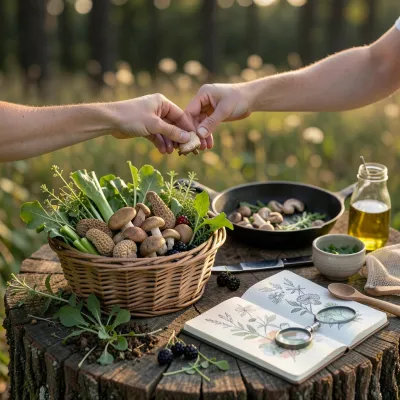
"Forage and Feast: Wild Foods, Identification, and Recipes" serves as a comprehensive guide to the practice of ethical foraging, emphasizing safety, ecological stewardship, and culinary application of wild plants and mushrooms. The book begins by establishing the historical significance and ethical underpinnings of foraging, encouraging a deep connection to nature and sustainable harvesting practices. It meticulously covers crucial aspects such as reading diverse landscapes, understanding legal regulations for public and private lands, and prioritizing safety through rigorous identification protocols, including recognizing poisonous look-alikes.
The core of the book is structured seasonally, guiding foragers through the bounty available in different times of the year. Spring is presented as a season for tender shoots, greens, and the much-sought-after morels, along with their allies and dangerous confusions. Early summer transitions to blossoms, delicate herbs, and tender pods, while peak summer explodes with berries, drupes, and succulents. Late summer and fall shift the focus to substantial harvests of nuts, seeds, and wild grains, alongside robust autumn mushrooms like oysters and hen of the woods. Even winter offers insights into evergreens, seaweeds, and cold-hardy finds, proving that the wild pantry is available year-round for the observant forager.
Beyond the seasonal guides, the book delves into specialized foraging strategies for coastal, desert, and alpine terrains, highlighting the unique challenges and opportunities each ecosystem presents. It places a strong emphasis on sustainable harvesting techniques, advocating for regeneration, diligent record-keeping, and participation in community science. The latter chapters provide practical advice on post-harvest handling, including cleaning, processing, and kitchen safety. Finally, it offers a rich exploration of preservation methods—drying, curing, pickling, and fermentation—and guides the reader in building a versatile wild pantry through infusions, syrups, salts, and powders. The book concludes with techniques and core recipes for cooking with wild plants and mushrooms, culminating in suggestions for seasonal menus and feasts that encourage responsible sharing of nature's bounty.
What You'll Find Inside:
- Ethical foraging principles including conservative harvesting, the 'rule of thirds,' and reciprocity practices to ensure ecosystem regeneration and wildlife support
- Seasonal foraging guidance organized by plant and mushroom availability throughout the year with habitat-specific strategies for different ecosystems and microclimates
- Critical safety frameworks focusing on poisonous look-alike identification for both plants and mushrooms, risk assessment protocols, and conservative decision-making in the field
- Practical post-harvest handling techniques covering cleaning, processing, preservation methods (drying, fermentation, pickling), and kitchen safety to maintain food quality and prevent spoilage
- Identification fundamentals for botany and mycology with emphasis on building reliable recognition skills through systematic observation, cross-referencing sources, and understanding habitat associations
Who's It For:
This book serves both beginning foragers seeking a responsible foundation in wild food harvesting and experienced practitioners looking to deepen their knowledge of safety protocols, seasonal patterns, and sustainable techniques. It's particularly valuable for hikers, naturalists, chefs, and homesteaders who want to ethically incorporate wild plants and mushrooms into their lives while respecting legal boundaries, ecological balance, and cultural traditions. The emphasis on risk-aware decision-making makes it essential for anyone prioritizing personal safety and environmental stewardship in their foraging practice.
Table of Contents:
- Introduction
- Chapter 1 Why Forage? History, Purpose, and Ethics
- Chapter 2 Reading the Landscape: Ecosystems, Habitats, and Microclimates
- Chapter 3 Laws, Access, and Public-Land Regulations
- Chapter 4 Safety First: Risk Assessment and Decision-Making in the Field
- Chapter 5 Tools, Field Gear, and Low-Impact Harvesting Techniques
- Chapter 6 Identification Fundamentals: Botany and Mycology Basics
- Chapter 7 Poisonous Look-Alikes: High-Risk Plants to Recognize
- Chapter 8 Poisonous Look-Alikes: High-Risk Mushrooms to Recognize
- Chapter 9 Spring Forage: Shoots, Greens, and Wild Aromatics
- Chapter 10 Spring Mushrooms: Morels, Allies, and Confusions
- Chapter 11 Early Summer: Blossoms, Herbs, and Tender Pods
- Chapter 12 Peak Summer: Berries, Drupes, and Succulents
- Chapter 13 Summer Mushrooms: Chanterelles, Boletes, and Common Mix-Ups
- Chapter 14 Late Summer to Fall: Nuts, Seeds, and Wild Grains
- Chapter 15 Autumn Mushrooms: Oysters, Hen of the Woods, and Look-Alikes
- Chapter 16 Winter Foraging: Evergreens, Seaweeds, and Cold-Hardy Finds
- Chapter 17 Urban and Suburban Foraging: Yards, Parks, and Cautions
- Chapter 18 Special Terrains: Coastal, Desert, and Alpine Strategies
- Chapter 19 Sustainable Harvesting: Regeneration, Records, and Community Science
- Chapter 20 Post-Harvest Handling: Cleaning, Processing, and Kitchen Safety
- Chapter 21 Preservation Methods: Drying, Curing, Pickling, and Fermentation
- Chapter 22 Building a Wild Pantry: Infusions, Syrups, Salts, and Powders
- Chapter 23 Cooking with Wild Plants: Techniques and Core Recipes
- Chapter 24 Cooking with Wild Mushrooms: Techniques and Core Recipes
- Chapter 25 Seasonal Menus and Feasts: Sharing the Harvest Responsibly
Author:
Published By:
Date Published:
May 7, 2026
Type:
Nonfiction
Language:
English
Word Count:
68,160 words
Reading Time:
4 hours 46 minutes
Sample:
Order:
Order Forage and Feast: Wild Foods, Identification, and Recipes (Paperback) on MixCache.com:
Buy NowPrint copy is made to order and ships worldwide. Includes the ebook free, ready to read instantly.
$5 account credit for all new MixCache.com accounts, usable toward any ebook purchase!*