
Browse by Category
Fiction
- Action & Adventure
- African American
- Anthologies
- Children's Fiction
- Classics
- Comics & Graphic Novels
- Coming of Age
- Contemporary
- Cultural & Regional
- Drama
- Erotica
- Fantasy
- General
- Historical Fiction
- Horror
- Humor & Satire
- Literary Fiction
- Mystery, Thriller & Suspense
- Poetry
- Religious & Inspirational
- Romance
- Science Fiction
- Short Stories
- War & Military
- Westerns
- Women's Fiction
- Young Adult
Non-Fiction
- Antiques & Collectibles
- Arts & Photography
- Biographies & Memoirs
- Business & Money
- Children's Non-Fiction
-
Computers & Technology
- Artificial Intelligence
- Computer Science
- Cybersecurity & Cryptography
- Data Science & Analytics
- Databases & Big Data
- Game Development & Design
- General
- Hardware & DIY
- Mobile App Development
- Networking & Cloud Computing
- Operating Systems
- Programming
- Robotics
- Software
- Software Engineering
- User Experience (UX) & Design
- Web Development & Design
- Cooking, Food & Wine
- Crafts, Hobbies & Home
- Education & Teaching
- Engineering
- General
- Health, Fitness & Dieting
-
History
- African History
- African History - North Africa
- African History - Sub-Saharan Africa
- American History
- American History - 20th Century
- American History - Civil War
- American History - Colonial Period
- Ancient History
- Asian History
- Asian History - China
- Asian History - India
- Asian History - Japan
- Asian History - Southeast Asia
- European History
- European History - Ancient Greece
- European History - Ancient Rome
- European History - Medieval
- European History - Modern
- European History - Renaissance
- General
- Middle Eastern History
- Military History
- Military History - Aviation
- Military History - Naval
- Social & Cultural History
- World History
- Humor & Entertainment
- Industrial Technology
- Language Learning
- Law
- LGBTQ+ Non-Fiction
- Literary Criticism
- Medical Books
- Parenting & Relationships
- Philosophy
- Politics & Social Sciences
- Reference
- Religion & Spirituality
-
Science & Math
- Agricultural Sciences
- Astronomy & Space Science
- Behavioral Sciences
- Biological Sciences
- Botany & Plant Science
- Chemistry
- Earth Sciences
- Engineering - Chemical
- Engineering - Civil
- Engineering - Electrical
- Engineering - Mechanical
- Environment
- General
- Geology
- Mathematics
- Nature & Ecology
- Oceanography
- Paleontology
- Physics
- Statistics
- Self-Help
- Sports & Outdoors
- Study Aids
- Sustainability & Green Living
- Textbooks
- Transportation
- Travel
- True Crime
- Urban Planning & Development
- Veterinary Medicine
- Writing & Publishing
Jump to Section
MixCache.com Total Access
Unlimited reading and audiobooks for every book published by MixCache.com.
Included titles carry the MTA badge.
Learn more →
Latvia's Path to Sovereignty: Three Attempts at Independence
MTA
The Latvian People's Struggle Against Imperial Domination
About this book:
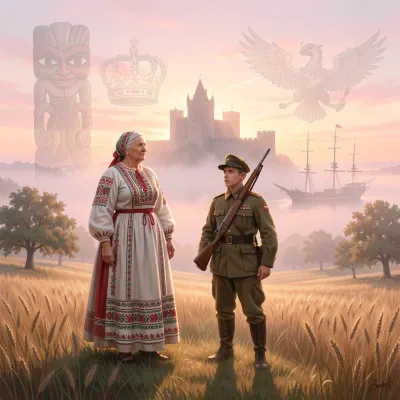
Latvia's path to sovereignty is traced from its ancient tribal roots through centuries of foreign domination by German, Polish‑Lithuanian, Swedish, and Russian powers. The book shows how early Latvian identity survived despite serfdom, cultural suppression, and shifting imperial rule, laying the groundwork for a national awakening in the mid‑19th century. Led by the Young Latvians, this cultural revival emphasized language, folklore, and education, fostering a collective consciousness that would later fuel political demands for self‑determination.
The first major push for independence came amid the collapse of empires during World War I. Latvian Riflemen fought on the Eastern Front, and the turmoil of 1917–1918 allowed the proclamation of the Republic of Latvia on 18 November 1918. After a brutal multi‑front war against Soviet Russia, German forces, and local militias, Latvia secured its sovereignty with the Treaty of Riga in 1920. The interwar period saw democratic nation‑building, land reform, economic recovery, and a flourishing of Latvian culture, even as authoritarian pressures grew and the nation ultimately fell under Soviet control following the Molotov‑Ribbentrop Pact and the June 1940 occupation.
The second attempt at re‑asserting independence manifested in the Forest Brothers’ armed resistance (1944‑early 1950s), a desperate guerrilla struggle against renewed Soviet rule that, though ultimately suppressed, kept the flame of national defiance alive. Decades of Soviet repression, russification, and cultural stagnation were challenged under Gorbachev’s glasnost and perestroika, which allowed historical truths to surface. The Latvian Popular Front and the Singing Revolution mobilized mass non‑violent protests, culminating in the Barricades of January 1991 and the failed August Coup in Moscow. On 21 August 1991 Latvia declared full independence, which was swiftly recognized internationally, restoring the Republic of Latvia after half a century of occupation and initiating the complex work of rebuilding democratic institutions, a market economy, and national identity.
What You'll Find Inside:
- The book details Latvia's three distinct attempts at independence: the 1918 proclamation, WWII resistance movements, and the 1991 restoration via the Singing Revolution and Barricades.
- It explores how centuries of foreign domination by German, Polish-Lithuanian, Swedish, and Russian powers shaped Latvian identity while failing to extinguish the nation's struggle for self-determination.
- The Latvian National Awakening of the mid-19th century, led by the Young Latvians, is highlighted as the crucial cultural foundation that preserved language, folklore, and national consciousness during periods of oppression.
- Key turning points like the 1905 Revolution (as a 'dress rehearsal'), World War I (as the 'crucible of statehood'), and the Barricades of 1991 are examined as pivotal moments that tested and strengthened Latvia's resolve for independence.
- The book examines how Latvia navigated between competing totalitarian powers (Nazi Germany and Soviet Russia) during WWII, experienced Soviet repression and deportations, and ultimately reclaimed sovereignty through non-violent resistance and popular mobilization.
Who's It For:
This book is ideal for students and scholars of Eastern European history, Baltic studies, and nationalism, as well as readers interested in independence movements and struggles against imperial powers. It will particularly benefit those studying the Soviet Union's collapse and the restoration of independence in Baltic states, individuals with Latvian heritage seeking to understand their national history, and anyone interested in how small nations survive and assert sovereignty between larger powers. The content is accessible to educated adults with an interest in history, politics, or national identity.
Table of Contents:
- Introduction
- Chapter 1 The Ancient Roots of a Nation: Early Latvian Identity and Foreign Influence
- Chapter 2 The Teutonic Knights and the Dawn of German Domination (13th-16th Centuries)
- Chapter 3 The Reformation and Shifting Powers: Swedish and Polish-Lithuanian Rule
- Chapter 4 The Great Northern War and the Rise of Russian Hegemony
- Chapter 5 Serfdom and Social Structures Under Tsarist Rule
- Chapter 6 The Latvian National Awakening: Cultural Revival and the Young Latvians (Mid-19th Century)
- Chapter 7 Industrialization, Urbanization, and the Growth of Political Consciousness
- Chapter 8 The 1905 Revolution: A Dress Rehearsal for Independence
- Chapter 9 World War I: The Crucible of Statehood
- Chapter 10 The Proclamation of the Republic of Latvia (1918)
- Chapter 11 The Latvian War of Independence (1918-1920)
- Chapter 12 Building a Nation: Democratic Governance and Economic Development (1920s)
- Chapter 13 Cultural Flourishing and National Identity in the Interwar Period
- Chapter 14 The Shadow of Totalitarianism: Latvia Between Nazi Germany and Soviet Russia
- Chapter 15 The Molotov-Ribbentrop Pact and the Loss of Sovereignty (1939)
- Chapter 16 Soviet Occupation and Annexation (1940)
- Chapter 17 World War II: Nazi Occupation and Renewed Soviet Control
- Chapter 18 The Forest Brothers: Armed Resistance Against Soviet Rule
- Chapter 19 Sovietization and Suppression: Life in the Latvian SSR
- Chapter 20 Dissent and Dissidence: Seeds of Resistance in the Soviet Era
- Chapter 21 Glasnost and Perestroika: Cracks in the Soviet System
- Chapter 22 The Awakening: The Latvian Popular Front and the Singing Revolution
- Chapter 23 Towards Renewal of Independence: Political Mobilization and Demands for Self-Determination
- Chapter 24 The Barricades of 1991: Defending Freedom
- Chapter 25 Reclaiming Sovereignty: The Restoration of the Republic of Latvia
Author:
Published By:
Date Published:
July 19, 2026
Type:
Nonfiction
Language:
English
Word Count:
40,790 words
Reading Time:
2 hours 51 minutes
Sample:
MixCache.com Total Access
Get unlimited access to this book + all books published by MixCache.com for $11.99/month
Subscribe to MTAOr purchase this book individually below
Order:
Buy the Latvia's Path to Sovereignty: Three Attempts at Independence ebook on MixCache.com:
Buy Now
Full ebook will be available immediately
- read online or download as a PDF file.
$5 account credit for all new MixCache.com accounts, usable toward any ebook purchase!*





Ratings & Reviews
Ask Questions About This Book
Have a question about the content? Ask our AI assistant!
Start by asking a question about "Latvia's Path to Sovereignty: Three Attempts at Independence"
Example: "Does this book mention William Shakespeare?"
Thinking...