Browse by Category
Fiction
- Action & Adventure
- African American
- Anthologies
- Children's Fiction
- Classics
- Comics & Graphic Novels
- Coming of Age
- Contemporary
- Cultural & Regional
- Drama
- Erotica
- Fantasy
- General
- Historical Fiction
- Horror
- Humor & Satire
- Literary Fiction
- Mystery, Thriller & Suspense
- Poetry
- Religious & Inspirational
- Romance
- Science Fiction
- Short Stories
- War & Military
- Westerns
- Women's Fiction
- Young Adult
Non-Fiction
- Antiques & Collectibles
- Arts & Photography
- Biographies & Memoirs
- Business & Money
- Children's Non-Fiction
-
Computers & Technology
- Artificial Intelligence
- Computer Science
- Cybersecurity & Cryptography
- Data Science & Analytics
- Databases & Big Data
- Game Development & Design
- General
- Hardware & DIY
- Mobile App Development
- Networking & Cloud Computing
- Operating Systems
- Programming
- Robotics
- Software
- Software Engineering
- User Experience (UX) & Design
- Web Development & Design
- Cooking, Food & Wine
- Crafts, Hobbies & Home
- Education & Teaching
- Engineering
- General
- Health, Fitness & Dieting
-
History
- African History
- African History - North Africa
- African History - Sub-Saharan Africa
- American History
- American History - 20th Century
- American History - Civil War
- American History - Colonial Period
- Ancient History
- Asian History
- Asian History - China
- Asian History - India
- Asian History - Japan
- Asian History - Southeast Asia
- European History
- European History - Ancient Greece
- European History - Ancient Rome
- European History - Medieval
- European History - Modern
- European History - Renaissance
- General
- Middle Eastern History
- Military History
- Military History - Aviation
- Military History - Naval
- Social & Cultural History
- World History
- Humor & Entertainment
- Industrial Technology
- Language Learning
- Law
- LGBTQ+ Non-Fiction
- Literary Criticism
- Medical Books
- Parenting & Relationships
- Philosophy
- Politics & Social Sciences
- Reference
- Religion & Spirituality
-
Science & Math
- Agricultural Sciences
- Astronomy & Space Science
- Behavioral Sciences
- Biological Sciences
- Botany & Plant Science
- Chemistry
- Earth Sciences
- Engineering - Chemical
- Engineering - Civil
- Engineering - Electrical
- Engineering - Mechanical
- Environment
- General
- Geology
- Mathematics
- Nature & Ecology
- Oceanography
- Paleontology
- Physics
- Statistics
- Self-Help
- Sports & Outdoors
- Study Aids
- Sustainability & Green Living
- Textbooks
- Transportation
- Travel
- True Crime
- Urban Planning & Development
- Veterinary Medicine
- Writing & Publishing
Jump to Section

Want unlimited access to all books published by MixCache.com (plus their audiobooks)? Try MixCache.com Total Access. Look for the MTA badge on book covers to identify included titles.
Access to infinite ebooks: Don't see the book you want? Suggest it and we'll create it (free!) for you from scratch with our powerful AI book writer. Then read it with MTA - besides profiting from any sales it makes!
Education In Afghanistan
MTA
A Comprehensive Overview from Early Childhood to Higher Education
About this book:
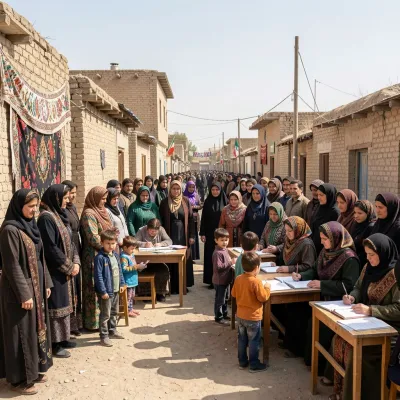
This comprehensive overview of education in Afghanistan traces the nation's learning landscape from its ancient historical roots through the devastation of prolonged conflict to its current, complex state of reconstruction. The book begins by establishing the deep historical context of Afghan education, highlighting the transition from pre-Islamic Buddhist monasteries and early Islamic madrasas to the introduction of modern secular schooling in the 20th century. It emphasizes the enduring influence of traditional and religious systems, which remain the primary educational pathway for millions, particularly in rural areas, while also detailing the significant, yet often interrupted, efforts to build a modern state-led system. A central theme is the catastrophic impact of conflict, which has not only destroyed physical infrastructure and displaced millions but has also created profound psychological trauma, exacerbated gender inequalities, and led to a debilitating "brain drain" of the nation's intellectual capital.
The book provides a meticulous, level-by-level analysis of the educational structure, from the nascent stage of early childhood education to the challenges of primary, secondary, and higher education. It exposes a system grappling with severe deficiencies: a critical shortage of qualified teachers, overcrowded and dilapidated classrooms, a lack of basic resources, and curricula often struggling to balance traditional values with modern, market-relevant skills. Cross-cutting themes are given dedicated focus, including the persistent gender gap that denies millions of girls their right to learn, the near-invisibility of children with special needs, and the vital but complex roles played by international aid and non-governmental organizations (NGOs). The analysis extends to the governance and financial underpinnings of the system, revealing how political instability, corruption, and a reliance on unpredictable external funding have hindered sustainable development.
Ultimately, the work is a testament to the resilience of the Afghan people and their unwavering desire for knowledge. It acknowledges the monumental challenges that lie ahead—including insecurity, poverty, and deeply entrenched cultural barriers—while offering a series of pragmatic, forward-looking recommendations. The path to a robust and equitable education system, the book concludes, hinges on a sustained commitment to peace, increased domestic funding, comprehensive teacher professionalization, strategic use of technology, and a national consensus that prioritizes education as the cornerstone of Afghanistan's future stability and prosperity.
What You'll Find Inside:
- Comprehensive analysis of Afghanistan's education system spanning early childhood, primary, secondary, vocational, and higher education stages, including historical evolution and current challenges.
- Exploration of traditional and religious education systems, highlighting their enduring influence and the push to modernize curricula while respecting cultural values.
- In-depth examination of the impact of decades of conflict on educational infrastructure, access, quality, and the exacerbation of gender disparities, particularly affecting girls.
- Focus on inclusive education efforts, addressing gender equality, children with special needs, and the integration of marginalized communities through community-based and non-formal learning programs.
- Analysis of international aid's role, challenges in funding and governance, and strategic recommendations for sustainable development, including technology integration and combating the 'brain drain' phenomenon.
Who's It For:
This book is designed for policymakers, educators, international development professionals, researchers, and advocates working in or studying education in fragile states. It is particularly beneficial for those interested in understanding the intersection of historical, cultural, and socio-economic factors in shaping education systems in post-conflict environments. Readers seeking insights into gender equity, inclusive education, and the role of international aid in educational development will find it invaluable.
Author:
Published By:
Date Published:
June 16, 2026
Type:
Nonfiction
Language:
English
Word Count:
44,967 words
Reading Time:
3 hours 9 minutes
Sample:
Order:
Order Education In Afghanistan (Hardcover) on MixCache.com:
Buy NowPrint copy is made to order and ships worldwide. Includes the ebook free, ready to read instantly.
$5 account credit for all new MixCache.com accounts, usable toward any ebook purchase!*