
Browse by Category
Fiction
- Action & Adventure
- African American
- Anthologies
- Children's Fiction
- Classics
- Comics & Graphic Novels
- Coming of Age
- Contemporary
- Cultural & Regional
- Drama
- Erotica
- Fantasy
- General
- Historical Fiction
- Horror
- Humor & Satire
- Literary Fiction
- Mystery, Thriller & Suspense
- Poetry
- Religious & Inspirational
- Romance
- Science Fiction
- Short Stories
- War & Military
- Westerns
- Women's Fiction
- Young Adult
Non-Fiction
- Antiques & Collectibles
- Arts & Photography
- Biographies & Memoirs
- Business & Money
- Children's Non-Fiction
-
Computers & Technology
- Artificial Intelligence
- Computer Science
- Cybersecurity & Cryptography
- Data Science & Analytics
- Databases & Big Data
- Game Development & Design
- General
- Hardware & DIY
- Mobile App Development
- Networking & Cloud Computing
- Operating Systems
- Programming
- Robotics
- Software
- Software Engineering
- User Experience (UX) & Design
- Web Development & Design
- Cooking, Food & Wine
- Crafts, Hobbies & Home
- Education & Teaching
- Engineering
- General
- Health, Fitness & Dieting
-
History
- African History
- African History - North Africa
- African History - Sub-Saharan Africa
- American History
- American History - 20th Century
- American History - Civil War
- American History - Colonial Period
- Ancient History
- Asian History
- Asian History - China
- Asian History - India
- Asian History - Japan
- Asian History - Southeast Asia
- European History
- European History - Ancient Greece
- European History - Ancient Rome
- European History - Medieval
- European History - Modern
- European History - Renaissance
- General
- Middle Eastern History
- Military History
- Military History - Aviation
- Military History - Naval
- Social & Cultural History
- World History
- Humor & Entertainment
- Industrial Technology
- Language Learning
- Law
- LGBTQ+ Non-Fiction
- Literary Criticism
- Medical Books
- Parenting & Relationships
- Philosophy
- Politics & Social Sciences
- Reference
- Religion & Spirituality
-
Science & Math
- Agricultural Sciences
- Astronomy & Space Science
- Behavioral Sciences
- Biological Sciences
- Botany & Plant Science
- Chemistry
- Earth Sciences
- Engineering - Chemical
- Engineering - Civil
- Engineering - Electrical
- Engineering - Mechanical
- Environment
- General
- Geology
- Mathematics
- Nature & Ecology
- Oceanography
- Paleontology
- Physics
- Statistics
- Self-Help
- Sports & Outdoors
- Study Aids
- Sustainability & Green Living
- Textbooks
- Transportation
- Travel
- True Crime
- Urban Planning & Development
- Veterinary Medicine
- Writing & Publishing
Jump to Section
MixCache.com Total Access
Unlimited reading and audiobooks for every book published by MixCache.com.
Included titles carry the MTA badge.
Learn more →
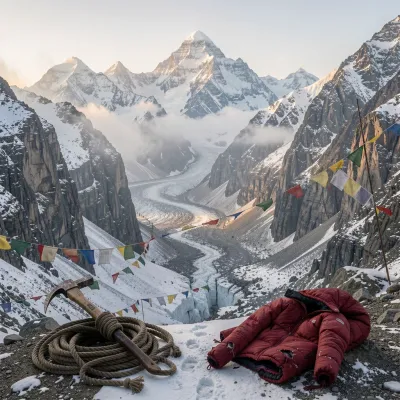
Alone on the Ridge: Prepared Solo Mountaineering for Experienced Climbers
MTA
Risk mitigation, planning, communication, and ethics for solo ascents
About this book:

Alone on the Ridge: Prepared Solo Mountaineering for Experienced Climbers provides a comprehensive framework for undertaking solo ascents with rigor and responsibility, emphasizing that solitude demands heightened preparation rather than diminished caution. The book argues that solo climbing requires honest self-assessment, meticulous pre-trip planning, and the integration of redundancy into every critical system—navigation, communication, protection, and escape routes—because there is no partner to catch mistakes or share resources. It guides experienced climbers through objective selection that matches terrain to proven skills, detailed route beta gathering, permit acquisition, stakeholder notifications, and weather interpretation, stressing that poor objective selection and underestimated conditions are primary causes of solo mishaps.
The technical core of the book covers specialized solo systems: self-belay devices with mandatory backups, anchor building prioritizing bomber, equalized, no-extension placements, protection strategies tailored for rock, ice, and mixed terrain, glacier travel reliant on incessant crevasse probing, and avalanche avoidance through snowpack analysis and terrain discipline. It details emergency communication protocols using PLBs and satellite messengers, check-in routines with trusted contacts, navigation redundancy (map, compass, GPS), bail options with staged exits, self-rescue techniques for crevasse extrication and rope ascents, wilderness medicine for self-treatment, and gear selection balancing weight, redundancy, and multi-functionality. Each technical chapter is grounded in the principle that soloists must anticipate failure points and build conservative margins into every system.
Beyond technical skills, the book deeply addresses the psychological, ethical, and decision-making dimensions of solo mountaineering. It explores managing isolation-induced cognitive biases, maintaining judgment under stress through predefined decision triggers (Conditions, Time, Energy, Objective Hazards), and embracing conservatism as a psychological anchor. Ethical considerations include minimizing environmental impact via Leave-No-Trace principles, understanding legal liabilities and insurance needs, and communicating effectively with SAR teams during crises. Decision frameworks stress pre-computed turnaround times, reality checking against wishful thinking, and the acceptance of inherent risk while rejecting recklessness. The work culminates in case studies illustrating consequences of ignored turnaround times, inadequate self-belay redundancy, and insufficient crevasse probing, accompanied by actionable checklists and training pathways advocating graduated exposure, mentorship, and realistic simulations to build instinctive competence. Ultimately, it presents solo climbing not as a pursuit of invulnerability but as a disciplined practice of self-reliance, stewardship, and continuous learning where the truest summit is a safe return.
What You'll Find Inside:
- Comprehensive risk mitigation strategies for solo climbing, emphasizing objective hazard evaluation, terrain selection, and proactive safety protocols tailored for independent ascents.
- In-depth technical skill development for soloists, including advanced rope techniques, anchor building, protection placement, and self-rescue methods essential for life-threatening scenarios.
- Dedicated coverage of emergency preparedness, including selection and use of communication devices, wilderness medicine protocols, and survival techniques for unexpected overnight stays.
- Psychological and decision-making frameworks designed to help climbers manage solitude, assess risks objectively, and maintain clear judgment under extreme pressure and isolation.
- Exploration of ethical considerations, legal responsibilities, and Leave-No-Trace principles to ensure climbers approach solo objectives with environmental stewardship and accountability.
Who's It For:
This book is intended for experienced climbers with a solid foundation in technical mountaineering skills who are considering or beginning to pursue solo ascents. It is particularly valuable for those seeking to transition from team-based climbing to solo endeavors, offering structured frameworks for risk management, emergency preparedness, and psychological resilience. Readers should possess proficiency in rock, ice, and mixed climbing techniques, as well as navigation and wilderness survival skills, to fully benefit from the advanced concepts and scenarios presented.
Table of Contents:
- Introduction
- Chapter 1 <Choosing Solo Objectives: Matching Terrain to Skill and Experience>
- Chapter 2 <Pre‑trip Research: Route Beta, Permits, and Stakeholder Notifications>
- Chapter 3 <Weather and Microclimates: Forecast Interpretation and Decision Triggers>
- Chapter 4 <Navigation Solo: Map, Compass, GPS, and Redundant Wayfinding>
- Chapter 5 <Rope Techniques for Soloists: Self‑belays, Autoblocks, and Safe Progression>
- Chapter 6 <Anchors and Redundancy: Building Reliable Systems Under Load>
- Chapter 7 <Protection Strategies on Rock, Ice, and Mixed Ground>
- Chapter 8 <Glacier Travel and Crevasse Risk Mitigation When Alone>
- Chapter 9 <Avalanche Awareness, Solo Travel Protocols, and Rescue Limits>
- Chapter 10 <Emergency Communication Devices: PLBs, Satellite Messengers, and Radios>
- Chapter 11 <Check‑in Protocols, Remote Tracking, and Automated Monitoring>
- Chapter 12 <Bail Options and Retreat Planning: Staged Exits and Decision Points>
- Chapter 13 <Self‑Rescue and Improvised Systems: Haul, Ascend, and Evacuate Alone>
- Chapter 14 <Wilderness Medicine for Solo Climbs: Trauma, Illness, and Patient Care>
- Chapter 15 <Gear Selection, Redundancy Philosophy, and Weight/Benefit Tradeoffs>
- Chapter 16 <Shelter and Bivouac Techniques for Unexpected Overnighting>
- Chapter 17 <Nutrition, Hydration, and Fueling Strategies for Prolonged Effort>
- Chapter 18 <Sleep Management, Fatigue Mitigation, and Napping Strategies>
- Chapter 19 <Psychology of Solitude: Cognition, Stress, and Maintaining Judgement>
- Chapter 20 <Legal Considerations, Rescue Liability, and Insurance for Soloists>
- Chapter 21 <Communication with SAR and Third Parties: What to Say and Preserve>
- Chapter 22 <Environmental Ethics and Leave‑No‑Trace Practices When Solo>
- Chapter 23 <Decision Frameworks: When to Push, When to Turn Back, and Acceptance of Risk>
- Chapter 24 <Training Pathways and Skill Development: Simulations, Mentors, and Graduated Exposure>
- Chapter 25 <Case Studies and Checklists: Real Incidents, Lessons Learned, and Ready‑to‑Use Lists>
Author:
Published By:
Date Published:
June 15, 2026
Type:
Nonfiction
Language:
English
Word Count:
60,049 words
Reading Time:
4 hours 12 minutes
Sample:
Order:
Buy the Alone on the Ridge: Prepared Solo Mountaineering for Experienced Climbers ebook on MixCache.com:
Buy Now
Full ebook will be available immediately
- read online or download as a PDF file.
$5 account credit for all new MixCache.com accounts, usable toward any ebook purchase!*
MixCache.com Total Access
Get unlimited access to this book + all books published by MixCache.com for $11.99/month
Subscribe to MTA




Ratings & Reviews
Ask Questions About This Book
Have a question about the content? Ask our AI assistant!
Start by asking a question about "Alone on the Ridge: Prepared Solo Mountaineering for Experienced Climbers"
Example: "Does this book mention William Shakespeare?"
Thinking...