
Browse by Category
Fiction
- Action & Adventure
- African American
- Anthologies
- Children's Fiction
- Classics
- Comics & Graphic Novels
- Coming of Age
- Contemporary
- Cultural & Regional
- Drama
- Erotica
- Fantasy
- General
- Historical Fiction
- Horror
- Humor & Satire
- Literary Fiction
- Mystery, Thriller & Suspense
- Poetry
- Religious & Inspirational
- Romance
- Science Fiction
- Short Stories
- War & Military
- Westerns
- Women's Fiction
- Young Adult
Non-Fiction
- Antiques & Collectibles
- Arts & Photography
- Biographies & Memoirs
- Business & Money
- Children's Non-Fiction
-
Computers & Technology
- Artificial Intelligence
- Computer Science
- Cybersecurity & Cryptography
- Data Science & Analytics
- Databases & Big Data
- Game Development & Design
- General
- Hardware & DIY
- Mobile App Development
- Networking & Cloud Computing
- Operating Systems
- Programming
- Robotics
- Software
- Software Engineering
- User Experience (UX) & Design
- Web Development & Design
- Cooking, Food & Wine
- Crafts, Hobbies & Home
- Education & Teaching
- Engineering
- General
- Health, Fitness & Dieting
-
History
- African History
- African History - North Africa
- African History - Sub-Saharan Africa
- American History
- American History - 20th Century
- American History - Civil War
- American History - Colonial Period
- Ancient History
- Asian History
- Asian History - China
- Asian History - India
- Asian History - Japan
- Asian History - Southeast Asia
- European History
- European History - Ancient Greece
- European History - Ancient Rome
- European History - Medieval
- European History - Modern
- European History - Renaissance
- General
- Middle Eastern History
- Military History
- Military History - Aviation
- Military History - Naval
- Social & Cultural History
- World History
- Humor & Entertainment
- Industrial Technology
- Language Learning
- Law
- LGBTQ+ Non-Fiction
- Literary Criticism
- Medical Books
- Parenting & Relationships
- Philosophy
- Politics & Social Sciences
- Reference
- Religion & Spirituality
-
Science & Math
- Agricultural Sciences
- Astronomy & Space Science
- Behavioral Sciences
- Biological Sciences
- Botany & Plant Science
- Chemistry
- Earth Sciences
- Engineering - Chemical
- Engineering - Civil
- Engineering - Electrical
- Engineering - Mechanical
- Environment
- General
- Geology
- Mathematics
- Nature & Ecology
- Oceanography
- Paleontology
- Physics
- Statistics
- Self-Help
- Sports & Outdoors
- Study Aids
- Sustainability & Green Living
- Textbooks
- Transportation
- Travel
- True Crime
- Urban Planning & Development
- Veterinary Medicine
- Writing & Publishing
Jump to Section

Want unlimited access to all books published by MixCache.com (plus their audiobooks)? Try MixCache.com Total Access. Look for the MTA badge on book covers to identify included titles.
Access to infinite ebooks: Don't see the book you want? Suggest it and we'll create it (free!) for you from scratch with our powerful AI book writer. Then read it with MTA - besides profiting from any sales it makes!
Mountain Geology for Climbers: Interpreting Rock, Ice, and Tectonics to Improve Route Choice
MTA
How geological processes create hazards, holds, and long-term route changes
About this book:
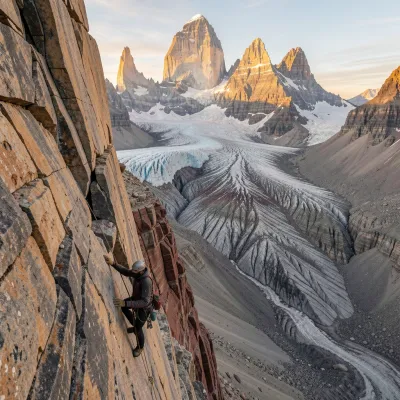
*Mountain Geology for Climbers* explains how the Earth’s dynamic processes shape the mountains we climb and how understanding those processes improves safety and route choice. It begins with plate tectonics, showing how divergent, convergent, and transform boundaries create the major mountain ranges and influence rock types, seismic activity, and landscape evolution. The book then details the three main rock families—igneous (intrusive granite and extrusive basalt), sedimentary (sandstone, limestone, shale), and metamorphic (slate, schist, gneiss, quartzite)—linking their formation, mineralogy, texture, and weathering to climbing characteristics such as hold quality, fracture patterns, and susceptibility to hazards like grusification or slick surfaces.
Central to the text is the idea that rock strength is constantly challenged by mechanical and chemical weathering, water infiltration, freeze‑thaw cycles, and ice‑related processes. It examines how joints, faults, and folds create both climbing features (cracks, corners, arêtes) and zones of weakness (outward‑dipping bedding planes, fault gouge, foliation planes). Glacial sculpting—U‑shaped valleys, cirques, polished slabs, moraine, crevasses, and seracs—is explored alongside snowpack metamorphism, avalanche formation, and the growing threat of thawing permafrost, which acts as a disappearing “ice cement” in high‑altitude rock. Volcanic hazards (ash, lahars, eruptions) and earthquake‑triggered slope failures are also discussed as acute, region‑specific dangers.
The book translates this knowledge into practical skills: reading the landscape from afar, selecting routes based on fracture orientation and rock type, assessing objective hazards (rockfall, icefall, avalanches, crevasses, seracs), placing reliable belay anchors and protection, and adapting to long‑term changes driven by climate shift, glacial retreat, and permafrost degradation. Regional spotlights illustrate how these principles manifest in world‑class areas such as Yosemite’s granite, Kalymnos’s limestone tufas, the Peak District’s gritstone, the Dolomites’ folded carbonates, Patagonia’s wind‑scathed granite, and the Alpine mosaic of rock, ice, and tectonics. Ultimately, it encourages climbers to see mountains as evolving geological stories, where deep time, ongoing uplift and erosion, and accelerating climate change continually reshape the vertical world, demanding vigilance, interpretation, and respect.
What You'll Find Inside:
- Understand how plate tectonics shapes mountain ranges, influencing rock types, structural features, and hazard potential in climbing environments.
- Learn to identify and assess different rock types (igneous, sedimentary, metamorphic) for their climbing characteristics, strength, and hold reliability.
- Decode fracture patterns, including joints, faults, and bedding planes, to evaluate route stability, protection opportunities, and objective hazards like rockfall.
- Explore the impact of glacial erosion, permafrost, and ice formations on terrain features, route viability, and seasonal climbing conditions.
- Develop skills to assess objective hazards (avalanches, landslides, rockfall) and adapt to climate-driven changes affecting mountain stability and access.
Who's It For:
This book is essential for mountaineers, rock climbers, and alpine adventurers seeking to enhance their safety and decision-making through geological understanding. It caters to climbers operating in diverse terrains—from granite cliffs and limestone crags to glaciated peaks—who want to interpret landscapes, anticipate hazards, and choose optimal routes. Readers will gain insight into how tectonic forces, rock dynamics, and climate change directly influence climbing risks and opportunities, making it invaluable for those pursuing technical ascents in dynamic mountain environments. It bridges the gap between geology and climbing practice, offering practical knowledge for both novice and experienced climbers.
Author:
Published By:
Date Published:
June 17, 2026
Type:
Nonfiction
Language:
English
Word Count:
57,050 words
Reading Time:
4 hours
Sample:
MixCache.com Total Access
Get unlimited access to this book + all books published by MixCache.com for $11.99/month
Subscribe to MTAOr purchase this book individually below
Order:
Buy the Mountain Geology for Climbers: Interpreting Rock, Ice, and Tectonics to Improve Route Choice ebook on MixCache.com:
Buy Now
Full ebook will be available immediately
- read online or download as a PDF file.
$5 account credit for all new MixCache.com accounts, usable toward any ebook purchase!*




Ratings & Reviews
Ask Questions About This Book
Have a question about the content? Ask our AI assistant!
Start by asking a question about "Mountain Geology for Climbers: Interpreting Rock, Ice, and Tectonics to Improve Route Choice"
Example: "Does this book mention William Shakespeare?"
Thinking...