Browse by Category
Fiction
- Action & Adventure
- African American
- Anthologies
- Children's Fiction
- Classics
- Comics & Graphic Novels
- Coming of Age
- Contemporary
- Cultural & Regional
- Drama
- Erotica
- Fantasy
- General
- Historical Fiction
- Horror
- Humor & Satire
- Literary Fiction
- Mystery, Thriller & Suspense
- Poetry
- Religious & Inspirational
- Romance
- Science Fiction
- Short Stories
- War & Military
- Westerns
- Women's Fiction
- Young Adult
Non-Fiction
- Antiques & Collectibles
- Arts & Photography
- Biographies & Memoirs
- Business & Money
- Children's Non-Fiction
-
Computers & Technology
- Artificial Intelligence
- Computer Science
- Cybersecurity & Cryptography
- Data Science & Analytics
- Databases & Big Data
- Game Development & Design
- General
- Hardware & DIY
- Mobile App Development
- Networking & Cloud Computing
- Operating Systems
- Programming
- Robotics
- Software
- Software Engineering
- User Experience (UX) & Design
- Web Development & Design
- Cooking, Food & Wine
- Crafts, Hobbies & Home
- Education & Teaching
- Engineering
- General
- Health, Fitness & Dieting
-
History
- African History
- African History - North Africa
- African History - Sub-Saharan Africa
- American History
- American History - 20th Century
- American History - Civil War
- American History - Colonial Period
- Ancient History
- Asian History
- Asian History - China
- Asian History - India
- Asian History - Japan
- Asian History - Southeast Asia
- European History
- European History - Ancient Greece
- European History - Ancient Rome
- European History - Medieval
- European History - Modern
- European History - Renaissance
- General
- Middle Eastern History
- Military History
- Military History - Aviation
- Military History - Naval
- Social & Cultural History
- World History
- Humor & Entertainment
- Industrial Technology
- Language Learning
- Law
- LGBTQ+ Non-Fiction
- Literary Criticism
- Medical Books
- Parenting & Relationships
- Philosophy
- Politics & Social Sciences
- Reference
- Religion & Spirituality
-
Science & Math
- Agricultural Sciences
- Astronomy & Space Science
- Behavioral Sciences
- Biological Sciences
- Botany & Plant Science
- Chemistry
- Earth Sciences
- Engineering - Chemical
- Engineering - Civil
- Engineering - Electrical
- Engineering - Mechanical
- Environment
- General
- Geology
- Mathematics
- Nature & Ecology
- Oceanography
- Paleontology
- Physics
- Statistics
- Self-Help
- Sports & Outdoors
- Study Aids
- Sustainability & Green Living
- Textbooks
- Transportation
- Travel
- True Crime
- Urban Planning & Development
- Veterinary Medicine
- Writing & Publishing
Jump to Section
MixCache.com Total Access
Unlimited reading and audiobooks for every book published by MixCache.com.
Included titles carry the MTA badge.
Learn more →
A History of Famine
When The Food Supply Broke Down
About this book:

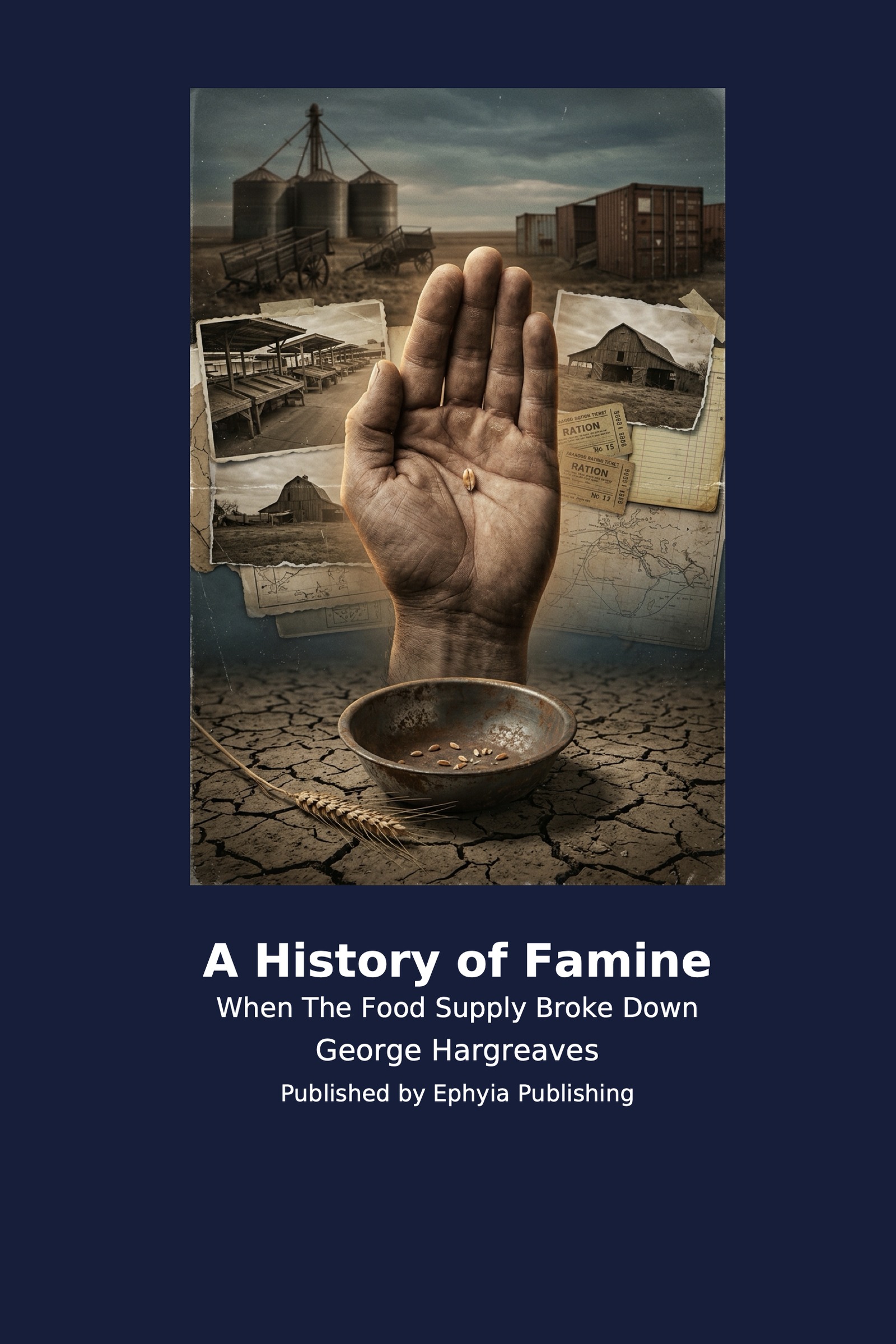
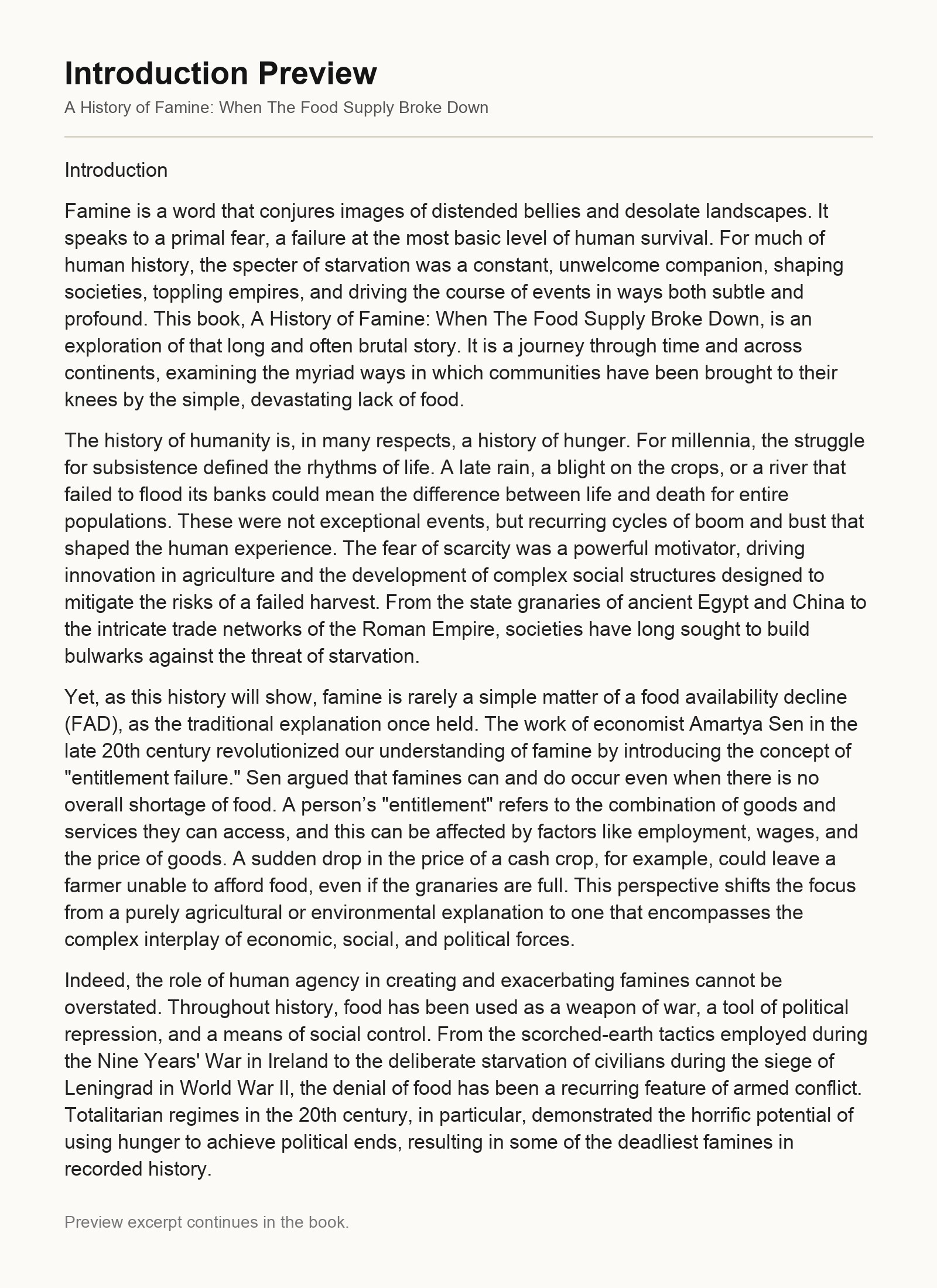
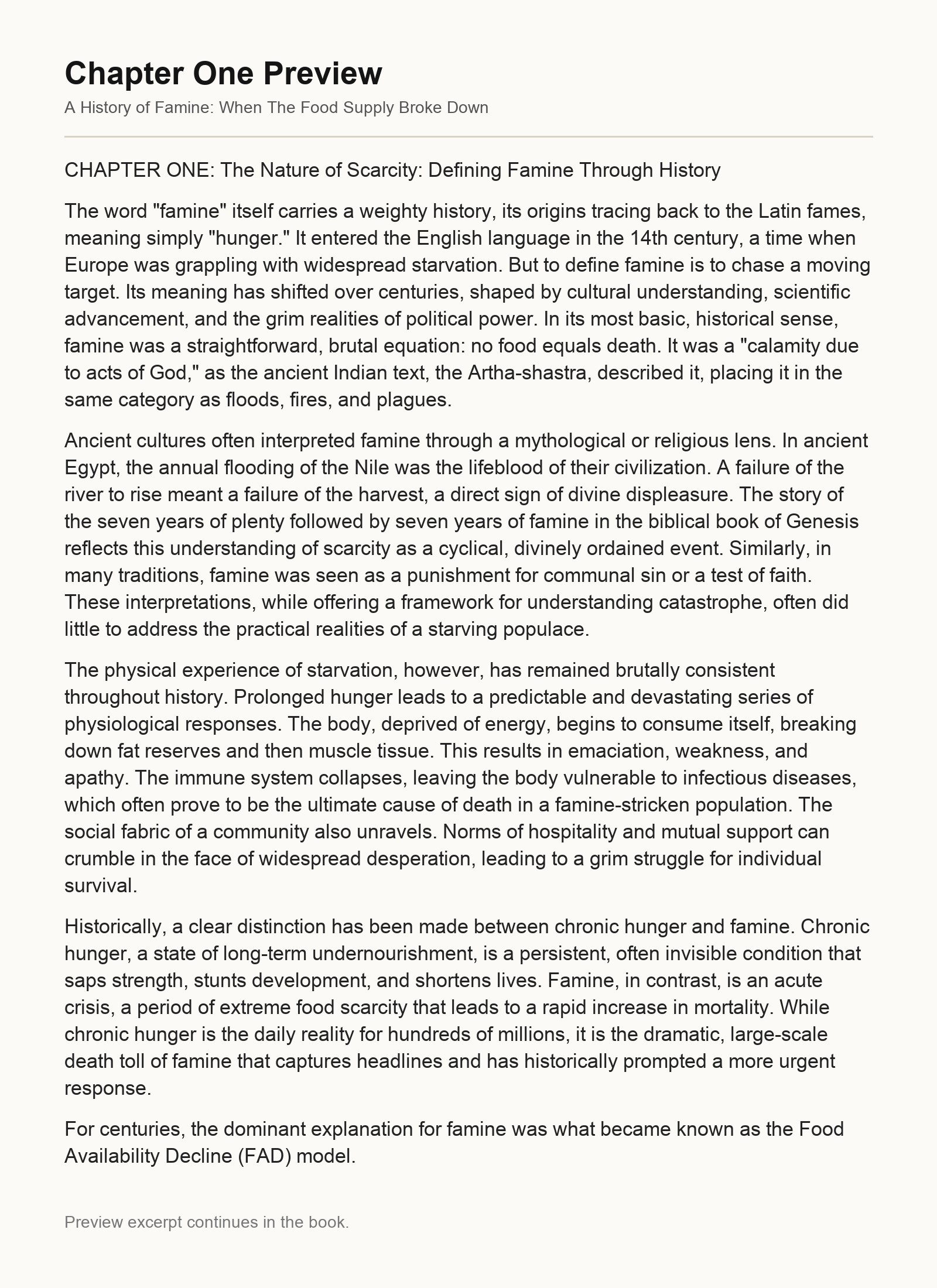
A History of Famine: When The Food Supply Broke Down offers readers a sweeping, continent‑spanning journey through the many ways hunger has shaped human civilization. From the Nile‑dependent granaries of ancient Egypt to the scorched‑earth tactics of the Thirty Years' War, from the Irish Potato Famine to the engineered horrors of the Holodomor and Mao’s Great Leap Forward, each chapter unpacks a distinct episode where food systems collapsed and societies were forced to confront starvation. The narrative weaves together environmental shocks, political decisions, economic structures, and cultural beliefs to show how famine is rarely a simple lack of food but a complex failure of access, entitlement, and power.
Readers will gain a deep understanding of the theories that have explained famine over time, beginning with the Malthusian view of inevitable population checks and moving through the revolutionary entitlement approach of Amartya Sen, which reveals how price spikes, wage collapses, and distorted markets can starve populations even when grain is abundant. The book also traces the evolution of humanitarian response—from ad‑hoc granaries and religious almsgiving to modern early‑warning systems, the Integrated Food Security Phase Classification, and cash‑based aid—illustrating how lessons from past crises have shaped today’s global food security architecture.
Beyond the statistics and dates, the work immerses the reader in the human experience of famine: the visceral desperation of eating bark and leather, the spread of disease among weakened bodies, the breakdown of social norms, and the remarkable resilience shown by those who forged black markets, organized relief, or fled in mass migrations. Vivid accounts from chroniclers, missionaries, defectors, and journalists bring the emotional weight of each crisis to life, allowing readers to feel both the terror and the courage that have accompanied humanity’s longest struggle against hunger.
By examining the recurring patterns—war as a weapon of starvation, climate volatility as a trigger, and political ideology as an aggravator—the book equips readers to see contemporary food crises through a historical lens. It highlights why modern famines are increasingly driven by conflict and climate change, and why technological advances alone cannot eradicate hunger without just governance, equitable access, and a commitment to human rights. The final chapters challenge readers to consider what a famine‑free future might look like and what collective actions are required to achieve it.
Ultimately, A History of Famine is not just a chronicle of past suffering; it is a vital tool for understanding the vulnerabilities of our present food system and for inspiring informed action toward a more secure and compassionate world. Readers will finish the book with a nuanced grasp of how famine arises, how it has been confronted, and what steps can be taken to prevent its return.
What You'll Find Inside:
- The evolution of famine theory from simple food availability decline models to Amartya Sen's entitlement approach, revealing that famines often occur due to failures in access and distribution rather than absolute food shortages
- How famine has been systematically weaponized throughout history as a tool of war, political repression, and social control, from ancient sieges to modern totalitarian regimes
- The critical role of political instability, governance failures, and inequitable economic policies in transforming natural food shortages into catastrophic famines with massive mortality
- The devastating human toll of famine extending beyond starvation to include disease epidemics, social breakdown, mass migration, and the erosion of cultural and family structures
- Historical patterns demonstrating that while environmental triggers initiate food crises, human factors—particularly conflict, policy choices, and inequality—determine whether shortages escalate to famine
Who's It For:
This book is essential reading for students of history, economics, and political science seeking to understand the complex interplay of environmental, economic, and political factors in food crises. It will particularly benefit humanitarian aid workers, policymakers, and development professionals looking to apply historical lessons to contemporary food security challenges. General readers interested in how food systems have shaped human civilization will also find this comprehensive account both informative and relevant to current global challenges.
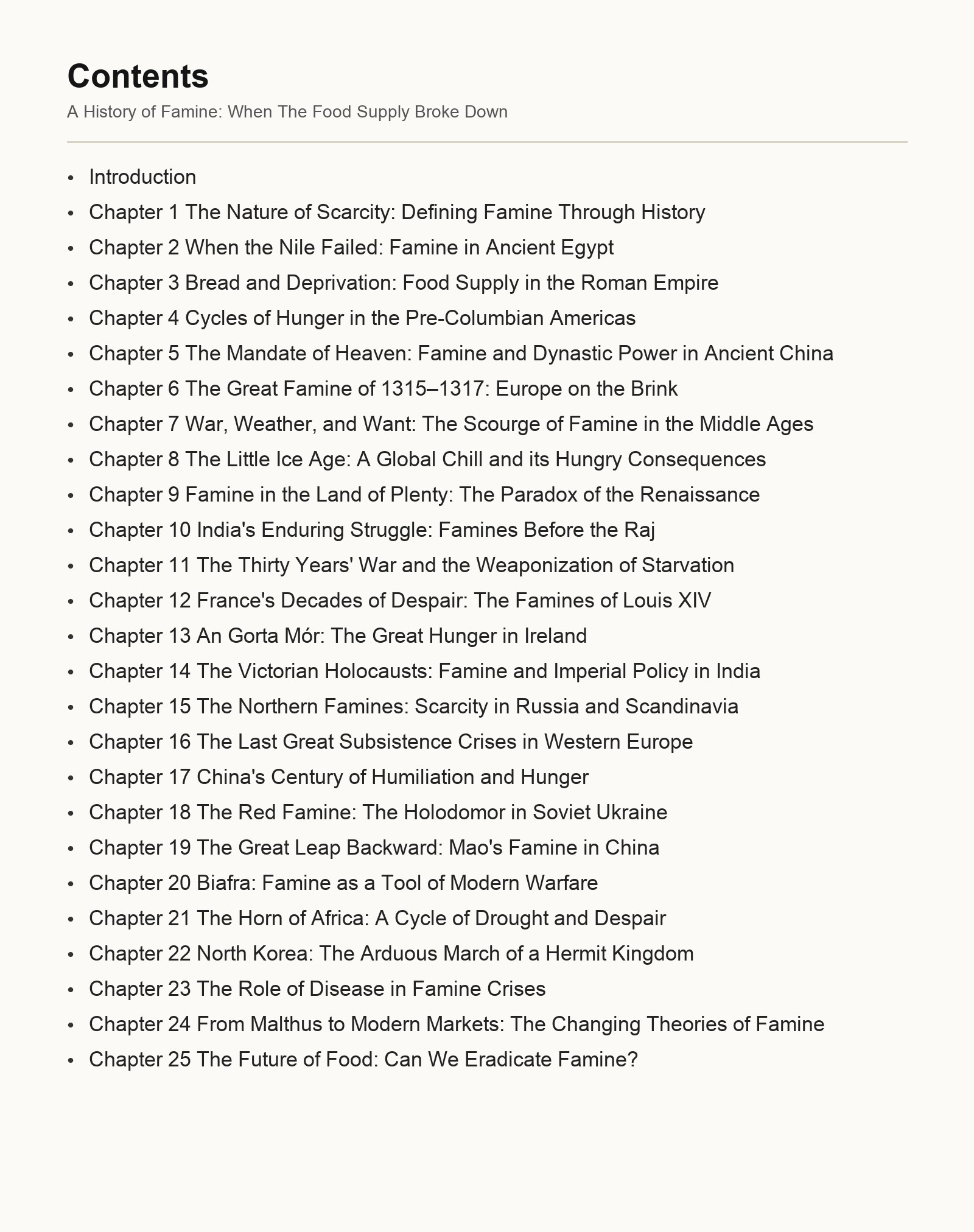
Table of Contents:
- Introduction
- Chapter 1 The Nature of Scarcity: Defining Famine Through History
- Chapter 2 When the Nile Failed: Famine in Ancient Egypt
- Chapter 3 Bread and Deprivation: Food Supply in the Roman Empire
- Chapter 4 Cycles of Hunger in the Pre-Columbian Americas
- Chapter 5 The Mandate of Heaven: Famine and Dynastic Power in Ancient China
- Chapter 6 The Great Famine of 1315–1317: Europe on the Brink
- Chapter 7 War, Weather, and Want: The Scourge of Famine in the Middle Ages
- Chapter 8 The Little Ice Age: A Global Chill and its Hungry Consequences
- Chapter 9 Famine in the Land of Plenty: The Paradox of the Renaissance
- Chapter 10 India's Enduring Struggle: Famines Before the Raj
- Chapter 11 The Thirty Years' War and the Weaponization of Starvation
- Chapter 12 France's Decades of Despair: The Famines of Louis XIV
- Chapter 13 An Gorta Mór: The Great Hunger in Ireland
- Chapter 14 The Victorian Holocausts: Famine and Imperial Policy in India
- Chapter 15 The Northern Famines: Scarcity in Russia and Scandinavia
- Chapter 16 The Last Great Subsistence Crises in Western Europe
- Chapter 17 China's Century of Humiliation and Hunger
- Chapter 18 The Red Famine: The Holodomor in Soviet Ukraine
- Chapter 19 The Great Leap Backward: Mao's Famine in China
- Chapter 20 Biafra: Famine as a Tool of Modern Warfare
- Chapter 21 The Horn of Africa: A Cycle of Drought and Despair
- Chapter 22 North Korea: The Arduous March of a Hermit Kingdom
- Chapter 23 The Role of Disease in Famine Crises
- Chapter 24 From Malthus to Modern Markets: The Changing Theories of Famine
- Chapter 25 The Future of Food: Can We Eradicate Famine?
Author:
Published By:
Date Published:
May 29, 2026
Type:
Nonfiction
Language:
English
Word Count:
40,978 words
Reading Time:
2 hours 52 minutes
Sample:
Order:
Order A History of Famine (Hardcover) on MixCache.com:
Buy NowPrint copy is made to order and ships worldwide. Includes the ebook free, ready to read instantly.
$5 account credit for all new MixCache.com accounts, usable toward any ebook purchase!*