Browse by Category
Fiction
- Action & Adventure
- African American
- Anthologies
- Children's Fiction
- Classics
- Comics & Graphic Novels
- Coming of Age
- Contemporary
- Cultural & Regional
- Drama
- Erotica
- Fantasy
- General
- Historical Fiction
- Horror
- Humor & Satire
- Literary Fiction
- Mystery, Thriller & Suspense
- Poetry
- Religious & Inspirational
- Romance
- Science Fiction
- Short Stories
- War & Military
- Westerns
- Women's Fiction
- Young Adult
Non-Fiction
- Antiques & Collectibles
- Arts & Photography
- Biographies & Memoirs
- Business & Money
- Children's Non-Fiction
-
Computers & Technology
- Artificial Intelligence
- Computer Science
- Cybersecurity & Cryptography
- Data Science & Analytics
- Databases & Big Data
- Game Development & Design
- General
- Hardware & DIY
- Mobile App Development
- Networking & Cloud Computing
- Operating Systems
- Programming
- Robotics
- Software
- Software Engineering
- User Experience (UX) & Design
- Web Development & Design
- Cooking, Food & Wine
- Crafts, Hobbies & Home
- Education & Teaching
- Engineering
- General
- Health, Fitness & Dieting
-
History
- African History
- African History - North Africa
- African History - Sub-Saharan Africa
- American History
- American History - 20th Century
- American History - Civil War
- American History - Colonial Period
- Ancient History
- Asian History
- Asian History - China
- Asian History - India
- Asian History - Japan
- Asian History - Southeast Asia
- European History
- European History - Ancient Greece
- European History - Ancient Rome
- European History - Medieval
- European History - Modern
- European History - Renaissance
- General
- Middle Eastern History
- Military History
- Military History - Aviation
- Military History - Naval
- Social & Cultural History
- World History
- Humor & Entertainment
- Industrial Technology
- Language Learning
- Law
- LGBTQ+ Non-Fiction
- Literary Criticism
- Medical Books
- Parenting & Relationships
- Philosophy
- Politics & Social Sciences
- Reference
- Religion & Spirituality
-
Science & Math
- Agricultural Sciences
- Astronomy & Space Science
- Behavioral Sciences
- Biological Sciences
- Botany & Plant Science
- Chemistry
- Earth Sciences
- Engineering - Chemical
- Engineering - Civil
- Engineering - Electrical
- Engineering - Mechanical
- Environment
- General
- Geology
- Mathematics
- Nature & Ecology
- Oceanography
- Paleontology
- Physics
- Statistics
- Self-Help
- Sports & Outdoors
- Study Aids
- Sustainability & Green Living
- Textbooks
- Transportation
- Travel
- True Crime
- Urban Planning & Development
- Veterinary Medicine
- Writing & Publishing
Jump to Section
MixCache.com Total Access
Unlimited reading and audiobooks for every book published by MixCache.com.
Included titles carry the MTA badge.
Learn more →A History of Manipur
About this book:
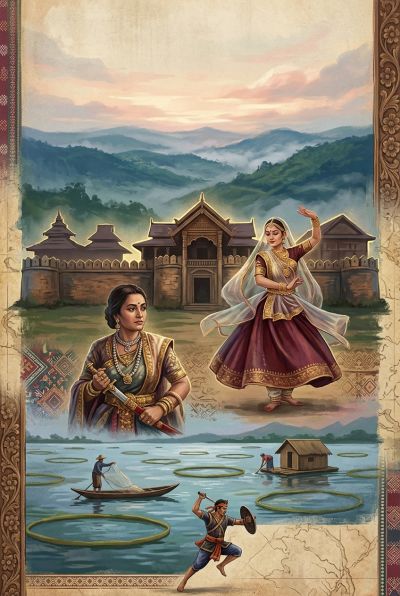
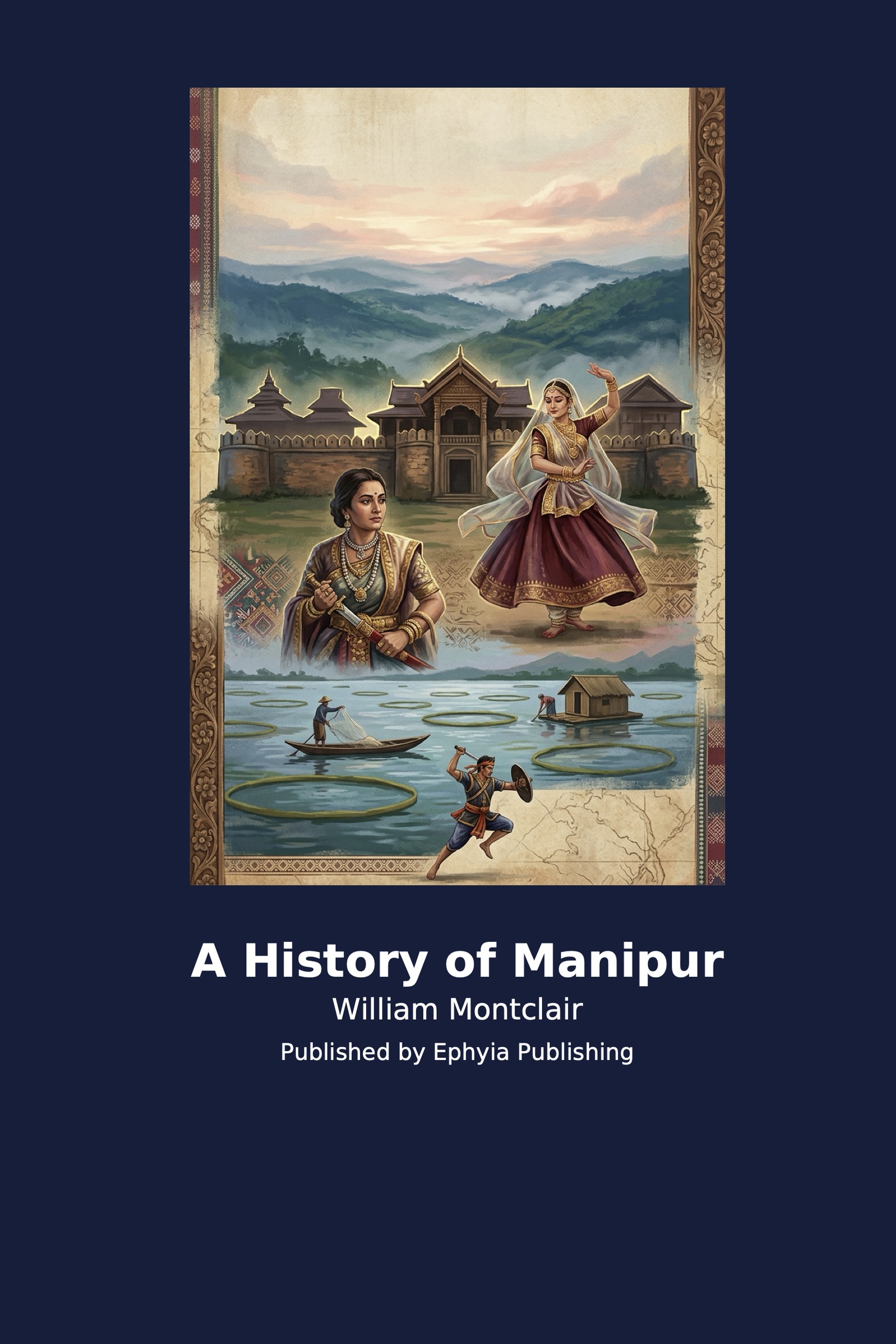
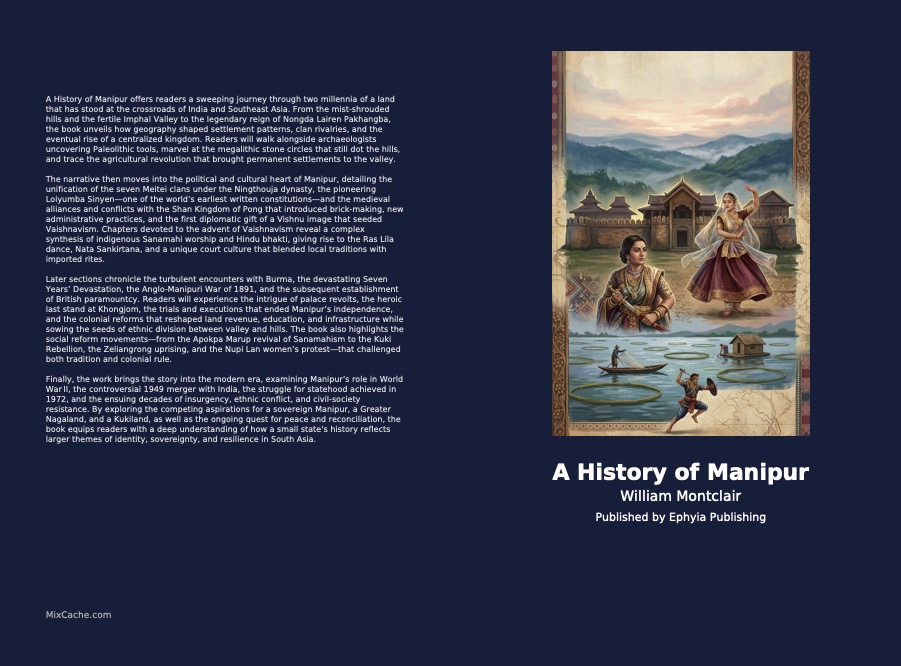
A History of Manipur offers readers a sweeping journey through two millennia of a land that has stood at the crossroads of India and Southeast Asia. From the mist‑shrouded hills and the fertile Imphal Valley to the legendary reign of Nongda Lairen Pakhangba, the book unveils how geography shaped settlement patterns, clan rivalries, and the eventual rise of a centralized kingdom. Readers will walk alongside archaeologists uncovering Paleolithic tools, marvel at the megalithic stone circles that still dot the hills, and trace the agricultural revolution that brought permanent settlements to the valley.
The narrative then moves into the political and cultural heart of Manipur, detailing the unification of the seven Meitei clans under the Ningthouja dynasty, the pioneering Loiyumba Sinyen—one of the world’s earliest written constitutions—and the medieval alliances and conflicts with the Shan Kingdom of Pong that introduced brick‑making, new administrative practices, and the first diplomatic gift of a Vishnu image that seeded Vaishnavism. Chapters devoted to the advent of Vaishnavism reveal a complex synthesis of indigenous Sanamahi worship and Hindu bhakti, giving rise to the Ras Lila dance, Nata Sankirtana, and a unique court culture that blended local traditions with imported rites.
Later sections chronicle the turbulent encounters with Burma, the devastating Seven Years’ Devastation, the Anglo‑Manipuri War of 1891, and the subsequent establishment of British paramountcy. Readers will experience the intrigue of palace revolts, the heroic last stand at Khongjom, the trials and executions that ended Manipur’s independence, and the colonial reforms that reshaped land revenue, education, and infrastructure while sowing the seeds of ethnic division between valley and hills. The book also highlights the social reform movements—from the Apokpa Marup revival of Sanamahism to the Kuki Rebellion, the Zeliangrong uprising, and the Nupi Lan women’s protest—that challenged both tradition and colonial rule.
Finally, the work brings the story into the modern era, examining Manipur’s role in World War II, the controversial 1949 merger with India, the struggle for statehood achieved in 1972, and the ensuing decades of insurgency, ethnic conflict, and civil‑society resistance. By exploring the competing aspirations for a sovereign Manipur, a Greater Nagaland, and a Kukiland, as well as the ongoing quest for peace and reconciliation, the book equips readers with a deep understanding of how a small state’s history reflects larger themes of identity, sovereignty, and resilience in South Asia.
What You'll Find Inside:
- The geographical and ethnic duality of Manipur: the fertile Imphal Valley home to the Meiteis versus the surrounding hills inhabited by diverse Naga and Kuki-Zo tribes, which has shaped the state's social, political, and economic trajectory throughout history.
- The origins of the Manipuri kingdom with Nongda Lairen Pakhangba in 33 CE, the unification of the seven clans, and the creation of the first written constitution under King Loiyumba in the 12th century that centralized power through the Lallup system of corvée labor.
- The devastating Burmese occupation known as Chahi-Taret Khuntakpa (1819-1826) that nearly depopulated the valley, followed by British intervention that saved Manipur but established British paramountcy after the Anglo-Manipuri War of 1891 and the Battle of Khongjom.
- The controversial 1949 merger with India, signed under duress by Maharaja Bodhchandra Singh, which dissolved Manipur's democratic experiment and triggered decades of political unrest, insurgency, and ethnic conflicts over self-determination and territorial integrity.
- Contemporary Manipur's struggles including multiple insurgent groups seeking self-determination, the ethnic violence of 2023 between Meiteis and Kuki-Zo tribes, and ongoing peace movements like the anti-AFSPA protests led by Irom Sharmila and the Meira Paibis.
Who's It For:
This book is ideal for students, researchers, and academics specializing in Northeast Indian history, post-colonial studies, and ethnic conflict resolution. It will also benefit policymakers, journalists, and activists working on Manipur's contemporary issues, as well as general readers interested in understanding the complex historical roots of the region's current political dynamics, cultural identity, and quest for peace within the Indian Union.
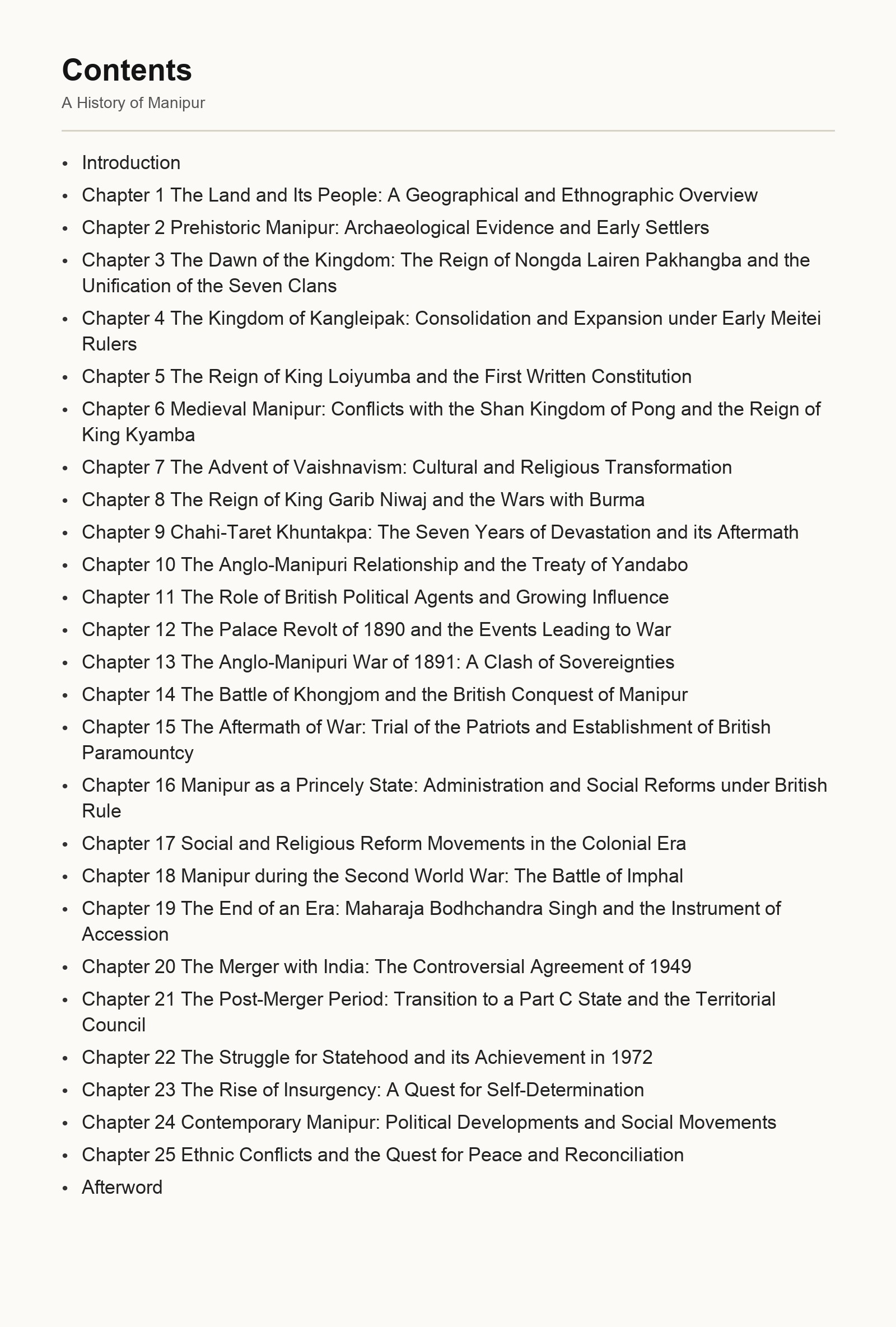
Table of Contents:
- Introduction
- Chapter 1 The Land and Its People: A Geographical and Ethnographic Overview
- Chapter 2 Prehistoric Manipur: Archaeological Evidence and Early Settlers
- Chapter 3 The Dawn of the Kingdom: The Reign of Nongda Lairen Pakhangba and the Unification of the Seven Clans
- Chapter 4 The Kingdom of Kangleipak: Consolidation and Expansion under Early Meitei Rulers
- Chapter 5 The Reign of King Loiyumba and the First Written Constitution
- Chapter 6 Medieval Manipur: Conflicts with the Shan Kingdom of Pong and the Reign of King Kyamba
- Chapter 7 The Advent of Vaishnavism: Cultural and Religious Transformation
- Chapter 8 The Reign of King Garib Niwaj and the Wars with Burma
- Chapter 9 Chahi-Taret Khuntakpa: The Seven Years of Devastation and its Aftermath
- Chapter 10 The Anglo-Manipuri Relationship and the Treaty of Yandabo
- Chapter 11 The Role of British Political Agents and Growing Influence
- Chapter 12 The Palace Revolt of 1890 and the Events Leading to War
- Chapter 13 The Anglo-Manipuri War of 1891: A Clash of Sovereignties
- Chapter 14 The Battle of Khongjom and the British Conquest of Manipur.
- Chapter 15 The Aftermath of War: Trial of the Patriots and Establishment of British Paramountcy
- Chapter 16 Manipur as a Princely State: Administration and Social Reforms under British Rule
- Chapter 17 Social and Religious Reform Movements in the Colonial Era
- Chapter 18 Manipur during the Second World War: The Battle of Imphal.
- Chapter 19 The End of an Era: Maharaja Bodhchandra Singh and the Instrument of Accession
- Chapter 20 The Merger with India: The Controversial Agreement of 1949
- Chapter 21 The Post-Merger Period: Transition to a Part C State and the Territorial Council.
- Chapter 22 The Struggle for Statehood and its Achievement in 1972
- Chapter 23 The Rise of Insurgency: A Quest for Self-Determination.
- Chapter 24 Contemporary Manipur: Political Developments and Social Movements
- Chapter 25 Ethnic Conflicts and the Quest for Peace and Reconciliation
- Afterword
Author:
Published By:
Date Published:
May 28, 2026
Type:
Nonfiction
Language:
English
Also Available In:
Word Count:
44,204 words
Reading Time:
3 hours 6 minutes
Sample:
Order:
Order A History of Manipur (Hardcover) on MixCache.com:
Buy NowPrint copy is made to order and ships worldwide. Includes the ebook free, ready to read instantly.
$5 account credit for all new MixCache.com accounts, usable toward any ebook purchase!*