Browse by Category
Fiction
- Action & Adventure
- African American
- Anthologies
- Children's Fiction
- Classics
- Comics & Graphic Novels
- Coming of Age
- Contemporary
- Cultural & Regional
- Drama
- Erotica
- Fantasy
- General
- Historical Fiction
- Horror
- Humor & Satire
- Literary Fiction
- Mystery, Thriller & Suspense
- Poetry
- Religious & Inspirational
- Romance
- Science Fiction
- Short Stories
- War & Military
- Westerns
- Women's Fiction
- Young Adult
Non-Fiction
- Antiques & Collectibles
- Arts & Photography
- Biographies & Memoirs
- Business & Money
- Children's Non-Fiction
-
Computers & Technology
- Artificial Intelligence
- Computer Science
- Cybersecurity & Cryptography
- Data Science & Analytics
- Databases & Big Data
- Game Development & Design
- General
- Hardware & DIY
- Mobile App Development
- Networking & Cloud Computing
- Operating Systems
- Programming
- Robotics
- Software
- Software Engineering
- User Experience (UX) & Design
- Web Development & Design
- Cooking, Food & Wine
- Crafts, Hobbies & Home
- Education & Teaching
- Engineering
- General
- Health, Fitness & Dieting
-
History
- African History
- African History - North Africa
- African History - Sub-Saharan Africa
- American History
- American History - 20th Century
- American History - Civil War
- American History - Colonial Period
- Ancient History
- Asian History
- Asian History - China
- Asian History - India
- Asian History - Japan
- Asian History - Southeast Asia
- European History
- European History - Ancient Greece
- European History - Ancient Rome
- European History - Medieval
- European History - Modern
- European History - Renaissance
- General
- Middle Eastern History
- Military History
- Military History - Aviation
- Military History - Naval
- Social & Cultural History
- World History
- Humor & Entertainment
- Industrial Technology
- Language Learning
- Law
- LGBTQ+ Non-Fiction
- Literary Criticism
- Medical Books
- Parenting & Relationships
- Philosophy
- Politics & Social Sciences
- Reference
- Religion & Spirituality
-
Science & Math
- Agricultural Sciences
- Astronomy & Space Science
- Behavioral Sciences
- Biological Sciences
- Botany & Plant Science
- Chemistry
- Earth Sciences
- Engineering - Chemical
- Engineering - Civil
- Engineering - Electrical
- Engineering - Mechanical
- Environment
- General
- Geology
- Mathematics
- Nature & Ecology
- Oceanography
- Paleontology
- Physics
- Statistics
- Self-Help
- Sports & Outdoors
- Study Aids
- Sustainability & Green Living
- Textbooks
- Transportation
- Travel
- True Crime
- Urban Planning & Development
- Veterinary Medicine
- Writing & Publishing
Jump to Section

Want unlimited access to all books published by MixCache.com (plus their audiobooks)? Try MixCache.com Total Access. Look for the MTA badge on book covers to identify included titles.
Access to infinite ebooks: Don't see the book you want? Suggest it and we'll create it (free!) for you from scratch with our powerful AI book writer. Then read it with MTA - besides profiting from any sales it makes!
A History of Mining
A Global History of Civilization's Quest for Resources
About this book:
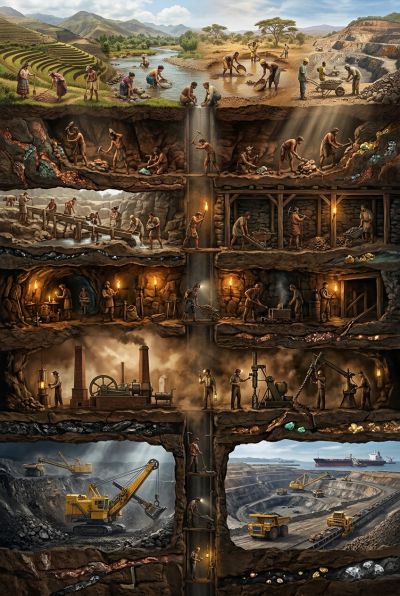
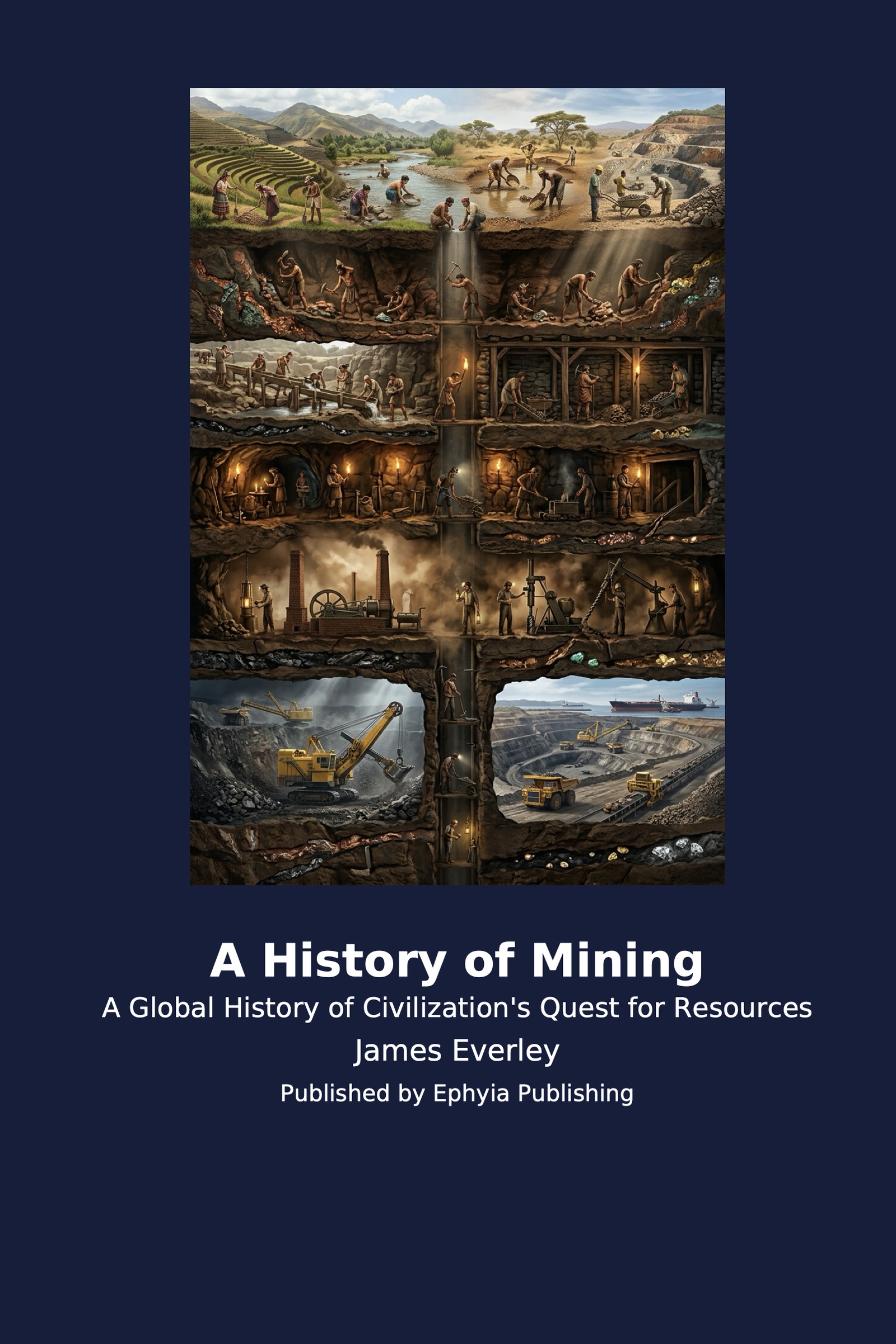
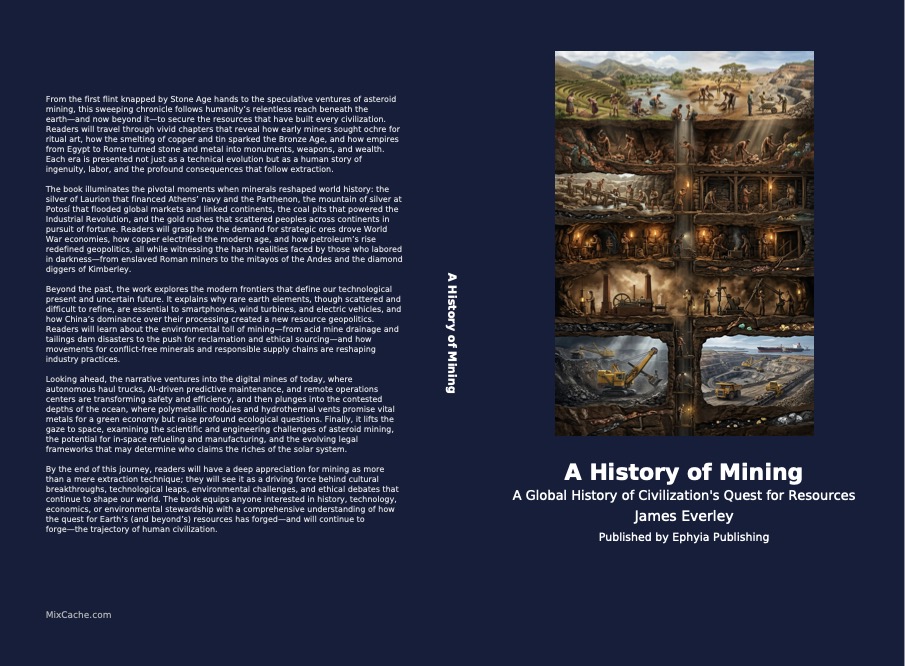
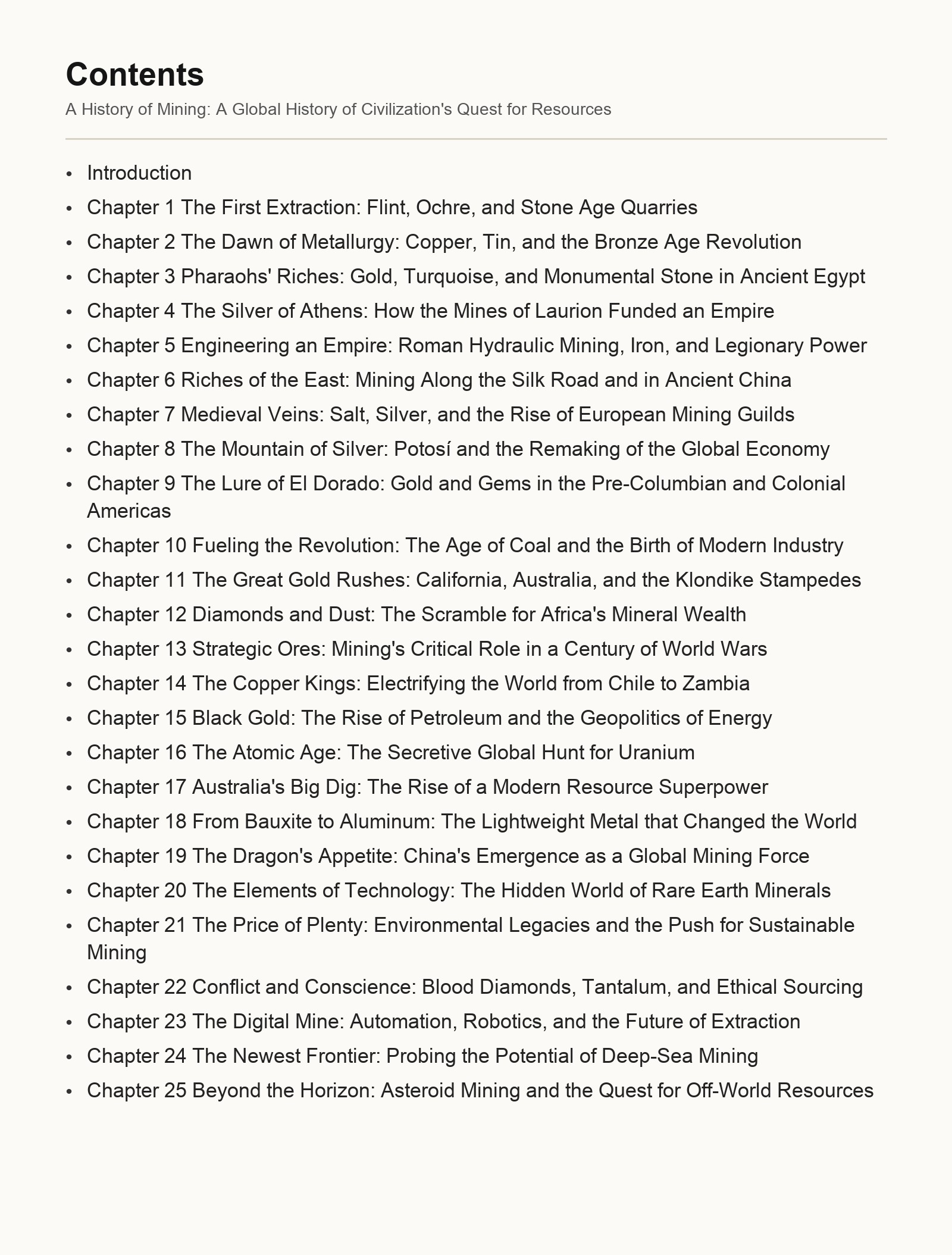
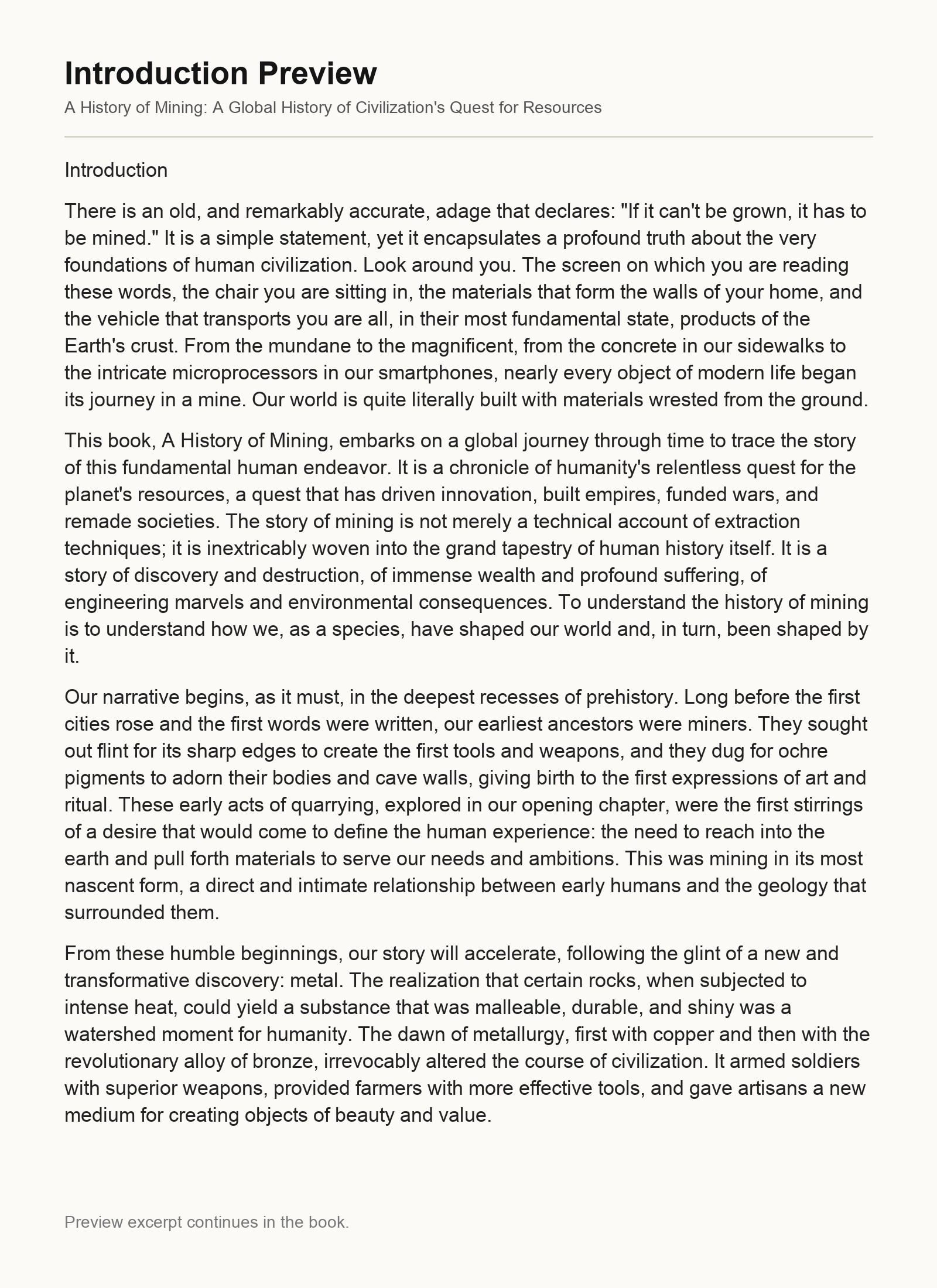
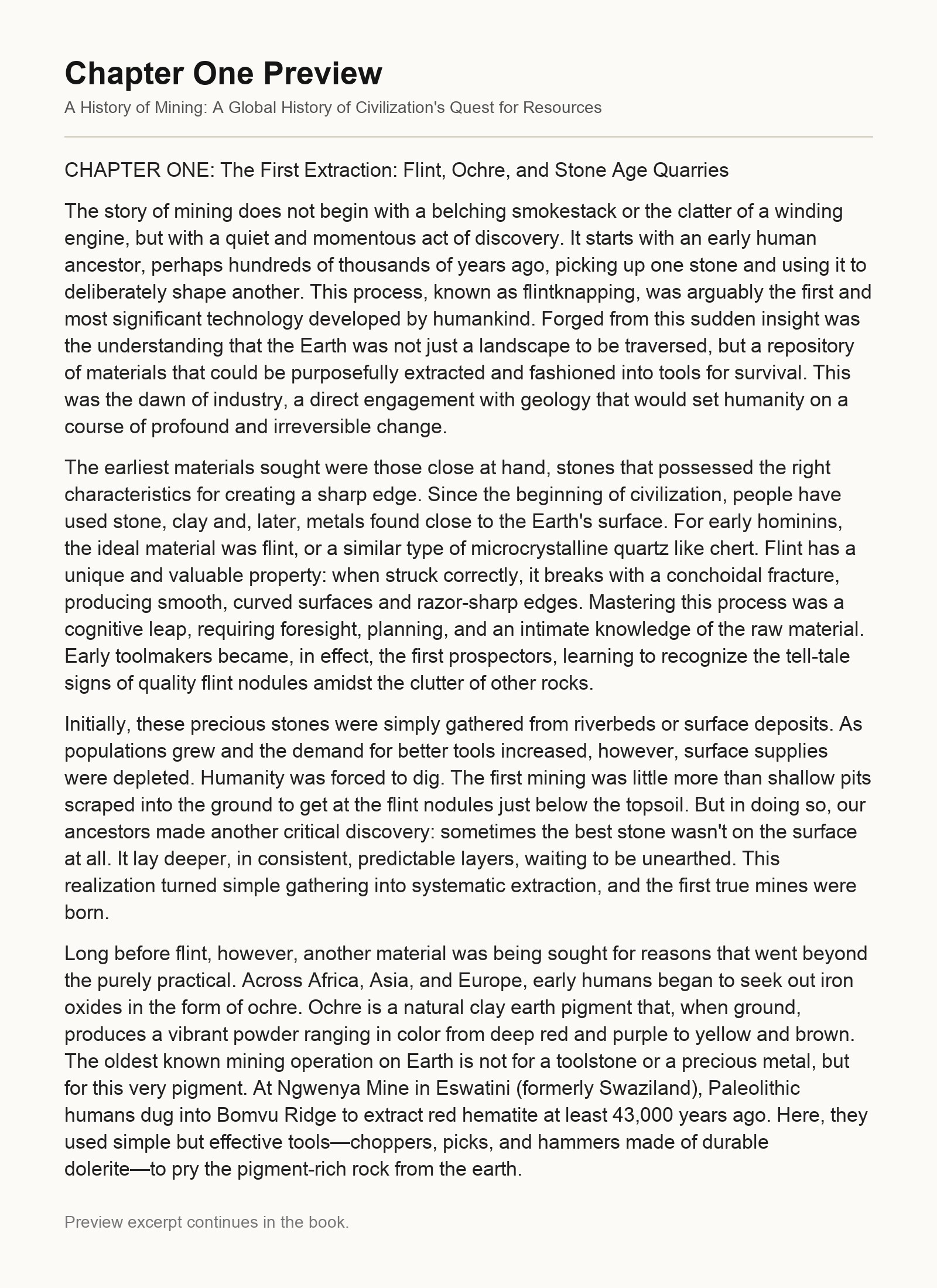
From the first flint knapped by Stone Age hands to the speculative ventures of asteroid mining, this sweeping chronicle follows humanity’s relentless reach beneath the earth—and now beyond it—to secure the resources that have built every civilization. Readers will travel through vivid chapters that reveal how early miners sought ochre for ritual art, how the smelting of copper and tin sparked the Bronze Age, and how empires from Egypt to Rome turned stone and metal into monuments, weapons, and wealth. Each era is presented not just as a technical evolution but as a human story of ingenuity, labor, and the profound consequences that follow extraction.
The book illuminates the pivotal moments when minerals reshaped world history: the silver of Laurion that financed Athens’ navy and the Parthenon, the mountain of silver at Potosí that flooded global markets and linked continents, the coal pits that powered the Industrial Revolution, and the gold rushes that scattered peoples across continents in pursuit of fortune. Readers will grasp how the demand for strategic ores drove World War economies, how copper electrified the modern age, and how petroleum’s rise redefined geopolitics, all while witnessing the harsh realities faced by those who labored in darkness—from enslaved Roman miners to the mitayos of the Andes and the diamond diggers of Kimberley.
Beyond the past, the work explores the modern frontiers that define our technological present and uncertain future. It explains why rare earth elements, though scattered and difficult to refine, are essential to smartphones, wind turbines, and electric vehicles, and how China’s dominance over their processing created a new resource geopolitics. Readers will learn about the environmental toll of mining—from acid mine drainage and tailings dam disasters to the push for reclamation and ethical sourcing—and how movements for conflict‑free minerals and responsible supply chains are reshaping industry practices.
Looking ahead, the narrative ventures into the digital mines of today, where autonomous haul trucks, AI‑driven predictive maintenance, and remote operations centers are transforming safety and efficiency, and then plunges into the contested depths of the ocean, where polymetallic nodules and hydrothermal vents promise vital metals for a green economy but raise profound ecological questions. Finally, it lifts the gaze to space, examining the scientific and engineering challenges of asteroid mining, the potential for in‑space refueling and manufacturing, and the evolving legal frameworks that may determine who claims the riches of the solar system.
By the end of this journey, readers will have a deep appreciation for mining as more than a mere extraction technique; they will see it as a driving force behind cultural breakthroughs, technological leaps, environmental challenges, and ethical debates that continue to shape our world. The book equips anyone interested in history, technology, economics, or environmental stewardship with a comprehensive understanding of how the quest for Earth’s (and beyond’s) resources has forged—and will continue to forge—the trajectory of human civilization.
What You'll Find Inside:
- Mining's foundational role in human civilization from Stone Age quarries to modern resource superpowers
- How mineral discoveries have driven economic transformations, funded empires, and reshaped global trade networks
- The technological evolution of extraction techniques from simple tools to automation and robotics
- The enduring environmental and social costs of mining throughout history and the push for sustainability
- Future frontiers of mining including deep-sea extraction and asteroid mining as humanity seeks off-world resources
Who's It For:
This book is ideal for history enthusiasts, economics students, environmental professionals, and mining industry professionals seeking to understand how the extraction of Earth's resources has shaped human civilization from prehistoric times to the present day. Readers interested in the intersection of technology, environment, and global development will find valuable insights into both historical patterns and future challenges in resource management.
Author:
Published By:
Date Published:
May 27, 2026
Type:
Nonfiction
Language:
English
Also Available In:
Word Count:
51,250 words
Reading Time:
3 hours 35 minutes
Sample:
Order:
Order A History of Mining (Hardcover) on MixCache.com:
Buy NowPrint copy is made to order and ships worldwide. Includes the ebook free, ready to read instantly.
$5 account credit for all new MixCache.com accounts, usable toward any ebook purchase!*