Browse by Category
Fiction
- Action & Adventure
- African American
- Anthologies
- Children's Fiction
- Classics
- Comics & Graphic Novels
- Coming of Age
- Contemporary
- Cultural & Regional
- Drama
- Erotica
- Fantasy
- General
- Historical Fiction
- Horror
- Humor & Satire
- Literary Fiction
- Mystery, Thriller & Suspense
- Poetry
- Religious & Inspirational
- Romance
- Science Fiction
- Short Stories
- War & Military
- Westerns
- Women's Fiction
- Young Adult
Non-Fiction
- Antiques & Collectibles
- Arts & Photography
- Biographies & Memoirs
- Business & Money
- Children's Non-Fiction
-
Computers & Technology
- Artificial Intelligence
- Computer Science
- Cybersecurity & Cryptography
- Data Science & Analytics
- Databases & Big Data
- Game Development & Design
- General
- Hardware & DIY
- Mobile App Development
- Networking & Cloud Computing
- Operating Systems
- Programming
- Robotics
- Software
- Software Engineering
- User Experience (UX) & Design
- Web Development & Design
- Cooking, Food & Wine
- Crafts, Hobbies & Home
- Education & Teaching
- Engineering
- General
- Health, Fitness & Dieting
-
History
- African History
- African History - North Africa
- African History - Sub-Saharan Africa
- American History
- American History - 20th Century
- American History - Civil War
- American History - Colonial Period
- Ancient History
- Asian History
- Asian History - China
- Asian History - India
- Asian History - Japan
- Asian History - Southeast Asia
- European History
- European History - Ancient Greece
- European History - Ancient Rome
- European History - Medieval
- European History - Modern
- European History - Renaissance
- General
- Middle Eastern History
- Military History
- Military History - Aviation
- Military History - Naval
- Social & Cultural History
- World History
- Humor & Entertainment
- Industrial Technology
- Language Learning
- Law
- LGBTQ+ Non-Fiction
- Literary Criticism
- Medical Books
- Parenting & Relationships
- Philosophy
- Politics & Social Sciences
- Reference
- Religion & Spirituality
-
Science & Math
- Agricultural Sciences
- Astronomy & Space Science
- Behavioral Sciences
- Biological Sciences
- Botany & Plant Science
- Chemistry
- Earth Sciences
- Engineering - Chemical
- Engineering - Civil
- Engineering - Electrical
- Engineering - Mechanical
- Environment
- General
- Geology
- Mathematics
- Nature & Ecology
- Oceanography
- Paleontology
- Physics
- Statistics
- Self-Help
- Sports & Outdoors
- Study Aids
- Sustainability & Green Living
- Textbooks
- Transportation
- Travel
- True Crime
- Urban Planning & Development
- Veterinary Medicine
- Writing & Publishing
Jump to Section
MixCache.com Total Access
Unlimited reading and audiobooks for every book published by MixCache.com.
Included titles carry the MTA badge.
Learn more →A History of Togo
About this book:
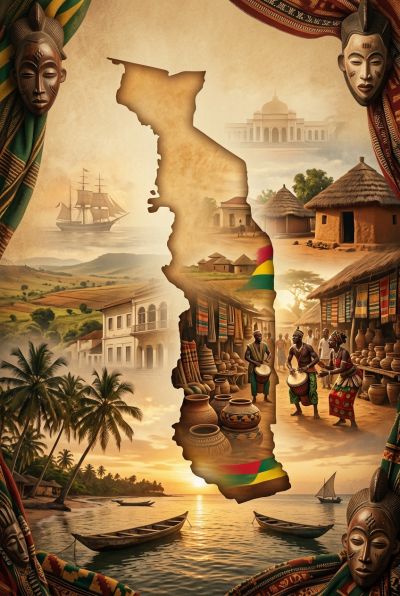
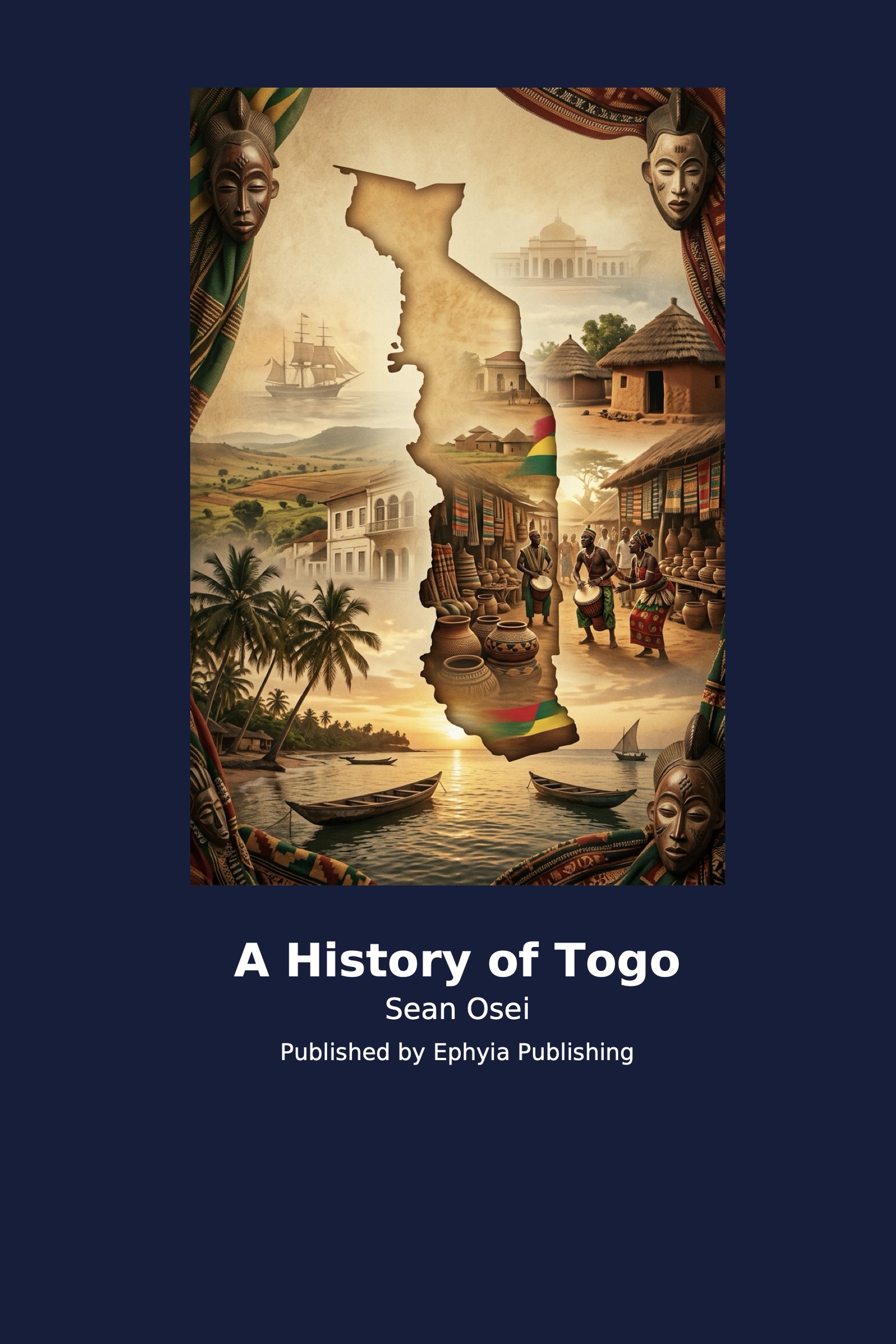
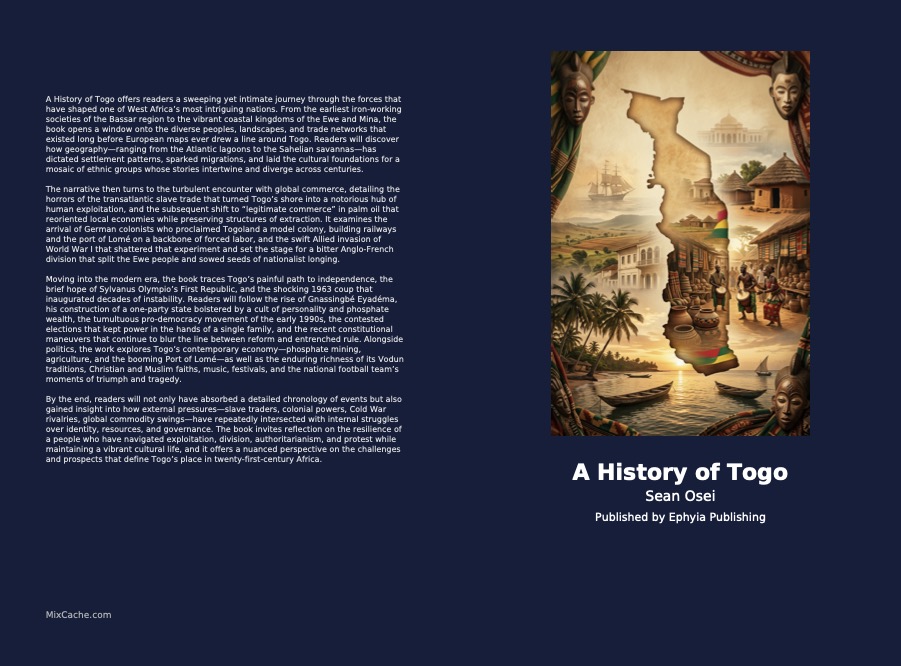
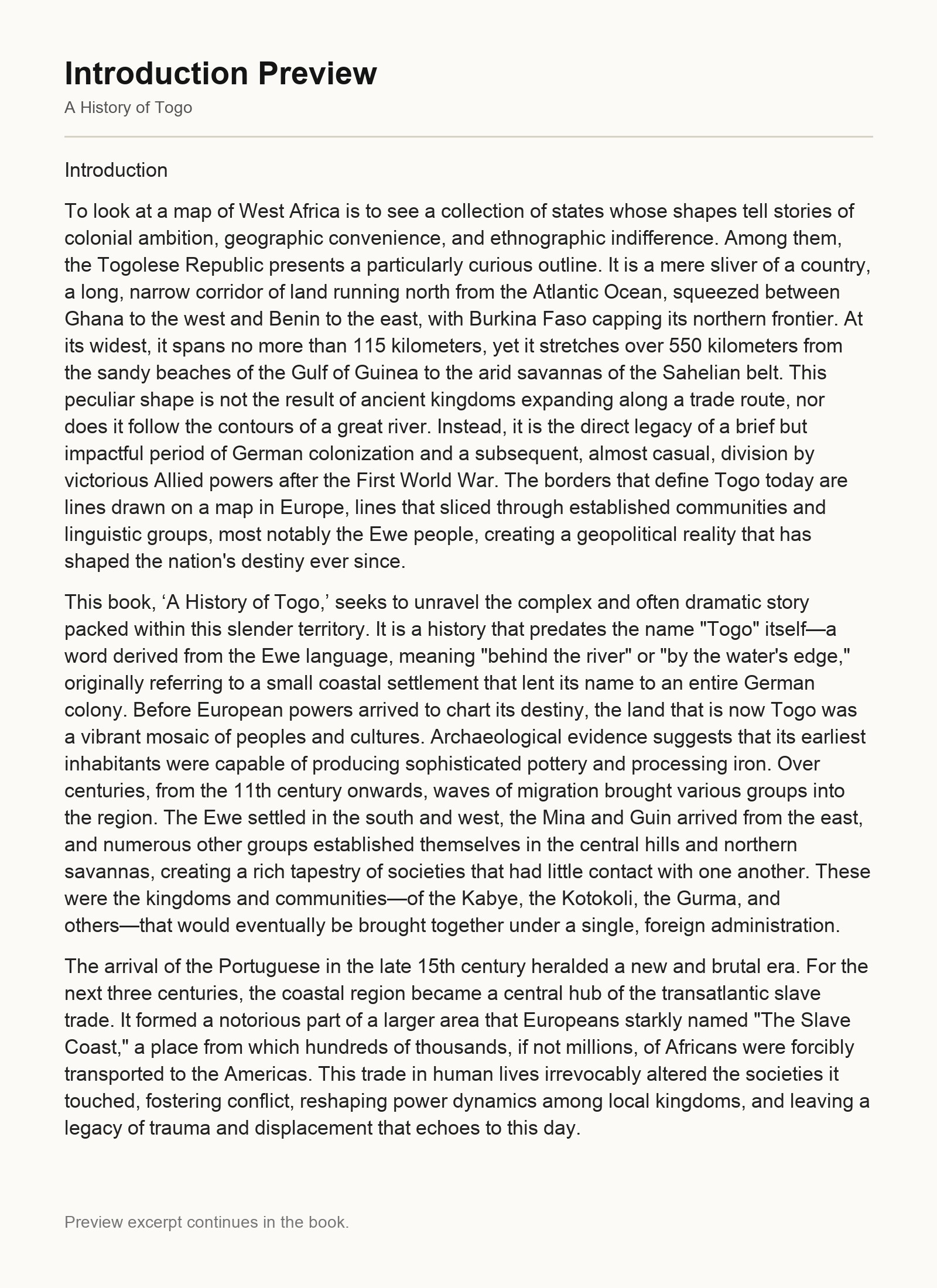
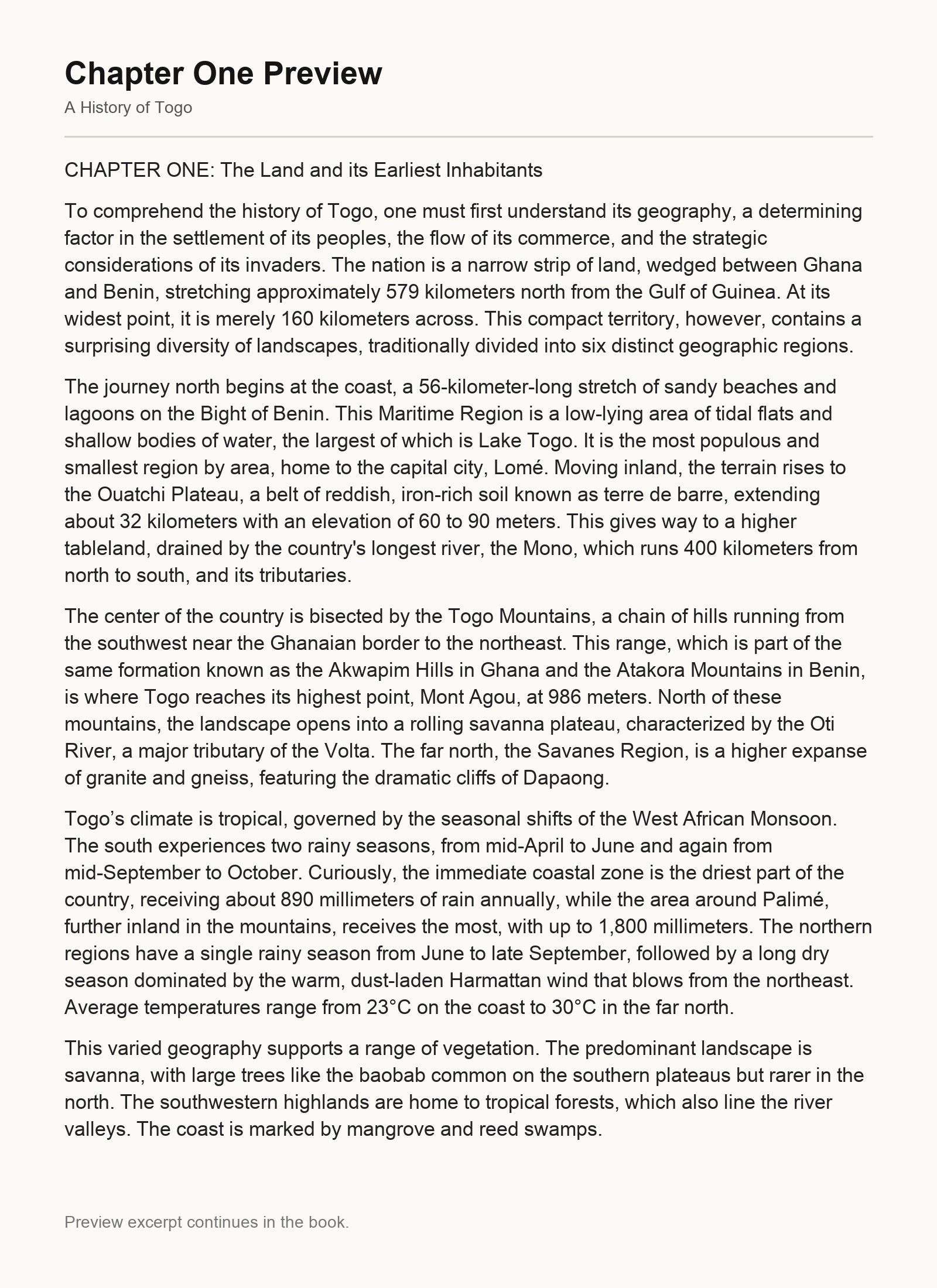
A History of Togo offers readers a sweeping yet intimate journey through the forces that have shaped one of West Africa’s most intriguing nations. From the earliest iron‑working societies of the Bassar region to the vibrant coastal kingdoms of the Ewe and Mina, the book opens a window onto the diverse peoples, landscapes, and trade networks that existed long before European maps ever drew a line around Togo. Readers will discover how geography—ranging from the Atlantic lagoons to the Sahelian savannas—has dictated settlement patterns, sparked migrations, and laid the cultural foundations for a mosaic of ethnic groups whose stories intertwine and diverge across centuries.
The narrative then turns to the turbulent encounter with global commerce, detailing the horrors of the transatlantic slave trade that turned Togo’s shore into a notorious hub of human exploitation, and the subsequent shift to “legitimate commerce” in palm oil that reoriented local economies while preserving structures of extraction. It examines the arrival of German colonists who proclaimed Togoland a model colony, building railways and the port of Lomé on a backbone of forced labor, and the swift Allied invasion of World War I that shattered that experiment and set the stage for a bitter Anglo‑French division that split the Ewe people and sowed seeds of nationalist longing.
Moving into the modern era, the book traces Togo’s painful path to independence, the brief hope of Sylvanus Olympio’s First Republic, and the shocking 1963 coup that inaugurated decades of instability. Readers will follow the rise of Gnassingbé Eyadéma, his construction of a one‑party state bolstered by a cult of personality and phosphate wealth, the tumultuous pro‑democracy movement of the early 1990s, the contested elections that kept power in the hands of a single family, and the recent constitutional maneuvers that continue to blur the line between reform and entrenched rule. Alongside politics, the work explores Togo’s contemporary economy—phosphate mining, agriculture, and the booming Port of Lomé—as well as the enduring richness of its Vodun traditions, Christian and Muslim faiths, music, festivals, and the national football team’s moments of triumph and tragedy.
By the end, readers will not only have absorbed a detailed chronology of events but also gained insight into how external pressures—slave traders, colonial powers, Cold War rivalries, global commodity swings—have repeatedly intersected with internal struggles over identity, resources, and governance. The book invites reflection on the resilience of a people who have navigated exploitation, division, authoritarianism, and protest while maintaining a vibrant cultural life, and it offers a nuanced perspective on the challenges and prospects that define Togo’s place in twenty‑first‑century Africa.
What You'll Find Inside:
- The book examines how Togo's unique geography and colonial borders (particularly the division of the Ewe people) have shaped its political challenges and national identity struggles throughout history.
- It traces Togo's journey from pre-colonial societies through German colonization, World War I occupation, League of Nations mandate, to independence in 1960 under Sylvanus Olympio.
- The book details the long authoritarian rule of Gnassingbé Eyadéma (1967-2005), including his one-party state, cult of personality, and economic policies centered on phosphate mining.
- It covers Togo's tumultuous path to democracy, including the pro-democracy movement of the 1990s, the Sovereign National Conference, and the contested elections that followed.
- The book concludes with an analysis of contemporary Togo, examining its modern economy (Port of Lomé, industrial zones), cultural diversity, and ongoing challenges including political succession issues, economic inequality, and regional security threats.
Who's It For:
This book would be most beneficial for students and scholars of African history, particularly those interested in West African colonialism and post-independence politics. It would also appeal to readers seeking to understand the specific historical roots of Togo's current political situation, including the Eyadéma dynasty's long rule and recent constitutional changes. Additionally, anyone interested in the impacts of the transatlantic slave trade, Cold War politics in Africa, or contemporary African economic development would find valuable insights in this comprehensive historical account.
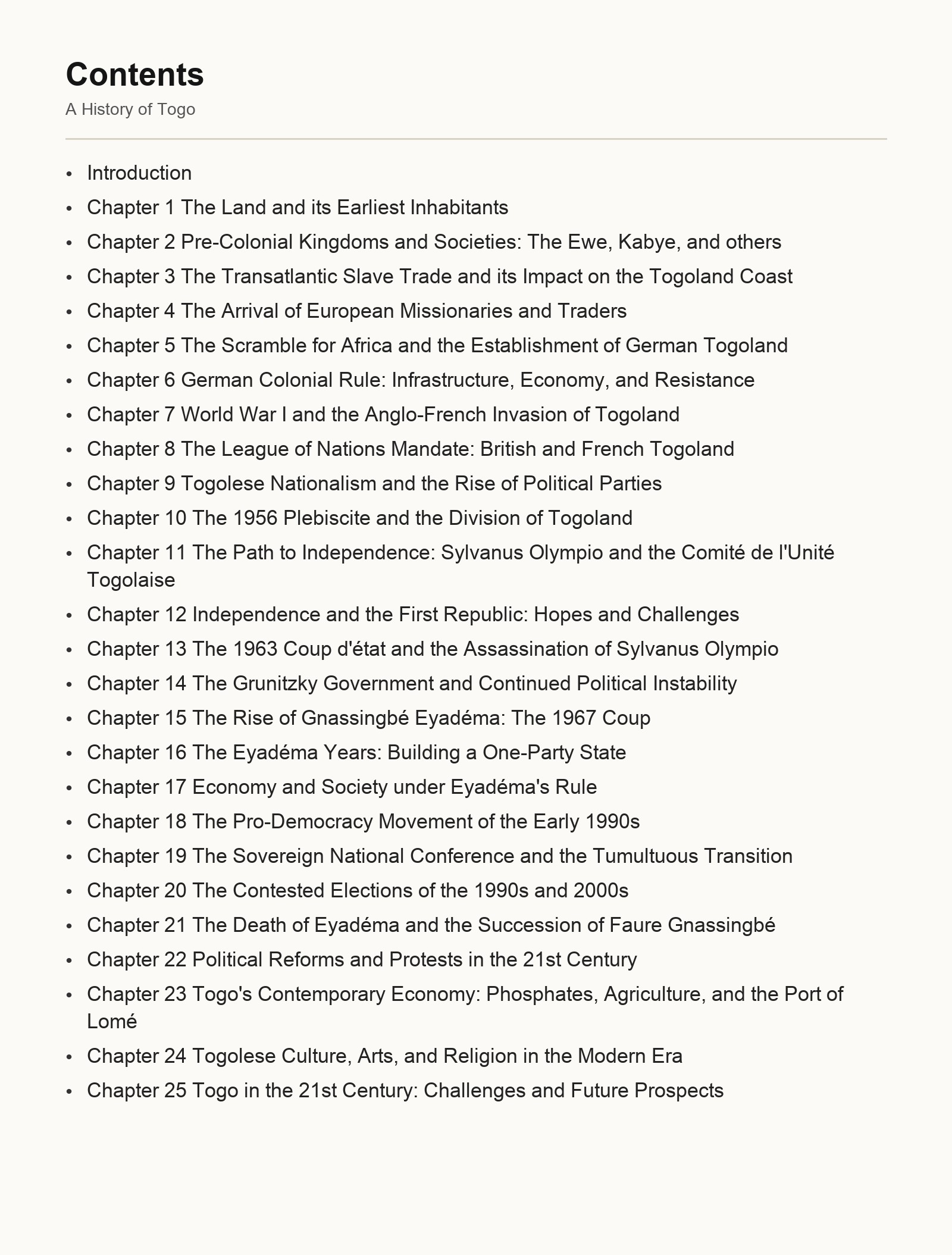
Table of Contents:
- Introduction
- Chapter 1 The Land and its Earliest Inhabitants
- Chapter 2 Pre-Colonial Kingdoms and Societies: The Ewe, Kabye, and others
- Chapter 3 The Transatlantic Slave Trade and its Impact on the Togoland Coast
- Chapter 4 The Arrival of European Missionaries and Traders
- Chapter 5 The Scramble for Africa and the Establishment of German Togoland
- Chapter 6 German Colonial Rule: Infrastructure, Economy, and Resistance
- Chapter 7 World War I and the Anglo-French Invasion of Togoland
- Chapter 8 The League of Nations Mandate: British and French Togoland
- Chapter 9 Togolese Nationalism and the Rise of Political Parties
- Chapter 10 The 1956 Plebiscite and the Division of Togoland
- Chapter 11 The Path to Independence: Sylvanus Olympio and the Comité de l'Unité Togolaise
- Chapter 12 Independence and the First Republic: Hopes and Challenges
- Chapter 13 The 1963 Coup d'état and the Assassination of Sylvanus Olympio
- Chapter 14 The Grunitzky Government and Continued Political Instability
- Chapter 15 The Rise of Gnassingbé Eyadéma: The 1967 Coup
- Chapter 16 The Eyadéma Years: Building a One-Party State
- Chapter 17 Economy and Society under Eyadéma's Rule
- Chapter 18 The Pro-Democracy Movement of the Early 1990s
- Chapter 19 The Sovereign National Conference and the Tumultuous Transition
- Chapter 20 The Contested Elections of the 1990s and 2000s
- Chapter 21 The Death of Eyadéma and the Succession of Faure Gnassingbé
- Chapter 22 Political Reforms and Protests in the 21st Century
- Chapter 23 Togo's Contemporary Economy: Phosphates, Agriculture, and the Port of Lomé
- Chapter 24 Togolese Culture, Arts, and Religion in the Modern Era
- Chapter 25 Togo in the 21st Century: Challenges and Future Prospects
Author:
Published By:
Date Published:
May 25, 2026
Type:
Nonfiction
Language:
English
Word Count:
42,669 words
Reading Time:
2 hours 59 minutes
Sample:
Order:
Order A History of Togo (Hardcover) on MixCache.com:
Buy NowPrint copy is made to order and ships worldwide. Includes the ebook free, ready to read instantly.
$5 account credit for all new MixCache.com accounts, usable toward any ebook purchase!*