Browse by Category
Fiction
- Action & Adventure
- African American
- Anthologies
- Children's Fiction
- Classics
- Comics & Graphic Novels
- Coming of Age
- Contemporary
- Cultural & Regional
- Drama
- Erotica
- Fantasy
- General
- Historical Fiction
- Horror
- Humor & Satire
- Literary Fiction
- Mystery, Thriller & Suspense
- Poetry
- Religious & Inspirational
- Romance
- Science Fiction
- Short Stories
- War & Military
- Westerns
- Women's Fiction
- Young Adult
Non-Fiction
- Antiques & Collectibles
- Arts & Photography
- Biographies & Memoirs
- Business & Money
- Children's Non-Fiction
-
Computers & Technology
- Artificial Intelligence
- Computer Science
- Cybersecurity & Cryptography
- Data Science & Analytics
- Databases & Big Data
- Game Development & Design
- General
- Hardware & DIY
- Mobile App Development
- Networking & Cloud Computing
- Operating Systems
- Programming
- Robotics
- Software
- Software Engineering
- User Experience (UX) & Design
- Web Development & Design
- Cooking, Food & Wine
- Crafts, Hobbies & Home
- Education & Teaching
- Engineering
- General
- Health, Fitness & Dieting
-
History
- African History
- African History - North Africa
- African History - Sub-Saharan Africa
- American History
- American History - 20th Century
- American History - Civil War
- American History - Colonial Period
- Ancient History
- Asian History
- Asian History - China
- Asian History - India
- Asian History - Japan
- Asian History - Southeast Asia
- European History
- European History - Ancient Greece
- European History - Ancient Rome
- European History - Medieval
- European History - Modern
- European History - Renaissance
- General
- Middle Eastern History
- Military History
- Military History - Aviation
- Military History - Naval
- Social & Cultural History
- World History
- Humor & Entertainment
- Industrial Technology
- Language Learning
- Law
- LGBTQ+ Non-Fiction
- Literary Criticism
- Medical Books
- Parenting & Relationships
- Philosophy
- Politics & Social Sciences
- Reference
- Religion & Spirituality
-
Science & Math
- Agricultural Sciences
- Astronomy & Space Science
- Behavioral Sciences
- Biological Sciences
- Botany & Plant Science
- Chemistry
- Earth Sciences
- Engineering - Chemical
- Engineering - Civil
- Engineering - Electrical
- Engineering - Mechanical
- Environment
- General
- Geology
- Mathematics
- Nature & Ecology
- Oceanography
- Paleontology
- Physics
- Statistics
- Self-Help
- Sports & Outdoors
- Study Aids
- Sustainability & Green Living
- Textbooks
- Transportation
- Travel
- True Crime
- Urban Planning & Development
- Veterinary Medicine
- Writing & Publishing
Jump to Section
MixCache.com Total Access
Unlimited reading and audiobooks for every book published by MixCache.com.
Included titles carry the MTA badge.
Learn more →
Aristocracy and Royalty
A Global History of Noble Power and Dynastic Rule
About this book:
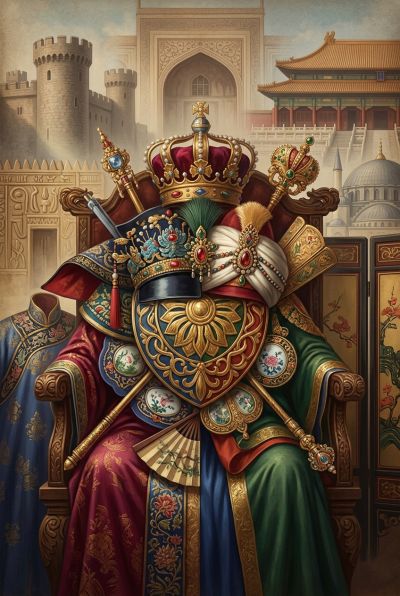
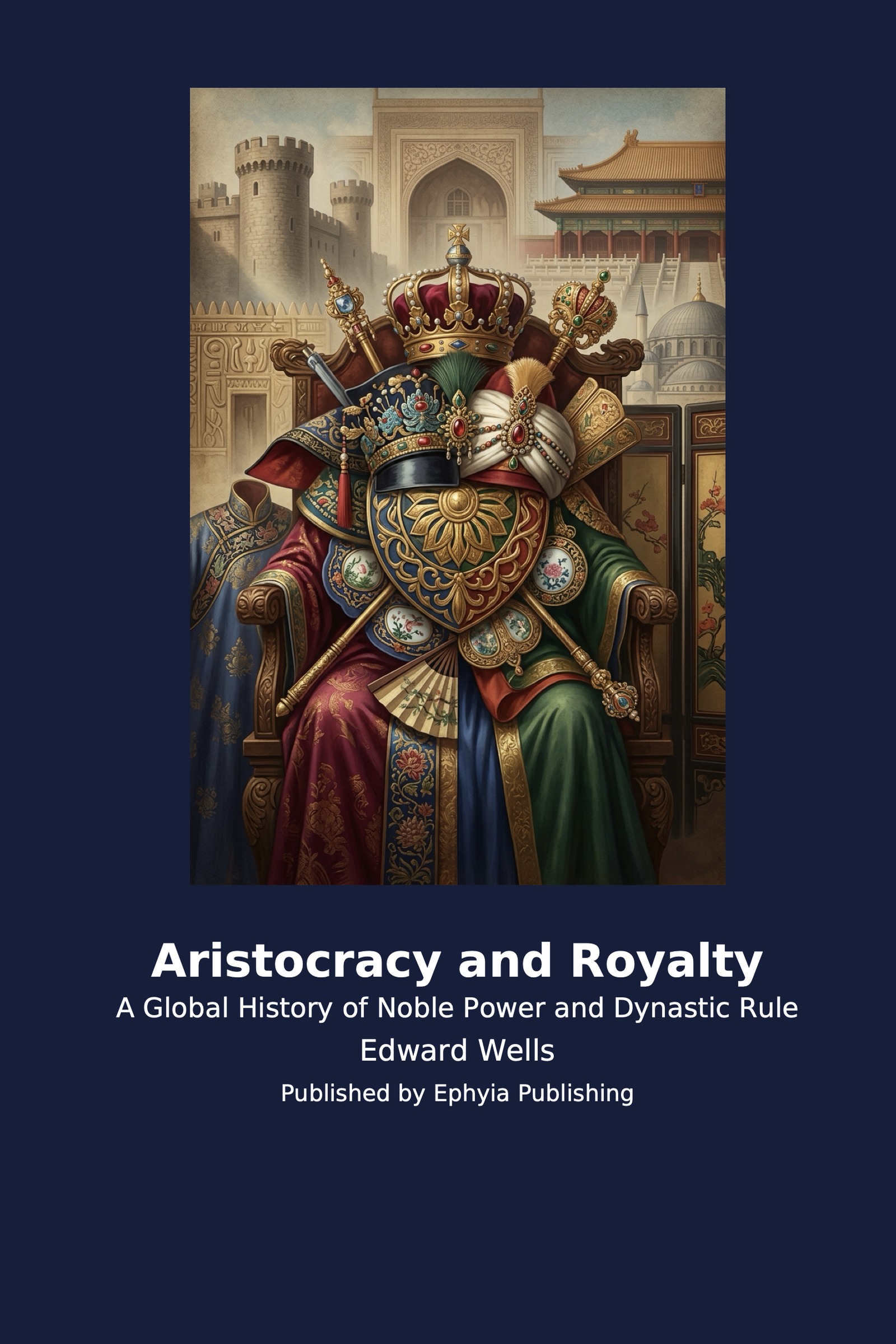
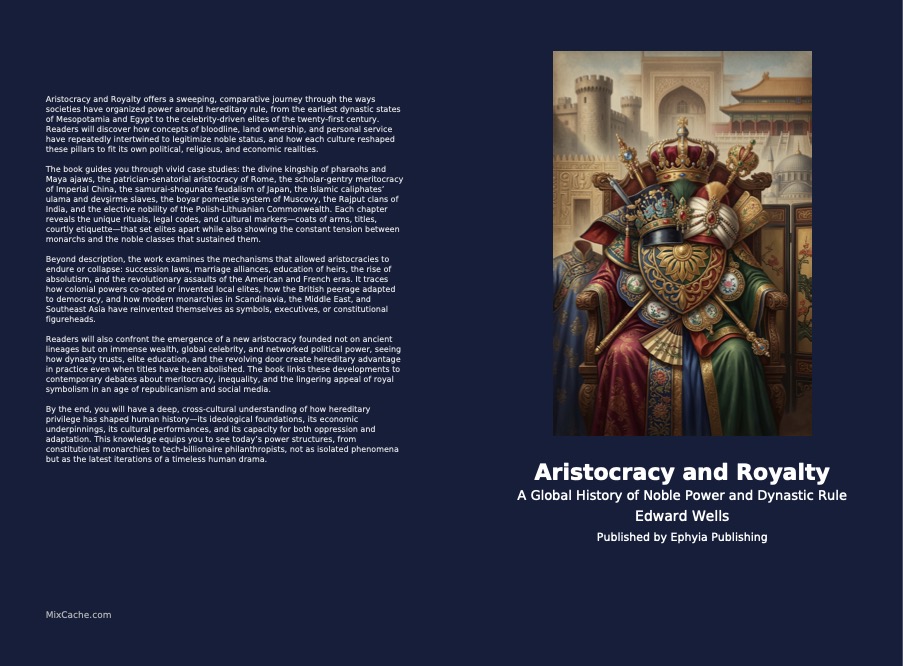
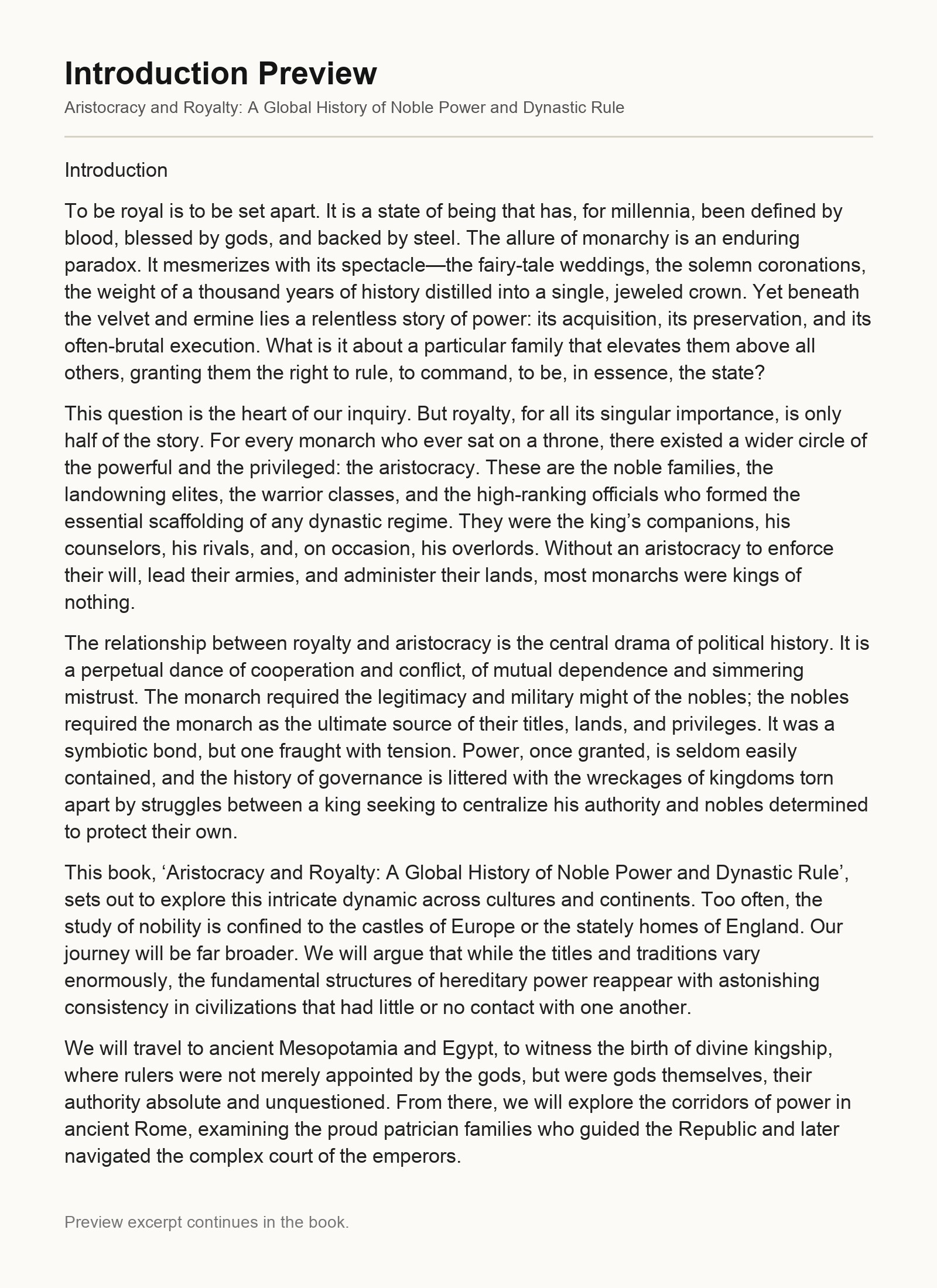
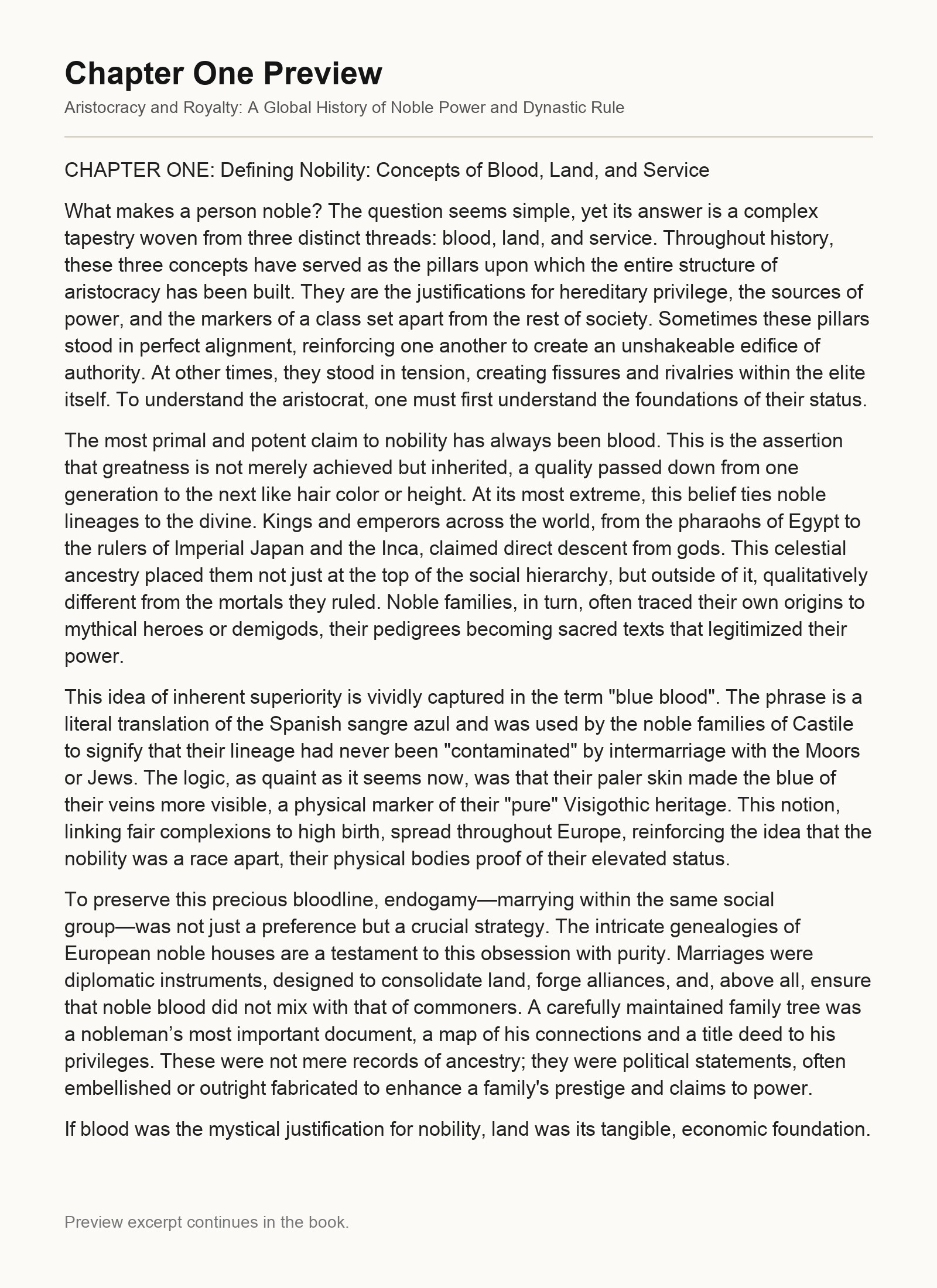
Aristocracy and Royalty offers a sweeping, comparative journey through the ways societies have organized power around hereditary rule, from the earliest dynastic states of Mesopotamia and Egypt to the celebrity‑driven elites of the twenty‑first century. Readers will discover how concepts of bloodline, land ownership, and personal service have repeatedly intertwined to legitimize noble status, and how each culture reshaped these pillars to fit its own political, religious, and economic realities.
The book guides you through vivid case studies: the divine kingship of pharaohs and Maya ajaws, the patrician‑senatorial aristocracy of Rome, the scholar‑gentry meritocracy of Imperial China, the samurai‑shogunate feudalism of Japan, the Islamic caliphates’ ulama and devşirme slaves, the boyar pomestie system of Muscovy, the Rajput clans of India, and the elective nobility of the Polish‑Lithuanian Commonwealth. Each chapter reveals the unique rituals, legal codes, and cultural markers—coats of arms, titles, courtly etiquette—that set elites apart while also showing the constant tension between monarchs and the noble classes that sustained them.
Beyond description, the work examines the mechanisms that allowed aristocracies to endure or collapse: succession laws, marriage alliances, education of heirs, the rise of absolutism, and the revolutionary assaults of the American and French eras. It traces how colonial powers co‑opted or invented local elites, how the British peerage adapted to democracy, and how modern monarchies in Scandinavia, the Middle East, and Southeast Asia have reinvented themselves as symbols, executives, or constitutional figureheads.
Readers will also confront the emergence of a new aristocracy founded not on ancient lineages but on immense wealth, global celebrity, and networked political power, seeing how dynasty trusts, elite education, and the revolving door create hereditary advantage in practice even when titles have been abolished. The book links these developments to contemporary debates about meritocracy, inequality, and the lingering appeal of royal symbolism in an age of republicanism and social media.
By the end, you will have a deep, cross‑cultural understanding of how hereditary privilege has shaped human history—its ideological foundations, its economic underpinnings, its cultural performances, and its capacity for both oppression and adaptation. This knowledge equips you to see today’s power structures, from constitutional monarchies to tech‑billionaire philanthropists, not as isolated phenomena but as the latest iterations of a timeless human drama.
What You'll Find Inside:
- The book analyzes how noble status has historically rested on three pillars—blood, land, and service—and shows how their relative importance shifts across cultures and time periods.
- It provides a comparative global survey of kingship and aristocracy, from divine rulers in Mesopotamia and Egypt to scholar‑gentry in China, samurai in Japan, and warrior clans in India and the Americas.
- A central theme is the dynamic tension between monarchs and aristocracies, illustrating cycles of cooperation, conflict, and adaptation that shape dynastic rule.
- The work traces how revolutions, colonialism, and modernization eroded traditional hereditary privilege while also revealing the remarkable resilience and reinvention of elites.
- It concludes by examining the persistence of aristocratic and royal influence today, including the emergence of a twenty‑first‑century ‘new aristocracy’ based on wealth, celebrity, and political networks.
Who's It For:
This book is ideal for undergraduate and graduate students of world history, political science, and sociology, as well as scholars researching comparative monarchy and nobility. It will also appeal to general readers with a strong interest in how power, privilege, and hereditary rule have evolved across civilizations and continue to influence contemporary society. Policymakers and anyone curious about the historical roots of modern elite formation will find its broad, comparative perspective especially valuable.
Table of Contents:
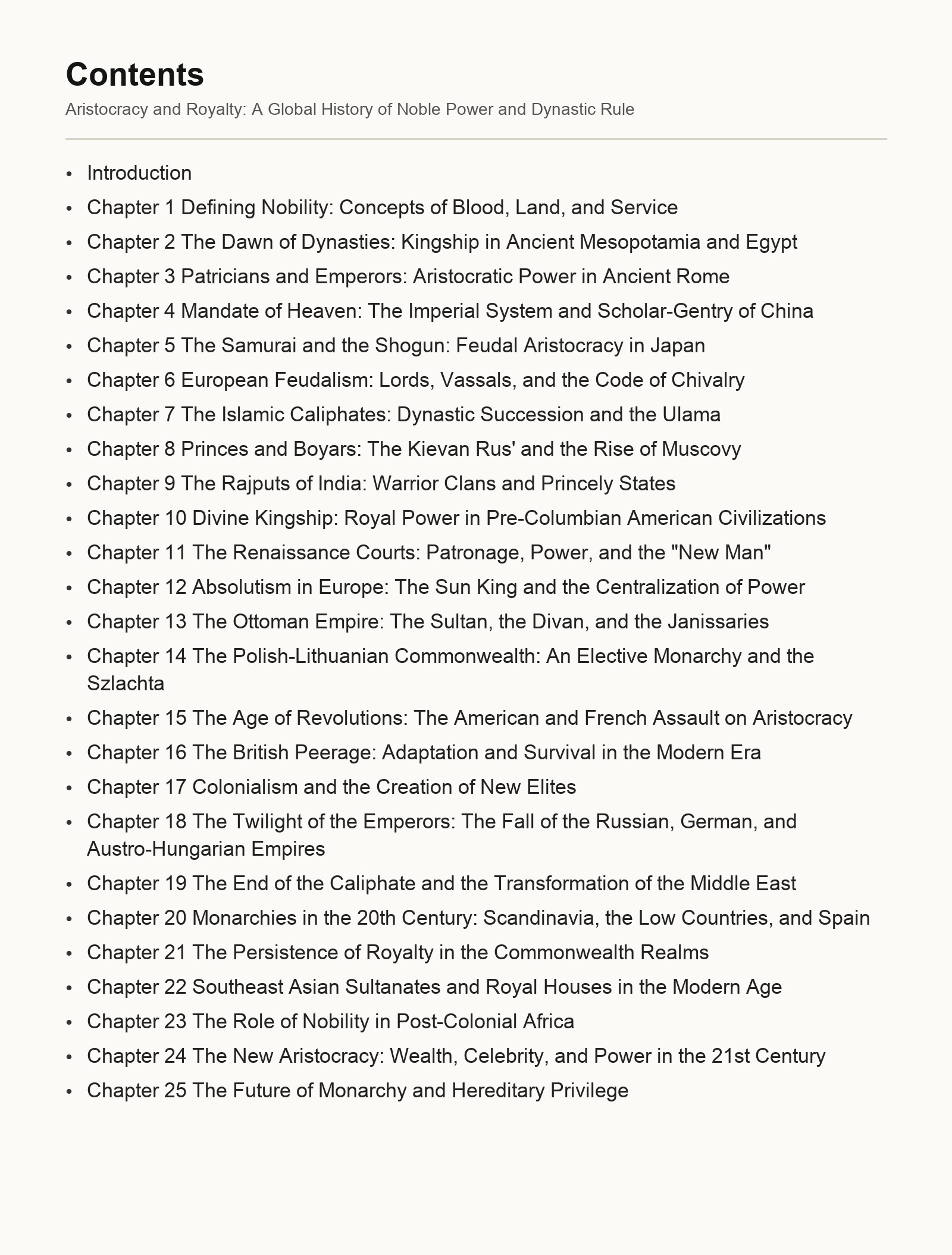
- Introduction
- Chapter 1 Defining Nobility: Concepts of Blood, Land, and Service
- Chapter 2 The Dawn of Dynasties: Kingship in Ancient Mesopotamia and Egypt
- Chapter 3 Patricians and Emperors: Aristocratic Power in Ancient Rome
- Chapter 4 Mandate of Heaven: The Imperial System and Scholar-Gentry of China
- Chapter 5 The Samurai and the Shogun: Feudal Aristocracy in Japan
- Chapter 6 European Feudalism: Lords, Vassals, and the Code of Chivalry
- Chapter 7 The Islamic Caliphates: Dynastic Succession and the Ulama
- Chapter 8 Princes and Boyars: The Kievan Rus' and the Rise of Muscovy
- Chapter 9 The Rajputs of India: Warrior Clans and Princely States
- Chapter 10 Divine Kingship: Royal Power in Pre-Columbian American Civilizations
- Chapter 11 The Renaissance Courts: Patronage, Power, and the "New Man"
- Chapter 12 Absolutism in Europe: The Sun King and the Centralization of Power
- Chapter 13 The Ottoman Empire: The Sultan, the Divan, and the Janissaries
- Chapter 14 The Polish-Lithuanian Commonwealth: An Elective Monarchy and the Szlachta
- Chapter 15 The Age of Revolutions: The American and French Assault on Aristocracy
- Chapter 16 The British Peerage: Adaptation and Survival in the Modern Era
- Chapter 17 Colonialism and the Creation of New Elites
- Chapter 18 The Twilight of the Emperors: The Fall of the Russian, German, and Austro-Hungarian Empires
- Chapter 19 The End of the Caliphate and the Transformation of the Middle East
- Chapter 20 Monarchies in the 20th Century: Scandinavia, the Low Countries, and Spain
- Chapter 21 The Persistence of Royalty in the Commonwealth Realms
- Chapter 22 Southeast Asian Sultanates and Royal Houses in the Modern Age
- Chapter 23 The Role of Nobility in Post-Colonial Africa
- Chapter 24 The New Aristocracy: Wealth, Celebrity, and Power in the 21st Century
- Chapter 25 The Future of Monarchy and Hereditary Privilege
Author:
Published By:
Date Published:
May 24, 2026
Type:
Nonfiction
Language:
English
Also Available In:
Word Count:
46,567 words
Reading Time:
3 hours 16 minutes
Sample:
Order:
Order Aristocracy and Royalty (Hardcover) on MixCache.com:
Buy NowPrint copy is made to order and ships worldwide. Includes the ebook free, ready to read instantly.
$5 account credit for all new MixCache.com accounts, usable toward any ebook purchase!*