Browse by Category
Fiction
- Action & Adventure
- African American
- Anthologies
- Children's Fiction
- Classics
- Comics & Graphic Novels
- Coming of Age
- Contemporary
- Cultural & Regional
- Drama
- Erotica
- Fantasy
- General
- Historical Fiction
- Horror
- Humor & Satire
- Literary Fiction
- Mystery, Thriller & Suspense
- Poetry
- Religious & Inspirational
- Romance
- Science Fiction
- Short Stories
- War & Military
- Westerns
- Women's Fiction
- Young Adult
Non-Fiction
- Antiques & Collectibles
- Arts & Photography
- Biographies & Memoirs
- Business & Money
- Children's Non-Fiction
-
Computers & Technology
- Artificial Intelligence
- Computer Science
- Cybersecurity & Cryptography
- Data Science & Analytics
- Databases & Big Data
- Game Development & Design
- General
- Hardware & DIY
- Mobile App Development
- Networking & Cloud Computing
- Operating Systems
- Programming
- Robotics
- Software
- Software Engineering
- User Experience (UX) & Design
- Web Development & Design
- Cooking, Food & Wine
- Crafts, Hobbies & Home
- Education & Teaching
- Engineering
- General
- Health, Fitness & Dieting
-
History
- African History
- African History - North Africa
- African History - Sub-Saharan Africa
- American History
- American History - 20th Century
- American History - Civil War
- American History - Colonial Period
- Ancient History
- Asian History
- Asian History - China
- Asian History - India
- Asian History - Japan
- Asian History - Southeast Asia
- European History
- European History - Ancient Greece
- European History - Ancient Rome
- European History - Medieval
- European History - Modern
- European History - Renaissance
- General
- Middle Eastern History
- Military History
- Military History - Aviation
- Military History - Naval
- Social & Cultural History
- World History
- Humor & Entertainment
- Industrial Technology
- Language Learning
- Law
- LGBTQ+ Non-Fiction
- Literary Criticism
- Medical Books
- Parenting & Relationships
- Philosophy
- Politics & Social Sciences
- Reference
- Religion & Spirituality
-
Science & Math
- Agricultural Sciences
- Astronomy & Space Science
- Behavioral Sciences
- Biological Sciences
- Botany & Plant Science
- Chemistry
- Earth Sciences
- Engineering - Chemical
- Engineering - Civil
- Engineering - Electrical
- Engineering - Mechanical
- Environment
- General
- Geology
- Mathematics
- Nature & Ecology
- Oceanography
- Paleontology
- Physics
- Statistics
- Self-Help
- Sports & Outdoors
- Study Aids
- Sustainability & Green Living
- Textbooks
- Transportation
- Travel
- True Crime
- Urban Planning & Development
- Veterinary Medicine
- Writing & Publishing
Jump to Section

Want unlimited access to all books published by MixCache.com (plus their audiobooks)? Try MixCache.com Total Access. Look for the MTA badge on book covers to identify included titles.
Access to infinite ebooks: Don't see the book you want? Suggest it and we'll create it (free!) for you from scratch with our powerful AI book writer. Then read it with MTA - besides profiting from any sales it makes!
A History of Burundi
About this book:

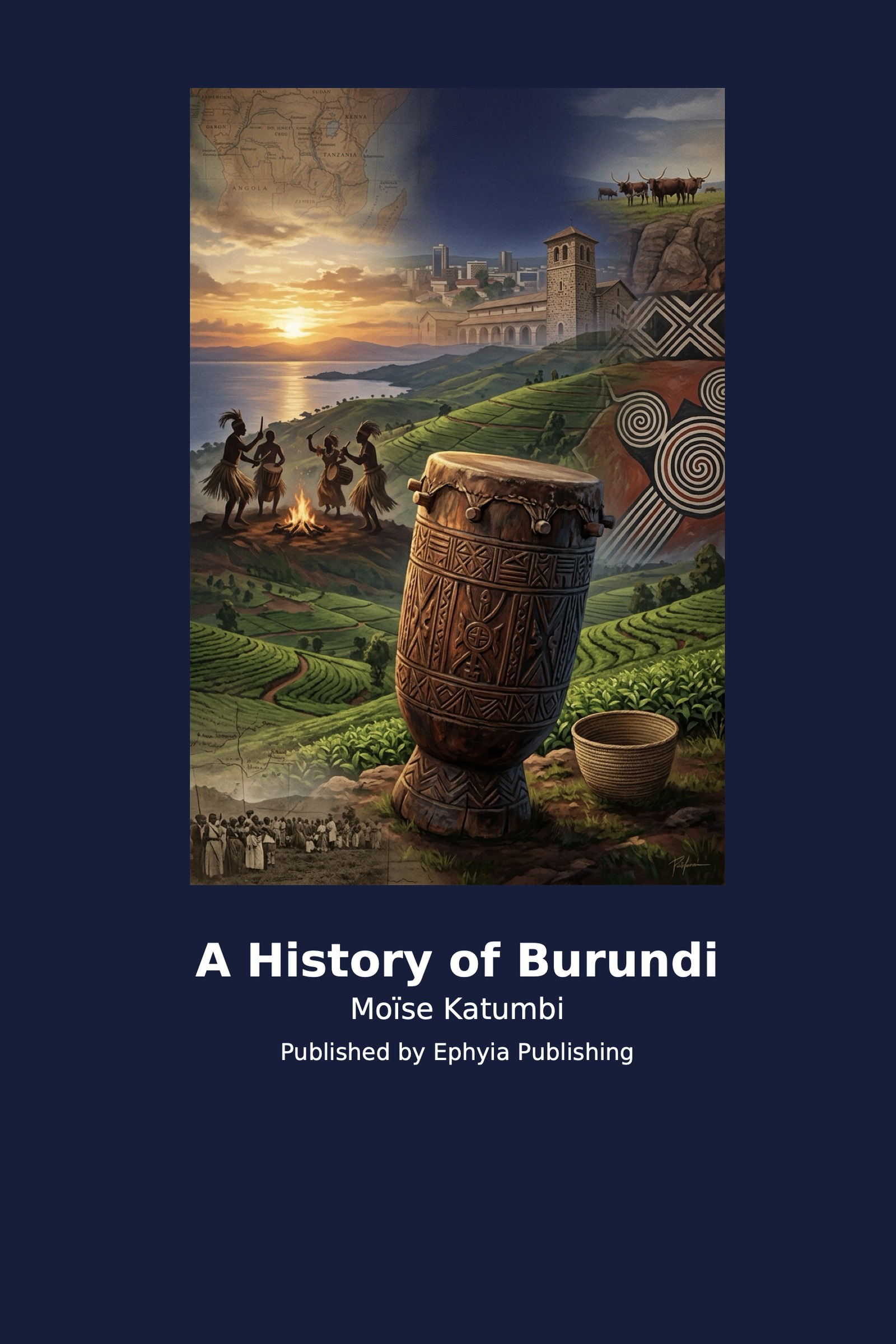
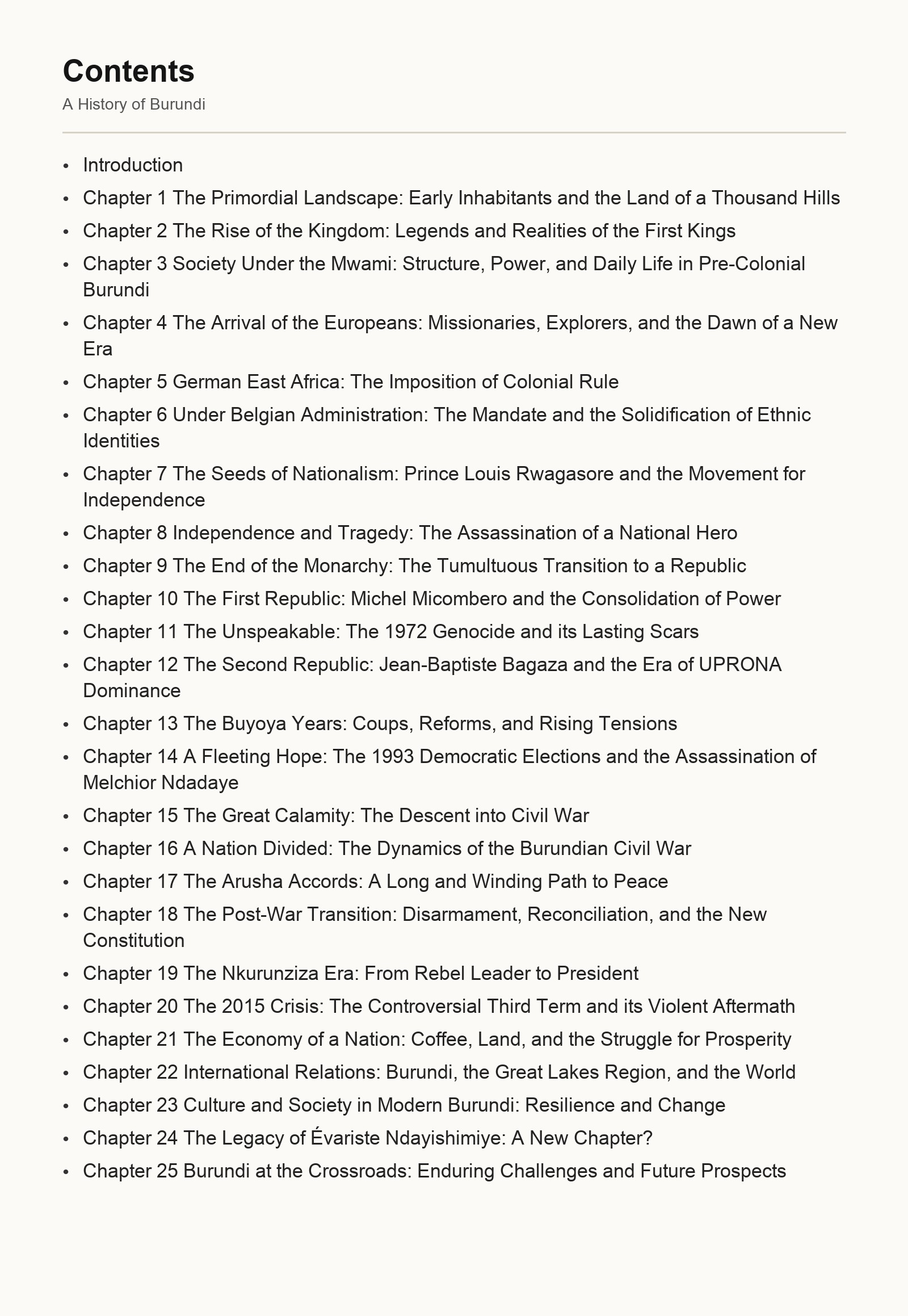
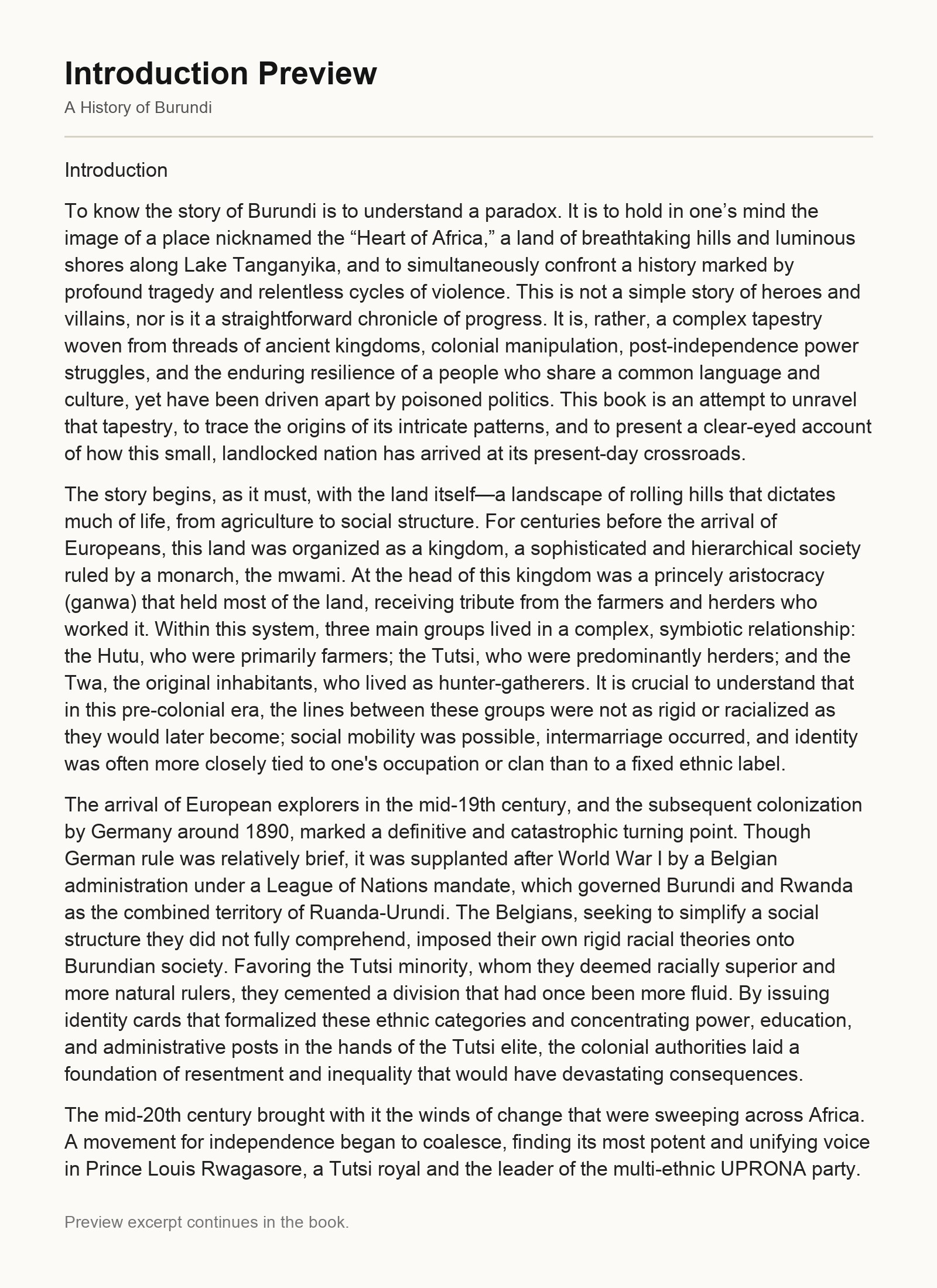
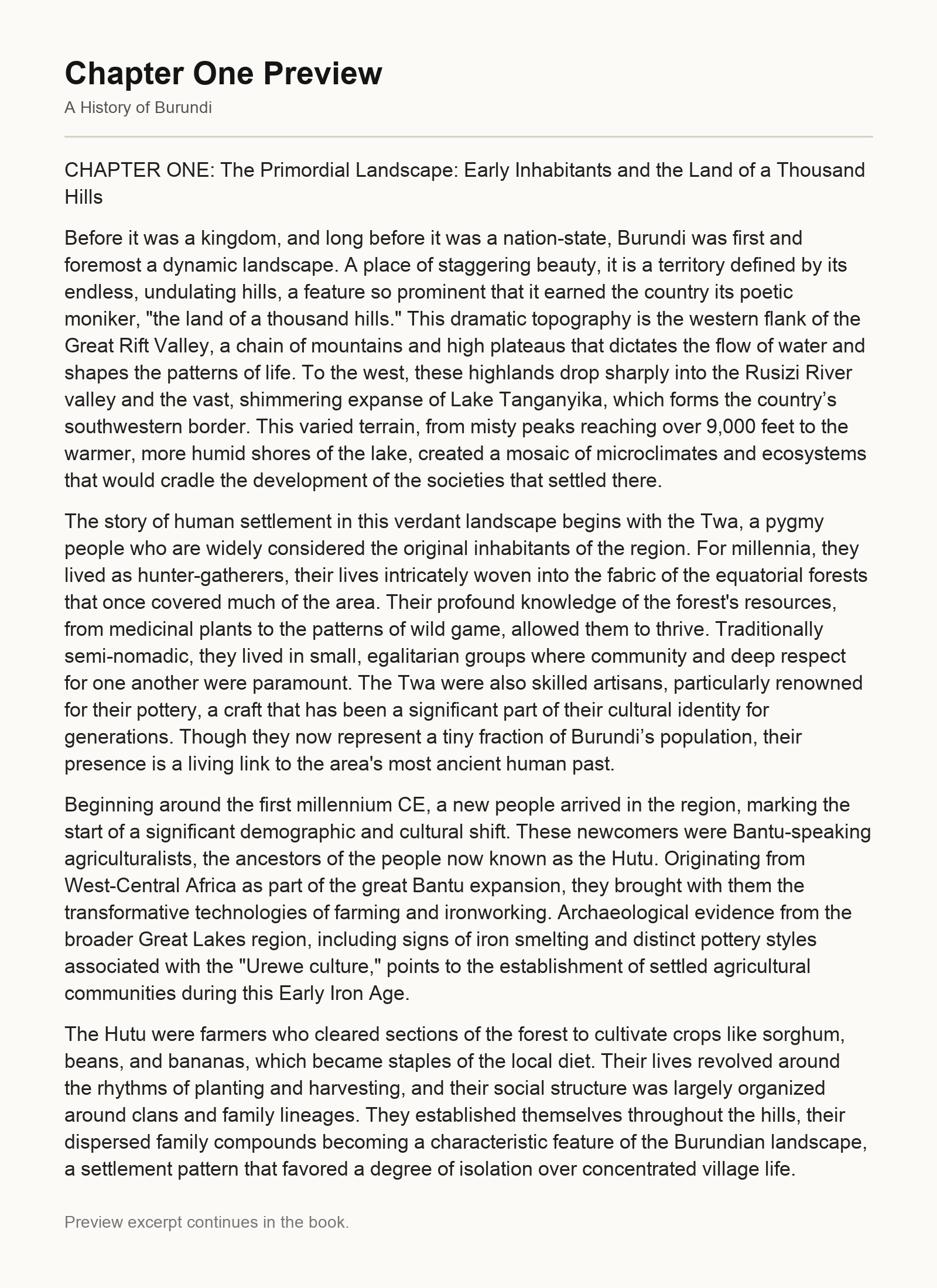
A History of Burundi offers readers a comprehensive journey through the nation’s past, from the earliest hunter‑gatherer societies that roamed its verdant hills to the complex political landscape of the twenty‑first century. By tracing the origins of the kingdom, the book reveals how geography, livelihood, and social structures intertwined to create a vibrant pre‑colonial world where identity was fluid and community life centered on the land and cattle. Readers will gain a clear picture of the daily rhythms of farming families, pastoralist clans, and the original Twa inhabitants, as well as the spiritual beliefs and customary justice systems that held society together for centuries.
The narrative then follows the dramatic arrival of European explorers, missionaries, and colonial powers, showing how external interests disrupted existing balances and imposed rigid ethnic categories that would echo through generations. Through detailed chapters on German and Belgian rule, the book explains how colonial policies of divide and rule, forced labor, and cash‑crop cultivation laid the foundations for deep‑seated resentment and inequality. Readers will understand the mechanisms by which identity cards, land reforms, and missionary education reshaped Burundian society and set the stage for nationalist awakening.
Central to the book is the rise and tragic fall of early independence leaders, most notably Prince Louis Rwagasore, whose vision of a united Burundi was cut short by assassination. The text walks the reader through the ensuing cycles of hope and violence—coups, genocides, civil wars, and fragile peace agreements—highlighting how each episode was rooted in colonial legacies, power struggles, and the manipulation of ethnic identities. By examining key figures such as Michel Micombero, Jean‑ Baptiste Bagaza, Pierre Buyoya, Melchior Ndadaye, and Pierre Nkurunziza, the work illustrates the personal ambitions and systemic forces that have repeatedly derailed democratic progress.
Beyond politics, the book delves into the economic realities that have shaped Burundi’s destiny, from the dominance of coffee exports to the crushing pressure of population density on limited farmland. Readers will learn how natural resources, foreign aid, and regional ties intersect with internal conflict to create a cycle of vulnerability and occasional resilience. The cultural chapters showcase the enduring strength of Kirundi language, traditional drumming, communal life on the hills, and the ways in which art, religion, and everyday practices have survived despite turmoil.
Finally, A History of Burundi brings the story up to the present, assessing the challenges and possibilities facing the nation under President Évariste Ndayishimiye. It invites readers to consider the prospects for lasting peace, economic diversification, and genuine reconciliation, while appreciating the profound resilience of a people who have repeatedly rebuilt their lives amid adversity. This thorough, balanced account equips anyone interested in African history, post‑colonial studies, or global affairs with a nuanced understanding of how a small, landlocked nation has navigated the tides of identity, power, and hope.
What You'll Find Inside:
- How colonial powers transformed fluid pre-colonial social categories into rigid ethnic identities through policies like Belgian identity cards, favoring Tutsi and hardening divisions that fueled future conflict.
- The assassination of Prince Louis Rwagasore in 1961 as a pivotal tragedy that destroyed Burundi's best chance for unified leadership and triggered decades of instability and violence.
- The 1972 genocide (Ikiza), a state-organized massacre targeting educated Hutu elites that eliminated approximately 75% of the Hutu educated class and entrenched ethnic hatred.
- The Arusha Peace Accords of 2000, which established a complex power-sharing framework with ethnic quotas in government and military to end the civil war and prevent future domination by either group.
- The persistent tension between democratic aspirations and authoritarian resilience, illustrated by controversies over presidential term limits, the 2015 crisis, and the ongoing struggle to implement genuine power-sharing.
Who's It For:
Students and scholars of African history, conflict studies, and post-colonial politics will find this comprehensive analysis invaluable for understanding the roots of ethnic violence and peacebuilding challenges. It also serves policymakers, humanitarian workers, and readers interested in how colonial legacies shape modern African states, particularly those focused on the Great Lakes region. Anyone seeking to grasp the interplay between identity politics, external intervention, and the struggle for sustainable peace in a post-colonial context will benefit from this detailed historical account.
Author:
Published By:
Date Published:
May 22, 2026
Type:
Nonfiction
Language:
English
Also Available In:
Word Count:
36,911 words
Reading Time:
2 hours 35 minutes
Sample:
Order:
Order A History of Burundi (Paperback) on MixCache.com:
Buy NowPrint copy is made to order and ships worldwide. Includes the ebook free, ready to read instantly.
$5 account credit for all new MixCache.com accounts, usable toward any ebook purchase!*