
Browse by Category
Fiction
- Action & Adventure
- African American
- Anthologies
- Children's Fiction
- Classics
- Comics & Graphic Novels
- Coming of Age
- Contemporary
- Cultural & Regional
- Drama
- Erotica
- Fantasy
- General
- Historical Fiction
- Horror
- Humor & Satire
- Literary Fiction
- Mystery, Thriller & Suspense
- Poetry
- Religious & Inspirational
- Romance
- Science Fiction
- Short Stories
- War & Military
- Westerns
- Women's Fiction
- Young Adult
Non-Fiction
- Antiques & Collectibles
- Arts & Photography
- Biographies & Memoirs
- Business & Money
- Children's Non-Fiction
-
Computers & Technology
- Artificial Intelligence
- Computer Science
- Cybersecurity & Cryptography
- Data Science & Analytics
- Databases & Big Data
- Game Development & Design
- General
- Hardware & DIY
- Mobile App Development
- Networking & Cloud Computing
- Operating Systems
- Programming
- Robotics
- Software
- Software Engineering
- User Experience (UX) & Design
- Web Development & Design
- Cooking, Food & Wine
- Crafts, Hobbies & Home
- Education & Teaching
- Engineering
- General
- Health, Fitness & Dieting
-
History
- African History
- African History - North Africa
- African History - Sub-Saharan Africa
- American History
- American History - 20th Century
- American History - Civil War
- American History - Colonial Period
- Ancient History
- Asian History
- Asian History - China
- Asian History - India
- Asian History - Japan
- Asian History - Southeast Asia
- European History
- European History - Ancient Greece
- European History - Ancient Rome
- European History - Medieval
- European History - Modern
- European History - Renaissance
- General
- Middle Eastern History
- Military History
- Military History - Aviation
- Military History - Naval
- Social & Cultural History
- World History
- Humor & Entertainment
- Industrial Technology
- Language Learning
- Law
- LGBTQ+ Non-Fiction
- Literary Criticism
- Medical Books
- Parenting & Relationships
- Philosophy
- Politics & Social Sciences
- Reference
- Religion & Spirituality
-
Science & Math
- Agricultural Sciences
- Astronomy & Space Science
- Behavioral Sciences
- Biological Sciences
- Botany & Plant Science
- Chemistry
- Earth Sciences
- Engineering - Chemical
- Engineering - Civil
- Engineering - Electrical
- Engineering - Mechanical
- Environment
- General
- Geology
- Mathematics
- Nature & Ecology
- Oceanography
- Paleontology
- Physics
- Statistics
- Self-Help
- Sports & Outdoors
- Study Aids
- Sustainability & Green Living
- Textbooks
- Transportation
- Travel
- True Crime
- Urban Planning & Development
- Veterinary Medicine
- Writing & Publishing
Jump to Section
MixCache.com Total Access
Unlimited reading and audiobooks for every book published by MixCache.com.
Included titles carry the MTA badge.
Learn more →A History of Martinique
About this book:
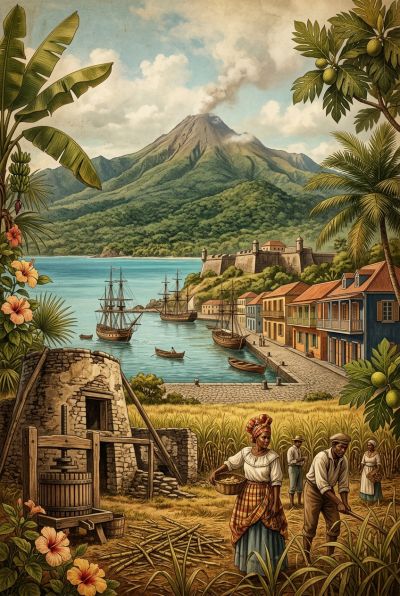
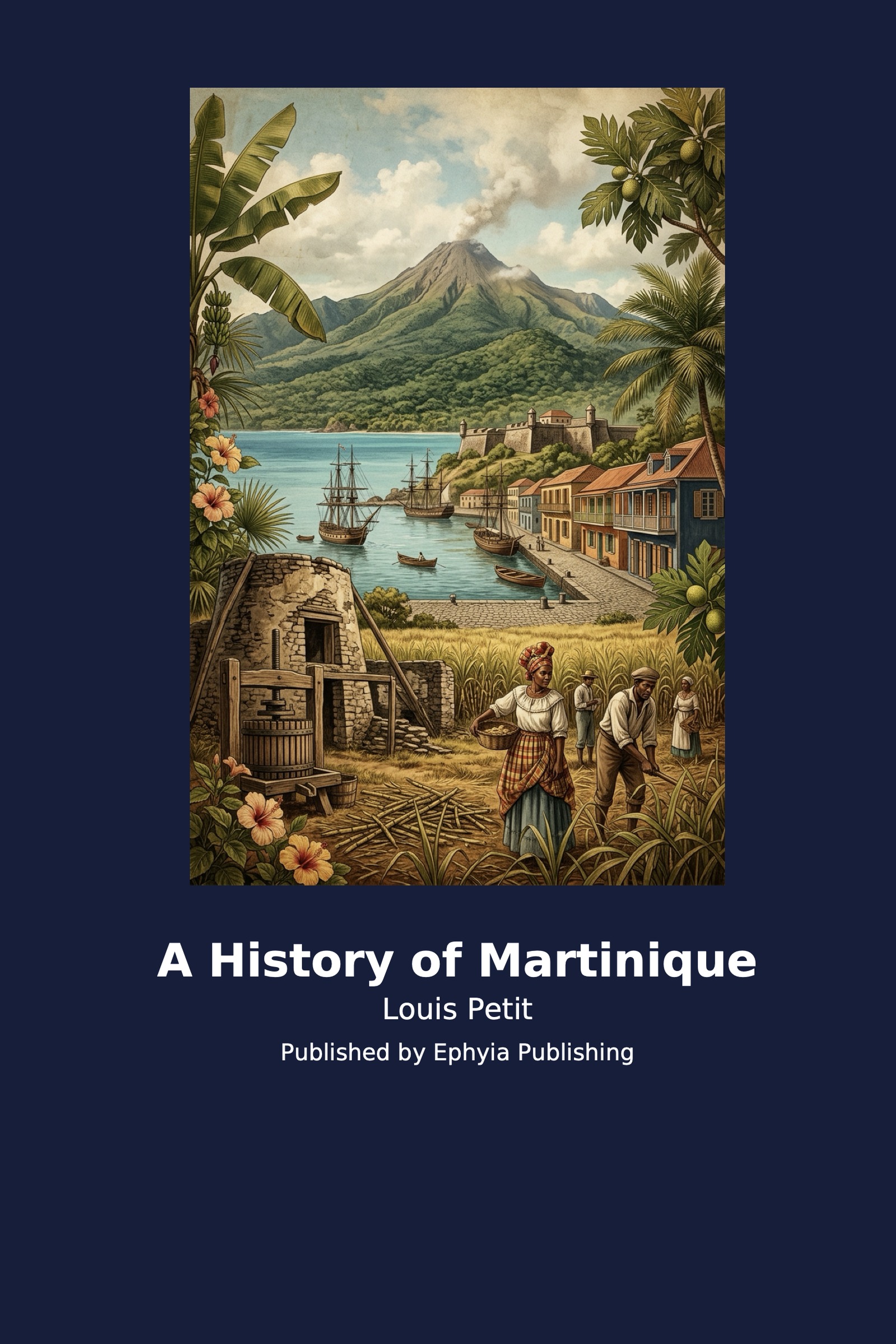
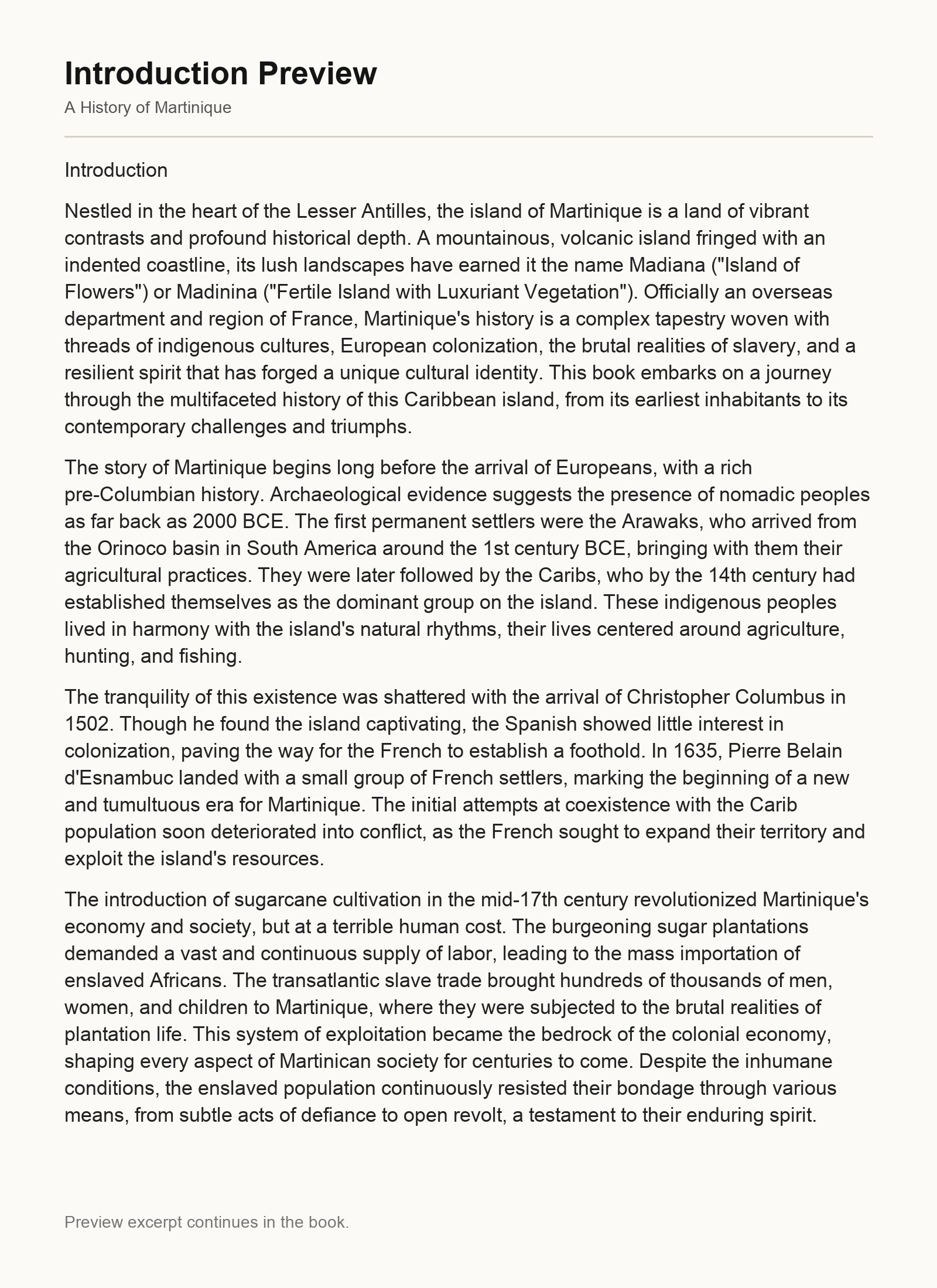
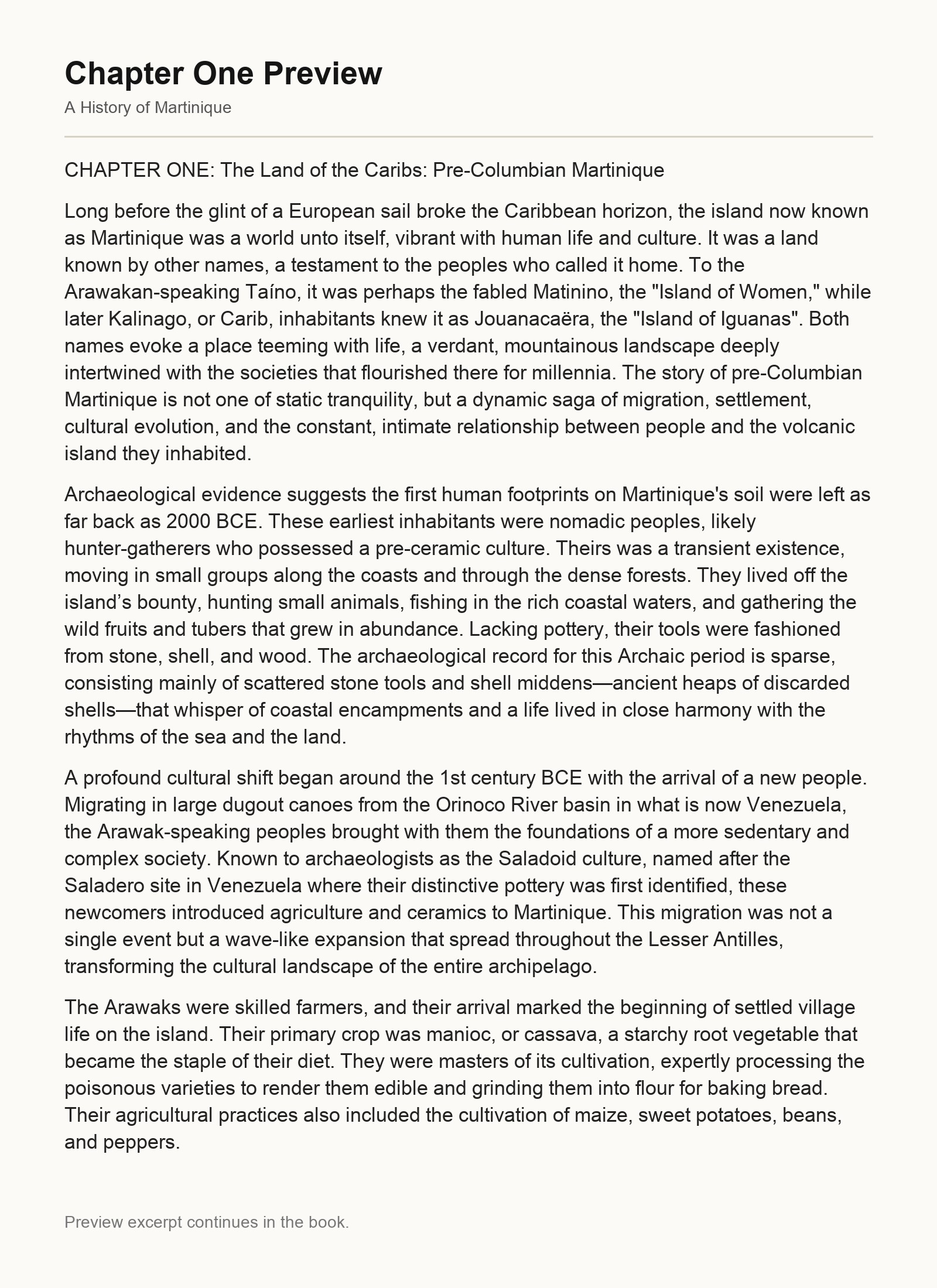
A History of Martinique offers readers a sweeping journey through the island’s past, from the first footsteps of nomadic peoples around 2000 BCE to the complex challenges of the twenty‑first century. Louis Petit traces the evolution of Martinique’s societies—beginning with the Arawak and Kalinago inhabitants, moving through the turbulent arrival of French colonists, and detailing how the island’s lush landscapes became the stage for a brutal plantation economy built on enslaved African labor. Each chapter unpacks the political, economic, and cultural forces that have shaped Martinique, giving the reader a clear sense of how centuries of conquest, resistance, and adaptation have left an indelible mark on its people and geography.
The narrative delves deeply into the lived experience of slavery, from the horrors of the Middle Passage and the seasoning process on the plantations to the myriad forms of resistance—everyday acts of defiance, maroon communities, poisonings, and armed revolts—that kept the spirit of freedom alive. Readers will encounter the legal scaffolding of the Code Noir, see how revolutionary ideals from France and Haiti sparked both hope and violent backlash, and follow the long, painful road to emancipation in 1848, including the immediate aftermath when former slaves struggled to turn legal liberty into real autonomy amid vagrancy laws, labor contracts, and a planter class determined to maintain control.
The twentieth century unfolds with dramatic episodes that redefined the island’s destiny: the catastrophic 1902 eruption of Mount Pelée that erased Saint‑Pierre and shifted the island’s capital to Fort‑de-France; the contributions and sacrifices of Martinican soldiers in two World Wars; the oppressive years of the Vichy regime and the courageous dissent that led to the rally to Free France; and the postwar push for departmentalization, which promised equality but left Martinique grappling with new dependencies, the rise of Aimé Césaire and the Négritude movement, and the profound social and economic transformations that created a growing civil‑service middle class alongside persistent rural poverty.
Later chapters bring the story into the contemporary era, examining the rise of independence sentiment, the economic turmoil of the Banana Wars and the chlordecone scandal, and the vibrant cultural flowering that emerged from Creole language revitalization, Zouk music, and the defiant satire of Carnival. Readers will see how Martinique’s identity is continually negotiated between its African roots, European influences, and Caribbean creativity, and how the island confronts modern pressures—climate change, sargassum influxes, demographic shifts, and the lingering trauma of environmental poisoning—while seeking a path forward that balances the benefits of French citizenship with the desire for authentic self‑determination.
By the end of this volume, the reader will have gained not only a chronological account of Martinique’s history but also a nuanced understanding of the resilience, creativity, and ongoing struggle for justice that define its people. The book illuminates how the island’s past—marked by exploitation, revolt, cultural synthesis, and natural disaster—continues to inform its present debates over autonomy, identity, and sustainability, offering a compelling case study of a society forged in the crucible of empire and slavery, yet constantly reinventing itself on its own terms.
What You'll Find Inside:
- The indigenous origins of Martinique, from Arawak settlement to Carib dominance before European contact
- The transformation of Martinique into a sugar colony built on enslaved African labor and the plantation system
- The struggle for freedom from slavery through resistance, rebellion, and eventual abolition in 1848
- The island's turbulent 20th century marked by the Mount Pelée eruption, world wars, and political evolution
- Contemporary Martinique's complex identity, economic challenges, and ongoing quest for autonomy within France
Who's It For:
This book is ideal for students and scholars of Caribbean history, colonial studies, and post-colonial societies. It will particularly benefit readers interested in the African diaspora, slavery and emancipation movements, and the unique political status of French overseas departments. Anyone seeking to understand how historical forces shape contemporary identity, economic challenges, and cultural resilience in Martinique will find this comprehensive account invaluable.
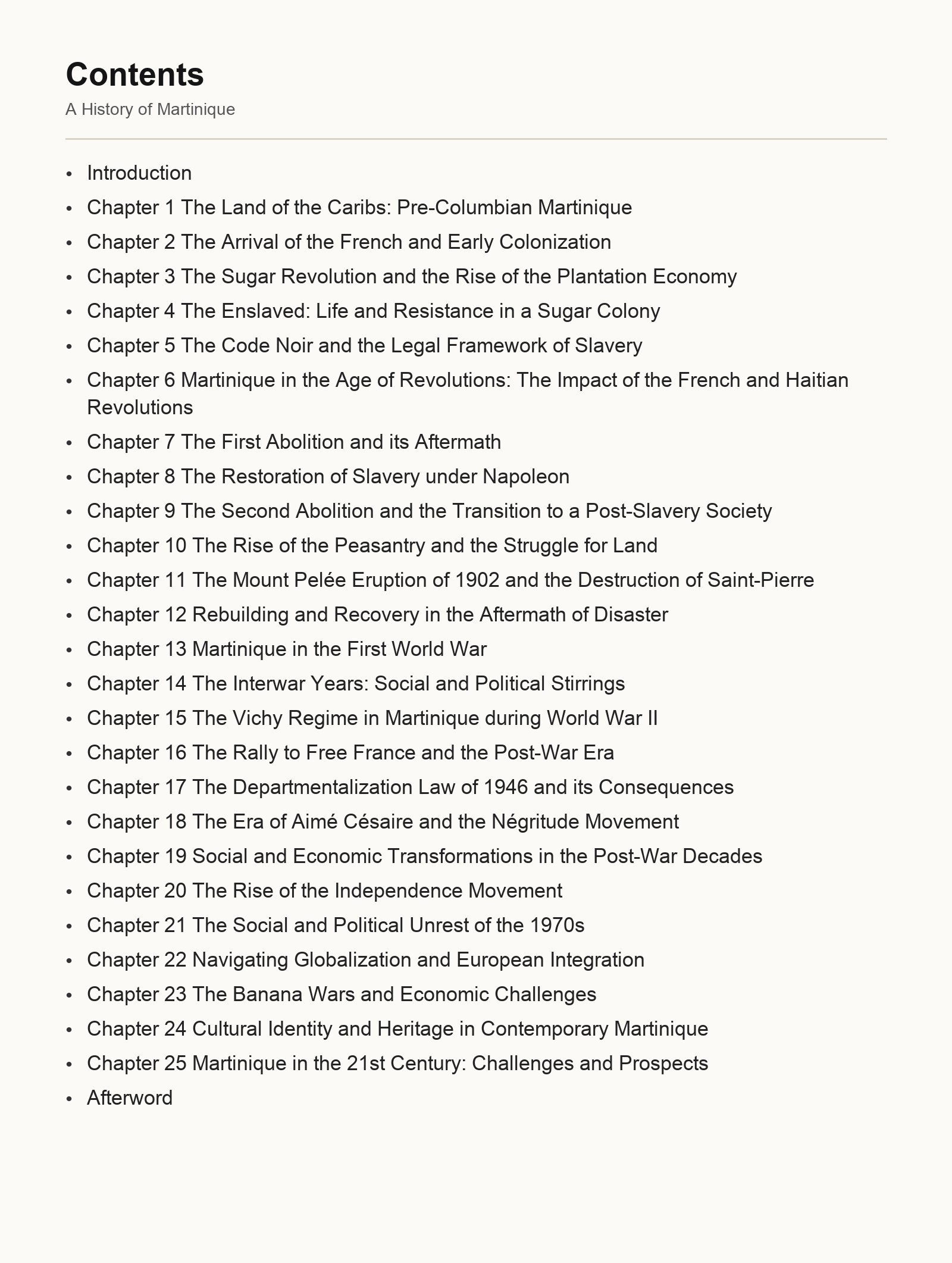
Table of Contents:
- Introduction
- Chapter 1 The Land of the Caribs: Pre-Columbian Martinique
- Chapter 2 The Arrival of the French and Early Colonization
- Chapter 3 The Sugar Revolution and the Rise of the Plantation Economy
- Chapter 4 The Enslaved: Life and Resistance in a Sugar Colony
- Chapter 5 The Code Noir and the Legal Framework of Slavery
- Chapter 6 Martinique in the Age of Revolutions: The Impact of the French and Haitian Revolutions
- Chapter 7 The First Abolition and its Aftermath
- Chapter 8 The Restoration of Slavery under Napoleon
- Chapter 9 The Second Abolition and the Transition to a Post-Slavery Society
- Chapter 10 The Rise of the Peasantry and the Struggle for Land
- Chapter 11 The Mount Pelée Eruption of 1902 and the Destruction of Saint-Pierre
- Chapter 12 Rebuilding and Recovery in the Aftermath of Disaster
- Chapter 13 Martinique in the First World War
- Chapter 14 The Interwar Years: Social and Political Stirrings
- Chapter 15 The Vichy Regime in Martinique during World War II
- Chapter 16 The Rally to Free France and the Post-War Era
- Chapter 17 The Departmentalization Law of 1946 and its Consequences
- Chapter 18 The Era of Aimé Césaire and the Négritude Movement
- Chapter 19 Social and Economic Transformations in the Post-War Decades
- Chapter 20 The Rise of the Independence Movement
- Chapter 21 The Social and Political Unrest of the 1970s
- Chapter 22 Navigating Globalization and European Integration
- Chapter 23 The Banana Wars and Economic Challenges
- Chapter 24 Cultural Identity and Heritage in Contemporary Martinique
- Chapter 25 Martinique in the 21st Century: Challenges and Prospects
- Afterword
Author:
Published By:
Date Published:
May 22, 2026
Type:
Nonfiction
Language:
English
Also Available In:
Spanish, French, Italian, Dutch, Portuguese
Word Count:
45,640 words
Reading Time:
3 hours 12 minutes
Sample:
Order:
Order A History of Martinique (Paperback) on MixCache.com:
Buy NowPrint copy is made to order and ships worldwide. Includes the ebook free, ready to read instantly.
$5 account credit for all new MixCache.com accounts, usable toward any ebook purchase!*


