
Browse by Category
Fiction
- Action & Adventure
- African American
- Anthologies
- Children's Fiction
- Classics
- Comics & Graphic Novels
- Coming of Age
- Contemporary
- Cultural & Regional
- Drama
- Erotica
- Fantasy
- General
- Historical Fiction
- Horror
- Humor & Satire
- Literary Fiction
- Mystery, Thriller & Suspense
- Poetry
- Religious & Inspirational
- Romance
- Science Fiction
- Short Stories
- War & Military
- Westerns
- Women's Fiction
- Young Adult
Non-Fiction
- Antiques & Collectibles
- Arts & Photography
- Biographies & Memoirs
- Business & Money
- Children's Non-Fiction
-
Computers & Technology
- Artificial Intelligence
- Computer Science
- Cybersecurity & Cryptography
- Data Science & Analytics
- Databases & Big Data
- Game Development & Design
- General
- Hardware & DIY
- Mobile App Development
- Networking & Cloud Computing
- Operating Systems
- Programming
- Robotics
- Software
- Software Engineering
- User Experience (UX) & Design
- Web Development & Design
- Cooking, Food & Wine
- Crafts, Hobbies & Home
- Education & Teaching
- Engineering
- General
- Health, Fitness & Dieting
-
History
- African History
- African History - North Africa
- African History - Sub-Saharan Africa
- American History
- American History - 20th Century
- American History - Civil War
- American History - Colonial Period
- Ancient History
- Asian History
- Asian History - China
- Asian History - India
- Asian History - Japan
- Asian History - Southeast Asia
- European History
- European History - Ancient Greece
- European History - Ancient Rome
- European History - Medieval
- European History - Modern
- European History - Renaissance
- General
- Middle Eastern History
- Military History
- Military History - Aviation
- Military History - Naval
- Social & Cultural History
- World History
- Humor & Entertainment
- Industrial Technology
- Language Learning
- Law
- LGBTQ+ Non-Fiction
- Literary Criticism
- Medical Books
- Parenting & Relationships
- Philosophy
- Politics & Social Sciences
- Reference
- Religion & Spirituality
-
Science & Math
- Agricultural Sciences
- Astronomy & Space Science
- Behavioral Sciences
- Biological Sciences
- Botany & Plant Science
- Chemistry
- Earth Sciences
- Engineering - Chemical
- Engineering - Civil
- Engineering - Electrical
- Engineering - Mechanical
- Environment
- General
- Geology
- Mathematics
- Nature & Ecology
- Oceanography
- Paleontology
- Physics
- Statistics
- Self-Help
- Sports & Outdoors
- Study Aids
- Sustainability & Green Living
- Textbooks
- Transportation
- Travel
- True Crime
- Urban Planning & Development
- Veterinary Medicine
- Writing & Publishing
Jump to Section
MixCache.com Total Access
Unlimited reading and audiobooks for every book published by MixCache.com.
Included titles carry the MTA badge.
Learn more →A History of the European Union
About this book:
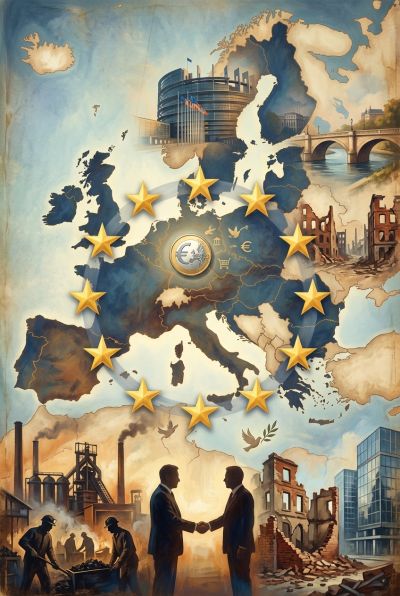


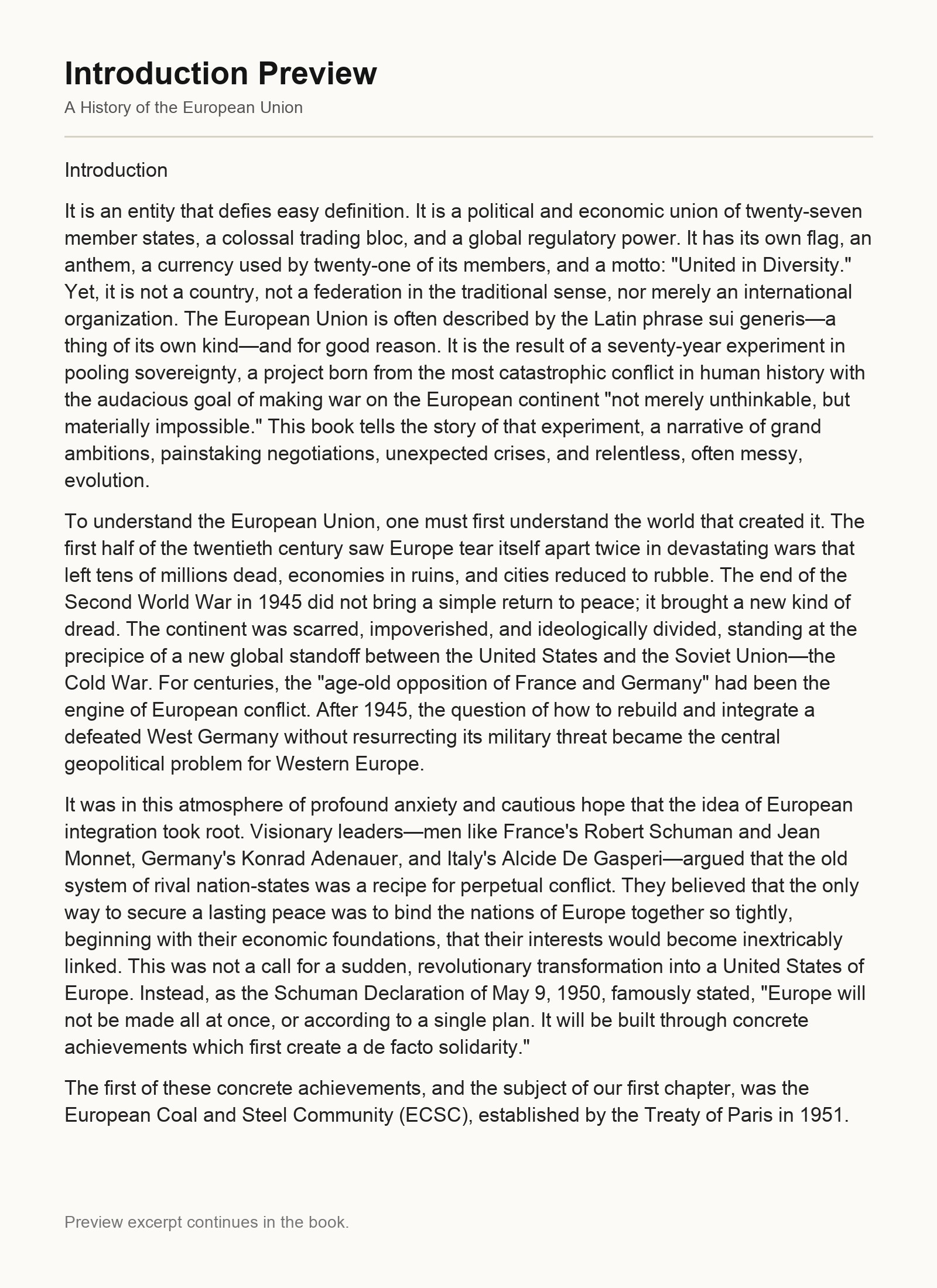
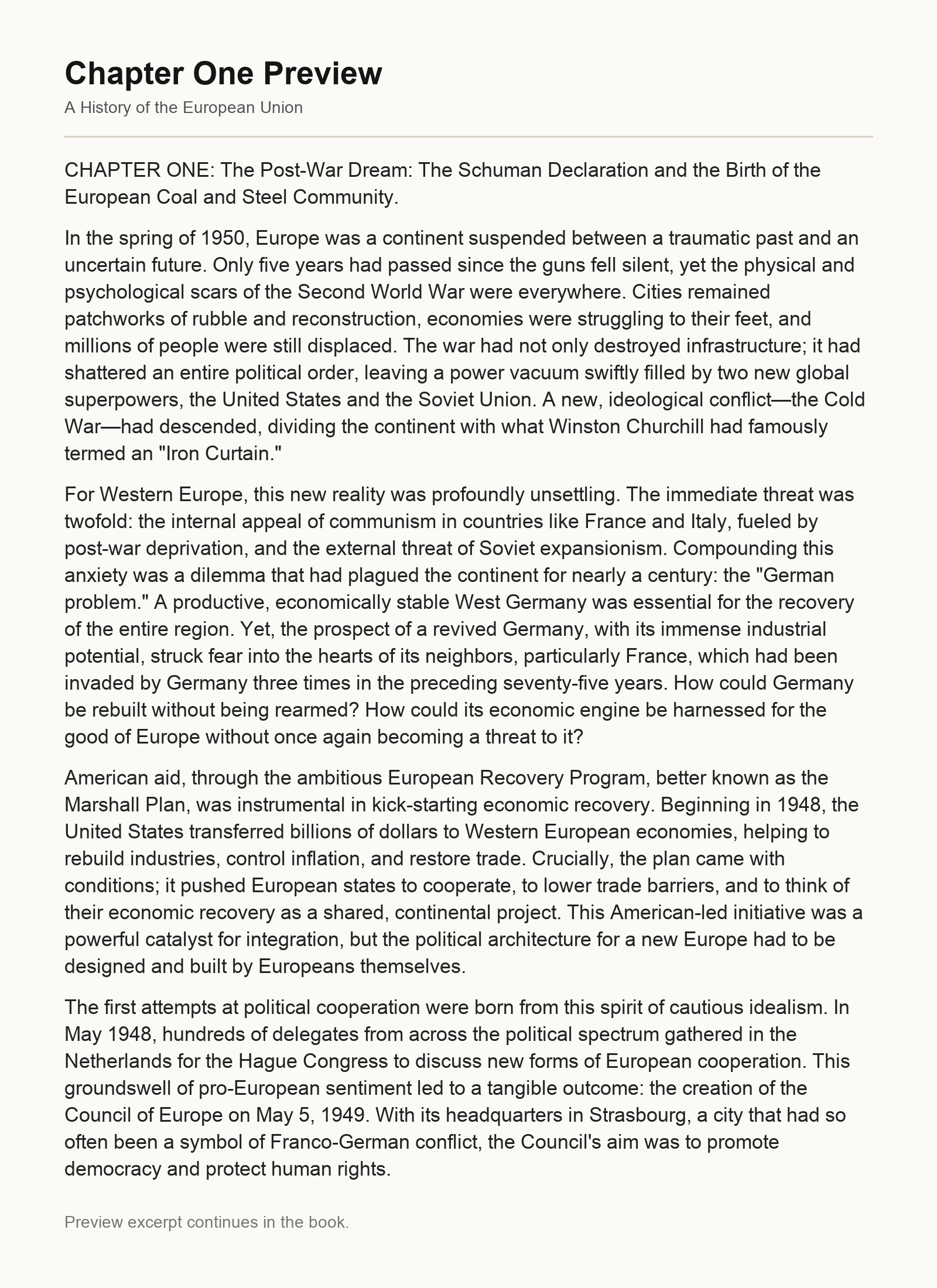
This book offers a sweeping, chronological journey through the seventy‑year experiment that is the European Union, from the ashes of World War II to the present day of geopolitical awakening and twin green‑digital transitions. Readers will discover how visionary leaders turned the dream of lasting peace into concrete achievements, beginning with the pooling of coal and steel in the European Coal and Steel Community and evolving through the Treaties of Rome that created the Common Market and the four freedoms of movement. Each chapter unpacks the political bargains, economic motivations, and institutional innovations that have shaped the Union, showing how a modest industry‑specific agreement grew into a unique political and economic entity.
The narrative details the successive waves of enlargement that have redefined Europe’s map and character, from the first addition of the United Kingdom, Ireland and Denmark in the 1970s, through the southern expansion that welcomed Greece, Spain and Portugal, to the historic “Big Bang” of 2004 that brought ten former Eastern Bloc states into the fold, and the more recent accessions of Romania, Bulgaria and Croatia. By exploring the negotiations, referendums and occasional setbacks that accompanied each step, the book illustrates how the Union’s promise of democracy and prosperity has acted as a powerful magnet for nations seeking stability, while also exposing the tensions that arise when diverse economies and political traditions are brought under a common framework.
Readers will also gain insight into the crises that have tested the Union’s resolve—the oil shocks and stagflation of the 1970s, the Maastricht Treaty’s turbulent ratification, the Eurozone debt crisis, the migrant influx of 2015, the Brexit referendum, the COVID‑19 pandemic, and Russia’s invasion of Ukraine. Each episode is examined not only for its immediate impact but for the ways in which the EU responded, often emerging with deeper integration, new fiscal tools, or a renewed sense of strategic purpose. The book highlights the pattern that, as Jean Monnet observed, Europe has repeatedly been forged in crisis, turning adversity into opportunities for further cooperation.
Finally, the work looks ahead to the challenges that will define the Union’s next decades: the ambitious Green Deal and Digital Decade agendas, the pressing need for institutional reform to accommodate a potentially larger membership, and the ongoing struggle to balance solidarity with sovereignty in a world of rising populism and great‑power competition. By the end, readers will have a comprehensive understanding of how the European Union came to be, how it has adapted through triumph and turmoil, and what forces will shape its future trajectory as it seeks to maintain peace, prosperity, and influence on the global stage.
What You'll Find Inside:
- The EU's origins in post-WWII peace efforts, beginning with the Schuman Declaration and the European Coal and Steel Community's pooling of vital war materials
- How key treaties from Rome to Lisbon progressively created the EU's supranational institutions, common policies, and path to monetary union
- The historical pattern where crises - from 1970s economic shocks to the Eurozone debt crisis and pandemic - have driven further European integration
- The ongoing tension between widening (enlargement) and deepening (integration), exemplified by the 2004 'Big Bang' expansion and current Western Balkans/Ukrainian accession talks
- The EU's 21st century challenges including implementing the Green Deal and Digital Decade while responding to geopolitical shifts from Russia's invasion of Ukraine
Who's It For:
This book is ideal for students and scholars of European studies, political science, and international relations seeking a comprehensive chronological account of the EU's development. It will also benefit professionals working with EU institutions or policy who need historical context for current challenges. General readers interested in understanding how past events like the fall of the Berlin Wall, the Eurozone crisis, and Brexit have shaped today's European Union will find this narrative both informative and engaging.
Table of Contents:
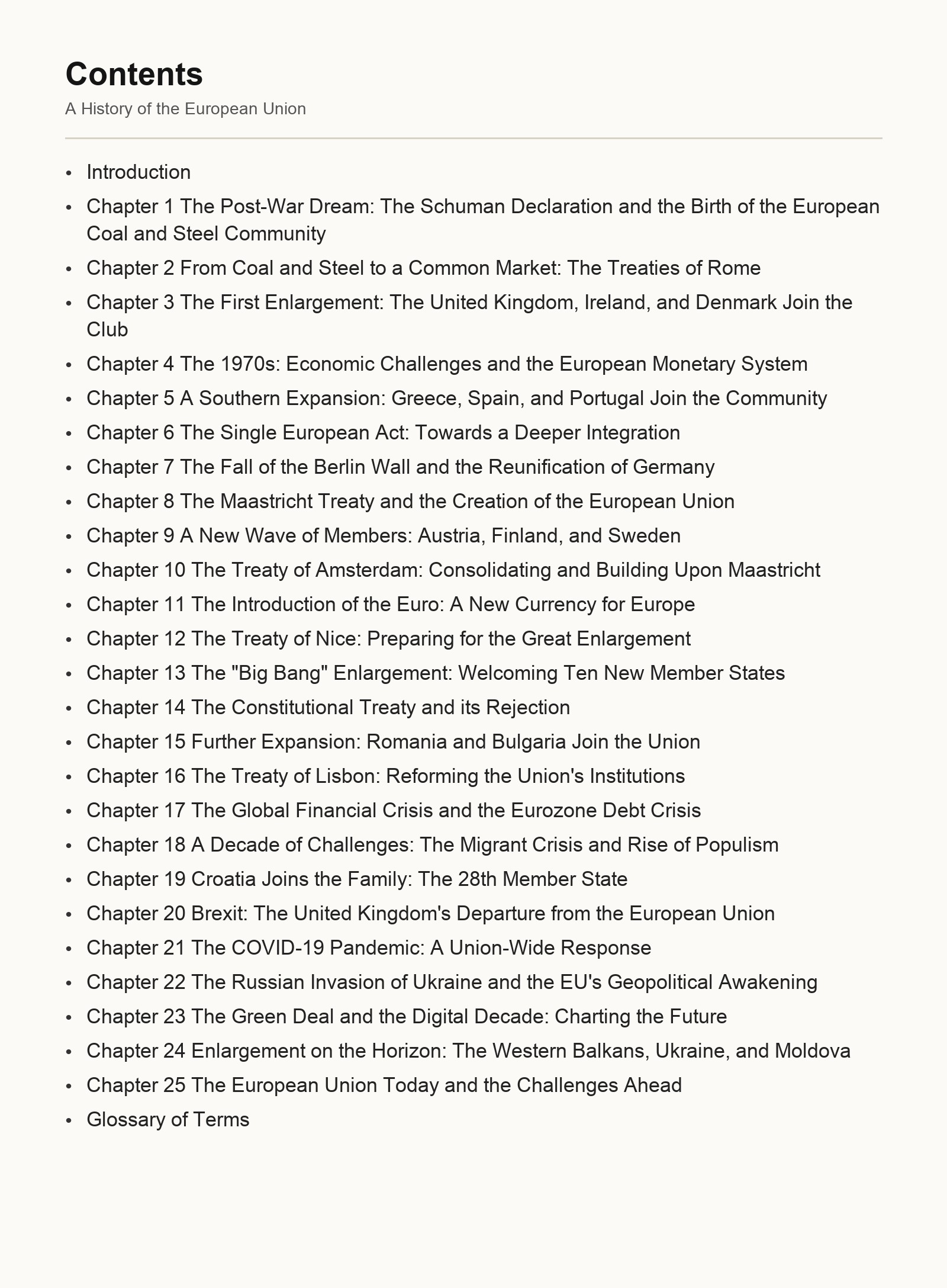
- Introduction
- Chapter 1 The Post-War Dream: The Schuman Declaration and the Birth of the European Coal and Steel Community.
- Chapter 2 From Coal and Steel to a Common Market: The Treaties of Rome.
- Chapter 3 The First Enlargement: The United Kingdom, Ireland, and Denmark Join the Club.
- Chapter 4 The 1970s: Economic Challenges and the European Monetary System.
- Chapter 5 A Southern Expansion: Greece, Spain, and Portugal Join the Community.
- Chapter 6 The Single European Act: Towards a Deeper Integration.
- Chapter 7 The Fall of the Berlin Wall and the Reunification of Germany.
- Chapter 8 The Maastricht Treaty and the Creation of the European Union.
- Chapter 9 A New Wave of Members: Austria, Finland, and Sweden.
- Chapter 10 The Treaty of Amsterdam: Consolidating and Building Upon Maastricht.
- Chapter 11 The Introduction of the Euro: A New Currency for Europe.
- Chapter 12 The Treaty of Nice: Preparing for the Great Enlargement.
- Chapter 13 The "Big Bang" Enlargement: Welcoming Ten New Member States.
- Chapter 14 The Constitutional Treaty and its Rejection.
- Chapter 15 Further Expansion: Romania and Bulgaria Join the Union.
- Chapter 16 The Treaty of Lisbon: Reforming the Union's Institutions.
- Chapter 17 The Global Financial Crisis and the Eurozone Debt Crisis.
- Chapter 18 A Decade of Challenges: The Migrant Crisis and Rise of Populism.
- Chapter 19 Croatia Joins the Family: The 28th Member State.
- Chapter 20 Brexit: The United Kingdom's Departure from the European Union.
- Chapter 21 The COVID-19 Pandemic: A Union-Wide Response.
- Chapter 22 The Russian Invasion of Ukraine and the EU's Geopolitical Awakening.
- Chapter 23 The Green Deal and the Digital Decade: Charting the Future.
- Chapter 24 Enlargement on the Horizon: The Western Balkans, Ukraine, and Moldova.
- Chapter 25 The European Union Today and the Challenges Ahead.
- Glossary of Terms
Author:
Published By:
Date Published:
May 22, 2026
Type:
Nonfiction
Language:
English
Also Available In:
Word Count:
52,833 words
Reading Time:
3 hours 42 minutes
Sample:
Order:
Buy the A History of the European Union ebook on MixCache.com:
Buy NowThe full ebook will be available immediately to read instantly on any device.
$5 account credit for all new MixCache.com accounts, usable toward any ebook purchase!*




Ratings & Reviews
Ask Questions About This Book
Have a question about the content? Ask our AI assistant!
Start by asking a question about "A History of the European Union"
Example: "Does this book mention William Shakespeare?"
Thinking...