Browse by Category
Fiction
- Action & Adventure
- African American
- Anthologies
- Children's Fiction
- Classics
- Comics & Graphic Novels
- Coming of Age
- Contemporary
- Cultural & Regional
- Drama
- Erotica
- Fantasy
- General
- Historical Fiction
- Horror
- Humor & Satire
- Literary Fiction
- Mystery, Thriller & Suspense
- Poetry
- Religious & Inspirational
- Romance
- Science Fiction
- Short Stories
- War & Military
- Westerns
- Women's Fiction
- Young Adult
Non-Fiction
- Antiques & Collectibles
- Arts & Photography
- Biographies & Memoirs
- Business & Money
- Children's Non-Fiction
-
Computers & Technology
- Artificial Intelligence
- Computer Science
- Cybersecurity & Cryptography
- Data Science & Analytics
- Databases & Big Data
- Game Development & Design
- General
- Hardware & DIY
- Mobile App Development
- Networking & Cloud Computing
- Operating Systems
- Programming
- Robotics
- Software
- Software Engineering
- User Experience (UX) & Design
- Web Development & Design
- Cooking, Food & Wine
- Crafts, Hobbies & Home
- Education & Teaching
- Engineering
- General
- Health, Fitness & Dieting
-
History
- African History
- African History - North Africa
- African History - Sub-Saharan Africa
- American History
- American History - 20th Century
- American History - Civil War
- American History - Colonial Period
- Ancient History
- Asian History
- Asian History - China
- Asian History - India
- Asian History - Japan
- Asian History - Southeast Asia
- European History
- European History - Ancient Greece
- European History - Ancient Rome
- European History - Medieval
- European History - Modern
- European History - Renaissance
- General
- Middle Eastern History
- Military History
- Military History - Aviation
- Military History - Naval
- Social & Cultural History
- World History
- Humor & Entertainment
- Industrial Technology
- Language Learning
- Law
- LGBTQ+ Non-Fiction
- Literary Criticism
- Medical Books
- Parenting & Relationships
- Philosophy
- Politics & Social Sciences
- Reference
- Religion & Spirituality
-
Science & Math
- Agricultural Sciences
- Astronomy & Space Science
- Behavioral Sciences
- Biological Sciences
- Botany & Plant Science
- Chemistry
- Earth Sciences
- Engineering - Chemical
- Engineering - Civil
- Engineering - Electrical
- Engineering - Mechanical
- Environment
- General
- Geology
- Mathematics
- Nature & Ecology
- Oceanography
- Paleontology
- Physics
- Statistics
- Self-Help
- Sports & Outdoors
- Study Aids
- Sustainability & Green Living
- Textbooks
- Transportation
- Travel
- True Crime
- Urban Planning & Development
- Veterinary Medicine
- Writing & Publishing
Jump to Section
MixCache.com Total Access
Unlimited reading and audiobooks for every book published by MixCache.com.
Included titles carry the MTA badge.
Learn more →A History of Morocco
About this book:
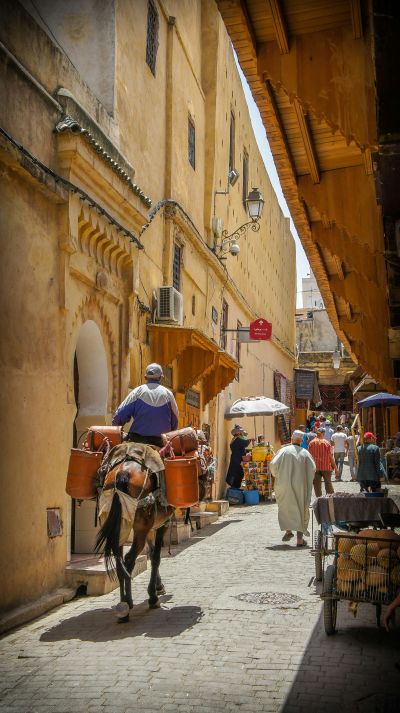
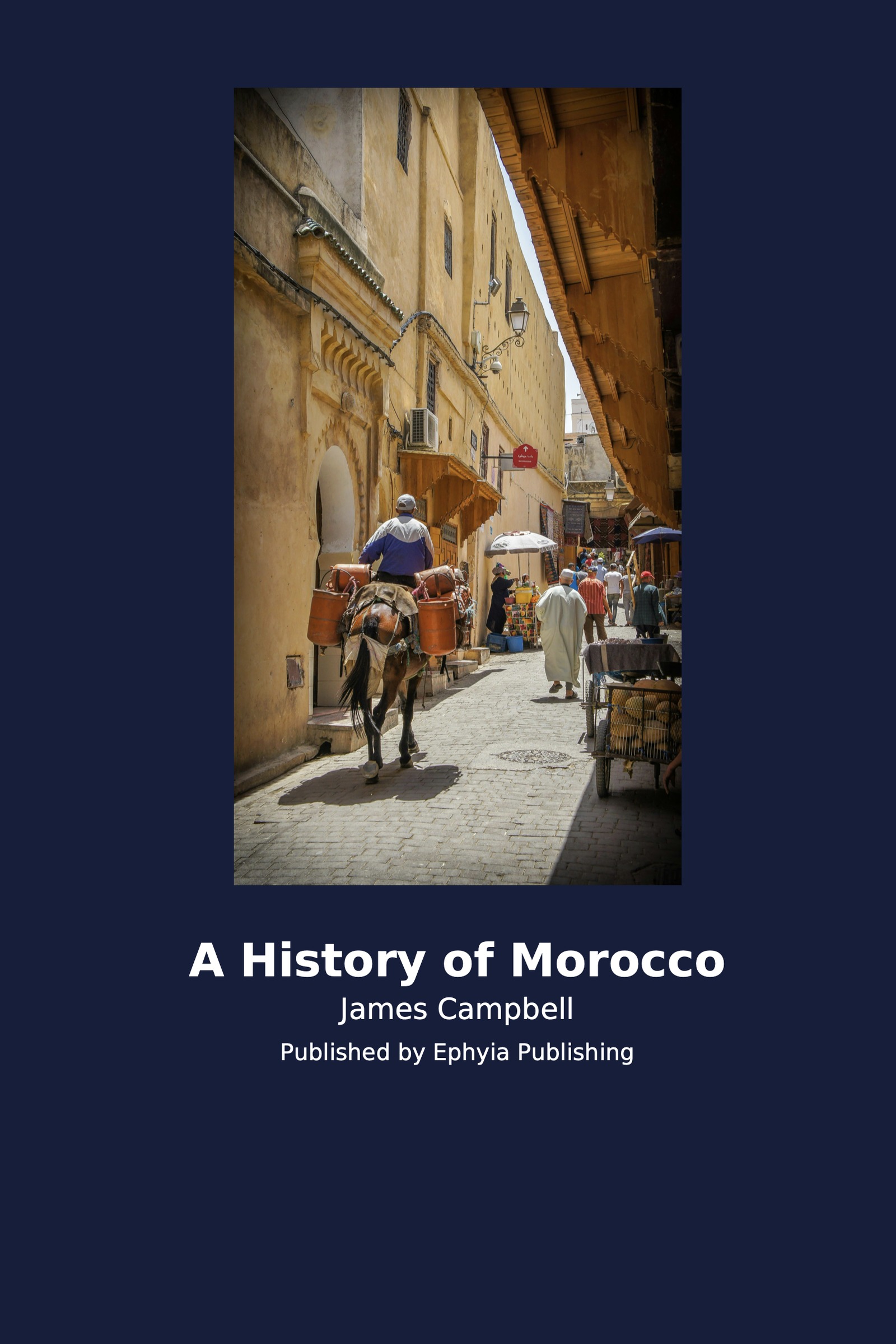
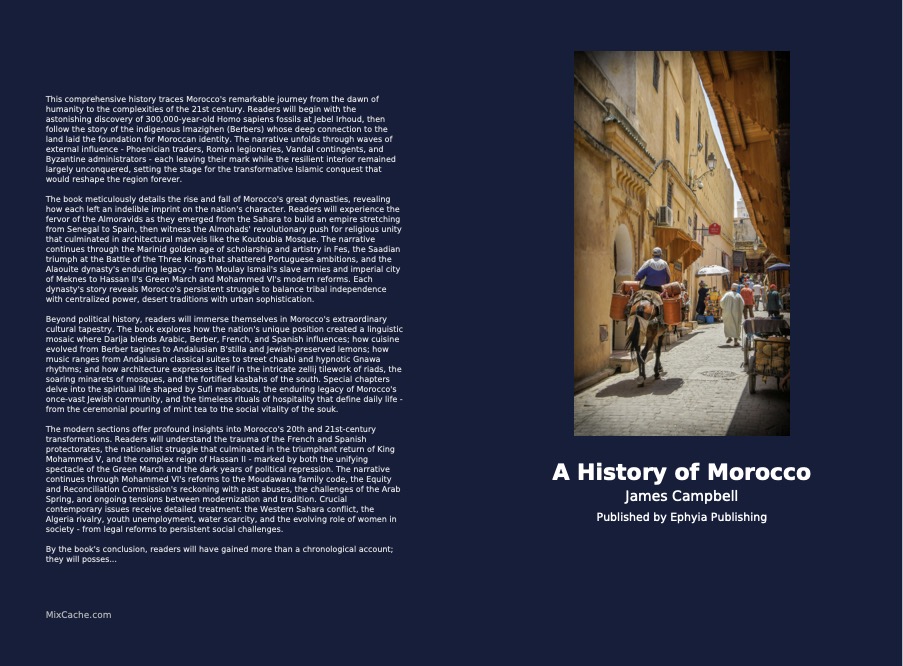
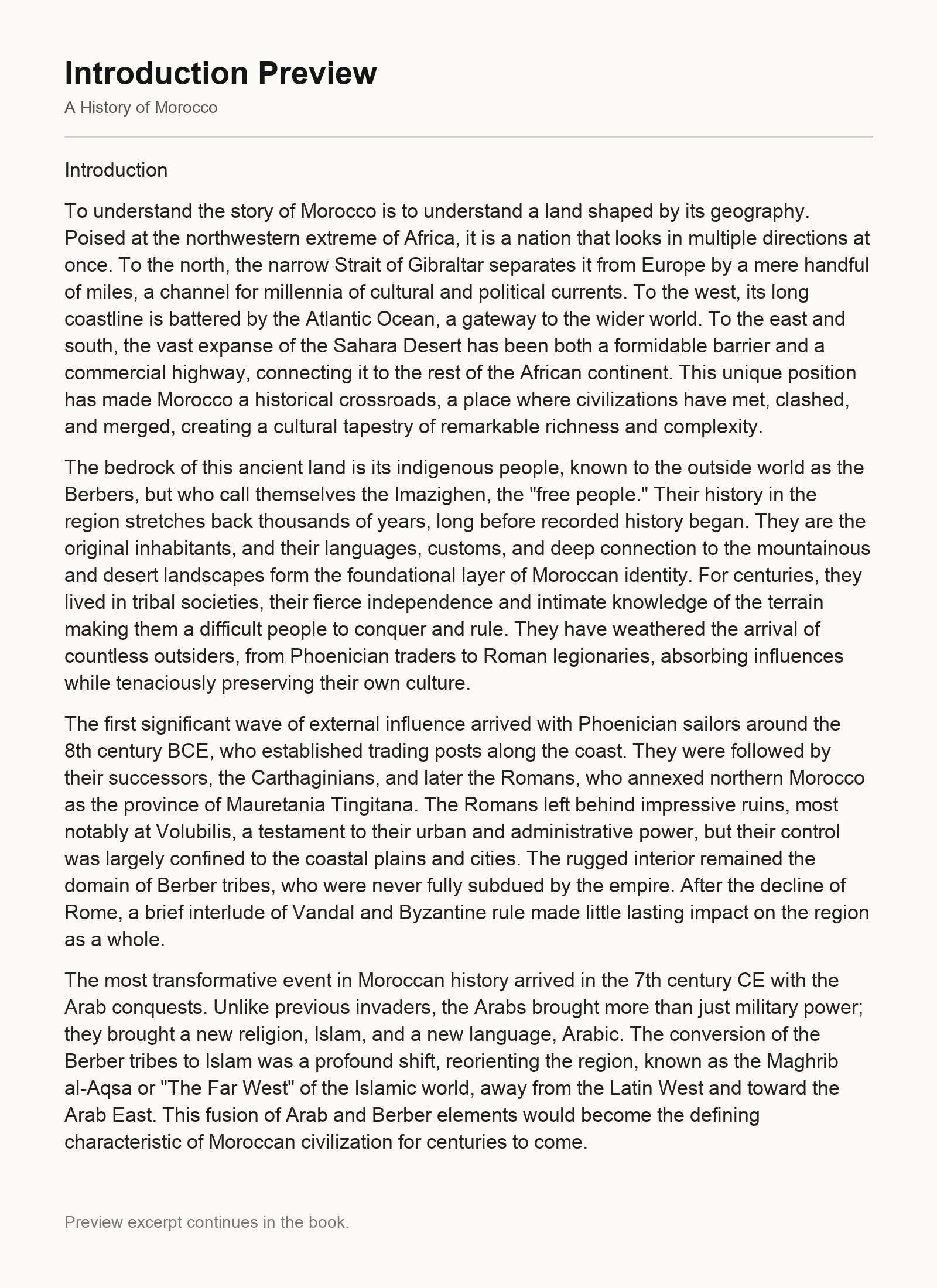
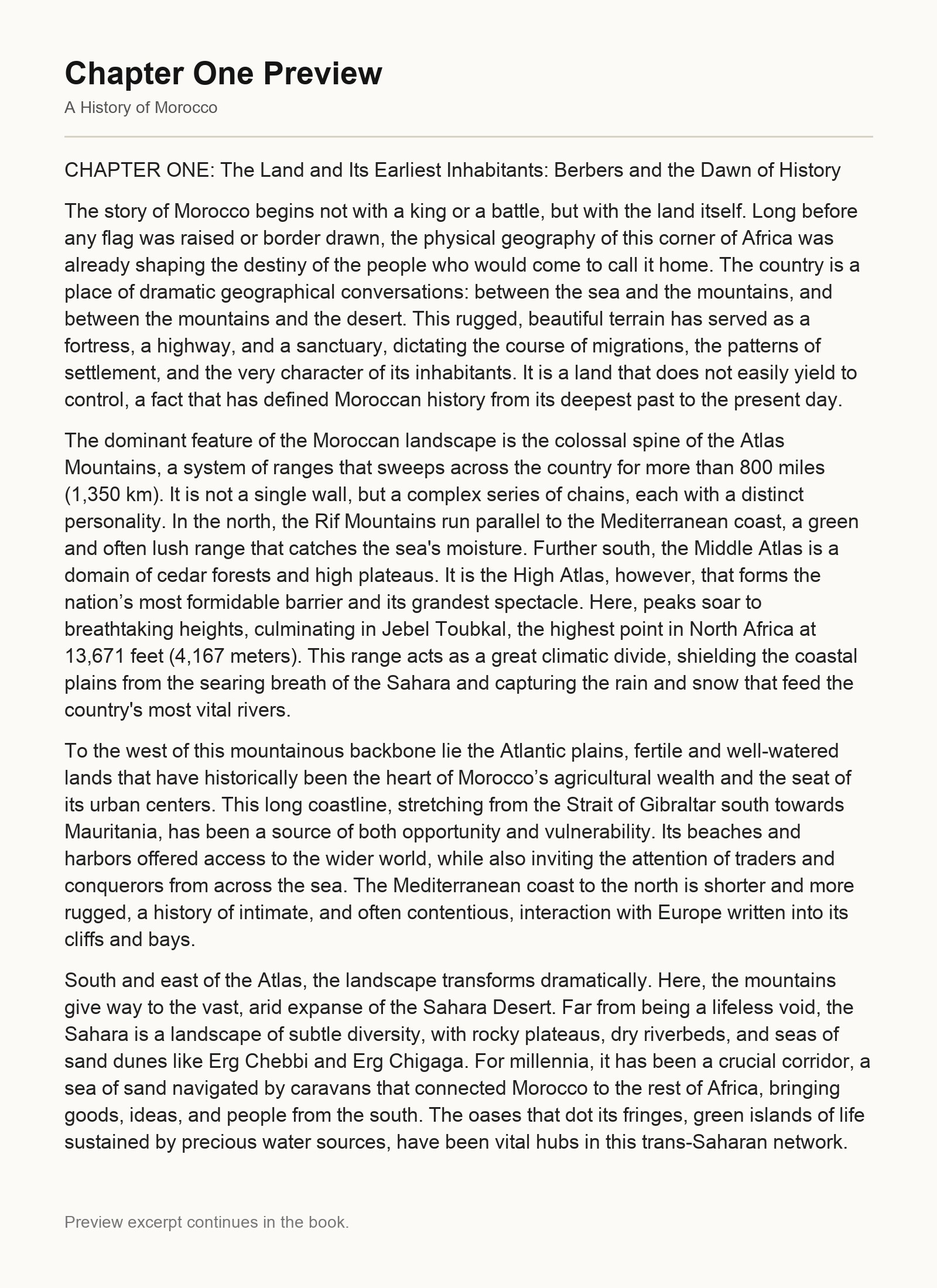
This comprehensive history traces Morocco's remarkable journey from the dawn of humanity to the complexities of the 21st century. Readers will begin with the astonishing discovery of 300,000-year-old Homo sapiens fossils at Jebel Irhoud, then follow the story of the indigenous Imazighen (Berbers) whose deep connection to the land laid the foundation for Moroccan identity. The narrative unfolds through waves of external influence - Phoenician traders, Roman legionaries, Vandal contingents, and Byzantine administrators - each leaving their mark while the resilient interior remained largely unconquered, setting the stage for the transformative Islamic conquest that would reshape the region forever.
The book meticulously details the rise and fall of Morocco's great dynasties, revealing how each left an indelible imprint on the nation's character. Readers will experience the fervor of the Almoravids as they emerged from the Sahara to build an empire stretching from Senegal to Spain, then witness the Almohads' revolutionary push for religious unity that culminated in architectural marvels like the Koutoubia Mosque. The narrative continues through the Marinid golden age of scholarship and artistry in Fes, the Saadian triumph at the Battle of the Three Kings that shattered Portuguese ambitions, and the Alaouite dynasty's enduring legacy - from Moulay Ismail's slave armies and imperial city of Meknes to Hassan II's Green March and Mohammed VI's modern reforms. Each dynasty's story reveals Morocco's persistent struggle to balance tribal independence with centralized power, desert traditions with urban sophistication.
Beyond political history, readers will immerse themselves in Morocco's extraordinary cultural tapestry. The book explores how the nation's unique position created a linguistic mosaic where Darija blends Arabic, Berber, French, and Spanish influences; how cuisine evolved from Berber tagines to Andalusian B'stilla and Jewish-preserved lemons; how music ranges from Andalusian classical suites to street chaabi and hypnotic Gnawa rhythms; and how architecture expresses itself in the intricate zellij tilework of riads, the soaring minarets of mosques, and the fortified kasbahs of the south. Special chapters delve into the spiritual life shaped by Sufi marabouts, the enduring legacy of Morocco's once-vast Jewish community, and the timeless rituals of hospitality that define daily life - from the ceremonial pouring of mint tea to the social vitality of the souk.
The modern sections offer profound insights into Morocco's 20th and 21st-century transformations. Readers will understand the trauma of the French and Spanish protectorates, the nationalist struggle that culminated in the triumphant return of King Mohammed V, and the complex reign of Hassan II - marked by both the unifying spectacle of the Green March and the dark years of political repression. The narrative continues through Mohammed VI's reforms to the Moudawana family code, the Equity and Reconciliation Commission's reckoning with past abuses, the challenges of the Arab Spring, and ongoing tensions between modernization and tradition. Crucial contemporary issues receive detailed treatment: the Western Sahara conflict, the Algeria rivalry, youth unemployment, water scarcity, and the evolving role of women in society - from legal reforms to persistent social challenges.
By the book's conclusion, readers will have gained more than a chronological account; they will possess a deep understanding of what makes Morocco unique - a nation that has continuously absorbed and transformed external influences while maintaining a resilient core identity. They will appreciate how geography has shaped destiny, from the Atlas Mountains that protected Berber independence to the Sahara that facilitated trans-Saharan trade and the Strait of Gibraltar that opened doors to Europe. Most importantly, readers will experience Morocco not as a static historical subject but as a living, evolving story - a kingdom perpetually negotiating between tradition and modernity, Africa and Europe, tribal loyalty and state power, all while striving to define its place in an increasingly complex world. This is the essential account for anyone seeking to comprehend not just where Morocco has been, but where it might be going.
What You'll Find Inside:
- Morocco's extraordinarily deep human history, highlighted by the Jebel Irhoud fossils dating back 300,000 years that reshape our understanding of Homo sapiens origins in Africa.
- The formation of a distinct Moroccan identity through the fusion of Arab and Berber cultures following the Islamic conquest, creating a civilization that repeatedly resisted external domination while absorbing diverse influences.
- The rise and fall of powerful Berber dynasties—Almoravids, Almohads, Marinids, and Saadis—that forged empires stretching from sub-Saharan Africa to Iberia, leaving enduring architectural and cultural legacies.
- The protracted struggle against European colonialism, from the Rif Republic's defiance to the nationalist movement that secured independence in 1956 and restored the Alaouite monarchy as a unifying national symbol.
- Contemporary Morocco's challenges in balancing rapid economic modernization and social reforms with persistent territorial disputes (Western Sahara), regional rivalries, and the tension between tradition and progressive change under King Mohammed VI.
Who's It For:
This book is ideal for university students and academics specializing in North African, African, or Islamic history who seek a comprehensive, single-volume narrative of Morocco's development. It will also benefit general readers with a deep interest in Moroccan culture, professionals engaged in diplomatic or business relations with Morocco, and anyone wishing to understand how geography, dynasty, colonialism, and modernity have interacted to shape this crossroads nation's complex identity.
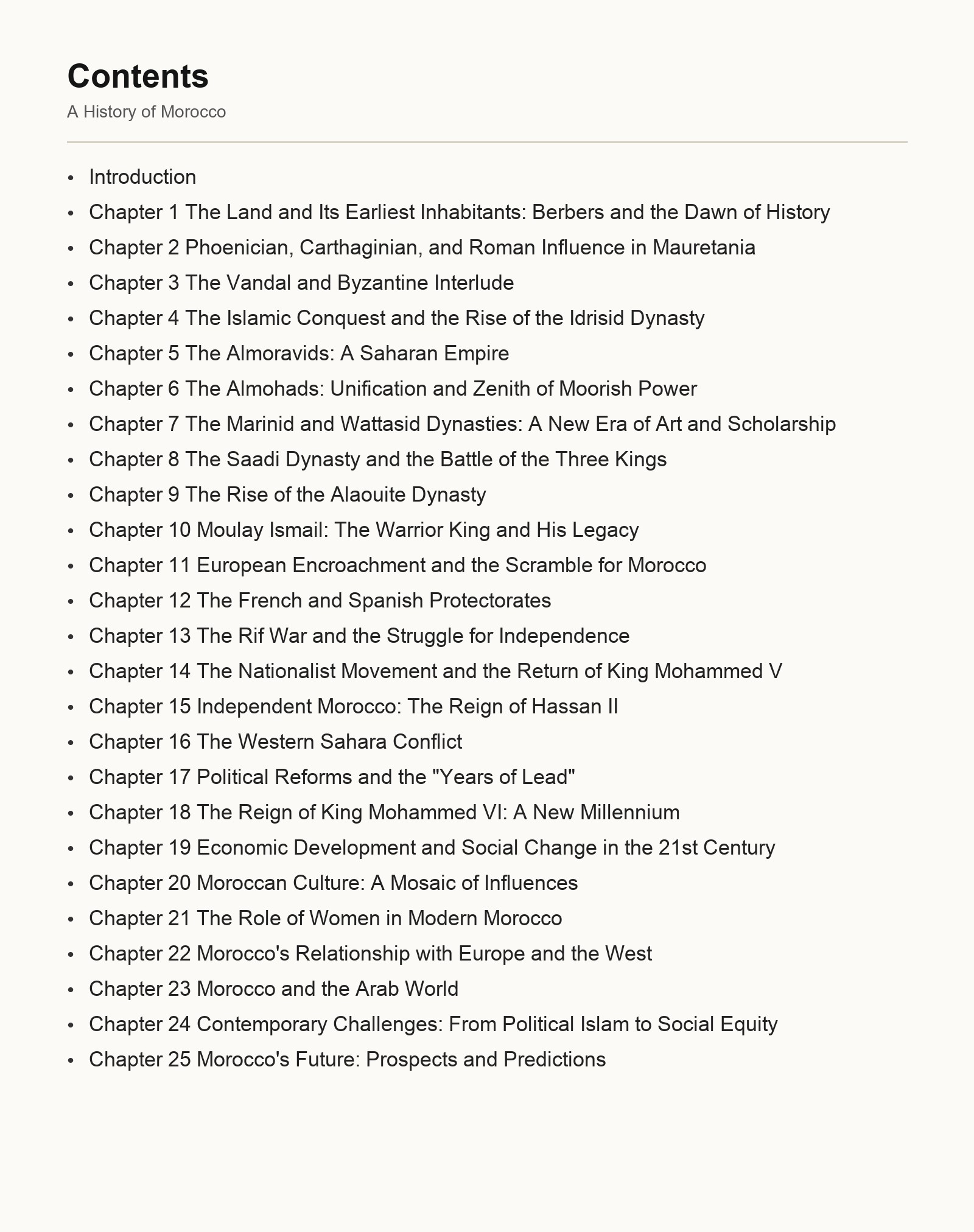
Table of Contents:
- Introduction
- Chapter 1 The Land and Its Earliest Inhabitants: Berbers and the Dawn of History
- Chapter 2 Phoenician, Carthaginian, and Roman Influence in Mauretania
- Chapter 3 The Vandal and Byzantine Interlude
- Chapter 4 The Islamic Conquest and the Rise of the Idrisid Dynasty
- Chapter 5 The Almoravids: A Saharan Empire
- Chapter 6 The Almohads: Unification and Zenith of Moorish Power
- Chapter 7 The Marinid and Wattasid Dynasties: A New Era of Art and Scholarship
- Chapter 8 The Saadi Dynasty and the Battle of the Three Kings
- Chapter 9 The Rise of the Alaouite Dynasty
- Chapter 10 Moulay Ismail: The Warrior King and His Legacy
- Chapter 11 European Encroachment and the Scramble for Morocco
- Chapter 12 The French and Spanish Protectorates
- Chapter 13 The Rif War and the Struggle for Independence
- Chapter 14 The Nationalist Movement and the Return of King Mohammed V
- Chapter 15 Independent Morocco: The Reign of Hassan II
- Chapter 16 The Western Sahara Conflict
- Chapter 17 Political Reforms and the "Years of Lead"
- Chapter 18 The Reign of King Mohammed VI: A New Millennium
- Chapter 19 Economic Development and Social Change in the 21st Century
- Chapter 20 Moroccan Culture: A Mosaic of Influences
- Chapter 21 The Role of Women in Modern Morocco
- Chapter 22 Morocco's Relationship with Europe and the West
- Chapter 23 Morocco and the Arab World
- Chapter 24 Contemporary Challenges: From Political Islam to Social Equity
- Chapter 25 Morocco's Future: Prospects and Predictions
Author:
Published By:
Date Published:
May 26, 2026
Type:
Nonfiction
Language:
English
Also Available In:
Word Count:
47,481 words
Reading Time:
3 hours 20 minutes
Sample:
Order:
Order A History of Morocco (Hardcover) on MixCache.com:
Buy NowPrint copy is made to order and ships worldwide. Includes the ebook free, ready to read instantly.
$5 account credit for all new MixCache.com accounts, usable toward any ebook purchase!*