Browse by Category
Fiction
- Action & Adventure
- African American
- Anthologies
- Children's Fiction
- Classics
- Comics & Graphic Novels
- Coming of Age
- Contemporary
- Cultural & Regional
- Drama
- Erotica
- Fantasy
- General
- Historical Fiction
- Horror
- Humor & Satire
- Literary Fiction
- Mystery, Thriller & Suspense
- Poetry
- Religious & Inspirational
- Romance
- Science Fiction
- Short Stories
- War & Military
- Westerns
- Women's Fiction
- Young Adult
Non-Fiction
- Antiques & Collectibles
- Arts & Photography
- Biographies & Memoirs
- Business & Money
- Children's Non-Fiction
-
Computers & Technology
- Artificial Intelligence
- Computer Science
- Cybersecurity & Cryptography
- Data Science & Analytics
- Databases & Big Data
- Game Development & Design
- General
- Hardware & DIY
- Mobile App Development
- Networking & Cloud Computing
- Operating Systems
- Programming
- Robotics
- Software
- Software Engineering
- User Experience (UX) & Design
- Web Development & Design
- Cooking, Food & Wine
- Crafts, Hobbies & Home
- Education & Teaching
- Engineering
- General
- Health, Fitness & Dieting
-
History
- African History
- African History - North Africa
- African History - Sub-Saharan Africa
- American History
- American History - 20th Century
- American History - Civil War
- American History - Colonial Period
- Ancient History
- Asian History
- Asian History - China
- Asian History - India
- Asian History - Japan
- Asian History - Southeast Asia
- European History
- European History - Ancient Greece
- European History - Ancient Rome
- European History - Medieval
- European History - Modern
- European History - Renaissance
- General
- Middle Eastern History
- Military History
- Military History - Aviation
- Military History - Naval
- Social & Cultural History
- World History
- Humor & Entertainment
- Industrial Technology
- Language Learning
- Law
- LGBTQ+ Non-Fiction
- Literary Criticism
- Medical Books
- Parenting & Relationships
- Philosophy
- Politics & Social Sciences
- Reference
- Religion & Spirituality
-
Science & Math
- Agricultural Sciences
- Astronomy & Space Science
- Behavioral Sciences
- Biological Sciences
- Botany & Plant Science
- Chemistry
- Earth Sciences
- Engineering - Chemical
- Engineering - Civil
- Engineering - Electrical
- Engineering - Mechanical
- Environment
- General
- Geology
- Mathematics
- Nature & Ecology
- Oceanography
- Paleontology
- Physics
- Statistics
- Self-Help
- Sports & Outdoors
- Study Aids
- Sustainability & Green Living
- Textbooks
- Transportation
- Travel
- True Crime
- Urban Planning & Development
- Veterinary Medicine
- Writing & Publishing
Jump to Section
MixCache.com Total Access
Unlimited reading and audiobooks for every book published by MixCache.com.
Included titles carry the MTA badge.
Learn more →A History of Djibouti
About this book:
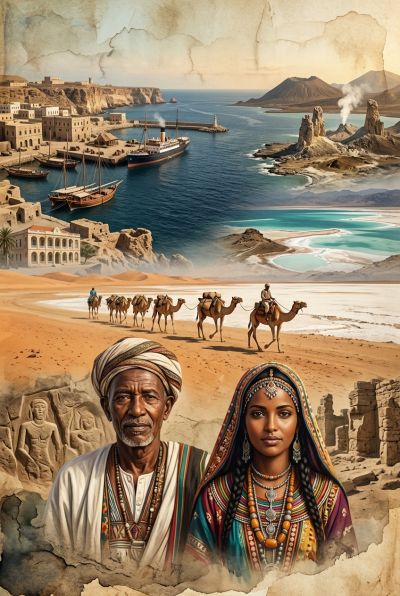
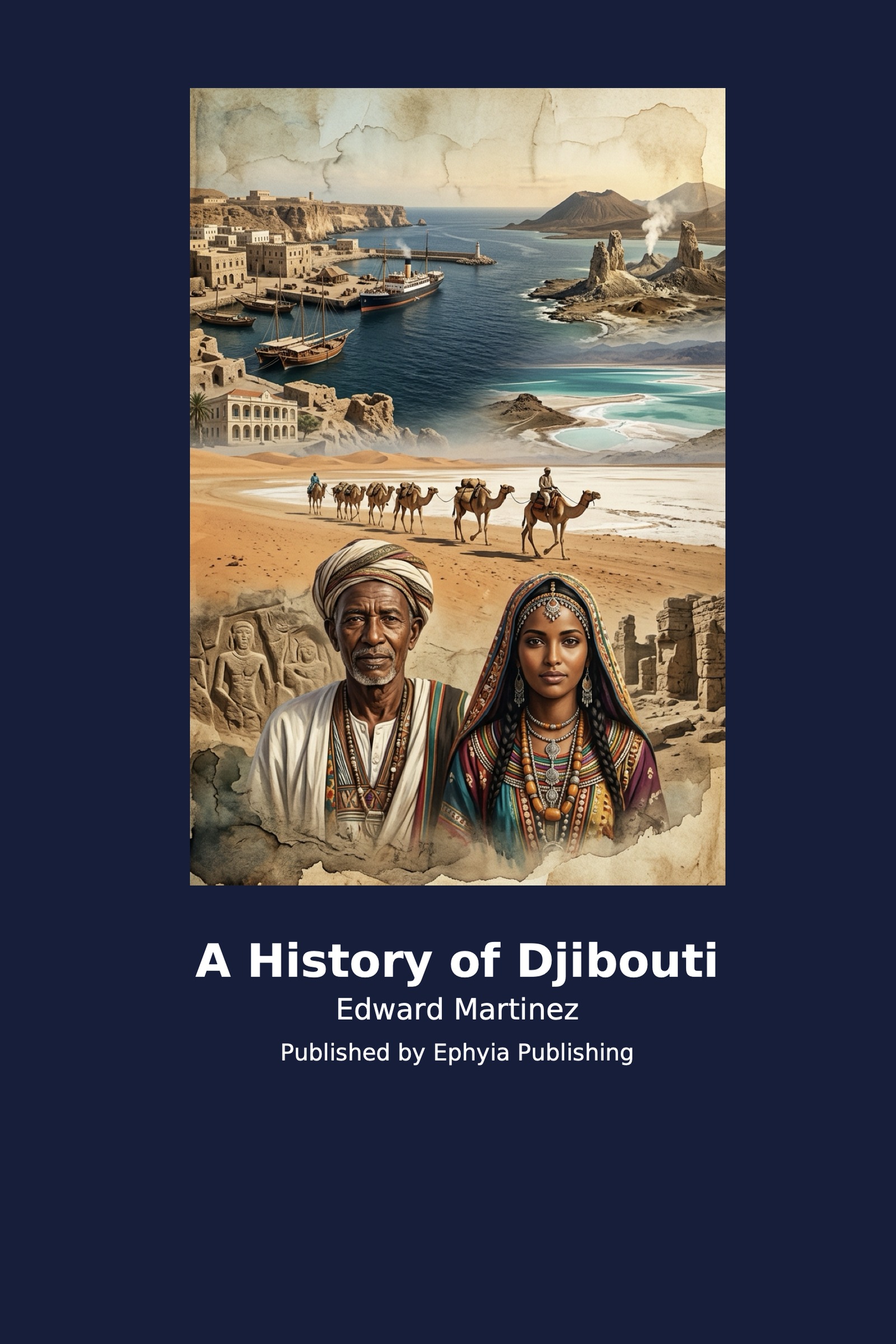
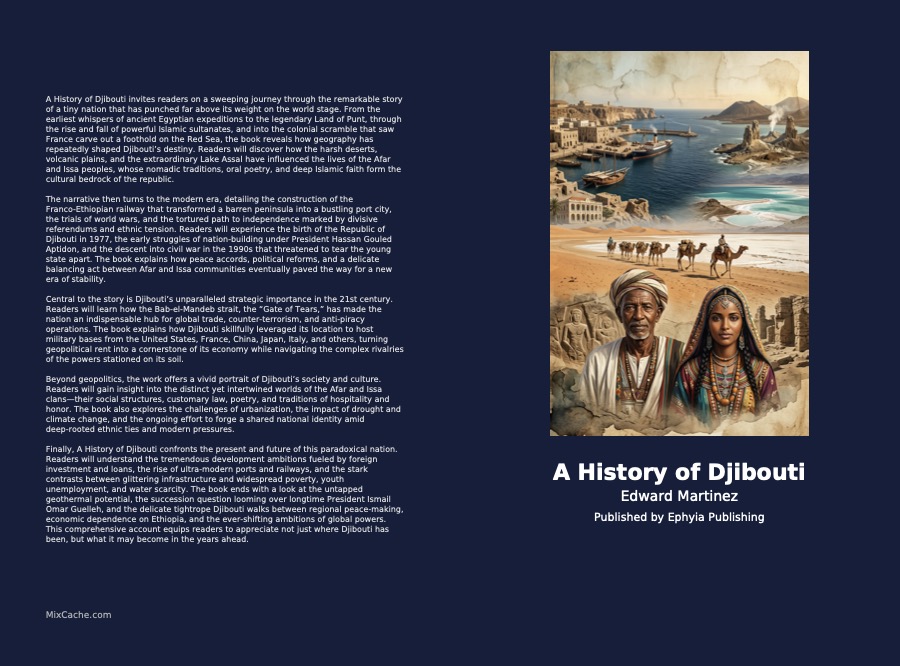
A History of Djibouti invites readers on a sweeping journey through the remarkable story of a tiny nation that has punched far above its weight on the world stage. From the earliest whispers of ancient Egyptian expeditions to the legendary Land of Punt, through the rise and fall of powerful Islamic sultanates, and into the colonial scramble that saw France carve out a foothold on the Red Sea, the book reveals how geography has repeatedly shaped Djibouti’s destiny. Readers will discover how the harsh deserts, volcanic plains, and the extraordinary Lake Assal have influenced the lives of the Afar and Issa peoples, whose nomadic traditions, oral poetry, and deep Islamic faith form the cultural bedrock of the republic.
The narrative then turns to the modern era, detailing the construction of the Franco‑Ethiopian railway that transformed a barren peninsula into a bustling port city, the trials of world wars, and the tortured path to independence marked by divisive referendums and ethnic tension. Readers will experience the birth of the Republic of Djibouti in 1977, the early struggles of nation‑building under President Hassan Gouled Aptidon, and the descent into civil war in the 1990s that threatened to tear the young state apart. The book explains how peace accords, political reforms, and a delicate balancing act between Afar and Issa communities eventually paved the way for a new era of stability.
Central to the story is Djibouti’s unparalleled strategic importance in the 21st century. Readers will learn how the Bab-el-Mandeb strait, the “Gate of Tears,” has made the nation an indispensable hub for global trade, counter‑terrorism, and anti‑piracy operations. The book explains how Djibouti skillfully leveraged its location to host military bases from the United States, France, China, Japan, Italy, and others, turning geopolitical rent into a cornerstone of its economy while navigating the complex rivalries of the powers stationed on its soil.
Beyond geopolitics, the work offers a vivid portrait of Djibouti’s society and culture. Readers will gain insight into the distinct yet intertwined worlds of the Afar and Issa clans—their social structures, customary law, poetry, and traditions of hospitality and honor. The book also explores the challenges of urbanization, the impact of drought and climate change, and the ongoing effort to forge a shared national identity amid deep‑rooted ethnic ties and modern pressures.
Finally, A History of Djibouti confronts the present and future of this paradoxical nation. Readers will understand the tremendous development ambitions fueled by foreign investment and loans, the rise of ultra‑modern ports and railways, and the stark contrasts between glittering infrastructure and widespread poverty, youth unemployment, and water scarcity. The book ends with a look at the untapped geothermal potential, the succession question looming over longtime President Ismail Omar Guelleh, and the delicate tightrope Djibouti walks between regional peace‑making, economic dependence on Ethiopia, and the ever‑shifting ambitions of global powers. This comprehensive account equips readers to appreciate not just where Djibouti has been, but what it may become in the years ahead.
What You'll Find Inside:
- Djibouti's pivotal role as a geographical crossroads from ancient Land of Punt trade to modern global shipping chokepoint at Bab-el-Mandeb strait
- The complex colonial legacy of French Somaliland, ethnic tensions between Afar and Issa peoples, and the non-linear path to independence achieved in 1977
- How Djibouti transformed from a French colony into a strategic geopolitical hub hosting military bases from global powers including the US, China, France, and Japan
- The nation's economic development model leveraging port infrastructure, logistics, and foreign base revenue while facing persistent poverty and unemployment challenges
- Djibouti's evolution into an active regional peacemaker and mediator in Horn of Africa conflicts despite its small size and authoritarian political system
Who's It For:
This book is ideal for students and researchers of African history, international relations, and geopolitics who seek to understand Djibouti's disproportionate global influence. It will particularly benefit professionals working in diplomacy, development, or regional security in the Horn of Africa, as well as general readers interested in how small nations navigate complex international landscapes through strategic geography and skilled statecraft.
Table of Contents:
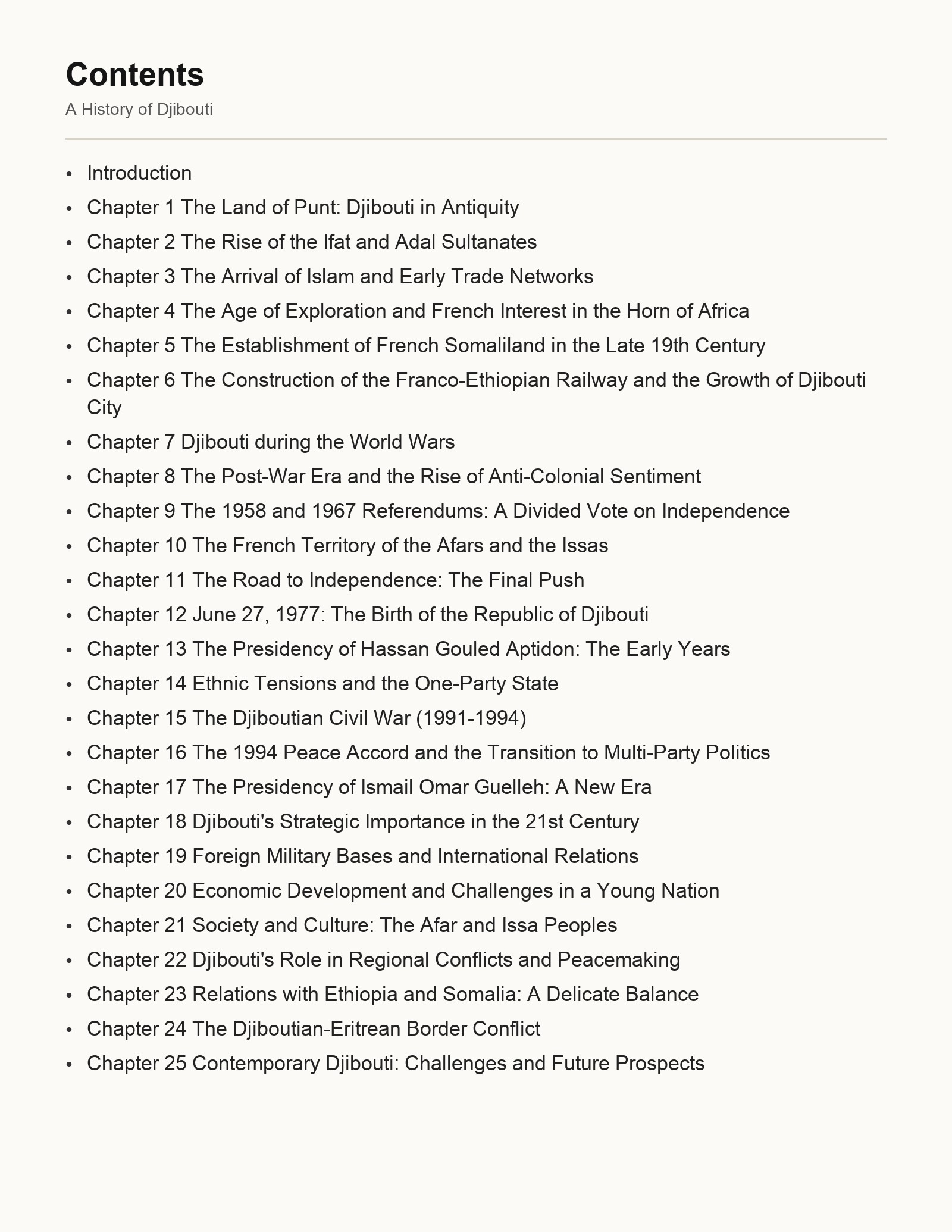
- Introduction
- Chapter 1 The Land of Punt: Djibouti in Antiquity.
- Chapter 2 The Rise of the Ifat and Adal Sultanates.
- Chapter 3 The Arrival of Islam and Early Trade Networks.
- Chapter 4 The Age of Exploration and French Interest in the Horn of Africa.
- Chapter 5 The Establishment of French Somaliland in the Late 19th Century.
- Chapter 6 The Construction of the Franco-Ethiopian Railway and the Growth of Djibouti City.
- Chapter 7 Djibouti during the World Wars.
- Chapter 8 The Post-War Era and the Rise of Anti-Colonial Sentiment.
- Chapter 9 The 1958 and 1967 Referendums: A Divided Vote on Independence.
- Chapter 10 The French Territory of the Afars and the Issas.
- Chapter 11 The Road to Independence: The Final Push.
- Chapter 12 June 27, 1977: The Birth of the Republic of Djibouti.
- Chapter 13 The Presidency of Hassan Gouled Aptidon: The Early Years.
- Chapter 14 Ethnic Tensions and the One-Party State.
- Chapter 15 The Djiboutian Civil War (1991-1994).
- Chapter 16 The 1994 Peace Accord and the Transition to Multi-Party Politics.
- Chapter 17 The Presidency of Ismail Omar Guelleh: A New Era.
- Chapter 18 Djibouti's Strategic Importance in the 21st Century.
- Chapter 19 Foreign Military Bases and International Relations.
- Chapter 20 Economic Development and Challenges in a Young Nation.
- Chapter 21 Society and Culture: The Afar and Issa Peoples.
- Chapter 22 Djibouti's Role in Regional Conflicts and Peacemaking.
- Chapter 23 Relations with Ethiopia and Somalia: A Delicate Balance.
- Chapter 24 The Djiboutian-Eritrean Border Conflict.
- Chapter 25 Contemporary Djibouti: Challenges and Future Prospects.
Author:
Published By:
Date Published:
May 20, 2026
Type:
Nonfiction
Language:
English
Also Available In:
Word Count:
39,638 words
Reading Time:
2 hours 47 minutes
Sample:
Order:
Order A History of Djibouti (Paperback) on MixCache.com:
Buy NowPrint copy is made to order and ships worldwide. Includes the ebook free, ready to read instantly.
$5 account credit for all new MixCache.com accounts, usable toward any ebook purchase!*