Browse by Category
Fiction
- Action & Adventure
- African American
- Anthologies
- Children's Fiction
- Classics
- Comics & Graphic Novels
- Coming of Age
- Contemporary
- Cultural & Regional
- Drama
- Erotica
- Fantasy
- General
- Historical Fiction
- Horror
- Humor & Satire
- Literary Fiction
- Mystery, Thriller & Suspense
- Poetry
- Religious & Inspirational
- Romance
- Science Fiction
- Short Stories
- War & Military
- Westerns
- Women's Fiction
- Young Adult
Non-Fiction
- Antiques & Collectibles
- Arts & Photography
- Biographies & Memoirs
- Business & Money
- Children's Non-Fiction
-
Computers & Technology
- Artificial Intelligence
- Computer Science
- Cybersecurity & Cryptography
- Data Science & Analytics
- Databases & Big Data
- Game Development & Design
- General
- Hardware & DIY
- Mobile App Development
- Networking & Cloud Computing
- Operating Systems
- Programming
- Robotics
- Software
- Software Engineering
- User Experience (UX) & Design
- Web Development & Design
- Cooking, Food & Wine
- Crafts, Hobbies & Home
- Education & Teaching
- Engineering
- General
- Health, Fitness & Dieting
-
History
- African History
- African History - North Africa
- African History - Sub-Saharan Africa
- American History
- American History - 20th Century
- American History - Civil War
- American History - Colonial Period
- Ancient History
- Asian History
- Asian History - China
- Asian History - India
- Asian History - Japan
- Asian History - Southeast Asia
- European History
- European History - Ancient Greece
- European History - Ancient Rome
- European History - Medieval
- European History - Modern
- European History - Renaissance
- General
- Middle Eastern History
- Military History
- Military History - Aviation
- Military History - Naval
- Social & Cultural History
- World History
- Humor & Entertainment
- Industrial Technology
- Language Learning
- Law
- LGBTQ+ Non-Fiction
- Literary Criticism
- Medical Books
- Parenting & Relationships
- Philosophy
- Politics & Social Sciences
- Reference
- Religion & Spirituality
-
Science & Math
- Agricultural Sciences
- Astronomy & Space Science
- Behavioral Sciences
- Biological Sciences
- Botany & Plant Science
- Chemistry
- Earth Sciences
- Engineering - Chemical
- Engineering - Civil
- Engineering - Electrical
- Engineering - Mechanical
- Environment
- General
- Geology
- Mathematics
- Nature & Ecology
- Oceanography
- Paleontology
- Physics
- Statistics
- Self-Help
- Sports & Outdoors
- Study Aids
- Sustainability & Green Living
- Textbooks
- Transportation
- Travel
- True Crime
- Urban Planning & Development
- Veterinary Medicine
- Writing & Publishing
Jump to Section
MixCache.com Total Access
Unlimited reading and audiobooks for every book published by MixCache.com.
Included titles carry the MTA badge.
Learn more →
Nasty Chemicals
A Tour Of The World's Worst Stuff And Its Effects
About this book:
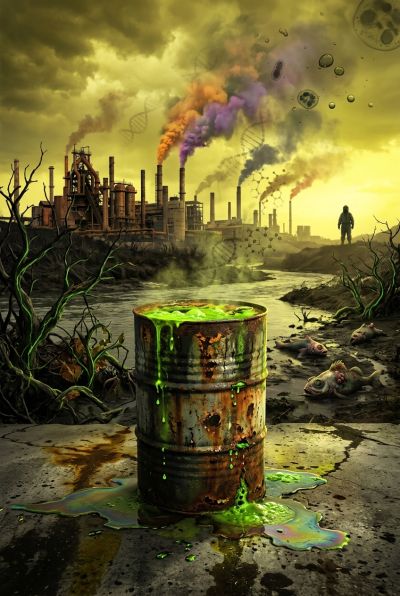
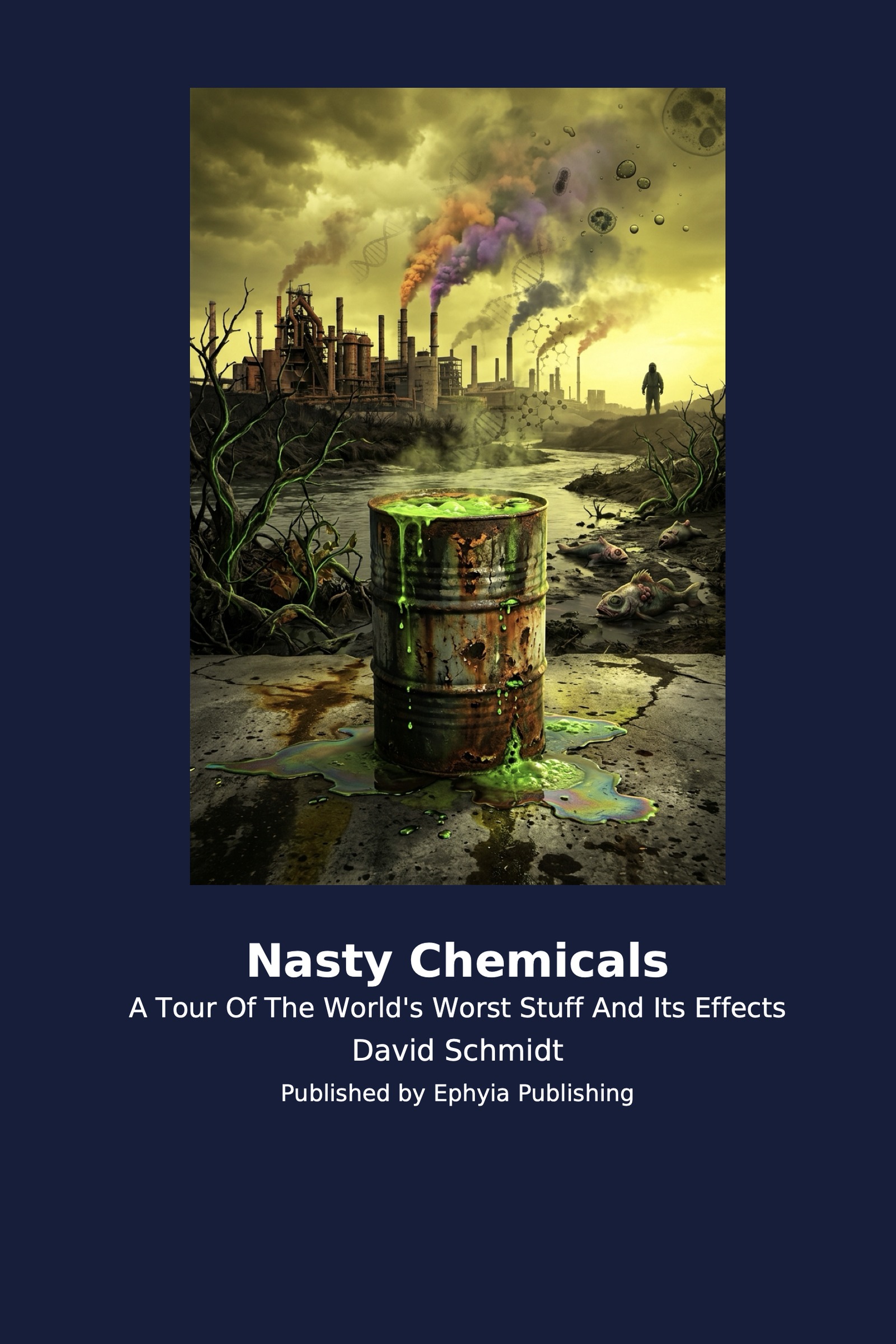
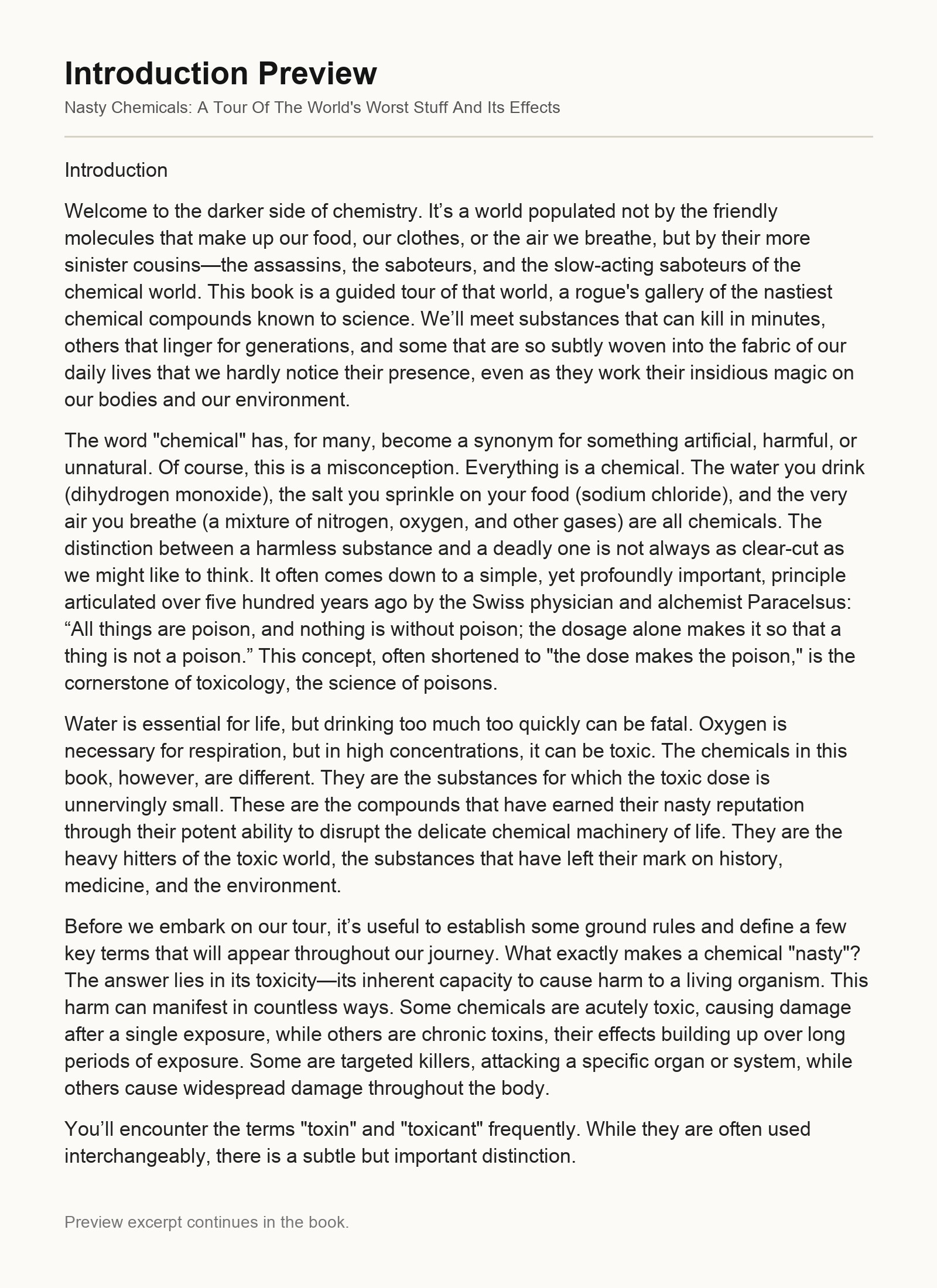
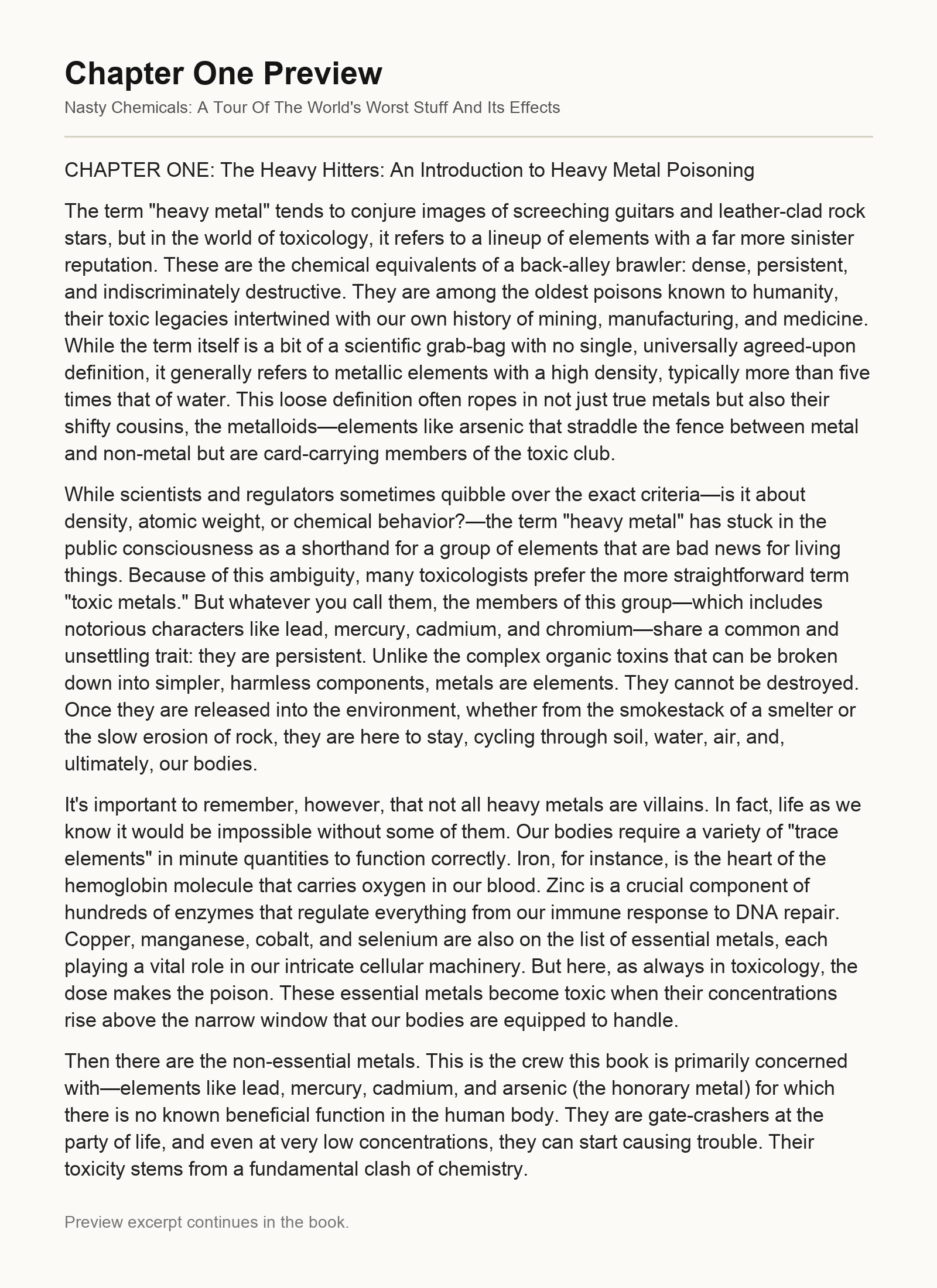
Nasty Chemicals takes readers on a gripping journey through the most dangerous substances known to science, from ancient poisons like lead and arsenic to modern threats such as PFAS and nerve agents. Each chapter reveals the chemistry behind a toxin, explaining how it enters the body, interferes with vital processes, and produces symptoms that range from immediate convulsions to chronic diseases that unfold over generations. By weaving together historical anecdotes, scientific explanations, and real‑world case studies—such as the Minamata mercury disaster, the Love Canal toxic waste crisis, and the assassination of Kim Jong‑nam with VX—the book shows how these chemicals have shaped wars, industries, and public health policies.
Readers will gain a clear understanding of toxicology fundamentals, including the principle that “the dose makes the poison,” the difference between toxins and toxicants, and the ways chemicals act as mutagens, carcinogens, endocrine disruptors, or neurotoxins. The book details mechanisms like biomagnification, oxidative stress, enzyme inhibition, and receptor mimicry, giving insight into why substances as disparate as cyanide, botulinum toxin, and BPA can each hijack the body’s machinery in uniquely devastating ways. Special attention is given to vulnerable populations—children, pregnant women, and workers—highlighting how exposure routes such as contaminated water, food, air, or consumer products lead to measurable health impacts.
Beyond the chemistry, Nasty Chemicals explores the social and environmental legacy of each pollutant. It chronicles how industrial breakthroughs like leaded gasoline, DDT, and PCBs brought short‑term benefits but left long‑term contamination, prompting landmark legislation, Superfund clean‑ups, and global treaties such as the Minamata Convention on Mercury. Stories of whistleblowers, activists, and scientists—from Rachel Carson to Clair Patterson—illustrate the ongoing struggle to balance technological progress with the need to protect ecosystems and human health. The narrative also confronts emerging threats, including nanomaterials, microplastics, pharmaceutical residues, and antibiotic resistance, showing how today’s innovations may become tomorrow’s hazards.
By the end of the tour, readers will not only recognize the names of infamous chemicals but also grasp the subtle ways they permeate daily life—from the lead in old paint and the mercury in certain fish to the phthalates in vinyl flooring and the PFAS in non‑stick cookware. The book empowers individuals to make informed choices about products, diet, and environment while appreciating the vital role of regulation, scientific vigilance, and public awareness in mitigating chemical risks. Whether you are a student, a concerned citizen, or simply curious about the hidden dangers that shape our world, Nasty Chemicals offers a compelling, eye‑opening exploration of chemistry’s dark side and the science that helps us defend against it.
What You'll Find Inside:
- A chronological tour of notorious chemicals—from ancient lead and arsenic to modern PFAS and nanomaterials—highlighting their discovery, use, and impact.
- Explanation of key toxic mechanisms such as enzyme inhibition, oxidative stress, endocrine disruption, biomagnification, and direct cellular damage.
- Detailed case studies of major poisonings and environmental disasters (e.g., Minamata, Love Canal, Seveso, Times Beach, Flint water crisis) illustrating real‑world consequences.
- Overview of medical treatments, regulatory responses, and public‑health lessons learned from each chemical threat.
- Examination of emerging risks including forever chemicals, microplastics, pharmaceutical residues, and nanomaterials, and the challenges they pose for future safety.
Who's It For:
This book is ideal for students, educators, and professionals in toxicology, environmental science, public health, chemistry, and related fields who seek a comprehensive yet accessible reference on hazardous substances. It also serves concerned citizens, policymakers, and anyone interested in understanding how chemicals affect health and the environment, providing the knowledge needed to make informed personal and societal decisions.
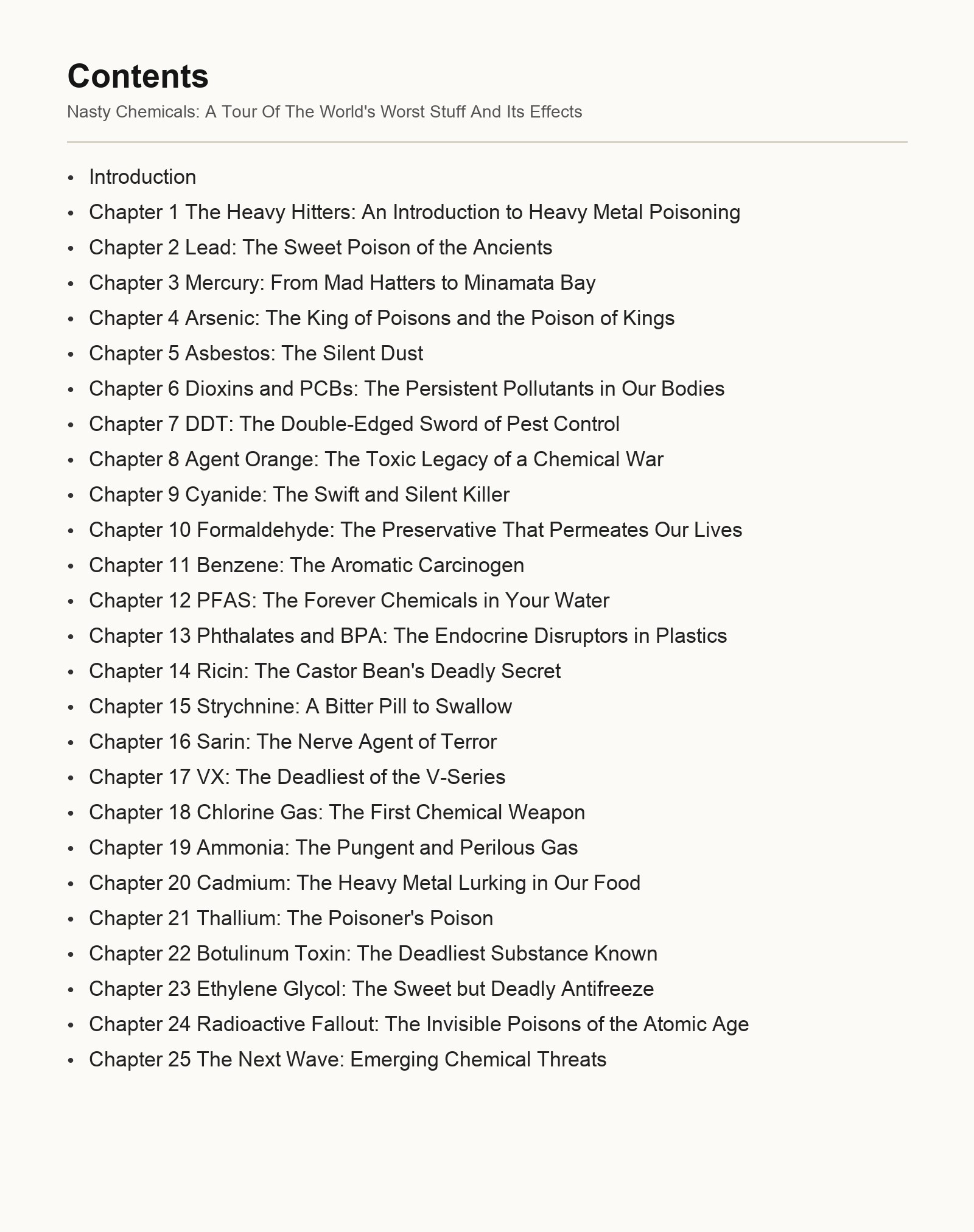
Table of Contents:
- Introduction
- Chapter 1 The Heavy Hitters: An Introduction to Heavy Metal Poisoning
- Chapter 2 Lead: The Sweet Poison of the Ancients
- Chapter 3 Mercury: From Mad Hatters to Minamata Bay
- Chapter 4 Arsenic: The King of Poisons and the Poison of Kings
- Chapter 5 Asbestos: The Silent Dust
- Chapter 6 Dioxins and PCBs: The Persistent Pollutants in Our Bodies
- Chapter 7 DDT: The Double-Edged Sword of Pest Control
- Chapter 8 Agent Orange: The Toxic Legacy of a Chemical War
- Chapter 9 Cyanide: The Swift and Silent Killer
- Chapter 10 Formaldehyde: The Preservative That Permeates Our Lives
- Chapter 11 Benzene: The Aromatic Carcinogen
- Chapter 12 PFAS: The Forever Chemicals in Your Water
- Chapter 13 Phthalates and BPA: The Endocrine Disruptors in Plastics
- Chapter 14 Ricin: The Castor Bean's Deadly Secret
- Chapter 15 Strychnine: A Bitter Pill to Swallow
- Chapter 16 Sarin: The Nerve Agent of Terror
- Chapter 17 VX: The Deadliest of the V-Series
- Chapter 18 Chlorine Gas: The First Chemical Weapon
- Chapter 19 Ammonia: The Pungent and Perilous Gas
- Chapter 20 Cadmium: The Heavy Metal Lurking in Our Food
- Chapter 21 Thallium: The Poisoner's Poison
- Chapter 22 Botulinum Toxin: The Deadliest Substance Known
- Chapter 23 Ethylene Glycol: The Sweet but Deadly Antifreeze
- Chapter 24 Radioactive Fallout: The Invisible Poisons of the Atomic Age
- Chapter 25 The Next Wave: Emerging Chemical Threats
Author:
Published By:
Date Published:
May 20, 2026
Type:
Nonfiction
Language:
English
Word Count:
46,772 words
Reading Time:
3 hours 17 minutes
Sample:
Order:
Order Nasty Chemicals (Hardcover) on MixCache.com:
Buy NowPrint copy is made to order and ships worldwide. Includes the ebook free, ready to read instantly.
$5 account credit for all new MixCache.com accounts, usable toward any ebook purchase!*