
Browse by Category
Fiction
- Action & Adventure
- African American
- Anthologies
- Children's Fiction
- Classics
- Comics & Graphic Novels
- Coming of Age
- Contemporary
- Cultural & Regional
- Drama
- Erotica
- Fantasy
- General
- Historical Fiction
- Horror
- Humor & Satire
- Literary Fiction
- Mystery, Thriller & Suspense
- Poetry
- Religious & Inspirational
- Romance
- Science Fiction
- Short Stories
- War & Military
- Westerns
- Women's Fiction
- Young Adult
Non-Fiction
- Antiques & Collectibles
- Arts & Photography
- Biographies & Memoirs
- Business & Money
- Children's Non-Fiction
-
Computers & Technology
- Artificial Intelligence
- Computer Science
- Cybersecurity & Cryptography
- Data Science & Analytics
- Databases & Big Data
- Game Development & Design
- General
- Hardware & DIY
- Mobile App Development
- Networking & Cloud Computing
- Operating Systems
- Programming
- Robotics
- Software
- Software Engineering
- User Experience (UX) & Design
- Web Development & Design
- Cooking, Food & Wine
- Crafts, Hobbies & Home
- Education & Teaching
- Engineering
- General
- Health, Fitness & Dieting
-
History
- African History
- African History - North Africa
- African History - Sub-Saharan Africa
- American History
- American History - 20th Century
- American History - Civil War
- American History - Colonial Period
- Ancient History
- Asian History
- Asian History - China
- Asian History - India
- Asian History - Japan
- Asian History - Southeast Asia
- European History
- European History - Ancient Greece
- European History - Ancient Rome
- European History - Medieval
- European History - Modern
- European History - Renaissance
- General
- Middle Eastern History
- Military History
- Military History - Aviation
- Military History - Naval
- Social & Cultural History
- World History
- Humor & Entertainment
- Industrial Technology
- Language Learning
- Law
- LGBTQ+ Non-Fiction
- Literary Criticism
- Medical Books
- Parenting & Relationships
- Philosophy
- Politics & Social Sciences
- Reference
- Religion & Spirituality
-
Science & Math
- Agricultural Sciences
- Astronomy & Space Science
- Behavioral Sciences
- Biological Sciences
- Botany & Plant Science
- Chemistry
- Earth Sciences
- Engineering - Chemical
- Engineering - Civil
- Engineering - Electrical
- Engineering - Mechanical
- Environment
- General
- Geology
- Mathematics
- Nature & Ecology
- Oceanography
- Paleontology
- Physics
- Statistics
- Self-Help
- Sports & Outdoors
- Study Aids
- Sustainability & Green Living
- Textbooks
- Transportation
- Travel
- True Crime
- Urban Planning & Development
- Veterinary Medicine
- Writing & Publishing
Jump to Section
MixCache.com Total Access
Unlimited reading and audiobooks for every book published by MixCache.com.
Included titles carry the MTA badge.
Learn more →
A History of Plague
The Story of the Disease that Terrorized Humanity
About this book:

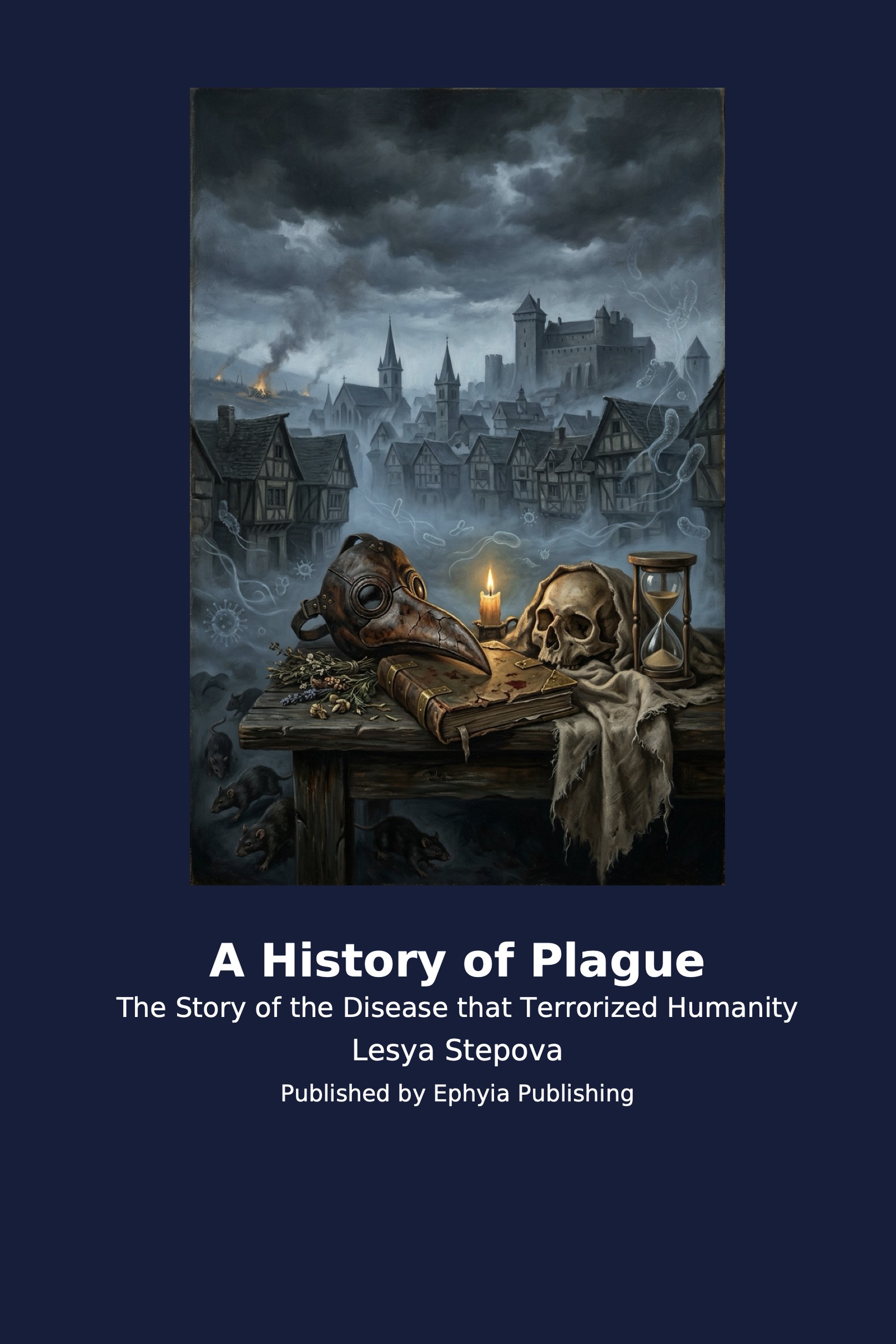
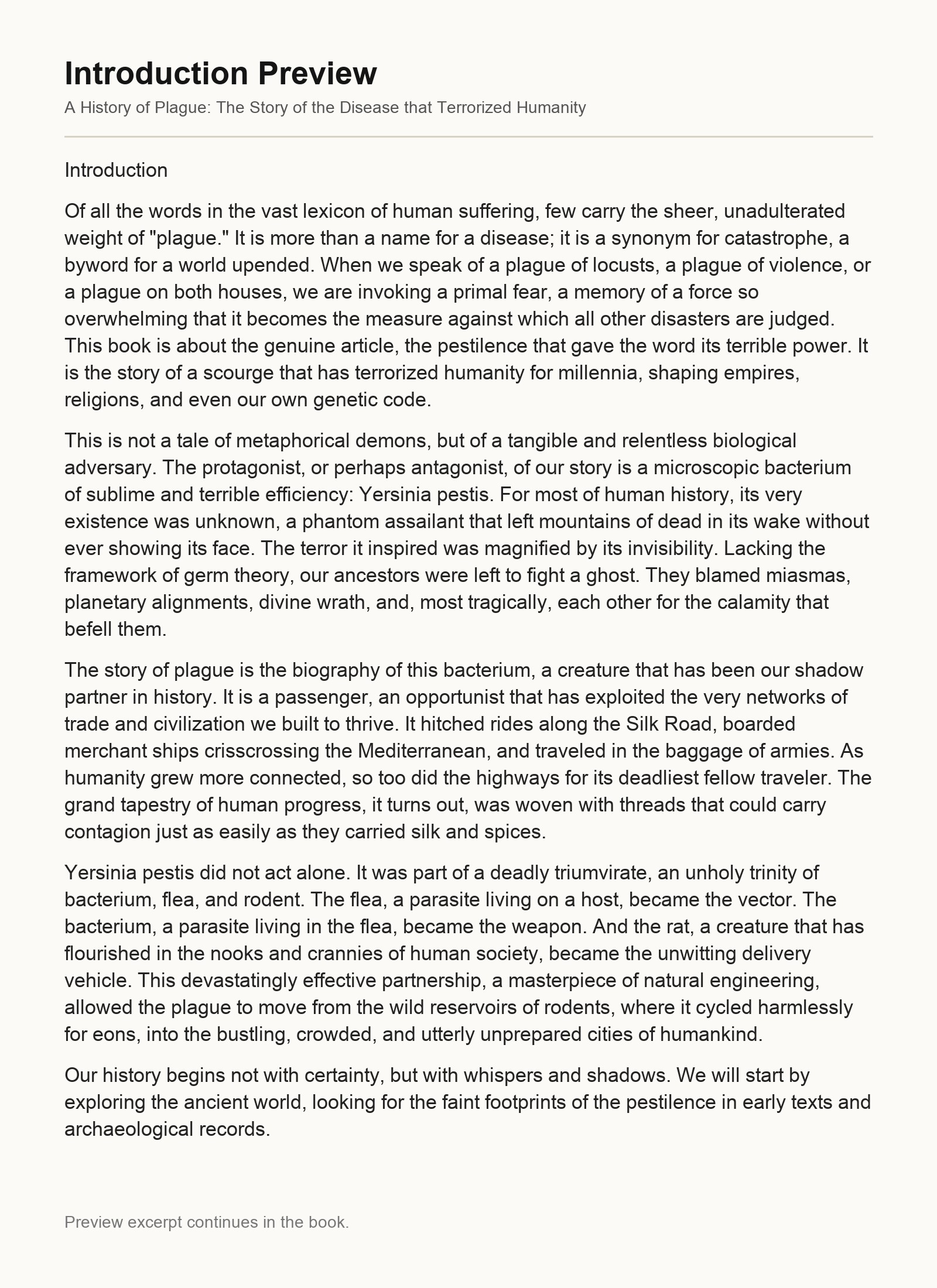
A History of Plague invites readers on a sweeping journey through the millennia‑long relationship between humanity and one of its most formidable adversaries, the bacterium Yersinia pestis. From the faint genetic traces of ancient infections buried in Neolithic teeth to the modern‑day vigilance of global health networks, the book traces how a tiny microorganism has repeatedly toppled empires, reshaped societies, and left an indelible mark on our biology and culture. Each chapter builds a vivid picture of the plague’s relentless march, showing how it rode the currents of trade, war, and migration to strike wherever human connection flourished.
Readers will discover the dramatic details of the three great pandemics—the Plague of Justinian, the Black Death, and the Third Pandemic—learning how the disease moved from remote rodent reservoirs into bustling cities via fleas and rats, and how breakthroughs in bacteriology finally unmasked its deadly triumvirate. The narrative explains the stark realities of bubonic, pneumonic, and septicemic forms, the horrific symptoms that terrified medieval witnesses, and the often misguided medical responses ranging from bloodletting to the first quarantines that laid the groundwork for modern public health. Alongside the science, the book explores the profound socioeconomic upheavals that followed mass mortality, from the collapse of feudalism and the rise of wage labor to the shifting patterns of land ownership and urban craft guilds.
Beyond statistics and science, the work immerses the reader in the human stories that emerged in the plague’s wake: the fervent processions of Flagellants, the tragic scapegoating of Jewish communities, the artistic outpourings of the Danse Macabre and transi tombs, and the literary reflections of Boccaccio, Defoe, and Camus. It reveals how the plague acted as a powerful engine of natural selection, leaving a genetic legacy such as the ERAP2 variant that conferred survival advantage yet now links to autoimmune risk, and how the disease inspired both despair and a fierce will to endure, adapt, and create meaning in the face of catastrophe.
The account does not end in the past; it brings the threat into the present, examining the persistence of plague in wild rodent reservoirs across four continents, the occasional spillover into human populations, and the challenges posed by antibiotic resistance and bioterrorism concerns. Readers will gain insight into contemporary surveillance strategies, the role of rapid diagnostics and targeted vector control, and the ongoing efforts to develop safer vaccines. Most importantly, the book distills timeless lessons about interconnectedness, denial, scapegoating, and the indispensable value of science-based preparedness—lessons that resonate strongly with today’s pandemic challenges.
Ultimately, A History of Plague offers more than a chronicle of death; it provides a gripping, interdisciplinary experience that blends microbiology, history, sociology, and literature into a coherent narrative of resilience and vigilance. By walking alongside the scientists, healers, victims, and artists who confronted this ancient scourge, readers will come away with a deeper appreciation of how a single bacterium has shaped our world—and why understanding its story remains essential for facing the microbial threats of tomorrow.
What You'll Find Inside:
- The book reveals how Yersinia pestis, transmitted by fleas on rodents, has been humanity's deadliest biological adversary throughout history, causing three major pandemics that reshaped civilizations from the Byzantine Empire to modern times.
- Beyond mortality statistics, the book explores plague's profound social impacts - from economic transformations after the Black Death to the persecution of minorities and the rise of public health measures like quarantine that still influence modern disease control.
- The text details the scientific breakthroughs that unmasked plague's true nature, from Yersin's identification of the bacterium in 1894 to Simond's discovery of the flea vector, transforming our understanding from miasma theory to germ theory and enabling effective treatments.
- The book examines plague's cultural legacy, showing how it influenced art (Danse Macabre), literature (from Boccaccio's Decameron to Camus' The Plague), and religious responses across Christian and Islamic societies, reflecting humanity's evolving relationship with mortality.
- The work concludes with modern relevance, discussing plague as a persistent zoonotic threat in regions like Madagascar and the American West, concerns about bioterrorism, and the enduring lessons for pandemic preparedness in our interconnected world.
Who's It For:
This book is ideal for students, academics, and general readers interested in history, medicine, and public health who seek to understand how pandemics shape human society. It will particularly benefit those in epidemiology, disease control, or pandemic preparedness fields, as well as educated readers looking for a comprehensive yet accessible account of plague's biological, historical, and cultural impact from ancient times to the 21st century.
Table of Contents:
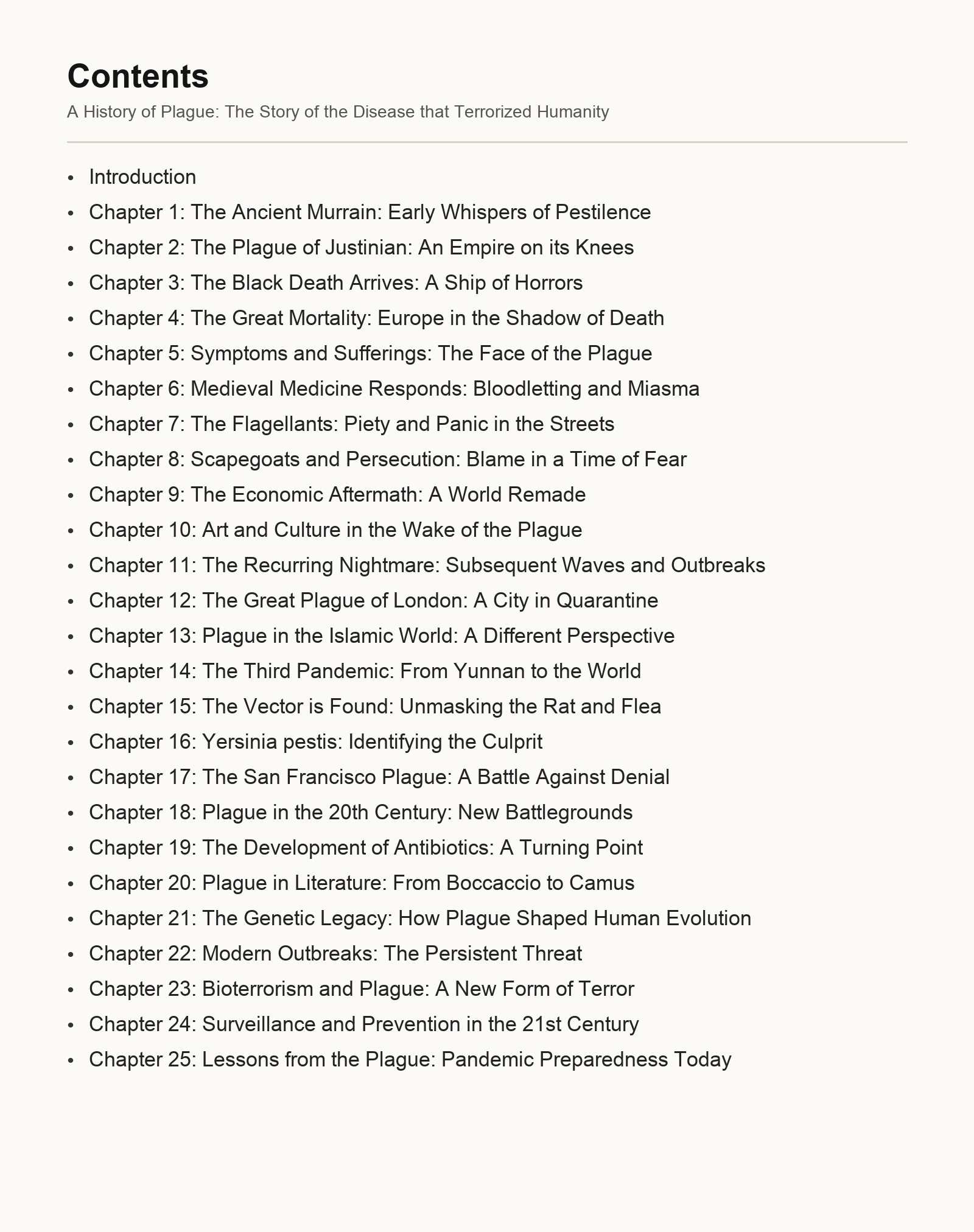
- Introduction
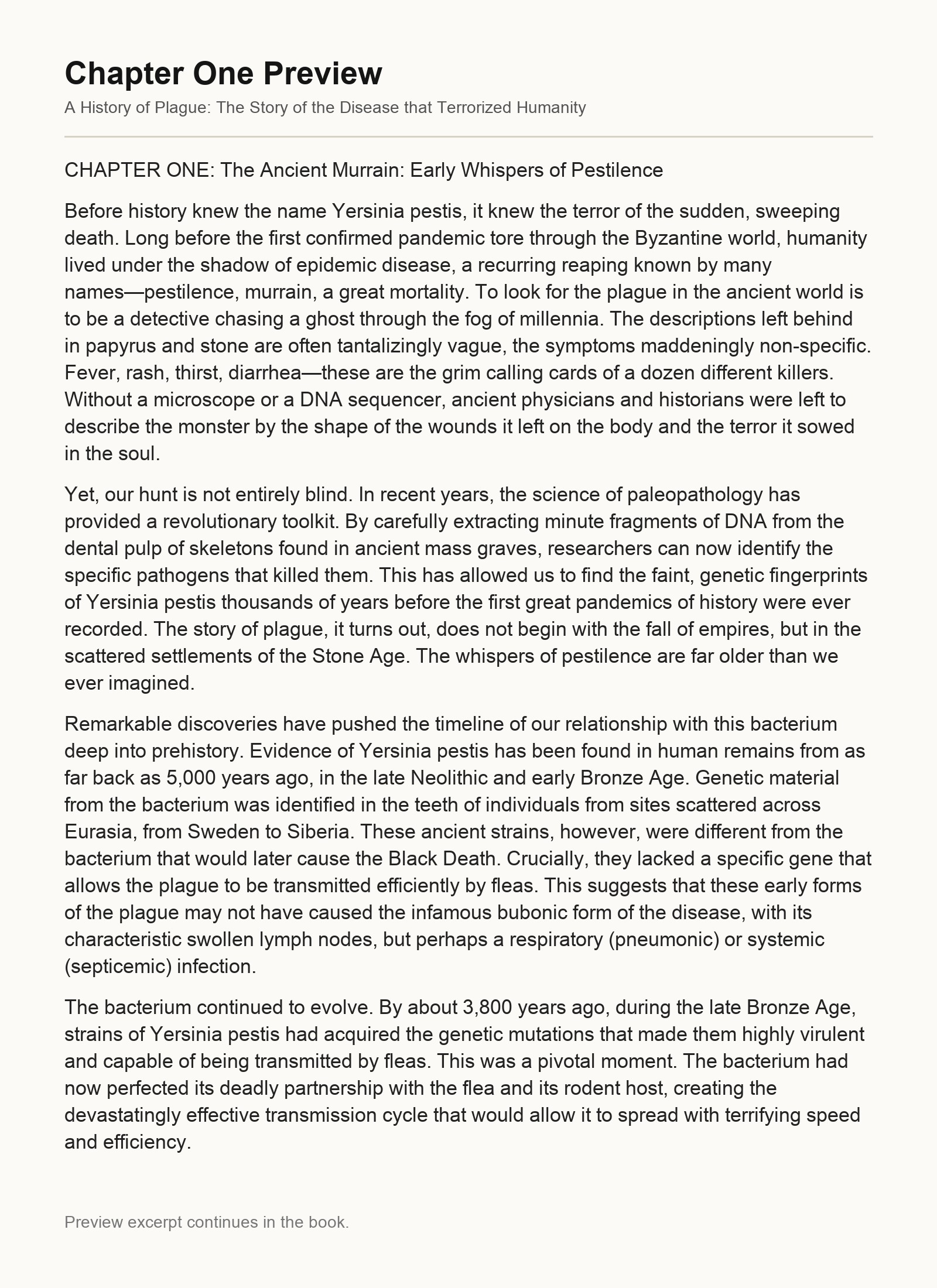
- Chapter 1: The Ancient Murrain: Early Whispers of Pestilence
- Chapter 2: The Plague of Justinian: An Empire on its Knees
- Chapter 3: The Black Death Arrives: A Ship of Horrors
- Chapter 4: The Great Mortality: Europe in the Shadow of Death
- Chapter 5: Symptoms and Sufferings: The Face of the Plague
- Chapter 6: Medieval Medicine Responds: Bloodletting and Miasma
- Chapter 7: The Flagellants: Piety and Panic in the Streets
- Chapter 8: Scapegoats and Persecution: Blame in a Time of Fear
- Chapter 9: The Economic Aftermath: A World Remade
- Chapter 10: Art and Culture in the Wake of the Plague
- Chapter 11: The Recurring Nightmare: Subsequent Waves and Outbreaks
- Chapter 12: The Great Plague of London: A City in Quarantine
- Chapter 13: Plague in the Islamic World: A Different Perspective
- Chapter 14: The Third Pandemic: From Yunnan to the World
- Chapter 15: The Vector is Found: Unmasking the Rat and Flea
- Chapter 16: Yersinia pestis: Identifying the Culprit
- Chapter 17: The San Francisco Plague: A Battle Against Denial
- Chapter 18: Plague in the 20th Century: New Battlegrounds
- Chapter 19: The Development of Antibiotics: A Turning Point
- Chapter 20: Plague in Literature: From Boccaccio to Camus
- Chapter 21: The Genetic Legacy: How Plague Shaped Human Evolution
- Chapter 22: Modern Outbreaks: The Persistent Threat
- Chapter 23: Bioterrorism and Plague: A New Form of Terror
- Chapter 24: Surveillance and Prevention in the 21st Century
- Chapter 25: Lessons from the Plague: Pandemic Preparedness Today
Ephyia Publishing MixCache.com Book Reference: 15665
Author:
Published By:
Date Published:
May 19, 2026
Type:
Nonfiction
Language:
English
Also Available In:
Word Count:
45,993 words
Reading Time:
3 hours 13 minutes
Sample:
Order:
Order A History of Plague (Paperback) on MixCache.com:
Buy NowPrint copy is made to order and ships worldwide. Includes the ebook free, ready to read instantly.
$5 account credit for all new MixCache.com accounts, usable toward any ebook purchase!*


