Browse by Category
Fiction
- Action & Adventure
- African American
- Anthologies
- Children's Fiction
- Classics
- Comics & Graphic Novels
- Coming of Age
- Contemporary
- Cultural & Regional
- Drama
- Erotica
- Fantasy
- General
- Historical Fiction
- Horror
- Humor & Satire
- Literary Fiction
- Mystery, Thriller & Suspense
- Poetry
- Religious & Inspirational
- Romance
- Science Fiction
- Short Stories
- War & Military
- Westerns
- Women's Fiction
- Young Adult
Non-Fiction
- Antiques & Collectibles
- Arts & Photography
- Biographies & Memoirs
- Business & Money
- Children's Non-Fiction
-
Computers & Technology
- Artificial Intelligence
- Computer Science
- Cybersecurity & Cryptography
- Data Science & Analytics
- Databases & Big Data
- Game Development & Design
- General
- Hardware & DIY
- Mobile App Development
- Networking & Cloud Computing
- Operating Systems
- Programming
- Robotics
- Software
- Software Engineering
- User Experience (UX) & Design
- Web Development & Design
- Cooking, Food & Wine
- Crafts, Hobbies & Home
- Education & Teaching
- Engineering
- General
- Health, Fitness & Dieting
-
History
- African History
- African History - North Africa
- African History - Sub-Saharan Africa
- American History
- American History - 20th Century
- American History - Civil War
- American History - Colonial Period
- Ancient History
- Asian History
- Asian History - China
- Asian History - India
- Asian History - Japan
- Asian History - Southeast Asia
- European History
- European History - Ancient Greece
- European History - Ancient Rome
- European History - Medieval
- European History - Modern
- European History - Renaissance
- General
- Middle Eastern History
- Military History
- Military History - Aviation
- Military History - Naval
- Social & Cultural History
- World History
- Humor & Entertainment
- Industrial Technology
- Language Learning
- Law
- LGBTQ+ Non-Fiction
- Literary Criticism
- Medical Books
- Parenting & Relationships
- Philosophy
- Politics & Social Sciences
- Reference
- Religion & Spirituality
-
Science & Math
- Agricultural Sciences
- Astronomy & Space Science
- Behavioral Sciences
- Biological Sciences
- Botany & Plant Science
- Chemistry
- Earth Sciences
- Engineering - Chemical
- Engineering - Civil
- Engineering - Electrical
- Engineering - Mechanical
- Environment
- General
- Geology
- Mathematics
- Nature & Ecology
- Oceanography
- Paleontology
- Physics
- Statistics
- Self-Help
- Sports & Outdoors
- Study Aids
- Sustainability & Green Living
- Textbooks
- Transportation
- Travel
- True Crime
- Urban Planning & Development
- Veterinary Medicine
- Writing & Publishing
Jump to Section
MixCache.com Total Access
Unlimited reading and audiobooks for every book published by MixCache.com.
Included titles carry the MTA badge.
Learn more →
The Industrial Revolution
A Concise History
About this book:

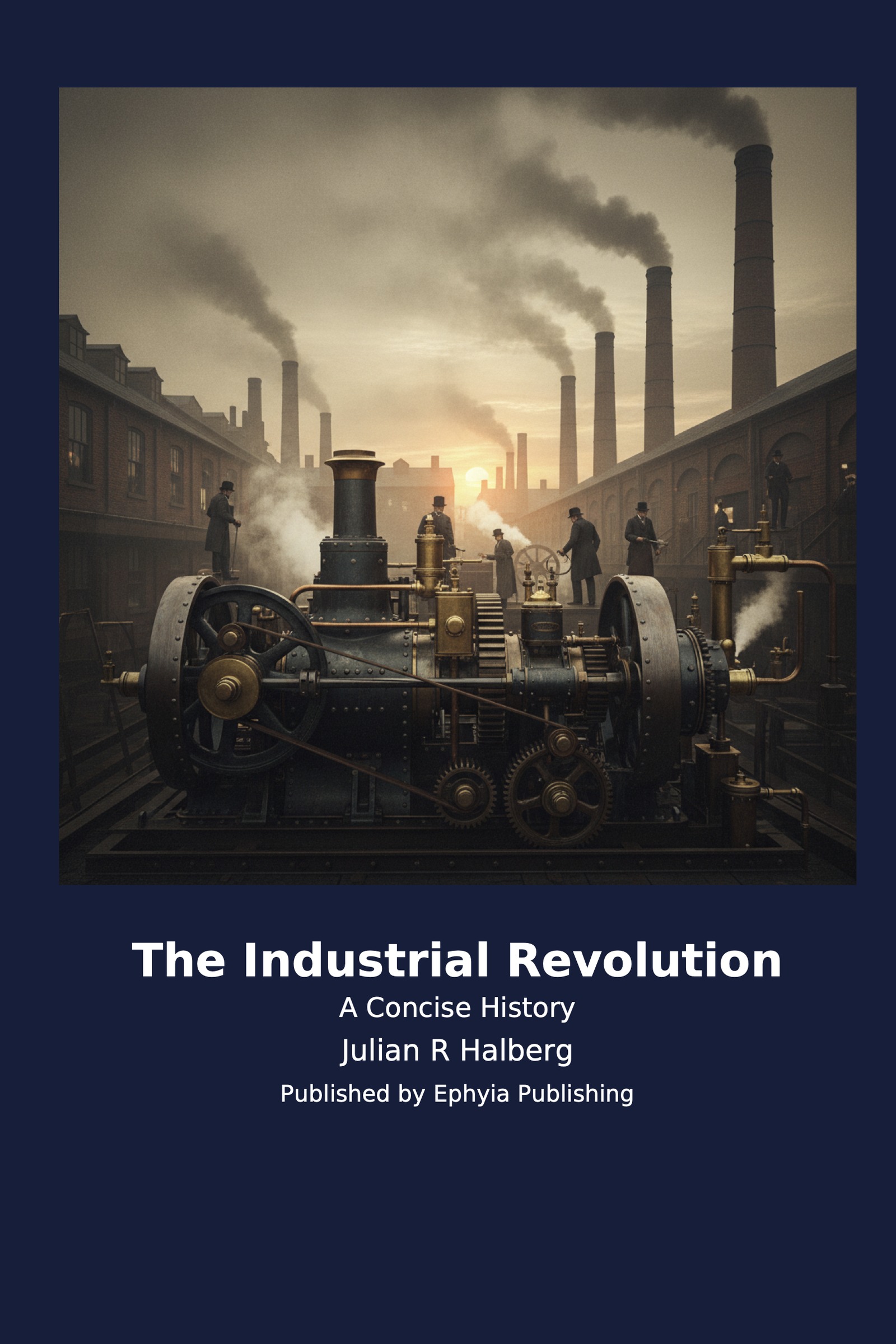
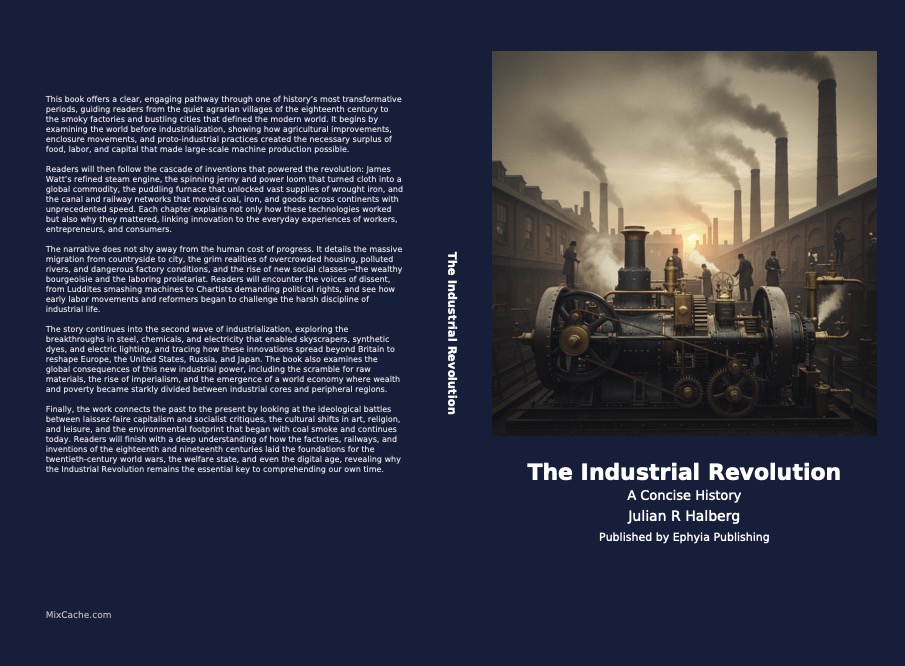
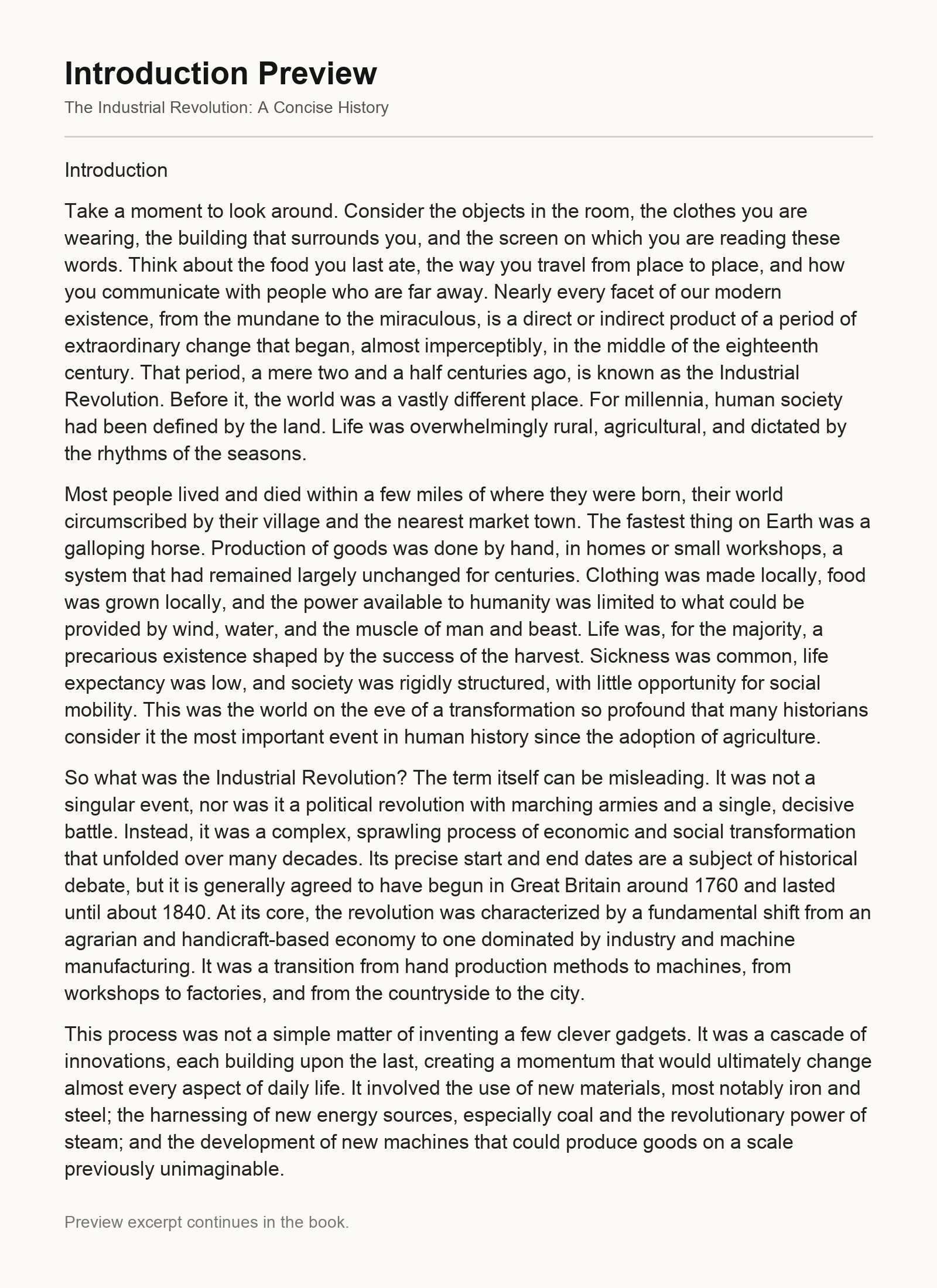
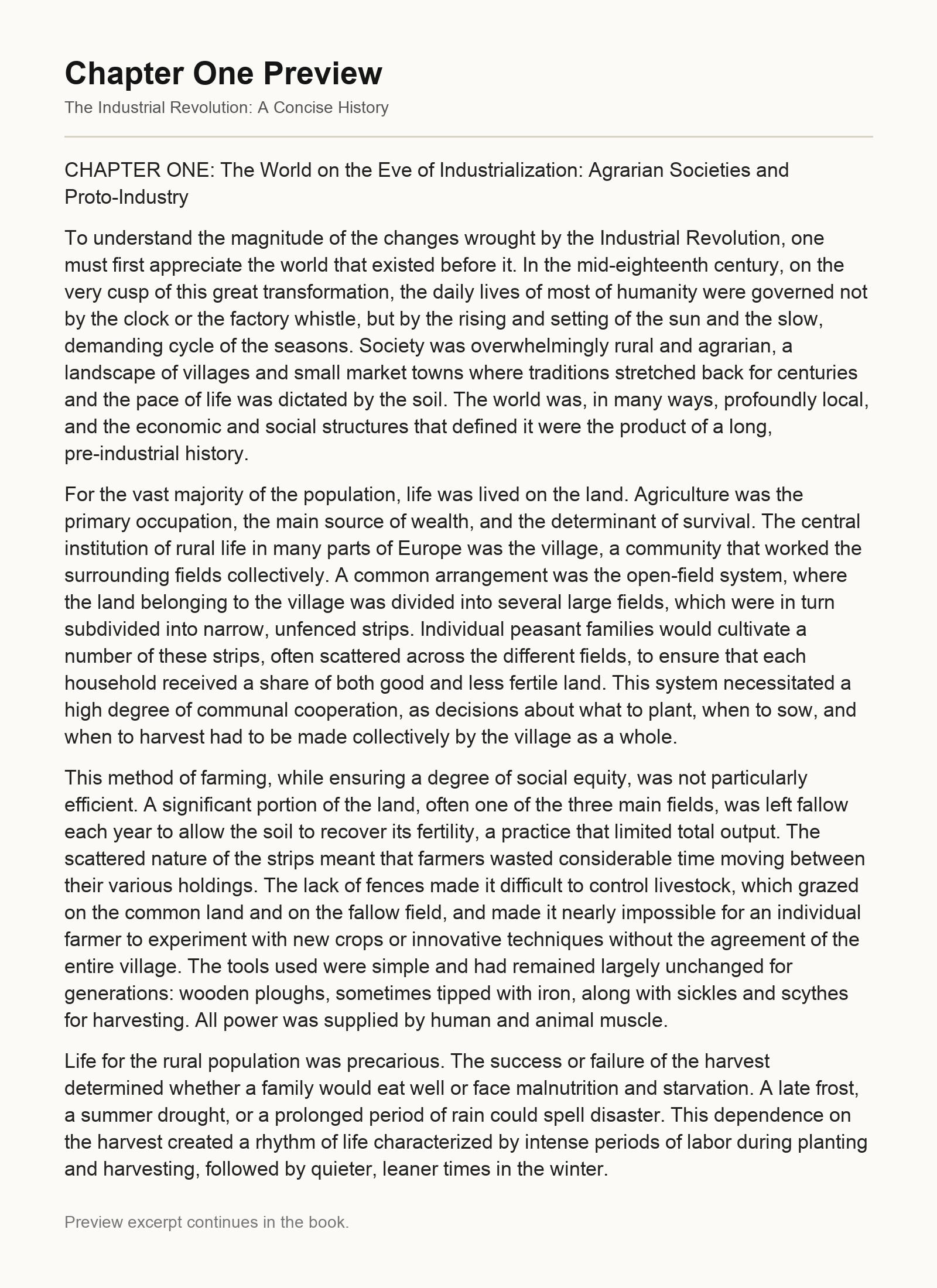
This book offers a clear, engaging pathway through one of history’s most transformative periods, guiding readers from the quiet agrarian villages of the eighteenth century to the smoky factories and bustling cities that defined the modern world. It begins by examining the world before industrialization, showing how agricultural improvements, enclosure movements, and proto‑industrial practices created the necessary surplus of food, labor, and capital that made large‑scale machine production possible.
Readers will then follow the cascade of inventions that powered the revolution: James Watt’s refined steam engine, the spinning jenny and power loom that turned cloth into a global commodity, the puddling furnace that unlocked vast supplies of wrought iron, and the canal and railway networks that moved coal, iron, and goods across continents with unprecedented speed. Each chapter explains not only how these technologies worked but also why they mattered, linking innovation to the everyday experiences of workers, entrepreneurs, and consumers.
The narrative does not shy away from the human cost of progress. It details the massive migration from countryside to city, the grim realities of overcrowded housing, polluted rivers, and dangerous factory conditions, and the rise of new social classes—the wealthy bourgeoisie and the laboring proletariat. Readers will encounter the voices of dissent, from Luddites smashing machines to Chartists demanding political rights, and see how early labor movements and reformers began to challenge the harsh discipline of industrial life.
The story continues into the second wave of industrialization, exploring the breakthroughs in steel, chemicals, and electricity that enabled skyscrapers, synthetic dyes, and electric lighting, and tracing how these innovations spread beyond Britain to reshape Europe, the United States, Russia, and Japan. The book also examines the global consequences of this new industrial power, including the scramble for raw materials, the rise of imperialism, and the emergence of a world economy where wealth and poverty became starkly divided between industrial cores and peripheral regions.
Finally, the work connects the past to the present by looking at the ideological battles between laissez‑faire capitalism and socialist critiques, the cultural shifts in art, religion, and leisure, and the environmental footprint that began with coal smoke and continues today. Readers will finish with a deep understanding of how the factories, railways, and inventions of the eighteenth and nineteenth centuries laid the foundations for the twentieth‑century world wars, the welfare state, and even the digital age, revealing why the Industrial Revolution remains the essential key to comprehending our own time.
What You'll Find Inside:
- The unique confluence of Britain's geography, natural resources (coal and iron), political stability, and social structure that made it the birthplace of the Industrial Revolution
- Key technological innovations that drove industrialization, including James Watt's steam engine, textile machinery (spinning jenny, water frame, power loom), and iron production breakthroughs
- The profound social transformation brought by industrialization, featuring urbanization, the emergence of new social classes (bourgeoisie and proletariat), factory labor conditions, and early labor movements
- How industrialization spread globally to continental Europe, America, Russia, and Japan, creating new economic patterns and fueling imperialism and global inequality
- The ideological developments of the era, from laissez-faire capitalism (Adam Smith) to socialist critiques (Marx), and the Industrial Revolution's lasting legacy into the 20th century and digital age
Who's It For:
This book is ideal for history students, educators, and general readers seeking a comprehensive yet accessible overview of the Industrial Revolution. It would particularly benefit those interested in understanding how technological innovations drove profound social, economic, and global changes that shaped the modern world. Readers looking for connections between historical industrialization and contemporary technological revolutions will also find value in its concluding chapters.
Table of Contents:
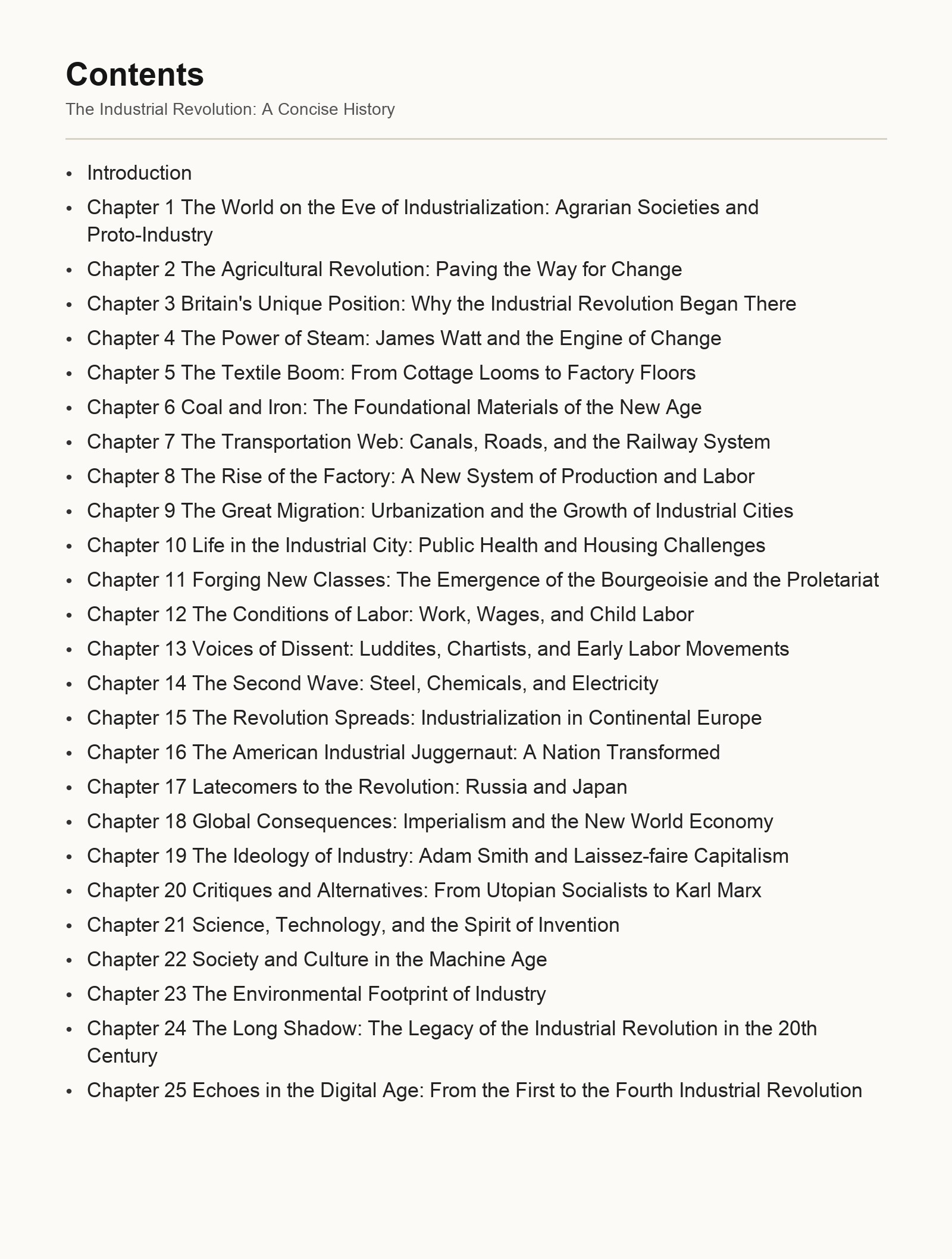
- Introduction
- Chapter 1 The World on the Eve of Industrialization: Agrarian Societies and Proto-Industry
- Chapter 2 The Agricultural Revolution: Paving the Way for Change
- Chapter 3 Britain's Unique Position: Why the Industrial Revolution Began There
- Chapter 4 The Power of Steam: James Watt and the Engine of Change
- Chapter 5 The Textile Boom: From Cottage Looms to Factory Floors
- Chapter 6 Coal and Iron: The Foundational Materials of the New Age
- Chapter 7 The Transportation Web: Canals, Roads, and the Railway System
- Chapter 8 The Rise of the Factory: A New System of Production and Labor
- Chapter 9 The Great Migration: Urbanization and the Growth of Industrial Cities
- Chapter 10 Life in the Industrial City: Public Health and Housing Challenges
- Chapter 11 Forging New Classes: The Emergence of the Bourgeoisie and the Proletariat
- Chapter 12 The Conditions of Labor: Work, Wages, and Child Labor
- Chapter 13 Voices of Dissent: Luddites, Chartists, and Early Labor Movements
- Chapter 14 The Second Wave: Steel, Chemicals, and Electricity
- Chapter 15 The Revolution Spreads: Industrialization in Continental Europe
- Chapter 16 The American Industrial Juggernaut: A Nation Transformed
- Chapter 17 Latecomers to the Revolution: Russia and Japan
- Chapter 18 Global Consequences: Imperialism and the New World Economy
- Chapter 19 The Ideology of Industry: Adam Smith and Laissez-faire Capitalism
- Chapter 20 Critiques and Alternatives: From Utopian Socialists to Karl Marx
- Chapter 21 Science, Technology, and the Spirit of Invention
- Chapter 22 Society and Culture in the Machine Age
- Chapter 23 The Environmental Footprint of Industry
- Chapter 24 The Long Shadow: The Legacy of the Industrial Revolution in the 20th Century
- Chapter 25 Echoes in the Digital Age: From the First to the Fourth Industrial Revolution
Author:
Published By:
Date Published:
May 16, 2026
Type:
Nonfiction
Language:
English
Also Available In:
Word Count:
52,499 words
Reading Time:
3 hours 41 minutes
Sample:
Order:
Order The Industrial Revolution (Paperback) on MixCache.com:
Buy NowPrint copy is made to order and ships worldwide. Includes the ebook free, ready to read instantly.
$5 account credit for all new MixCache.com accounts, usable toward any ebook purchase!*