
Browse by Category
Fiction
- Action & Adventure
- African American
- Anthologies
- Children's Fiction
- Classics
- Comics & Graphic Novels
- Coming of Age
- Contemporary
- Cultural & Regional
- Drama
- Erotica
- Fantasy
- General
- Historical Fiction
- Horror
- Humor & Satire
- Literary Fiction
- Mystery, Thriller & Suspense
- Poetry
- Religious & Inspirational
- Romance
- Science Fiction
- Short Stories
- War & Military
- Westerns
- Women's Fiction
- Young Adult
Non-Fiction
- Antiques & Collectibles
- Arts & Photography
- Biographies & Memoirs
- Business & Money
- Children's Non-Fiction
-
Computers & Technology
- Artificial Intelligence
- Computer Science
- Cybersecurity & Cryptography
- Data Science & Analytics
- Databases & Big Data
- Game Development & Design
- General
- Hardware & DIY
- Mobile App Development
- Networking & Cloud Computing
- Operating Systems
- Programming
- Robotics
- Software
- Software Engineering
- User Experience (UX) & Design
- Web Development & Design
- Cooking, Food & Wine
- Crafts, Hobbies & Home
- Education & Teaching
- Engineering
- General
- Health, Fitness & Dieting
-
History
- African History
- African History - North Africa
- African History - Sub-Saharan Africa
- American History
- American History - 20th Century
- American History - Civil War
- American History - Colonial Period
- Ancient History
- Asian History
- Asian History - China
- Asian History - India
- Asian History - Japan
- Asian History - Southeast Asia
- European History
- European History - Ancient Greece
- European History - Ancient Rome
- European History - Medieval
- European History - Modern
- European History - Renaissance
- General
- Middle Eastern History
- Military History
- Military History - Aviation
- Military History - Naval
- Social & Cultural History
- World History
- Humor & Entertainment
- Industrial Technology
- Language Learning
- Law
- LGBTQ+ Non-Fiction
- Literary Criticism
- Medical Books
- Parenting & Relationships
- Philosophy
- Politics & Social Sciences
- Reference
- Religion & Spirituality
-
Science & Math
- Agricultural Sciences
- Astronomy & Space Science
- Behavioral Sciences
- Biological Sciences
- Botany & Plant Science
- Chemistry
- Earth Sciences
- Engineering - Chemical
- Engineering - Civil
- Engineering - Electrical
- Engineering - Mechanical
- Environment
- General
- Geology
- Mathematics
- Nature & Ecology
- Oceanography
- Paleontology
- Physics
- Statistics
- Self-Help
- Sports & Outdoors
- Study Aids
- Sustainability & Green Living
- Textbooks
- Transportation
- Travel
- True Crime
- Urban Planning & Development
- Veterinary Medicine
- Writing & Publishing
Jump to Section
MixCache.com Total Access
Unlimited reading and audiobooks for every book published by MixCache.com.
Included titles carry the MTA badge.
Learn more →
Remembering World War II: Memory, Monuments, and National Narratives
MTA
The politics of commemoration, museums, and contested histories from 1945 to the present
About this book:
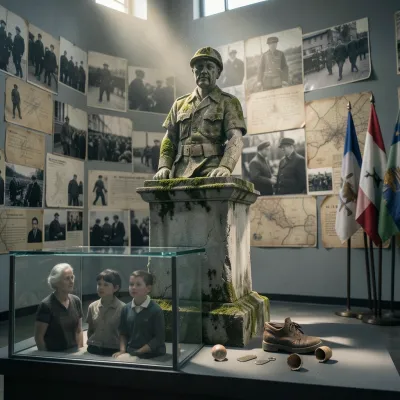
*Remembering World War II: Memory, Monuments, and National Narratives* provides a comprehensive global analysis of how the Second World War has been commemorated from 1945 to the present. The book argues that memory is a dynamic, public process negotiated between states, survivors, and cultural institutions. It moves beyond a simple historical retelling to examine "memory machines" like museums, school curricula, and state-sanctioned anniversaries, illustrating how these tools are used to forge national identities, justify political power, and influence international diplomacy.
The text utilizes a comparative approach to explore the divergent "memory wars" that define different regions. In Europe, it contrasts Germany’s profound "culture of remembrance" (*Erinnerungskultur*) with the "double occupation" narratives of Poland and the Baltic States, who grapple with the legacies of both Nazism and Soviet communism. In Asia, the book examines the persistent regional tensions between Japan, China, and the Koreas, where historical grievances over wartime atrocities and colonial collaboration continue to impact modern geopolitics. It also highlights the often-overlooked experiences of colonial subjects in Africa and Southeast Asia, whose wartime contributions became catalysts for post-war decolonization movements.
Beyond regional case studies, the book addresses contemporary challenges such as the globalization of Holocaust memory, the legal complexities of "memory laws," and the ethical imperatives of provenance research and the restitution of looted art. It explores how digital transformations—including augmented reality, AI, and social media algorithms—are reshaping the way new generations interact with the past. The text emphasizes that digital memory offers unprecedented access to archives but also presents significant risks regarding misinformation and the trivialization of historical trauma.
The book concludes with a practical "playbook" designed for researchers and curators. This guide offers a framework for navigating the ethical and technical aspects of public history, from stakeholder mapping and community consultation to trauma-informed pedagogy and funding strategies. Ultimately, the work asserts that effective commemoration should not aim to resolve historical disagreements but to make them legible and productive, ensuring that the lessons of World War II remain a living responsibility in the global consciousness.
What You'll Find Inside:
- Explores how WWII memory is actively constructed and contested through monuments, museums, school curricula, and commemorative rituals from 1945 to present.
- Provides comparative transnational analysis covering Germany's Erinnerungskultur, Japanese war memory debates, Eastern European memory conflicts, and colonial perspectives.
- Examines key issues including memory laws, Holocaust commemoration ethics, restitution claims, and digital transformation of historical memory.
- Offers practical frameworks for researchers and curators including stakeholder mapping, trauma-informed practice, provenance research, and exhibit design.
- Analyzes how contemporary political needs shape historical narratives while addressing ethical considerations in representing traumatic histories.
Who's It For:
This book is essential for researchers, curators, museum professionals, and educators working in public history, memory studies, or World War II commemoration. It also serves policymakers involved in cultural heritage legislation, memorialization projects, or educational curriculum development. Graduate students in history, museum studies, or related fields will find it valuable for both theoretical foundations and practical applications.
Table of Contents:
- Introduction
- Chapter 1 Concepts and Theories of Public Memory
- Chapter 2 Research Design and Methods for Memory Studies
- Chapter 3 Building and Unbuilding: Monuments, Memorials, and Their Afterlives
- Chapter 4 Museums as Memory Machines: Curating World War II
- Chapter 5 Classrooms and Canon: School Curricula and Textbooks
- Chapter 6 Calendars of Remembrance: Anniversaries, Rituals, and State Ceremonies
- Chapter 7 Memory Laws, Free Expression, and the Politics of History
- Chapter 8 Atrocity and Aftermath: Holocaust and Genocide Commemoration
- Chapter 9 The Eastern Front and Post‑Soviet Memory Wars
- Chapter 10 Germany’s Reckoning: From Ruins to Erinnerungskultur
- Chapter 11 Japan’s War Memory: Yasukuni, Apologies, and Regional Disputes
- Chapter 12 The United States: Victory, Internment, and the “Good War”
- Chapter 13 Britain and the Commonwealth: Blitz Spirit, Empire, and Decolonization
- Chapter 14 France and Italy: Resistance, Collaboration, and Civil War Memories
- Chapter 15 China’s War of Resistance and National Revival
- Chapter 16 The Koreas: Victimhood, Collaboration, and Competing States
- Chapter 17 Poland and the Baltic States: Occupation, Resistance, and Law
- Chapter 18 The Balkans: Partisans, Chetniks, and Postwar Legacies
- Chapter 19 Israel, the Diaspora, and the Globalization of Holocaust Memory
- Chapter 20 Colonial Subjects Remember: Southeast Asia and Africa
- Chapter 21 The Pacific Islands and Oceania: Battlefields, Tourism, and Heritage
- Chapter 22 Restitution, Repatriation, and Provenance Research
- Chapter 23 Digital Memory: Archives, Algorithms, and Augmented Reality
- Chapter 24 Transnational Memory, Reconciliation, and Public Diplomacy
- Chapter 25 A Practical Playbook for Researchers and Curators
Author:
Published By:
Date Published:
April 15, 2026
Type:
Nonfiction
Language:
English
Word Count:
43,897 words
Reading Time:
3 hours 4 minutes
Sample:
MixCache.com Total Access
Get unlimited access to this book + all books published by MixCache.com for $11.99/month
Subscribe to MTAOr purchase this book individually below
Order:
Buy the Remembering World War II: Memory, Monuments, and National Narratives ebook on MixCache.com:
Buy Now
Full ebook will be available immediately
- read online or download as a PDF file.
$5 account credit for all new MixCache.com accounts, usable toward any ebook purchase!*



Ratings & Reviews
Ask Questions About This Book
Have a question about the content? Ask our AI assistant!
Start by asking a question about "Remembering World War II: Memory, Monuments, and National Narratives"
Example: "Does this book mention William Shakespeare?"
Thinking...