Browse by Category
Fiction
- Action & Adventure
- African American
- Anthologies
- Children's Fiction
- Classics
- Comics & Graphic Novels
- Coming of Age
- Contemporary
- Cultural & Regional
- Drama
- Erotica
- Fantasy
- General
- Historical Fiction
- Horror
- Humor & Satire
- Literary Fiction
- Mystery, Thriller & Suspense
- Poetry
- Religious & Inspirational
- Romance
- Science Fiction
- Short Stories
- War & Military
- Westerns
- Women's Fiction
- Young Adult
Non-Fiction
- Antiques & Collectibles
- Arts & Photography
- Biographies & Memoirs
- Business & Money
- Children's Non-Fiction
-
Computers & Technology
- Artificial Intelligence
- Computer Science
- Cybersecurity & Cryptography
- Data Science & Analytics
- Databases & Big Data
- Game Development & Design
- General
- Hardware & DIY
- Mobile App Development
- Networking & Cloud Computing
- Operating Systems
- Programming
- Robotics
- Software
- Software Engineering
- User Experience (UX) & Design
- Web Development & Design
- Cooking, Food & Wine
- Crafts, Hobbies & Home
- Education & Teaching
- Engineering
- General
- Health, Fitness & Dieting
-
History
- African History
- African History - North Africa
- African History - Sub-Saharan Africa
- American History
- American History - 20th Century
- American History - Civil War
- American History - Colonial Period
- Ancient History
- Asian History
- Asian History - China
- Asian History - India
- Asian History - Japan
- Asian History - Southeast Asia
- European History
- European History - Ancient Greece
- European History - Ancient Rome
- European History - Medieval
- European History - Modern
- European History - Renaissance
- General
- Middle Eastern History
- Military History
- Military History - Aviation
- Military History - Naval
- Social & Cultural History
- World History
- Humor & Entertainment
- Industrial Technology
- Language Learning
- Law
- LGBTQ+ Non-Fiction
- Literary Criticism
- Medical Books
- Parenting & Relationships
- Philosophy
- Politics & Social Sciences
- Reference
- Religion & Spirituality
-
Science & Math
- Agricultural Sciences
- Astronomy & Space Science
- Behavioral Sciences
- Biological Sciences
- Botany & Plant Science
- Chemistry
- Earth Sciences
- Engineering - Chemical
- Engineering - Civil
- Engineering - Electrical
- Engineering - Mechanical
- Environment
- General
- Geology
- Mathematics
- Nature & Ecology
- Oceanography
- Paleontology
- Physics
- Statistics
- Self-Help
- Sports & Outdoors
- Study Aids
- Sustainability & Green Living
- Textbooks
- Transportation
- Travel
- True Crime
- Urban Planning & Development
- Veterinary Medicine
- Writing & Publishing
Jump to Section
MixCache.com Total Access
Unlimited reading and audiobooks for every book published by MixCache.com.
Included titles carry the MTA badge.
Learn more →
A History of the Bedouin
MTA
The Story of a Desert People
About this book:
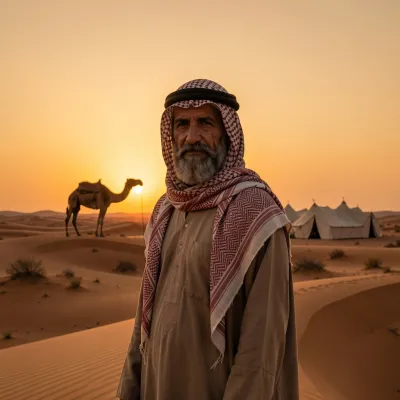
The Bedouin, "people of the desert," have traversed the Middle East's arid landscapes for millennia, their identity intrinsically tied to nomadic pastoralism, intricate tribal structures, and an intimate relationship with the environment. Originating in the Arabian Peninsula, their early life revolved around camel herding, seasonal migrations, and survival skills that fostered resilience and community. Their social fabric, built on kinship, the authority of *sheikhs*, and customary law (*Urfa*), emphasized collective solidarity (*asabiyya*), hospitality, and oral traditions. Central to their economy were livestock, trade routes, and strategic raiding, which sustained them in a challenging ecosystem. Their culture, rich in poetry, music, and craftsmanship, mirrored their connection to nature and their nomadic existence.
The arrival of Islam in the 7th century revolutionized Bedouin society, redirecting their energies towards religious conquest and integrating them into the broader Islamic world. However, their autonomy persisted through interactions with successive empires, including the Ottomans, and their pivotal role in events like the Great Arab Revolt during World War I. European colonial exploration (e.g., British involvement) further complicated their trajectory, as mandates and arbitrary borders disrupted traditional lifestyles. The 20th century marked a critical turning point with enforced sedentarization, as post-colonial states and modernization efforts sought to integrate Bedouin into national frameworks. This shift, driven by government policies and economic changes like oil wealth, led to the decline of nomadic practices, altering their social and economic structures.
Modernization brought both opportunities and challenges. Education, urbanization, and technological advancements connected younger generations to global networks while creating generational divides. Women experienced expanded roles due to increased access to education and services, though cultural values persisted. Environmental pressures, including climate change and resource scarcity, tested their adaptability, yet sustainable practices from their heritage gained renewed recognition. Cultural heritage initiatives, such as preserving *Sadu* weaving and traditional music, became vital for maintaining identity amid globalization. Bedouin communities across the Middle East, from the Levant to North Africa, adapted uniquely, with Gulf states experiencing rapid transformation while marginalized groups in Palestine faced ongoing struggles for recognition. Their legacy persists through contributions to language, hospitality, and environmental knowledge, underscoring their enduring influence on regional culture and identity.
The Bedouin's story is one of remarkable resilience, balancing tradition with adaptation. Their historical roles in trade, warfare, and Islamic expansion shaped the Middle East's cultural and political landscape. Today, they navigate the tensions between preserving ancestral customs and embracing modernity, using education and technology to advocate for their rights and cultural continuity. Their legacy as desert dwellers, custodians of ecological wisdom, and symbols of Arab identity remains profound, illustrating the dynamic interplay between heritage and change in a rapidly evolving world.
What You'll Find Inside:
- The Bedouin’s deep origins in the Arabian Peninsula, tracing how camel domestication transformed their nomadic life, social structures, and survival strategies.
- Core social institutions—tribal kinship, customary law (Urfa), and values of hospitality, honor, and asabiyya—that have sustained Bedouin cohesion across centuries.
- Economic foundations of herding, desert trade (incense routes), and historic raiding (ghazw), showing adaptation to scarcity and interaction with settled societies.
- Rich cultural expressions—oral poetry, music, dance, craftsmanship (Al Sadu weaving, silverwork), and cuisine—that embody Bedouin identity and resilience.
- The Bedouin’s pivotal role in Islamic conquests, Ottoman politics, European exploration, the Great Arab Revolt, and their ongoing negotiation with modern nation‑states and globalization.
Who's It For:
This book is ideal for undergraduate and graduate students, researchers, and enthusiasts of Middle Eastern history, anthropology, and nomadic studies who seek a comprehensive, chronological overview of Bedouin society. It also appeals to general readers interested in cultural heritage, desert ecology, and the interplay between tradition and modernity. Policymakers and development practitioners working with Bedouin communities will find valuable insights into their social structures and adaptive strategies.
Table of Contents:
- Introduction
- Chapter 1: Origins and Early Nomadic Life
- Chapter 2: The Arabian Peninsula: Cradle of the Bedouin
- Chapter 3: Social Structures and Tribal Organization
- Chapter 4: The Bedouin Economy: Herding, Trade, and Raiding
- Chapter 5: Bedouin Culture: Oral Traditions, Poetry, and Hospitality
- Chapter 6: The Arrival of Islam and its Impact
- Chapter 7: Bedouin Role in the Early Islamic Conquests
- Chapter 8: Medieval Bedouin: Between Empires and Independence
- Chapter 9: The Ottoman Era and Shifting Power Dynamics
- Chapter 10: European Exploration and Western Perceptions
- Chapter 11: The Great Arab Revolt and Bedouin Participation
- Chapter 12: The Bedouin in the Mandate Period
- Chapter 13: Post-Colonial States and the Challenge of Sedentarization
- Chapter 14: Modernization and Changing Lifestyles
- Chapter 15: Bedouin Women: Roles and Transformations
- Chapter 16: Education and the Younger Generations
- Chapter 17: The Bedouin and the Environment: Adaptations and Challenges
- Chapter 18: Bedouin Art and Craftsmanship
- Chapter 19: Music, Dance, and Festive Traditions
- Chapter 20: Legal Systems and Customary Law (Urfa)
- Chapter 21: Bedouin Cuisine and Foodways
- Chapter 22: The Future of Bedouin Identity
- Chapter 23: Bedouin Communities in the Wider Middle East
- Chapter 24: Global Perspectives on Nomadic Peoples
- Chapter 25: The Enduring Legacy of the Desert People
Author:
Published By:
Date Published:
July 8, 2026
Type:
Nonfiction
Language:
English
Word Count:
42,733 words
Reading Time:
3 hours
Sample:
Order:
Order A History of the Bedouin (Paperback) on MixCache.com:
Buy NowPrint copy is made to order and ships worldwide. Includes the ebook free, ready to read instantly.
$5 account credit for all new MixCache.com accounts, usable toward any ebook purchase!*