Browse by Category
Fiction
- Action & Adventure
- African American
- Anthologies
- Children's Fiction
- Classics
- Comics & Graphic Novels
- Coming of Age
- Contemporary
- Cultural & Regional
- Drama
- Erotica
- Fantasy
- General
- Historical Fiction
- Horror
- Humor & Satire
- Literary Fiction
- Mystery, Thriller & Suspense
- Poetry
- Religious & Inspirational
- Romance
- Science Fiction
- Short Stories
- War & Military
- Westerns
- Women's Fiction
- Young Adult
Non-Fiction
- Antiques & Collectibles
- Arts & Photography
- Biographies & Memoirs
- Business & Money
- Children's Non-Fiction
-
Computers & Technology
- Artificial Intelligence
- Computer Science
- Cybersecurity & Cryptography
- Data Science & Analytics
- Databases & Big Data
- Game Development & Design
- General
- Hardware & DIY
- Mobile App Development
- Networking & Cloud Computing
- Operating Systems
- Programming
- Robotics
- Software
- Software Engineering
- User Experience (UX) & Design
- Web Development & Design
- Cooking, Food & Wine
- Crafts, Hobbies & Home
- Education & Teaching
- Engineering
- General
- Health, Fitness & Dieting
-
History
- African History
- African History - North Africa
- African History - Sub-Saharan Africa
- American History
- American History - 20th Century
- American History - Civil War
- American History - Colonial Period
- Ancient History
- Asian History
- Asian History - China
- Asian History - India
- Asian History - Japan
- Asian History - Southeast Asia
- European History
- European History - Ancient Greece
- European History - Ancient Rome
- European History - Medieval
- European History - Modern
- European History - Renaissance
- General
- Middle Eastern History
- Military History
- Military History - Aviation
- Military History - Naval
- Social & Cultural History
- World History
- Humor & Entertainment
- Industrial Technology
- Language Learning
- Law
- LGBTQ+ Non-Fiction
- Literary Criticism
- Medical Books
- Parenting & Relationships
- Philosophy
- Politics & Social Sciences
- Reference
- Religion & Spirituality
-
Science & Math
- Agricultural Sciences
- Astronomy & Space Science
- Behavioral Sciences
- Biological Sciences
- Botany & Plant Science
- Chemistry
- Earth Sciences
- Engineering - Chemical
- Engineering - Civil
- Engineering - Electrical
- Engineering - Mechanical
- Environment
- General
- Geology
- Mathematics
- Nature & Ecology
- Oceanography
- Paleontology
- Physics
- Statistics
- Self-Help
- Sports & Outdoors
- Study Aids
- Sustainability & Green Living
- Textbooks
- Transportation
- Travel
- True Crime
- Urban Planning & Development
- Veterinary Medicine
- Writing & Publishing
Jump to Section
MixCache.com Total Access
Unlimited reading and audiobooks for every book published by MixCache.com.
Included titles carry the MTA badge.
Learn more →The Fall of the Roman Empire
About this book:
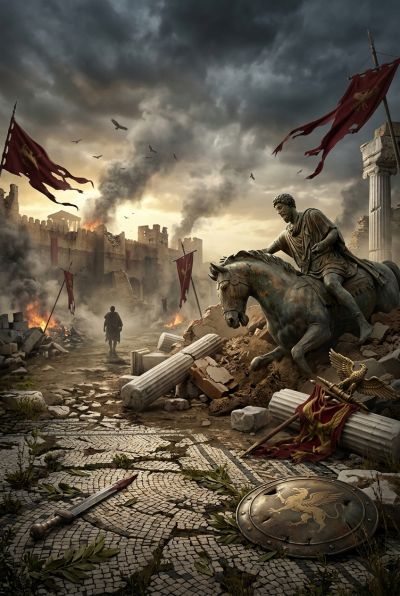
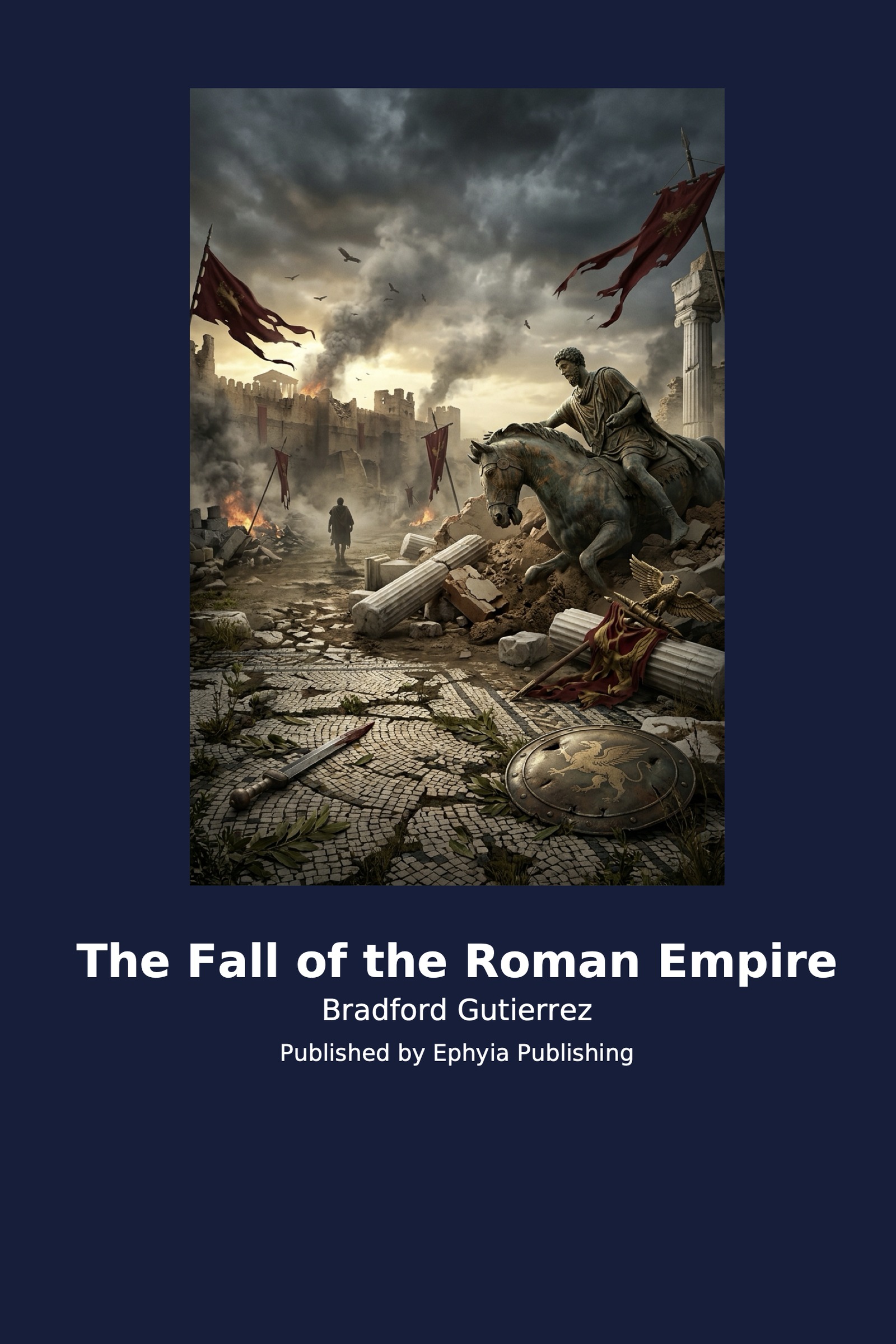
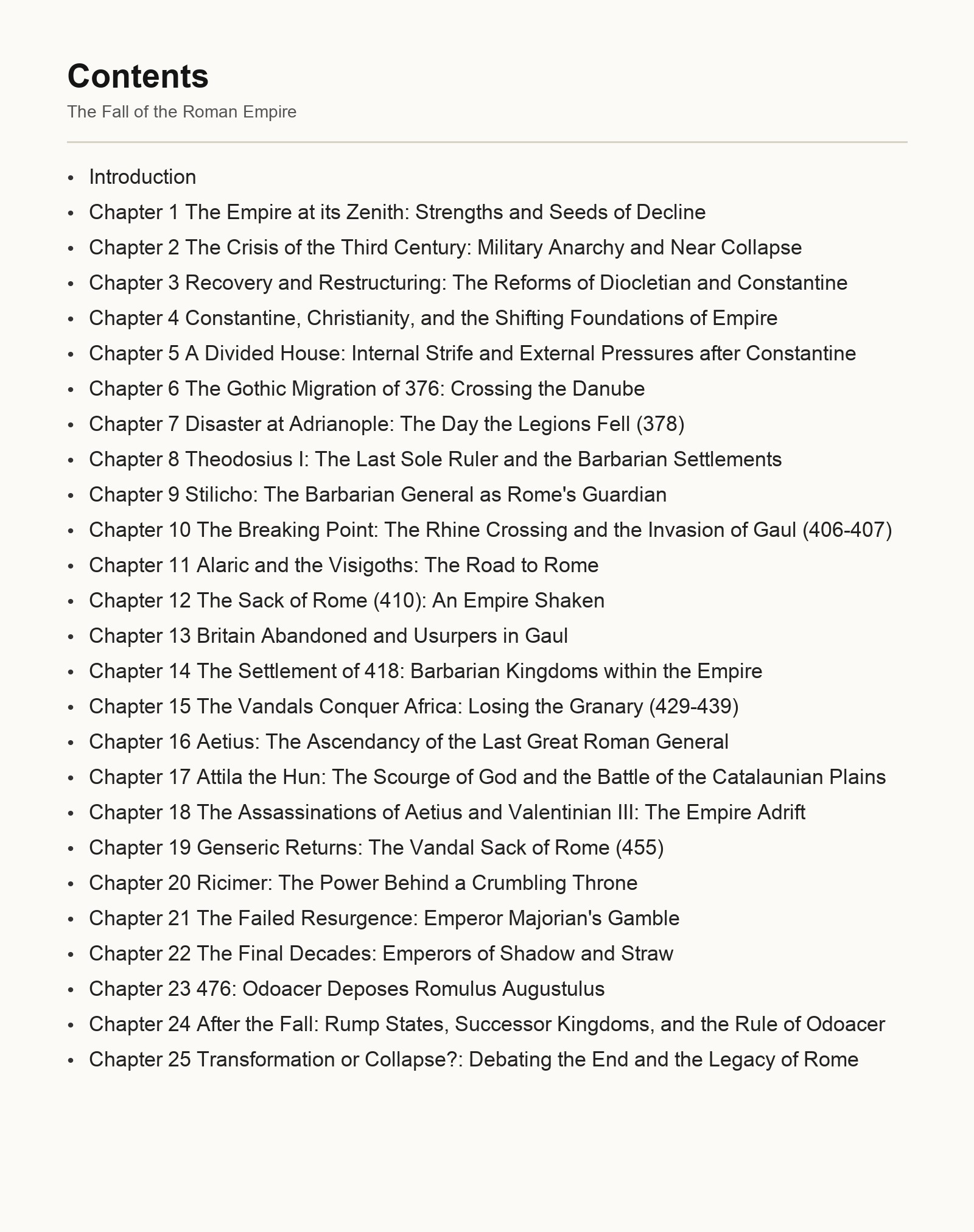
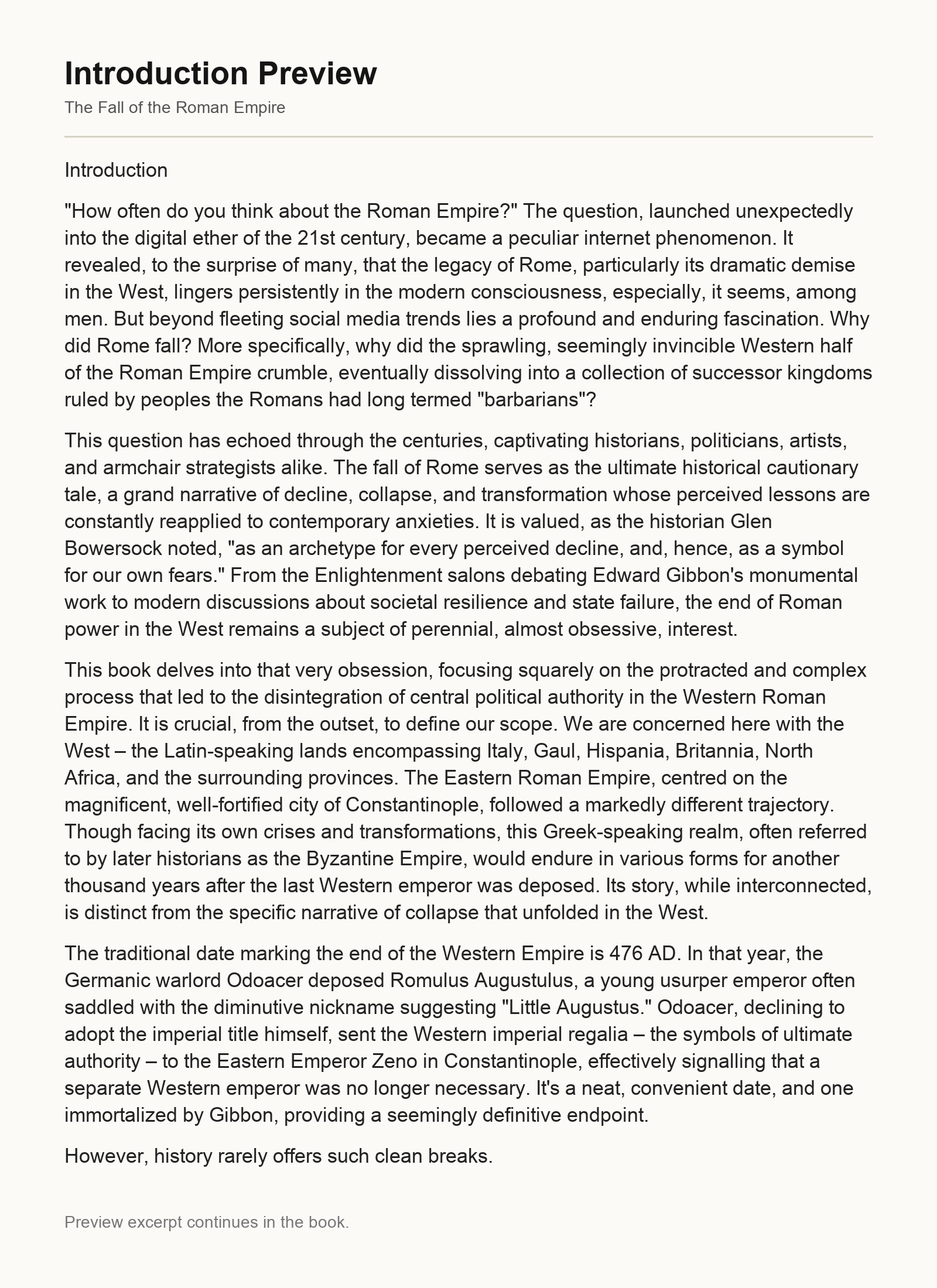
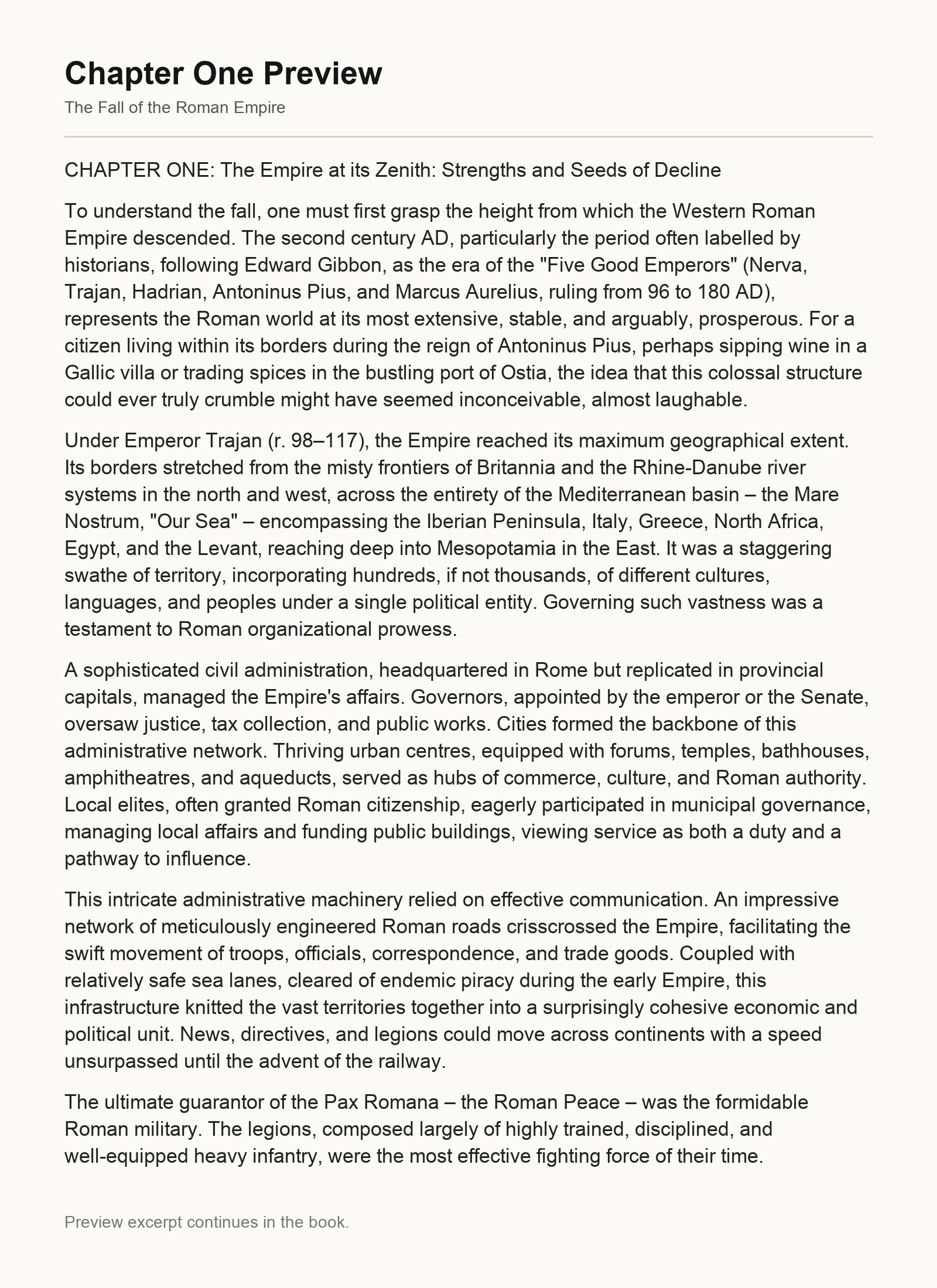
Discover the sweeping saga of the Western Roman Empire’s decline in this comprehensive chronicle that moves from the height of Antonine prosperity to the final deposition of Romulus Augustulus in 476 AD. Through vivid, chapter‑by‑chapter storytelling, you will witness the empire’s zenith, the devastating Crisis of the Third Century, the bold reforms of Diocletian and Constantine, and the growing tension between Rome’s traditional pagan identity and the rising influence of Christianity. Each period is illuminated by the actions of emperors, generals, barbarian leaders, and bishops whose decisions reshaped the fate of a civilization.
Follow the pivotal moments that shattered Rome’s invincibility: the Gothic migration across the Danube, the catastrophic defeat at Adrianople where an emperor fell in battle, the daring sack of Rome by Alaric in 410 AD, and the Vandal conquest of Africa that stripped the West of its vital grain supply. You will encounter towering figures such as Stilicho, Aetius, Attila the Hun, and Ricimer, whose alliances, betrayals, and military campaigns reveal how internal strife and external pressure intertwined to unravel imperial authority. The narrative also explores lesser‑known but crucial episodes—Britain’s abandonment, the settlement of barbarian kingdoms within imperial borders, and the relentless Vandal sack of 455 AD—that collectively painted a picture of an empire straining at its seams.
Beyond the military and political drama, this work invites you to grapple with the enduring historiographical debate: was the end a sudden collapse or a gradual transformation? You will examine the arguments of Gibbon, Pirenne, Heather, Ward‑Perkins, and the Late Antiquity school, weighing evidence from ancient texts, archaeology, climate science, and genetics. By engaging with these contrasting viewpoints, you will understand why the fall of Rome continues to serve as a mirror for modern anxieties about societal resilience, state failure, and cultural continuity.
Experience the human dimension of this epoch‑spanning tragedy through intimate stories—from the desperate pleas of Gothic refugees seeking refuge across the Danube, to the poignant lament of Saint Jerome over Rome’s violation, to the final quiet departure of the last emperor’s regalia to Constantinople. These narratives bring to life the fear, hope, betrayal, and occasional flashes of mercy that accompanied the empire’s unraveling, allowing you to feel the weight of history as it unfolded across battlefields, besieged cities, and the corridors of imperial power.
Close your reading with a thoughtful reflection on Rome’s lasting legacy. Discover how the fragmentation of the West gave rise to the successor kingdoms that shaped medieval Europe, how Roman law, language, engineering, and Christian institutions endured and evolved, and why the question of “fall versus transformation” remains a vital lens for understanding the foundations of our own world. This book equips you not only with a detailed account of what happened, but also with the analytical tools to appreciate why the story of Rome’s demise continues to captivate and instruct readers today.
What You'll Find Inside:
- The fall of the Western Roman Empire was a prolonged, complex process spanning generations rather than a single event in 476 AD, involving interconnected political, military, economic, social, and environmental factors.
- Key barbarian groups including the Goths, Vandals, Huns, and Sueves played pivotal roles through migrations, settlements within imperial borders, and eventual establishment of successor kingdoms on former Roman territory.
- The book examines crucial turning points such as the Crisis of the Third Century, the Battle of Adrianople (378), the Sack of Rome (410), the Vandal conquest of Africa, and the deposition of Romulus Augustulus (476) within their broader historical context.
- Important emperors and generals like Diocletian, Constantine, Aetius, Stilicho, and Ricimer are analyzed for their reforms, military leadership, and the paradoxical reliance on barbarian forces that both sustained and undermined imperial authority.
- The work engages with historiographical debates between collapse and transformation models, exploring perspectives from Gibbon to Pirenne to modern scholars on whether Rome's end represented catastrophe or gradual metamorphosis into medieval Europe.
Who's It For:
This book is ideal for history enthusiasts, undergraduate students, and general readers seeking a thorough yet accessible understanding of the fall of the Western Roman Empire. It will particularly benefit those interested in the complex interplay of internal weaknesses and external pressures that led to Rome's decline, as well as readers fascinated by historiographical debates about whether this period represented collapse or transformation. No specialized prior knowledge is required, though a basic familiarity with ancient history will enhance appreciation of the nuanced arguments presented.
Table of Contents:
- Introduction
- Chapter 1 The Empire at its Zenith: Strengths and Seeds of Decline
- Chapter 2 The Crisis of the Third Century: Military Anarchy and Near Collapse
- Chapter 3 Recovery and Restructuring: The Reforms of Diocletian and Constantine
- Chapter 4 Constantine, Christianity, and the Shifting Foundations of Empire
- Chapter 5 A Divided House: Internal Strife and External Pressures after Constantine
- Chapter 6 The Gothic Migration of 376: Crossing the Danube
- Chapter 7 Disaster at Adrianople: The Day the Legions Fell (378)
- Chapter 8 Theodosius I: The Last Sole Ruler and the Barbarian Settlements
- Chapter 9 Stilicho: The Barbarian General as Rome's Guardian
- Chapter 10 The Breaking Point: The Rhine Crossing and the Invasion of Gaul (406-407)
- Chapter 11 Alaric and the Visigoths: The Road to Rome
- Chapter 12 The Sack of Rome (410): An Empire Shaken
- Chapter 13 Britain Abandoned and Usurpers in Gaul
- Chapter 14 The Settlement of 418: Barbarian Kingdoms within the Empire
- Chapter 15 The Vandals Conquer Africa: Losing the Granary (429-439)
- Chapter 16 Aetius: The Ascendancy of the Last Great Roman General
- Chapter 17 Attila the Hun: The Scourge of God and the Battle of the Catalaunian Plains
- Chapter 18 The Assassinations of Aetius and Valentinian III: The Empire Adrift
- Chapter 19 Genseric Returns: The Vandal Sack of Rome (455)
- Chapter 20 Ricimer: The Power Behind a Crumbling Throne
- Chapter 21 The Failed Resurgence: Emperor Majorian's Gamble
- Chapter 22 The Final Decades: Emperors of Shadow and Straw
- Chapter 23 476: Odoacer Deposes Romulus Augustulus
- Chapter 24 After the Fall: Rump States, Successor Kingdoms, and the Rule of Odoacer
- Chapter 25 Transformation or Collapse?: Debating the End and the Legacy of Rome
Author:
Published By:
Date Published:
May 22, 2026
Type:
Nonfiction
Language:
English
Also Available In:
Word Count:
55,760 words
Reading Time:
3 hours 54 minutes
Sample:
Order:
Order The Fall of the Roman Empire (Paperback) on MixCache.com:
Buy NowPrint copy is made to order and ships worldwide. Includes the ebook free, ready to read instantly.
$5 account credit for all new MixCache.com accounts, usable toward any ebook purchase!*