
Browse by Category
Fiction
- Action & Adventure
- African American
- Anthologies
- Children's Fiction
- Classics
- Comics & Graphic Novels
- Coming of Age
- Contemporary
- Cultural & Regional
- Drama
- Erotica
- Fantasy
- General
- Historical Fiction
- Horror
- Humor & Satire
- Literary Fiction
- Mystery, Thriller & Suspense
- Poetry
- Religious & Inspirational
- Romance
- Science Fiction
- Short Stories
- War & Military
- Westerns
- Women's Fiction
- Young Adult
Non-Fiction
- Antiques & Collectibles
- Arts & Photography
- Biographies & Memoirs
- Business & Money
- Children's Non-Fiction
-
Computers & Technology
- Artificial Intelligence
- Computer Science
- Cybersecurity & Cryptography
- Data Science & Analytics
- Databases & Big Data
- Game Development & Design
- General
- Hardware & DIY
- Mobile App Development
- Networking & Cloud Computing
- Operating Systems
- Programming
- Robotics
- Software
- Software Engineering
- User Experience (UX) & Design
- Web Development & Design
- Cooking, Food & Wine
- Crafts, Hobbies & Home
- Education & Teaching
- Engineering
- General
- Health, Fitness & Dieting
-
History
- African History
- African History - North Africa
- African History - Sub-Saharan Africa
- American History
- American History - 20th Century
- American History - Civil War
- American History - Colonial Period
- Ancient History
- Asian History
- Asian History - China
- Asian History - India
- Asian History - Japan
- Asian History - Southeast Asia
- European History
- European History - Ancient Greece
- European History - Ancient Rome
- European History - Medieval
- European History - Modern
- European History - Renaissance
- General
- Middle Eastern History
- Military History
- Military History - Aviation
- Military History - Naval
- Social & Cultural History
- World History
- Humor & Entertainment
- Industrial Technology
- Language Learning
- Law
- LGBTQ+ Non-Fiction
- Literary Criticism
- Medical Books
- Parenting & Relationships
- Philosophy
- Politics & Social Sciences
- Reference
- Religion & Spirituality
-
Science & Math
- Agricultural Sciences
- Astronomy & Space Science
- Behavioral Sciences
- Biological Sciences
- Botany & Plant Science
- Chemistry
- Earth Sciences
- Engineering - Chemical
- Engineering - Civil
- Engineering - Electrical
- Engineering - Mechanical
- Environment
- General
- Geology
- Mathematics
- Nature & Ecology
- Oceanography
- Paleontology
- Physics
- Statistics
- Self-Help
- Sports & Outdoors
- Study Aids
- Sustainability & Green Living
- Textbooks
- Transportation
- Travel
- True Crime
- Urban Planning & Development
- Veterinary Medicine
- Writing & Publishing
Jump to Section
MixCache.com Total Access
Unlimited reading and audiobooks for every book published by MixCache.com.
Included titles carry the MTA badge.
Learn more →
Montenegro's Quest for Independence: Breaking Free from Serbia
MTA
The Road to Sovereignty in the Post-Yugoslav Era
About this book:
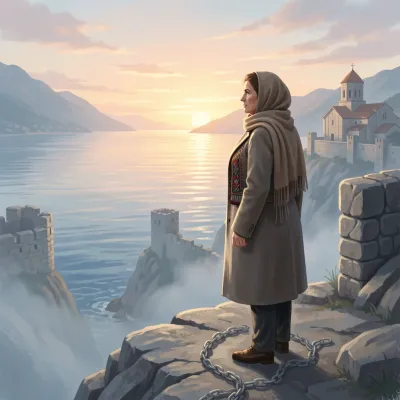
Montenegro's quest for independence was rooted in a centuries-old distinct identity forged through periods of autonomy and resistance, particularly evident in the medieval state of Duklja, the rule of the Petrović-Njegoš prince-bishops, and international recognition at the Congress of Berlin in 1878. Despite shared history with Serbia, including absorption into Yugoslavia after World War I, Montenegrin consciousness persisted, shaped by geographic isolation and cultural particularism. The collapse of Yugoslavia in the 1990s presented a critical juncture; initial Montenegrin alignment with Slobodan Milošević's Serbia gave way to growing dissent as economic sanctions devastated the republic, political marginalization within the Federal Republic of Yugoslavia became apparent, and Milo Đukanović began advocating for greater autonomy within the ruling Democratic Party of Socialists (DPS).
The 1990s witnessed a gradual shift from whispers to active pursuit of sovereignty, driven by economic disentanglement measures like adopting the Deutschmark (later Euro) and establishing independent customs, alongside a cultural revival emphasizing Montenegrin language, history, and symbols. Montenegro's skillful diplomacy during the 1999 NATO campaign, positioning itself as an "island of peace," further distanced it from Belgrade. The ouster of Milošević in 2000 led to the flawed State Union of Serbia and Montenegro in 2003—a loose confederation granting Montenegro significant autonomy but postponing independence for three years. As this union proved dysfunctional, Montenegro pursued sovereignty within the agreed framework, navigating intense political maneuvering over referendum mechanics, including the contentious 55% majority threshold brokered by the European Union.
The May 21, 2006 referendum resulted in 55.5% voting for independence, exceeding the required threshold amid over 86% turnout. International observers validated the process as free and fair, leading to swift recognition by the EU, UN, US, and others. Montenegro promptly declared independence, dissolved joint institutions, and began state-building: adopting a new constitution in 2007 defining it as a civic, multi-ethnic, parliamentary republic; pursuing Euro-Atlantic integration through NATO membership (achieved in 2017) and advanced EU accession talks; managing pragmatic but occasionally tense relations with Serbia, particularly over Kosovo recognition; and grappling with persistent identity politics, economic challenges reliant on tourism and foreign investment, and the ongoing effort to consolidate institutions while balancing pro-European aspirations with internal divisions over national identity and historical legacy. A decade after independence, Montenegro had transformed from a subordinate republic into a sovereign actor committed to European stability and prosperity, though challenges in rule of law, corruption, and regional dynamics remained central to its EU accession journey.
What You'll Find Inside:
- The deep historical roots of Montenegrin identity, tracing its evolution from medieval Doclea through Ottoman resistance to the theocratic rule of prince-bishops
- How economic sanctions during the Milošević era created both hardship and unexpected opportunities for Montenegro's economic disentanglement from Serbia
- The detailed mechanics of the 2006 independence referendum, including the negotiated 55% threshold and international observation process
- Montenegro's strategic pivot toward Euro-Atlantic integration, culminating in NATO membership and ongoing EU accession efforts
- The complex challenges of state-building post-independence, from constitutional drafting to managing identity politics and regional relations
Who's It For:
This book is ideal for students, researchers, and professionals specializing in Balkan studies, European politics, or international relations who seek an in-depth understanding of Montenegro's path to sovereignty. It will also appeal to policy makers and diplomats working on Southeast European affairs, as well as general readers interested in nationalist movements, state-building processes, and the complexities of post-Yugoslav transitions. The detailed analysis of referendum mechanics, international diplomacy, and post-independence challenges makes it particularly valuable for those studying self-determination and nation-building in contemporary contexts.
Table of Contents:
- Introduction
- Chapter 1: Historical Roots of Montenegrin Identity
- Chapter 2: Yugoslavia's Collapse and Montenegro's Shifting Loyalties
- Chapter 3: The Milošević Era and Montenegro's Precarious Position
- Chapter 4: Early Whispers of Independence (1990s)
- Chapter 5: The DPS and the Turn Towards Sovereignty
- Chapter 6: Economic Disentanglement: Initial Steps
- Chapter 7: Cultural Revival and National Affirmation
- Chapter 8: International Perspectives on Montenegro's Future
- Chapter 9: The State Union of Serbia and Montenegro: A Flawed Compromise
- Chapter 10: Political Maneuvering and Referendum Mechanics
- Chapter 11: The Campaign for Independence: Arguments and Actors
- Chapter 12: The Unionist Counter-Campaign: Preserving Ties with Serbia
- Chapter 13: Media, Propaganda, and Public Opinion
- Chapter 14: The Role of the European Union and International Observers
- Chapter 15: The Referendum Day: Process and Participation
- Chapter 16: The Referendum Results and Immediate Aftermath
- Chapter 17: International Recognition of Montenegrin Independence
- Chapter 18: Drafting a New Constitution for an Independent Montenegro
- Chapter 19: Economic Challenges and Opportunities Post-Independence
- Chapter 20: Foreign Policy Reorientation: Towards Euro-Atlantic Integration
- Chapter 21: Managing Relations with Serbia After the Split
- Chapter 22: Identity Politics in a Newly Sovereign State
- Chapter 23: The Long Road to EU Membership
- Chapter 24: Montenegro's Role in Regional Stability
- Chapter 25: A Decade of Independence: Achievements and Future Prospects
Author:
Published By:
Date Published:
July 18, 2026
Type:
Nonfiction
Language:
English
Word Count:
37,856 words
Reading Time:
2 hours 39 minutes
Sample:
MixCache.com Total Access
Get unlimited access to this book + all books published by MixCache.com for $11.99/month
Subscribe to MTAOr purchase this book individually below
Order:
Buy the Montenegro's Quest for Independence: Breaking Free from Serbia ebook on MixCache.com:
Buy Now
Full ebook will be available immediately
- read online or download as a PDF file.
$5 account credit for all new MixCache.com accounts, usable toward any ebook purchase!*




Ratings & Reviews
Ask Questions About This Book
Have a question about the content? Ask our AI assistant!
Start by asking a question about "Montenegro's Quest for Independence: Breaking Free from Serbia"
Example: "Does this book mention William Shakespeare?"
Thinking...