Browse by Category
Fiction
- Action & Adventure
- African American
- Anthologies
- Children's Fiction
- Classics
- Comics & Graphic Novels
- Coming of Age
- Contemporary
- Cultural & Regional
- Drama
- Erotica
- Fantasy
- General
- Historical Fiction
- Horror
- Humor & Satire
- Literary Fiction
- Mystery, Thriller & Suspense
- Poetry
- Religious & Inspirational
- Romance
- Science Fiction
- Short Stories
- War & Military
- Westerns
- Women's Fiction
- Young Adult
Non-Fiction
- Antiques & Collectibles
- Arts & Photography
- Biographies & Memoirs
- Business & Money
- Children's Non-Fiction
-
Computers & Technology
- Artificial Intelligence
- Computer Science
- Cybersecurity & Cryptography
- Data Science & Analytics
- Databases & Big Data
- Game Development & Design
- General
- Hardware & DIY
- Mobile App Development
- Networking & Cloud Computing
- Operating Systems
- Programming
- Robotics
- Software
- Software Engineering
- User Experience (UX) & Design
- Web Development & Design
- Cooking, Food & Wine
- Crafts, Hobbies & Home
- Education & Teaching
- Engineering
- General
- Health, Fitness & Dieting
-
History
- African History
- African History - North Africa
- African History - Sub-Saharan Africa
- American History
- American History - 20th Century
- American History - Civil War
- American History - Colonial Period
- Ancient History
- Asian History
- Asian History - China
- Asian History - India
- Asian History - Japan
- Asian History - Southeast Asia
- European History
- European History - Ancient Greece
- European History - Ancient Rome
- European History - Medieval
- European History - Modern
- European History - Renaissance
- General
- Middle Eastern History
- Military History
- Military History - Aviation
- Military History - Naval
- Social & Cultural History
- World History
- Humor & Entertainment
- Industrial Technology
- Language Learning
- Law
- LGBTQ+ Non-Fiction
- Literary Criticism
- Medical Books
- Parenting & Relationships
- Philosophy
- Politics & Social Sciences
- Reference
- Religion & Spirituality
-
Science & Math
- Agricultural Sciences
- Astronomy & Space Science
- Behavioral Sciences
- Biological Sciences
- Botany & Plant Science
- Chemistry
- Earth Sciences
- Engineering - Chemical
- Engineering - Civil
- Engineering - Electrical
- Engineering - Mechanical
- Environment
- General
- Geology
- Mathematics
- Nature & Ecology
- Oceanography
- Paleontology
- Physics
- Statistics
- Self-Help
- Sports & Outdoors
- Study Aids
- Sustainability & Green Living
- Textbooks
- Transportation
- Travel
- True Crime
- Urban Planning & Development
- Veterinary Medicine
- Writing & Publishing
Jump to Section
MixCache.com Total Access
Unlimited reading and audiobooks for every book published by MixCache.com.
Included titles carry the MTA badge.
Learn more →
Volcanic Foundations: How Iceland's Geology Shaped Its National Identity
MTA
The Role of Natural Resources in Icelandic State-Building and Cultural Development
About this book:
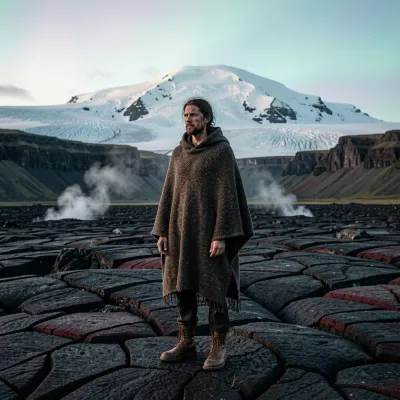
Iceland’s national identity has been continuously forged by its volcanic and glacial landscape, which simultaneously imposed harsh constraints and offered unique resources that compelled adaptation, ingenuity, and a deep sense of communal resilience. From the Norse settlers’ struggle to farm volcanic soils and fish treacherous waters, to the establishment of the Althing at Þingvellir—a legislative assembly shaped by the island’s rift valley and isolation—Iceland’s political and legal traditions emerged from direct interaction with its geological realities. The Medieval Warm Period spurred growth and cultural flourishing, while the Little Ice Age and repeated volcanic catastrophes, most notably the 1783 Laki eruption, tested the population’s endurance, reinforced a collective memory of suffering, and galvanized a nascent national consciousness opposed to distant Danish rule.
The drive for self‑determination in the 19th century drew on the legacy of the Commonwealth, the preservation of the Icelandic language, and the sagas that wove myth and landscape into a shared cultural narrative. Home rule, achieved in 1874, and full independence in 1944 were cemented by the strategic harnessing of geothermal energy, which transformed domestic life, fueled industrialization, and positioned Iceland as a global leader in renewable resources. Subsequent contests over marine wealth—the Cod Wars—asserted sovereign control over vital fishing grounds, while post‑independence development diversified the economy through aluminum smelting, data centers, and tourism, all rooted in the island’s geological gifts.
Today, Iceland’s identity reflects a balance between preserving its volcanic heritage and confronting new challenges: retreating glaciers, rising sea levels, and the need for sustainable tourism and environmental stewardship. Its experience has fostered a pragmatic environmentalism, a commitment to gender equality and human rights, and an outsized international influence through clean‑energy expertise, Arctic advocacy, and cultural diplomacy. The book concludes that Iceland’s enduring spirit—resourcefulness, adaptation, and communal solidarity—continues to be shaped by the very fire and ice beneath its feet, offering a model of how a nation can thrive by living in intimate, dynamic relationship with its natural environment.
What You'll Find Inside:
- Iceland's unique geology—positioned on the Mid-Atlantic Ridge over a mantle plume—creates intense volcanic and geothermal activity that has continuously shaped its landscape, resources, and national identity.
- Early Norse settlers adapted to harsh conditions by building turf houses, relying on fishing and hardy sheep, and utilizing geothermal hot springs for warmth, cooking, and hygiene.
- The Althing assembly at Þingvellir, established in 930 AD, became one of the world's oldest parliamentary institutions, born of isolation and a law‑based tradition without a monarchy.
- Catastrophic events like the 1783 Laki eruption caused massive famine and loss of life, yet forged a collective resilience and spurred the drive for autonomy from Danish rule.
- Modern Iceland harnesses its geothermal and hydroelectric abundance for clean energy, sustains its fisheries through careful management, and leverages its dramatic volcanic landscape for tourism, positioning itself as a global model of resourcefulness and adaptation.
Who's It For:
This book will appeal to readers interested in environmental history, geopolitics, and cultural studies—particularly students, scholars, and general audiences who want to understand how a nation's physical environment influences its political institutions, economic strategies, mythology, and modern identity. It offers valuable insights for anyone exploring the interplay between natural hazards, renewable energy, and national resilience, as well as those fascinated by Iceland's unique saga literature and its role in global affairs.
Table of Contents:
- Introduction: The Fiery Crucible of Identity
- Chapter 1: Land of Fire and Ice: A Geological Genesis
- Chapter 2: Norse Mariners and Volcanic Shores: Early Settlement Challenges
- Chapter 3: Shaping the Althing: Democracy Forged in Isolation
- Chapter 4: Geothermal Blessings: Early Adaptations and Survival
- Chapter 5: The Medieval Warm Period: A Brief Respite and Growth
- Chapter 6: Volcanic Winters and Famine: Resilience in the Face of Catastrophe
- Chapter 7: Sagas and Landscapes: Mythology Woven from Geology
- Chapter 8: Fishing and Farming: Sustenance from a Treacherous Land
- Chapter 9: Danish Rule and Icelandic Identity: A Struggle for Autonomy
- Chapter 10: The Laki Eruption: A Turning Point in National Consciousness
- Chapter 11: 19th-Century Nationalism: The Drive for Home Rule
- Chapter 12: Harnessing the Heat: The Dawn of Geothermal Power
- Chapter 13: Independence Gained: A Nation Forged Anew
- Chapter 14: Post-Independence Development: Building on Geothermal Foundations
- Chapter 15: The Cod Wars: Defending Marine Resources
- Chapter 16: Economic Diversification: Beyond Fish and Power
- Chapter 17: Tourism and the Volcanic Landscape: A Double-Edged Sword
- Chapter 18: Environmentalism in a Geologically Active Land
- Chapter 19: Cultural Resilience: Language and Arts in a Challenging Environment
- Chapter 20: Modern Iceland: A Global Player with Unique Roots
- Chapter 21: The Future of Geothermal: Innovation and Sustainability
- Chapter 22: Climate Change and Volcanic Activity: New Challenges, Enduring Spirit
- Chapter 23: Iceland's Role in International Relations: A Small Nation's Influence
- Chapter 24: The Icelandic Model: Lessons in Resourcefulness and Adaptation
- Chapter 25: Volcanic Foundations: A Continuing Legacy of Identity
Author:
Published By:
Date Published:
July 18, 2026
Type:
Nonfiction
Language:
English
Word Count:
39,182 words
Reading Time:
2 hours 45 minutes
Sample:
Order:
Order Volcanic Foundations: How Iceland's Geology Shaped Its National Identity (Hardcover) on MixCache.com:
Buy NowPrint copy is made to order and ships worldwide. Includes the ebook free, ready to read instantly.
$5 account credit for all new MixCache.com accounts, usable toward any ebook purchase!*