
Browse by Category
Fiction
- Action & Adventure
- African American
- Anthologies
- Children's Fiction
- Classics
- Comics & Graphic Novels
- Coming of Age
- Contemporary
- Cultural & Regional
- Drama
- Erotica
- Fantasy
- General
- Historical Fiction
- Horror
- Humor & Satire
- Literary Fiction
- Mystery, Thriller & Suspense
- Poetry
- Religious & Inspirational
- Romance
- Science Fiction
- Short Stories
- War & Military
- Westerns
- Women's Fiction
- Young Adult
Non-Fiction
- Antiques & Collectibles
- Arts & Photography
- Biographies & Memoirs
- Business & Money
- Children's Non-Fiction
-
Computers & Technology
- Artificial Intelligence
- Computer Science
- Cybersecurity & Cryptography
- Data Science & Analytics
- Databases & Big Data
- Game Development & Design
- General
- Hardware & DIY
- Mobile App Development
- Networking & Cloud Computing
- Operating Systems
- Programming
- Robotics
- Software
- Software Engineering
- User Experience (UX) & Design
- Web Development & Design
- Cooking, Food & Wine
- Crafts, Hobbies & Home
- Education & Teaching
- Engineering
- General
- Health, Fitness & Dieting
-
History
- African History
- African History - North Africa
- African History - Sub-Saharan Africa
- American History
- American History - 20th Century
- American History - Civil War
- American History - Colonial Period
- Ancient History
- Asian History
- Asian History - China
- Asian History - India
- Asian History - Japan
- Asian History - Southeast Asia
- European History
- European History - Ancient Greece
- European History - Ancient Rome
- European History - Medieval
- European History - Modern
- European History - Renaissance
- General
- Middle Eastern History
- Military History
- Military History - Aviation
- Military History - Naval
- Social & Cultural History
- World History
- Humor & Entertainment
- Industrial Technology
- Language Learning
- Law
- LGBTQ+ Non-Fiction
- Literary Criticism
- Medical Books
- Parenting & Relationships
- Philosophy
- Politics & Social Sciences
- Reference
- Religion & Spirituality
-
Science & Math
- Agricultural Sciences
- Astronomy & Space Science
- Behavioral Sciences
- Biological Sciences
- Botany & Plant Science
- Chemistry
- Earth Sciences
- Engineering - Chemical
- Engineering - Civil
- Engineering - Electrical
- Engineering - Mechanical
- Environment
- General
- Geology
- Mathematics
- Nature & Ecology
- Oceanography
- Paleontology
- Physics
- Statistics
- Self-Help
- Sports & Outdoors
- Study Aids
- Sustainability & Green Living
- Textbooks
- Transportation
- Travel
- True Crime
- Urban Planning & Development
- Veterinary Medicine
- Writing & Publishing
Jump to Section
MixCache.com Total Access
Unlimited reading and audiobooks for every book published by MixCache.com.
Included titles carry the MTA badge.
Learn more →
Education In Yemen
MTA
A Comprehensive Overview from Early Childhood to Higher Education
About this book:
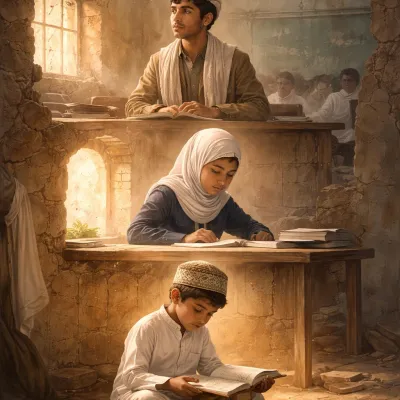
Education in Yemen, as detailed in this comprehensive overview, has undergone a multifaceted evolution from traditional Islamic instruction in *kuttabs* to a modern system grappling with profound challenges. Historically rooted in tribal and religious traditions, Yemen’s education system expanded during the mid-20th century under North and South Yemen, with unified policies post-1990 aiming to harmonize divergent approaches. However, the system has long faced structural issues, including inadequate infrastructure, regional disparities, and underfunding, compounded by the collapse caused by the ongoing conflict since 2014. The conflict has devastated educational infrastructure, disrupted teachers’ livelihoods, and displaced millions of students, leading to a catastrophic reversal in decades of progress. Despite these trials, the cultural value placed on education persists, offering a foundation for future rebuilding.
The educational system in Yemen is structured into basic, secondary, and higher education, with additional non-formal and vocational tracks. Early childhood education remains largely private and uneven, while primary and secondary education struggles with access, quality, and teacher shortages, particularly in rural areas. Gender disparities, socioeconomic barriers, and special educational needs are critical issues, exacerbated by the conflict, which has disproportionately affected girls, children with disabilities, and marginalized communities. Curriculum development and governance face challenges due to resource shortages, outdated materials, and fragmented administrative control, with efforts to modernize teaching practices and integrate technology lagging behind regional standards. Teacher training is vital but often underfunded, and professional development is sporadic, further undermining educational quality.
The conflict has rendered the education system nearly dysfunctional, with schools destroyed, teachers unpaid, and learning opportunities severely limited. Humanitarian efforts, including NGOs and international aid, have sustained emergency education, emphasizing psychosocial support and basic literacy, while the brain drain—of skilled educators and professionals—threatens long-term recovery. Despite this, grassroots resilience and community initiatives highlight the enduring commitment to learning. The book explores how factors like rural-urban divides, language of instruction (primarily Arabic), and socioeconomic disparities further marginalize students, creating a “lost generation” without formal qualifications or skills. The role of education in peacebuilding and reconstruction is underscored, advocating for trauma-informed pedagogy, conflict-sensitive curricula, and inclusive policies to heal societal divisions.
Looking ahead, the book emphasizes the need for a phased recovery strategy, prioritizing immediate stabilization, medium-term institutional rebuilding, and long-term systemic reforms. Recommendations include securing sustainable funding, reinvigorating teacher training, overhauling curricula to include peace education, and investing in technology and vocational training to align with post-conflict economic needs. Strengthening governance, combating corruption, and fostering partnerships between government, international donors, and local communities are critical for equitable recovery. The future of Yemeni education hinges on transforming it into a resilient, inclusive system that empowers youth and drives national reconstruction, leveraging lessons learned to address historical inequities and build a more prosperous future.
What You'll Find Inside:
- The historical evolution of Yemen's education system from traditional Islamic institutions to modern schooling structures
- The structure and organization of Yemen's educational system from early childhood through higher education
- The profound impact of ongoing conflict on all levels of education in Yemen, including physical destruction, teacher non-payment, and learning disruption
- Critical challenges facing Yemen's education system including gender disparities, rural-urban divides, socioeconomic barriers, and inclusive education for students with special needs
- The role of education in peacebuilding and reconstruction, along with recommendations for educational advancement in post-conflict Yemen
Who's It For:
This book is designed for policymakers, educators, researchers, humanitarian aid workers, and anyone with a vested interest in Yemen's educational future. It provides a comprehensive analysis of Yemen's education system from early childhood to higher education, with particular focus on the challenges posed by ongoing conflict. Readers will gain insights into historical context, structural issues, gender disparities, and the role of education in peacebuilding and reconstruction. The book also offers comparative analysis with regional systems and practical recommendations for educational advancement in Yemen.
Table of Contents:
- Introduction
- Chapter 1: Historical Context of Education in Yemen
- Chapter 2: The Structure of the Yemeni Educational System
- Chapter 3: Early Childhood Education: Foundations and Challenges
- Chapter 4: Primary Education: Access, Quality, and Curriculum
- Chapter 5: Secondary Education: Pathways and Transition to Higher Learning
- Chapter 6: Technical and Vocational Education and Training (TVET)
- Chapter 7: Higher Education Landscape: Universities and Institutions
- Chapter 8: Curriculum Development and Educational Standards
- Chapter 9: Teacher Training and Professional Development
- Chapter 10: The Role of Government in Education Policy and Funding
- Chapter 11: Non-Governmental Organizations (NGOs) and International Aid in Education
- Chapter 12: Education in Conflict Zones: Challenges and Adaptations
- Chapter 13: Gender Disparities and Equality in Yemeni Education
- Chapter 14: Inclusive Education for Students with Special Needs
- Chapter 15: The Impact of Socioeconomic Factors on Educational Attainment
- Chapter 16: Rural vs. Urban Educational Opportunities
- Chapter 17: Language of Instruction and Cultural Preservation
- Chapter 18: Educational Technology and Digital Learning Initiatives
- Chapter 19: Student Assessment, Examinations, and Certification
- Chapter 20: Brain Drain and its Impact on Human Capital
- Chapter 21: The Role of Education in Peacebuilding and Reconstruction
- Chapter 22: Challenges and Reforms in Educational Governance
- Chapter 23: Funding Mechanisms and Sustainable Development in Education
- Chapter 24: Comparative Analysis of Yemeni Education with Regional Systems
- Chapter 25: Future Outlook and Recommendations for Educational Advancement in Yemen
Author:
Published By:
Date Published:
July 8, 2026
Type:
Nonfiction
Language:
English
Word Count:
48,162 words
Reading Time:
3 hours 22 minutes
Sample:
MixCache.com Total Access
Get unlimited access to this book + all books published by MixCache.com for $11.99/month
Subscribe to MTAOr purchase this book individually below
Order:
Buy the Education In Yemen ebook on MixCache.com:
Buy Now
Full ebook will be available immediately
- read online or download as a PDF file.
$5 account credit for all new MixCache.com accounts, usable toward any ebook purchase!*





Ratings & Reviews
Ask Questions About This Book
Have a question about the content? Ask our AI assistant!
Start by asking a question about "Education In Yemen"
Example: "Does this book mention William Shakespeare?"
Thinking...