
Browse by Category
Fiction
- Action & Adventure
- African American
- Anthologies
- Children's Fiction
- Classics
- Comics & Graphic Novels
- Coming of Age
- Contemporary
- Cultural & Regional
- Drama
- Erotica
- Fantasy
- General
- Historical Fiction
- Horror
- Humor & Satire
- Literary Fiction
- Mystery, Thriller & Suspense
- Poetry
- Religious & Inspirational
- Romance
- Science Fiction
- Short Stories
- War & Military
- Westerns
- Women's Fiction
- Young Adult
Non-Fiction
- Antiques & Collectibles
- Arts & Photography
- Biographies & Memoirs
- Business & Money
- Children's Non-Fiction
-
Computers & Technology
- Artificial Intelligence
- Computer Science
- Cybersecurity & Cryptography
- Data Science & Analytics
- Databases & Big Data
- Game Development & Design
- General
- Hardware & DIY
- Mobile App Development
- Networking & Cloud Computing
- Operating Systems
- Programming
- Robotics
- Software
- Software Engineering
- User Experience (UX) & Design
- Web Development & Design
- Cooking, Food & Wine
- Crafts, Hobbies & Home
- Education & Teaching
- Engineering
- General
- Health, Fitness & Dieting
-
History
- African History
- African History - North Africa
- African History - Sub-Saharan Africa
- American History
- American History - 20th Century
- American History - Civil War
- American History - Colonial Period
- Ancient History
- Asian History
- Asian History - China
- Asian History - India
- Asian History - Japan
- Asian History - Southeast Asia
- European History
- European History - Ancient Greece
- European History - Ancient Rome
- European History - Medieval
- European History - Modern
- European History - Renaissance
- General
- Middle Eastern History
- Military History
- Military History - Aviation
- Military History - Naval
- Social & Cultural History
- World History
- Humor & Entertainment
- Industrial Technology
- Language Learning
- Law
- LGBTQ+ Non-Fiction
- Literary Criticism
- Medical Books
- Parenting & Relationships
- Philosophy
- Politics & Social Sciences
- Reference
- Religion & Spirituality
-
Science & Math
- Agricultural Sciences
- Astronomy & Space Science
- Behavioral Sciences
- Biological Sciences
- Botany & Plant Science
- Chemistry
- Earth Sciences
- Engineering - Chemical
- Engineering - Civil
- Engineering - Electrical
- Engineering - Mechanical
- Environment
- General
- Geology
- Mathematics
- Nature & Ecology
- Oceanography
- Paleontology
- Physics
- Statistics
- Self-Help
- Sports & Outdoors
- Study Aids
- Sustainability & Green Living
- Textbooks
- Transportation
- Travel
- True Crime
- Urban Planning & Development
- Veterinary Medicine
- Writing & Publishing
Jump to Section
MixCache.com Total Access
Unlimited reading and audiobooks for every book published by MixCache.com.
Included titles carry the MTA badge.
Learn more →
Education In Nepal
MTA
A Comprehensive Overview from Early Childhood to Higher Education
About this book:
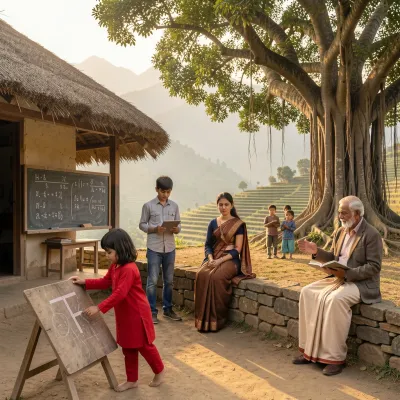
Education in Nepal has undergone a profound transformation from its historical roots in religious institutions and traditional systems like the Gurukul and Buddhist monastic education to a modern, multi-tiered structure encompassing early childhood development, primary, secondary, technical-vocational, and higher education. The book chronicles this evolution, highlighting the pivotal role of historical milestones such as the establishment of formal schools under the Rana regime, the democratic reforms of 1951, and the subsequent expansion of institutions like Tribhuvan University. The current system, while ambitious in scope, grapples with persistent challenges in quality, infrastructure, and teacher training, particularly in rural and marginalized areas. Early childhood and basic education initiatives aim to provide foundational skills, yet face issues of accessibility and cultural barriers, while secondary education, though competitive and specialized, often struggles with relevance to the job market. Technical and Vocational Education and Training (TVET) has emerged as a critical pathway to address skill gaps, though it faces hurdles in perception and resource allocation. Higher education, marked by multiple universities and regulatory frameworks like the University Grants Commission, seeks to foster research and academic excellence but contends with faculty shortages and infrastructure deficits.
The narrative shifts to explore systemic challenges and reform efforts, including the impact of federalism on governance and funding disparities between urban and rural schools. Inclusive education remains a pressing concern, addressing the needs of children with disabilities, linguistic minorities, and marginalized communities, often hindered by inadequate infrastructure and societal attitudes. Gender disparities, though narrowed at primary levels, persist in secondary and higher education due to cultural norms, early marriage, and economic pressures. Remote and rural areas face compounded difficulties, including geographical isolation, teacher shortages, and limited resources, necessitating innovative solutions like community learning centers and distance education. Natural disasters, such as the 2015 earthquake, and historical conflicts have disrupted educational continuity, prompting efforts to build resilient infrastructure and integrate disaster risk reduction into curricula. Curriculum development and assessment practices aim to balance traditional values with modern pedagogical approaches, though formative evaluation and competency-based learning are still evolving. Private sector involvement has expanded access and innovation but raised questions about equity and quality regulation, while non-formal education programs provide vital second chances for marginalized populations, emphasizing lifelong learning and community-driven solutions. International aid and cooperation have been instrumental in funding and capacity building, with a growing emphasis on strategic partnerships to reduce dependency and align with national priorities.
Looking ahead, the book envisions a future centered on quality enhancement, digital integration, and sustainable financing. Efforts to modernize curricula, elevate TVET’s status, and foster inclusive practices aim to align education with labor market demands and societal diversity. Teacher development, research innovation, and climate-sensitive policies are seen as critical for addressing brain drain and building a knowledge-based economy. The overarching goal is to create an adaptable, equitable system that leverages technology, community engagement, and global collaboration to ensure every Nepali citizen has access to meaningful, lifelong learning opportunities. This future hinges on addressing systemic inequities while maintaining the cultural and developmental contexts unique to Nepal.
What You'll Find Inside:
- Historical progression from traditional gurukul and monastic systems through Rana-era suppression to post-1951 democratic expansion, highlighting education's evolution from elite privilege to national right.
- Comprehensive structure of Nepal's education system spanning Early Childhood Education and Development (ECED) through basic, secondary, TVET, and higher education, including governance frameworks and non-formal pathways.
- Persistent challenges in access, quality, and equity, particularly for remote/rural populations, girls, marginalized communities, and children with disabilities, exacerbated by geographical barriers and socio-economic disparities.
- Critical reform areas including curriculum modernization toward competency-based learning, teacher professional development, digital transformation initiatives, and inclusive education practices to address diversity and special needs.
- Role of international cooperation, funding mechanisms, and policy governance in educational development, alongside ongoing efforts to mitigate brain drain, strengthen research innovation, and ensure sustainable financing.
Who's It For:
This book is essential for policymakers shaping Nepal's education strategies, researchers studying South Asian education systems, educators seeking to understand local context and reforms, students of education or development studies, and international development partners working in Nepal's education sector. It also provides valuable context for parents and students navigating educational pathways, while offering educators insights into ongoing reforms, quality assurance mechanisms, and professional development opportunities within Nepal's unique socio-economic and geographical landscape.
Table of Contents:
- Introduction
- Chapter 1: Historical Foundations of Nepali Education
- Chapter 2: The Structure of the Nepali Education System
- Chapter 3: Early Childhood Education in Nepal
- Chapter 4: Primary Education: Access and Challenges
- Chapter 5: Secondary Education: Curriculum and Development
- Chapter 6: Technical and Vocational Education and Training (TVET)
- Chapter 7: Higher Education: Universities and Institutions
- Chapter 8: Quality Assurance in Nepali Education
- Chapter 9: Teacher Education and Professional Development
- Chapter 10: Education Policy and Governance
- Chapter 11: Funding and Financing Education in Nepal
- Chapter 12: Digital Transformation and E-Learning Initiatives
- Chapter 13: Inclusive Education: Addressing Diversity and Special Needs
- Chapter 14: Gender and Education in Nepal
- Chapter 15: Education in Remote and Rural Areas
- Chapter 16: Impact of Conflict and Disaster on Education
- Chapter 17: Curriculum Development and Reform
- Chapter 18: Assessment and Evaluation Practices
- Chapter 19: Private Sector Involvement in Education
- Chapter 20: Non-Formal Education and Lifelong Learning
- Chapter 21: International Cooperation and Aid in Education
- Chapter 22: Brain Drain and its Impact on Human Capital
- Chapter 23: Research and Innovation in Nepali Academia
- Chapter 24: Challenges and Opportunities in Education
- Chapter 25: Future Directions for Education in Nepal
Author:
Published By:
Date Published:
July 1, 2026
Type:
Nonfiction
Language:
English
Word Count:
47,019 words
Reading Time:
3 hours 18 minutes
Sample:
MixCache.com Total Access
Get unlimited access to this book + all books published by MixCache.com for $11.99/month
Subscribe to MTAOr purchase this book individually below
Order:
Buy the Education In Nepal ebook on MixCache.com:
Buy Now
Full ebook will be available immediately
- read online or download as a PDF file.
$5 account credit for all new MixCache.com accounts, usable toward any ebook purchase!*




Ratings & Reviews
Ask Questions About This Book
Have a question about the content? Ask our AI assistant!
Start by asking a question about "Education In Nepal"
Example: "Does this book mention William Shakespeare?"
Thinking...