Browse by Category
Fiction
- Action & Adventure
- African American
- Anthologies
- Children's Fiction
- Classics
- Comics & Graphic Novels
- Coming of Age
- Contemporary
- Cultural & Regional
- Drama
- Erotica
- Fantasy
- General
- Historical Fiction
- Horror
- Humor & Satire
- Literary Fiction
- Mystery, Thriller & Suspense
- Poetry
- Religious & Inspirational
- Romance
- Science Fiction
- Short Stories
- War & Military
- Westerns
- Women's Fiction
- Young Adult
Non-Fiction
- Antiques & Collectibles
- Arts & Photography
- Biographies & Memoirs
- Business & Money
- Children's Non-Fiction
-
Computers & Technology
- Artificial Intelligence
- Computer Science
- Cybersecurity & Cryptography
- Data Science & Analytics
- Databases & Big Data
- Game Development & Design
- General
- Hardware & DIY
- Mobile App Development
- Networking & Cloud Computing
- Operating Systems
- Programming
- Robotics
- Software
- Software Engineering
- User Experience (UX) & Design
- Web Development & Design
- Cooking, Food & Wine
- Crafts, Hobbies & Home
- Education & Teaching
- Engineering
- General
- Health, Fitness & Dieting
-
History
- African History
- African History - North Africa
- African History - Sub-Saharan Africa
- American History
- American History - 20th Century
- American History - Civil War
- American History - Colonial Period
- Ancient History
- Asian History
- Asian History - China
- Asian History - India
- Asian History - Japan
- Asian History - Southeast Asia
- European History
- European History - Ancient Greece
- European History - Ancient Rome
- European History - Medieval
- European History - Modern
- European History - Renaissance
- General
- Middle Eastern History
- Military History
- Military History - Aviation
- Military History - Naval
- Social & Cultural History
- World History
- Humor & Entertainment
- Industrial Technology
- Language Learning
- Law
- LGBTQ+ Non-Fiction
- Literary Criticism
- Medical Books
- Parenting & Relationships
- Philosophy
- Politics & Social Sciences
- Reference
- Religion & Spirituality
-
Science & Math
- Agricultural Sciences
- Astronomy & Space Science
- Behavioral Sciences
- Biological Sciences
- Botany & Plant Science
- Chemistry
- Earth Sciences
- Engineering - Chemical
- Engineering - Civil
- Engineering - Electrical
- Engineering - Mechanical
- Environment
- General
- Geology
- Mathematics
- Nature & Ecology
- Oceanography
- Paleontology
- Physics
- Statistics
- Self-Help
- Sports & Outdoors
- Study Aids
- Sustainability & Green Living
- Textbooks
- Transportation
- Travel
- True Crime
- Urban Planning & Development
- Veterinary Medicine
- Writing & Publishing
Jump to Section

Want unlimited access to all books published by MixCache.com (plus their audiobooks)? Try MixCache.com Total Access. Look for the MTA badge on book covers to identify included titles.
Access to infinite ebooks: Don't see the book you want? Suggest it and we'll create it (free!) for you from scratch with our powerful AI book writer. Then read it with MTA - besides profiting from any sales it makes!
Green Ljubljana: Sustainable Planning, Historic Cores, and Small-Capital Influence
MTA
How Ljubljana became a model of livability, pedestrianism, and urban ecology
About this book:
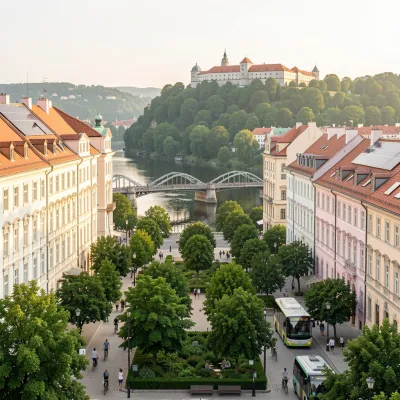
Ljubljana’s transformation into a model of sustainability and livability began with a strategic pivot from car-centric urbanism to a people-first approach, exemplified by the pedestrianization of its historic core and the revitalization of the Ljubljanica River as a public space. This shift prioritized walkability, cycling infrastructure, and integrated transit systems, creating a cohesive network that reduced vehicle emissions and fostered social interaction. Through tactical urbanism and iterative planning, the city gradually expanded green spaces, implemented energy-efficient building retrofits, and embraced circular economy principles in waste management and resource use, demonstrating how small-scale interventions could address large-scale challenges like climate resilience and biodiversity.
Central to this transformation was the city’s emphasis on inclusive governance and community engagement. Strong mayoral leadership, supported by integrated municipal institutions and EU funding, enabled cross-departmental coordination and public-private partnerships that aligned urban planning with sustainability goals. Participatory budgeting, co-design workshops, and transparent digital platforms empowered residents to shape their environment, fostering stewardship and social equity while addressing concerns like accessibility and affordable housing. Educational campaigns and citizen science initiatives further embedded sustainability into daily life, ensuring that green initiatives were both culturally resonant and practically maintained.
The success of Ljubljana’s model lies in its holistic systems-thinking, where infrastructure details—such as permeable paving, native-planted bioswales, and adaptive street furniture—reinforced broader ecological and social objectives. Integration of green energy, district heating, and nature-based solutions transformed the city into a living ecosystem, enhancing air quality, reducing urban heat, and supporting biodiversity. Challenges like balancing tourism growth and preserving affordability were managed through policies promoting year-round visitation, local business incentives, and equitable resource distribution, ensuring that benefits were shared broadly.
For other small capitals, Ljubljana’s lessons emphasize adaptability, pragmatic innovation, and leveraging institutional agility. Its phased approach—testing ideas through pilots, prioritizing multi-use design, and embedding sustainability into routine governance—offers a replicable framework for cities seeking to harmonize heritage preservation with modernization. However, the model underscores that success depends on local context, requiring sensitivity to cultural values, political stability, and access to external funding, rather than direct replication of specific projects. Ultimately, Ljubljana proves that incremental, community-driven efforts can coalesce into transformative urban change, reshaping cities into resilient, inclusive, and ecologically vibrant environments.
What You'll Find Inside:
- Ljubljana transformed from a car-centric city to a pedestrian-first capital through phased, community-engaged closures of historic streets.
- The Ljubljanica River was revitalized into a continuous public realm, linking parks, bridges, and embankments for recreation and climate resilience.
- Integrated mobility networks—walking paths, cycling lanes, electric buses, and bike-sharing—reduced car dependency in the compact capital.
- Strategic landscape architecture expanded greenways, urban forests, and biodiversity corridors, enhancing ecological health and livability.
- Data-driven governance, EU funding, and rigorous maintenance policies sustained Ljubljana’s green transformation over decades.
Who's It For:
This book is ideal for urban planners, municipal leaders, and sustainability practitioners working in small to mid-sized cities. It is also valuable for landscape architects, transportation engineers, and community advocates seeking practical, replicable strategies for car-lite mobility, heritage-sensitive design, and resilient public spaces.
Author:
Published By:
Date Published:
June 13, 2026
Type:
Nonfiction
Language:
English
Word Count:
45,254 words
Reading Time:
3 hours 10 minutes
Sample:
Order:
Order Green Ljubljana: Sustainable Planning, Historic Cores, and Small-Capital Influence (Paperback) on MixCache.com:
Buy NowPrint copy is made to order and ships worldwide. Includes the ebook free, ready to read instantly.
$5 account credit for all new MixCache.com accounts, usable toward any ebook purchase!*