
Browse by Category
Fiction
- Action & Adventure
- African American
- Anthologies
- Children's Fiction
- Classics
- Comics & Graphic Novels
- Coming of Age
- Contemporary
- Cultural & Regional
- Drama
- Erotica
- Fantasy
- General
- Historical Fiction
- Horror
- Humor & Satire
- Literary Fiction
- Mystery, Thriller & Suspense
- Poetry
- Religious & Inspirational
- Romance
- Science Fiction
- Short Stories
- War & Military
- Westerns
- Women's Fiction
- Young Adult
Non-Fiction
- Antiques & Collectibles
- Arts & Photography
- Biographies & Memoirs
- Business & Money
- Children's Non-Fiction
-
Computers & Technology
- Artificial Intelligence
- Computer Science
- Cybersecurity & Cryptography
- Data Science & Analytics
- Databases & Big Data
- Game Development & Design
- General
- Hardware & DIY
- Mobile App Development
- Networking & Cloud Computing
- Operating Systems
- Programming
- Robotics
- Software
- Software Engineering
- User Experience (UX) & Design
- Web Development & Design
- Cooking, Food & Wine
- Crafts, Hobbies & Home
- Education & Teaching
- Engineering
- General
- Health, Fitness & Dieting
-
History
- African History
- African History - North Africa
- African History - Sub-Saharan Africa
- American History
- American History - 20th Century
- American History - Civil War
- American History - Colonial Period
- Ancient History
- Asian History
- Asian History - China
- Asian History - India
- Asian History - Japan
- Asian History - Southeast Asia
- European History
- European History - Ancient Greece
- European History - Ancient Rome
- European History - Medieval
- European History - Modern
- European History - Renaissance
- General
- Middle Eastern History
- Military History
- Military History - Aviation
- Military History - Naval
- Social & Cultural History
- World History
- Humor & Entertainment
- Industrial Technology
- Language Learning
- Law
- LGBTQ+ Non-Fiction
- Literary Criticism
- Medical Books
- Parenting & Relationships
- Philosophy
- Politics & Social Sciences
- Reference
- Religion & Spirituality
-
Science & Math
- Agricultural Sciences
- Astronomy & Space Science
- Behavioral Sciences
- Biological Sciences
- Botany & Plant Science
- Chemistry
- Earth Sciences
- Engineering - Chemical
- Engineering - Civil
- Engineering - Electrical
- Engineering - Mechanical
- Environment
- General
- Geology
- Mathematics
- Nature & Ecology
- Oceanography
- Paleontology
- Physics
- Statistics
- Self-Help
- Sports & Outdoors
- Study Aids
- Sustainability & Green Living
- Textbooks
- Transportation
- Travel
- True Crime
- Urban Planning & Development
- Veterinary Medicine
- Writing & Publishing
Jump to Section

Want unlimited access to all books published by MixCache.com (plus their audiobooks)? Try MixCache.com Total Access. Look for the MTA badge on book covers to identify included titles.
Access to infinite ebooks: Don't see the book you want? Suggest it and we'll create it (free!) for you from scratch with our powerful AI book writer. Then read it with MTA - besides profiting from any sales it makes!
Cycling Capital: Copenhagen’s Urban Transformation Toward Sustainability
MTA
From port city to global model of cycling, green design, and livable streets
About this book:
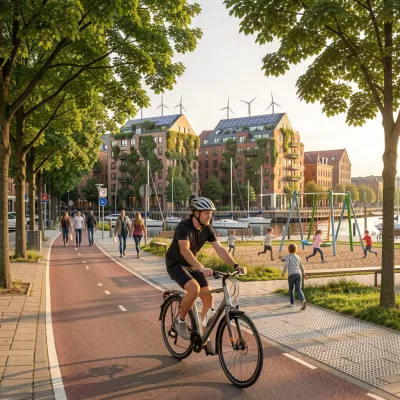
Cycling Capital chronicles Copenhagen’s evolution from a car‑oriented port city into a global model for cycling, livable streets, and sustainability. Over five decades, a coalition of activists, planners, and visionary mayors reclaimed street space from automobiles, prioritizing protected bike lanes, green‑wave traffic signals, and an expanding network of bicycle superhighways that connect suburbs to the core. The book shows how physical infrastructure—segregated cycle tracks, intuitive intersections, ample parking, and seamless transit integration—was paired with pragmatic policies, measurable goals, and sustained funding to make cycling the fastest, safest, and most convenient mode for work, school, and daily errands.
Beyond lanes and signals, the transformation reshaped the city’s form and culture. Tactical urbanism pilots, robust public participation, and data‑driven feedback loops allowed Copenhagen to test ideas, refine designs, and build political consensus. Investments in winter maintenance, cargo‑bike logistics, micromobility regulation, and equitable access ensured year‑round, inclusive mobility. Meanwhile, waterfront reclamation, human‑scaled public spaces, school streets, and Vision Zero traffic‑calming measures turned streets into places for health, social interaction, and climate resilience, delivering cleaner air, lower noise, and higher physical activity for all residents.
The book distills these lessons into a playbook for other cities: cultivate strong political will and measurable targets, build continuous protected networks, redesign intersections and parking for safety, integrate cycling with transit, prioritize equity and winter usability, use temporary pilots to gather feedback, and frame active transport as a public‑health and economic imperative. Copenhagen’s success is portrayed not as a utopian blueprint but as a learning laboratory—its principles of people‑centered design, data‑backed decision‑making, and iterative co‑creation offer a adaptable pathway for any city seeking sustainable, livable streets.
What You'll Find Inside:
- The critical role of sustained political leadership and visionary mayors in driving Copenhagen's long-term transformation toward sustainable urban mobility and livability.
- Innovative design and expansion of protected bicycle infrastructure, including cycle tracks, intersections, and seasonal maintenance strategies for year-round usability.
- Emphasis on public participation and co-creation with citizens and NGOs to ensure inclusive, community-driven urban planning initiatives.
- Data-driven decision-making through tools like the Copenhagen Bicycle Account, enabling measurable goals, feedback loops, and evidence-based optimizations.
- Lessons learned from setbacks and controversies, including equitable access, winter maintenance, and adapting urban models to diverse global contexts.
Who's It For:
This book is essential for city planners, mayors, policymakers, and community leaders seeking actionable strategies to transform urban mobility and public spaces. It also serves urban sustainability advocates, transportation engineers, and researchers looking for practical insights into implementing protected cycling infrastructure, fostering political will, and addressing equity in city planning. The content is particularly valuable for those involved in sustainable urban development and climate resilience initiatives.
Author:
Published By:
Date Published:
June 12, 2026
Type:
Nonfiction
Language:
English
Word Count:
44,211 words
Reading Time:
3 hours 6 minutes
Sample:
MixCache.com Total Access
Get unlimited access to this book + all books published by MixCache.com for $11.99/month
Subscribe to MTAOr purchase this book individually below
Order:
Buy the Cycling Capital: Copenhagen’s Urban Transformation Toward Sustainability ebook on MixCache.com:
Buy Now
Full ebook will be available immediately
- read online or download as a PDF file.
$5 account credit for all new MixCache.com accounts, usable toward any ebook purchase!*





Ratings & Reviews
Ask Questions About This Book
Have a question about the content? Ask our AI assistant!
Start by asking a question about "Cycling Capital: Copenhagen’s Urban Transformation Toward Sustainability"
Example: "Does this book mention William Shakespeare?"
Thinking...