
Browse by Category
Fiction
- Action & Adventure
- African American
- Anthologies
- Children's Fiction
- Classics
- Comics & Graphic Novels
- Coming of Age
- Contemporary
- Cultural & Regional
- Drama
- Erotica
- Fantasy
- General
- Historical Fiction
- Horror
- Humor & Satire
- Literary Fiction
- Mystery, Thriller & Suspense
- Poetry
- Religious & Inspirational
- Romance
- Science Fiction
- Short Stories
- War & Military
- Westerns
- Women's Fiction
- Young Adult
Non-Fiction
- Antiques & Collectibles
- Arts & Photography
- Biographies & Memoirs
- Business & Money
- Children's Non-Fiction
-
Computers & Technology
- Artificial Intelligence
- Computer Science
- Cybersecurity & Cryptography
- Data Science & Analytics
- Databases & Big Data
- Game Development & Design
- General
- Hardware & DIY
- Mobile App Development
- Networking & Cloud Computing
- Operating Systems
- Programming
- Robotics
- Software
- Software Engineering
- User Experience (UX) & Design
- Web Development & Design
- Cooking, Food & Wine
- Crafts, Hobbies & Home
- Education & Teaching
- Engineering
- General
- Health, Fitness & Dieting
-
History
- African History
- African History - North Africa
- African History - Sub-Saharan Africa
- American History
- American History - 20th Century
- American History - Civil War
- American History - Colonial Period
- Ancient History
- Asian History
- Asian History - China
- Asian History - India
- Asian History - Japan
- Asian History - Southeast Asia
- European History
- European History - Ancient Greece
- European History - Ancient Rome
- European History - Medieval
- European History - Modern
- European History - Renaissance
- General
- Middle Eastern History
- Military History
- Military History - Aviation
- Military History - Naval
- Social & Cultural History
- World History
- Humor & Entertainment
- Industrial Technology
- Language Learning
- Law
- LGBTQ+ Non-Fiction
- Literary Criticism
- Medical Books
- Parenting & Relationships
- Philosophy
- Politics & Social Sciences
- Reference
- Religion & Spirituality
-
Science & Math
- Agricultural Sciences
- Astronomy & Space Science
- Behavioral Sciences
- Biological Sciences
- Botany & Plant Science
- Chemistry
- Earth Sciences
- Engineering - Chemical
- Engineering - Civil
- Engineering - Electrical
- Engineering - Mechanical
- Environment
- General
- Geology
- Mathematics
- Nature & Ecology
- Oceanography
- Paleontology
- Physics
- Statistics
- Self-Help
- Sports & Outdoors
- Study Aids
- Sustainability & Green Living
- Textbooks
- Transportation
- Travel
- True Crime
- Urban Planning & Development
- Veterinary Medicine
- Writing & Publishing
Jump to Section

Want unlimited access to all books published by MixCache.com (plus their audiobooks)? Try MixCache.com Total Access. Look for the MTA badge on book covers to identify included titles.
Access to infinite ebooks: Don't see the book you want? Suggest it and we'll create it (free!) for you from scratch with our powerful AI book writer. Then read it with MTA - besides profiting from any sales it makes!
Provincial Capital to Creative City: Zagreb’s Cultural Revival and Urban Strategies
MTA
Zagreb’s shift from imperial administrative center to vibrant cultural capital
About this book:
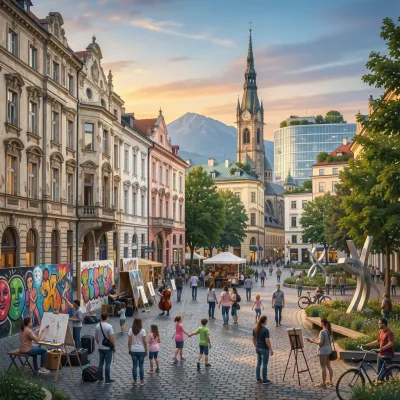
Zagreb’s transformation from a Habsburg provincial capital into a globally recognized creative city unfolded through layered historical forces, strategic urban planning, and a deliberate cultural renaissance. The city’s legacy of imperial architecture, multiethnic institutions, and socialist modernization created a unique foundation, while 19th- and 20th-century developments in infrastructure, education, and public space laid the groundwork for later revival. The turbulent 1990s transition and post-socialist marketization disrupted traditional structures but also opened pathways for grassroots cultural innovation, fostering a diverse ecosystem of festivals, design economies, and informal creative networks that would later be systematized into urban policy.
The 2000s marked a pivotal shift toward intentional culture-led regeneration, with festivals like Advent in Zagreb and INmusic emerging as engines of tourism and urban identity. Strategic municipal interventions—including participatory budgeting, adaptive reuse of public spaces, and heritage management as economic assets—enabled neighborhoods to become laboratories for micro-urbanism. Simultaneously, the city integrated technology and creative industries, fostering cross-sector collaboration between museums, tech startups, and maker culture, while initiatives like the Sava River’s "green spine" tied cultural programming to environmental sustainability. These efforts reflected a nuanced balancing act: leveraging global creative city frameworks while preserving local authenticity.
Governance evolved to embrace data-driven impact measurement, equitable access to cultural resources, and hybrid public-private partnerships. By measuring economic, social, and environmental outcomes, Zagreb refined its approach to ensure policies served both residents and visitors, avoiding oversimplification of culture’s value. Neighborhood labs, public art projects, and inclusive design practices became tools for democratizing urban development, ensuring that Zagreb’s creative boom did not exacerbate social divides. The city’s challenges—from earthquake recovery to gentrification risks—highlighted the resilience required to sustain cultural strategies amid external shocks.
Zagreb’s journey offers transferable insights for small and medium capitals: heritage can anchor innovation, grassroots participation fuels authentic placemaking, and adaptive governance bridges historical identity with contemporary aspirations. Its success lies in weaving culture into the fabric of daily urban life, transforming inherited spaces and institutions into dynamic tools for equity and creativity, while navigating the tensions between commodification, preservation, and community-driven change.
What You'll Find Inside:
- Historical evolution of Zagreb from Habsburg provincial capital to modern creative city, highlighting urban planning and cultural institutional development across eras.
- Strategic festivalization of urban space and case studies on how events like Advent in Zagreb and INmusic drive economic growth, tourism, and cultural engagement.
- Integration of technology, creative industries, and maker culture as catalysts for urban regeneration and cultural-creative cross-sector collaboration.
- Governance frameworks and municipal tools for culture-led urban development, including participatory planning, funding strategies, and sustainability initiatives.
- Lessons and cautions from Zagreb’s experience for small and medium capitals on balancing heritage preservation, creative economy growth, and inclusive urban development.
Who's It For:
This book is ideal for urban planners, cultural policy makers, and city administrators seeking insights into leveraging heritage and creativity for urban development. It is also valuable for scholars and practitioners interested in the intersection of cultural strategies, technology, and participatory governance in shaping resilient, inclusive cities. Target readers include professionals in cultural management, heritage conservation, and urban regeneration, as well as students studying European urbanism and creative economy dynamics.
Author:
Published By:
Date Published:
June 10, 2026
Type:
Nonfiction
Language:
English
Word Count:
58,234 words
Reading Time:
4 hours 5 minutes
Sample:
Order:
Order Provincial Capital to Creative City: Zagreb’s Cultural Revival and Urban Strategies (Hardcover) on MixCache.com:
Buy NowPrint copy is made to order and ships worldwide. Includes the ebook free, ready to read instantly.
$5 account credit for all new MixCache.com accounts, usable toward any ebook purchase!*




 Includes Audiobook