
Browse by Category
Fiction
- Action & Adventure
- African American
- Anthologies
- Children's Fiction
- Classics
- Comics & Graphic Novels
- Coming of Age
- Contemporary
- Cultural & Regional
- Drama
- Erotica
- Fantasy
- General
- Historical Fiction
- Horror
- Humor & Satire
- Literary Fiction
- Mystery, Thriller & Suspense
- Poetry
- Religious & Inspirational
- Romance
- Science Fiction
- Short Stories
- War & Military
- Westerns
- Women's Fiction
- Young Adult
Non-Fiction
- Antiques & Collectibles
- Arts & Photography
- Biographies & Memoirs
- Business & Money
- Children's Non-Fiction
-
Computers & Technology
- Artificial Intelligence
- Computer Science
- Cybersecurity & Cryptography
- Data Science & Analytics
- Databases & Big Data
- Game Development & Design
- General
- Hardware & DIY
- Mobile App Development
- Networking & Cloud Computing
- Operating Systems
- Programming
- Robotics
- Software
- Software Engineering
- User Experience (UX) & Design
- Web Development & Design
- Cooking, Food & Wine
- Crafts, Hobbies & Home
- Education & Teaching
- Engineering
- General
- Health, Fitness & Dieting
-
History
- African History
- African History - North Africa
- African History - Sub-Saharan Africa
- American History
- American History - 20th Century
- American History - Civil War
- American History - Colonial Period
- Ancient History
- Asian History
- Asian History - China
- Asian History - India
- Asian History - Japan
- Asian History - Southeast Asia
- European History
- European History - Ancient Greece
- European History - Ancient Rome
- European History - Medieval
- European History - Modern
- European History - Renaissance
- General
- Middle Eastern History
- Military History
- Military History - Aviation
- Military History - Naval
- Social & Cultural History
- World History
- Humor & Entertainment
- Industrial Technology
- Language Learning
- Law
- LGBTQ+ Non-Fiction
- Literary Criticism
- Medical Books
- Parenting & Relationships
- Philosophy
- Politics & Social Sciences
- Reference
- Religion & Spirituality
-
Science & Math
- Agricultural Sciences
- Astronomy & Space Science
- Behavioral Sciences
- Biological Sciences
- Botany & Plant Science
- Chemistry
- Earth Sciences
- Engineering - Chemical
- Engineering - Civil
- Engineering - Electrical
- Engineering - Mechanical
- Environment
- General
- Geology
- Mathematics
- Nature & Ecology
- Oceanography
- Paleontology
- Physics
- Statistics
- Self-Help
- Sports & Outdoors
- Study Aids
- Sustainability & Green Living
- Textbooks
- Transportation
- Travel
- True Crime
- Urban Planning & Development
- Veterinary Medicine
- Writing & Publishing
Jump to Section

Want unlimited access to all books published by MixCache.com (plus their audiobooks)? Try MixCache.com Total Access. Look for the MTA badge on book covers to identify included titles.
Access to infinite ebooks: Don't see the book you want? Suggest it and we'll create it (free!) for you from scratch with our powerful AI book writer. Then read it with MTA - besides profiting from any sales it makes!
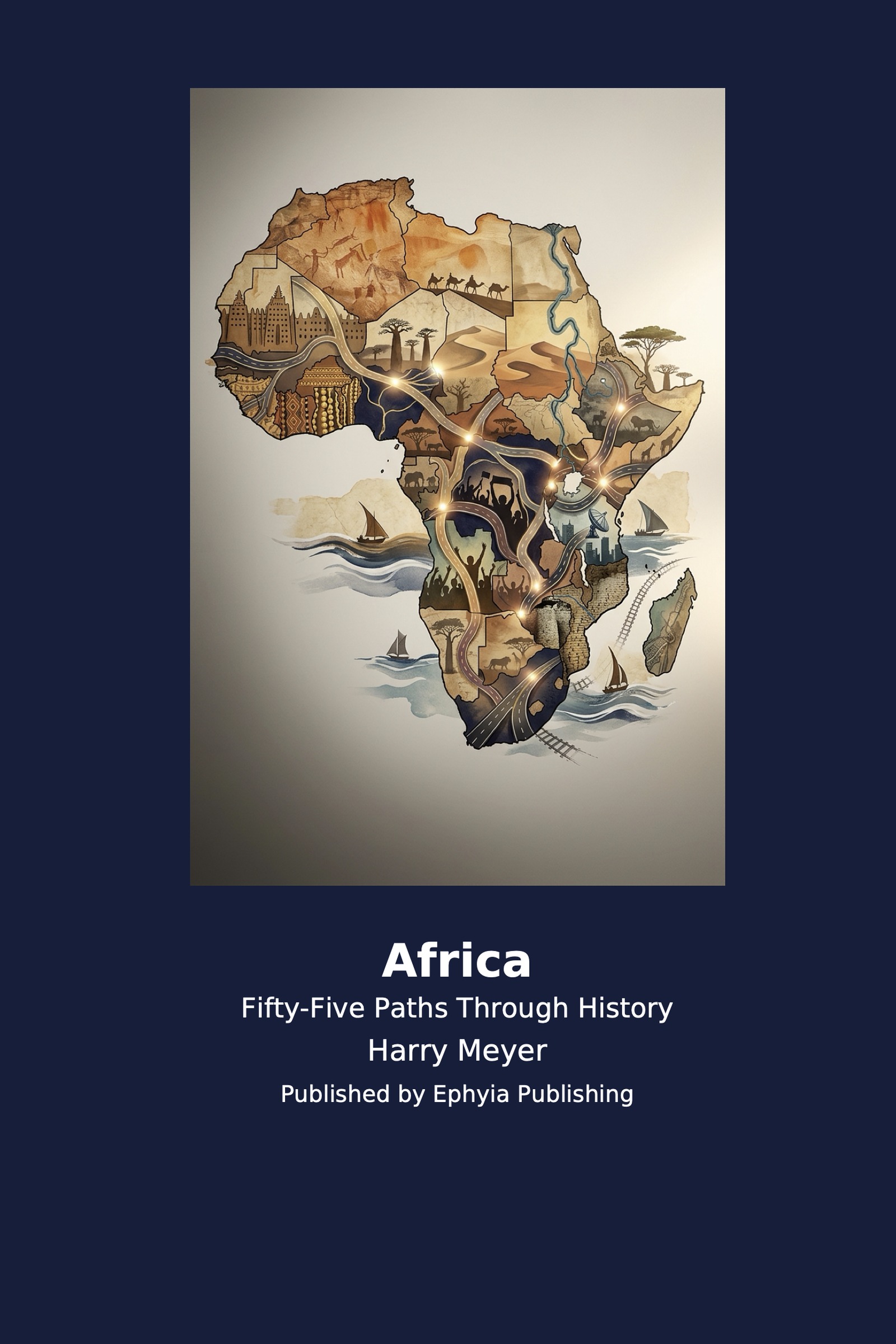
Africa
Fifty-Five Paths Through History
About this book:
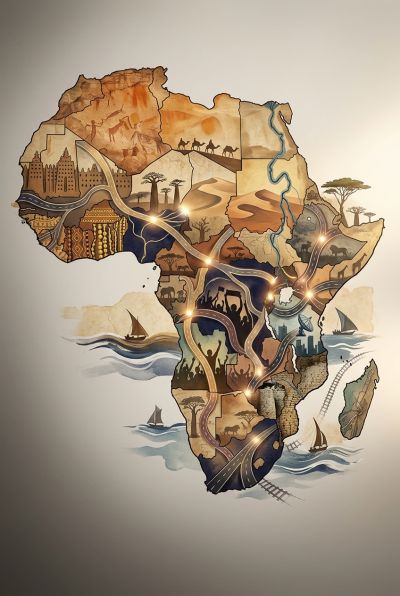
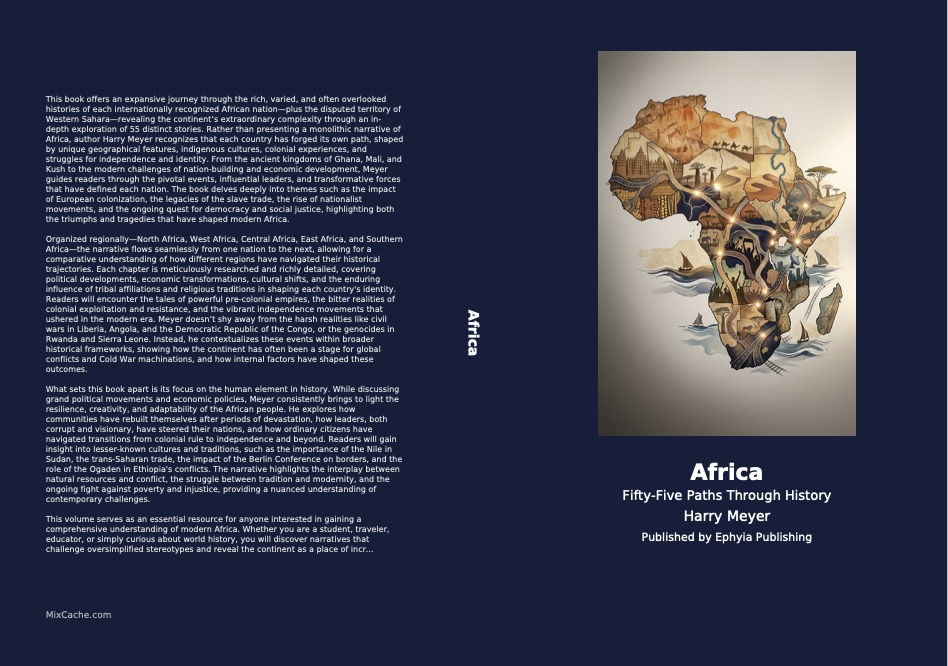
This book offers an expansive journey through the rich, varied, and often overlooked histories of each internationally recognized African nation—plus the disputed territory of Western Sahara—revealing the continent’s extraordinary complexity through an in-depth exploration of 55 distinct stories. Rather than presenting a monolithic narrative of Africa, author Harry Meyer recognizes that each country has forged its own path, shaped by unique geographical features, indigenous cultures, colonial experiences, and struggles for independence and identity. From the ancient kingdoms of Ghana, Mali, and Kush to the modern challenges of nation-building and economic development, Meyer guides readers through the pivotal events, influential leaders, and transformative forces that have defined each nation. The book delves deeply into themes such as the impact of European colonization, the legacies of the slave trade, the rise of nationalist movements, and the ongoing quest for democracy and social justice, highlighting both the triumphs and tragedies that have shaped modern Africa.
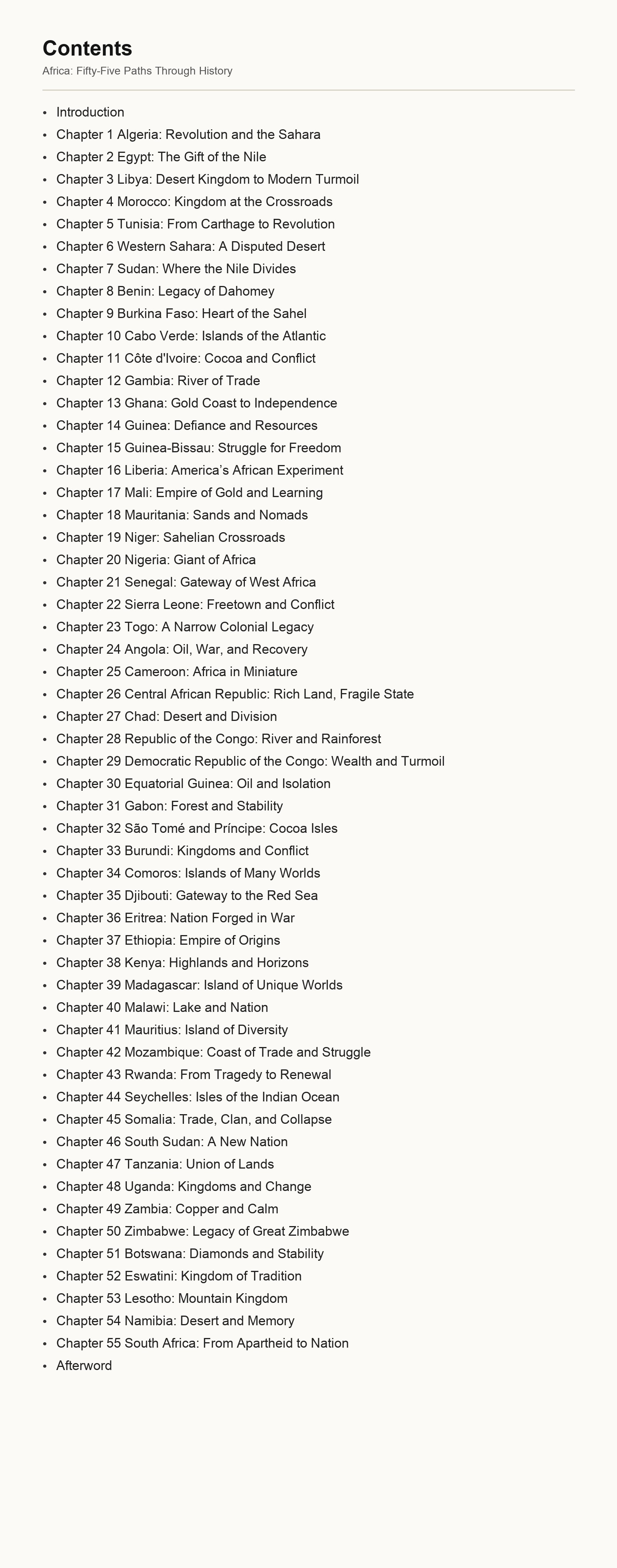
Organized regionally—North Africa, West Africa, Central Africa, East Africa, and Southern Africa—the narrative flows seamlessly from one nation to the next, allowing for a comparative understanding of how different regions have navigated their historical trajectories. Each chapter is meticulously researched and richly detailed, covering political developments, economic transformations, cultural shifts, and the enduring influence of tribal affiliations and religious traditions in shaping each country's identity. Readers will encounter the tales of powerful pre-colonial empires, the bitter realities of colonial exploitation and resistance, and the vibrant independence movements that ushered in the modern era. Meyer doesn’t shy away from the harsh realities like civil wars in Liberia, Angola, and the Democratic Republic of the Congo, or the genocides in Rwanda and Sierra Leone. Instead, he contextualizes these events within broader historical frameworks, showing how the continent has often been a stage for global conflicts and Cold War machinations, and how internal factors have shaped these outcomes.
What sets this book apart is its focus on the human element in history. While discussing grand political movements and economic policies, Meyer consistently brings to light the resilience, creativity, and adaptability of the African people. He explores how communities have rebuilt themselves after periods of devastation, how leaders, both corrupt and visionary, have steered their nations, and how ordinary citizens have navigated transitions from colonial rule to independence and beyond. Readers will gain insight into lesser-known cultures and traditions, such as the importance of the Nile in Sudan, the trans-Saharan trade, the impact of the Berlin Conference on borders, and the role of the Ogaden in Ethiopia's conflicts. The narrative highlights the interplay between natural resources and conflict, the struggle between tradition and modernity, and the ongoing fight against poverty and injustice, providing a nuanced understanding of contemporary challenges.
This volume serves as an essential resource for anyone interested in gaining a comprehensive understanding of modern Africa. Whether you are a student, traveler, educator, or simply curious about world history, you will discover narratives that challenge oversimplified stereotypes and reveal the continent as a place of incredible diversity and dynamism. Meyer’s approach combines scholarly rigor with accessible writing, making even complex topics like the effects of forced labor in Equatorial Guinea or the geopolitical importance of Djibouti engaging and informative. Each chapter not only tells the story of a nation but also connects it to broader continental and global trends, helping readers grasp how Africa’s past is inextricably linked to its present and future. From the islands of Cape Verde to the vastness of Sudan, from the mining wealth of Botswana to the political struggles of Somalia, the book paints a portrait of a continent that has endured enormous hardship yet shows remarkable potential for renewal and growth. By the end, readers will have a profound appreciation for Africa's invaluable contributions to global history and culture, and a clearer understanding of the forces that continue to shape its diverse and resilient nations today.
What You'll Find Inside:
- Explores the diverse histories of all 55 internationally recognized African nations, from ancient kingdoms to modern states, emphasizing that Africa is a continent of varied cultures and experiences rather than a singular entity.
- Highlights the profound and lasting impacts of colonialism, including arbitrary borders, forced labor systems, and the extraction of resources, while showcasing Africa's complex pre-colonial civilizations and resistance movements.
- Examines how natural resources like gold, diamonds, oil, and copper have shaped African economies and politics, often leading to both prosperity and conflict, reflecting the 'resource curse' dynamic.
- Details the struggles for independence across the continent, from peaceful transitions to prolonged liberation wars, and the subsequent challenges of building stable, democratic post-colonial states.
- Addresses contemporary issues such as ethnic conflicts, authoritarianism, migration crises, and the ongoing tension between traditional governance and modern political systems in shaping Africa's future.
Who's It For:
This book is ideal for history enthusiasts, students, and educators seeking a comprehensive understanding of African nations beyond common stereotypes. It appeals to readers interested in post-colonial studies, international relations, and the complexities of nation-building. The detailed narratives and diverse perspectives make it valuable for anyone wanting to grasp the intricate social, political, and economic developments across the continent. Additionally, policymakers, researchers, and global citizens engaged with African affairs would benefit from its insightful analysis of historical legacies and modern challenges.
Author:
Published By:
Date Published:
May 29, 2026
Type:
Nonfiction
Language:
English
Word Count:
155,427 words
Reading Time:
10 hours 53 minutes
Sample:
Order:
Order Africa (Paperback) on MixCache.com:
Buy NowPrint copy is made to order and ships worldwide. Includes the ebook free, ready to read instantly.
$5 account credit for all new MixCache.com accounts, usable toward any ebook purchase!*


