Browse by Category
Fiction
- Action & Adventure
- African American
- Anthologies
- Children's Fiction
- Classics
- Comics & Graphic Novels
- Coming of Age
- Contemporary
- Cultural & Regional
- Drama
- Erotica
- Fantasy
- General
- Historical Fiction
- Horror
- Humor & Satire
- Literary Fiction
- Mystery, Thriller & Suspense
- Poetry
- Religious & Inspirational
- Romance
- Science Fiction
- Short Stories
- War & Military
- Westerns
- Women's Fiction
- Young Adult
Non-Fiction
- Antiques & Collectibles
- Arts & Photography
- Biographies & Memoirs
- Business & Money
- Children's Non-Fiction
-
Computers & Technology
- Artificial Intelligence
- Computer Science
- Cybersecurity & Cryptography
- Data Science & Analytics
- Databases & Big Data
- Game Development & Design
- General
- Hardware & DIY
- Mobile App Development
- Networking & Cloud Computing
- Operating Systems
- Programming
- Robotics
- Software
- Software Engineering
- User Experience (UX) & Design
- Web Development & Design
- Cooking, Food & Wine
- Crafts, Hobbies & Home
- Education & Teaching
- Engineering
- General
- Health, Fitness & Dieting
-
History
- African History
- African History - North Africa
- African History - Sub-Saharan Africa
- American History
- American History - 20th Century
- American History - Civil War
- American History - Colonial Period
- Ancient History
- Asian History
- Asian History - China
- Asian History - India
- Asian History - Japan
- Asian History - Southeast Asia
- European History
- European History - Ancient Greece
- European History - Ancient Rome
- European History - Medieval
- European History - Modern
- European History - Renaissance
- General
- Middle Eastern History
- Military History
- Military History - Aviation
- Military History - Naval
- Social & Cultural History
- World History
- Humor & Entertainment
- Industrial Technology
- Language Learning
- Law
- LGBTQ+ Non-Fiction
- Literary Criticism
- Medical Books
- Parenting & Relationships
- Philosophy
- Politics & Social Sciences
- Reference
- Religion & Spirituality
-
Science & Math
- Agricultural Sciences
- Astronomy & Space Science
- Behavioral Sciences
- Biological Sciences
- Botany & Plant Science
- Chemistry
- Earth Sciences
- Engineering - Chemical
- Engineering - Civil
- Engineering - Electrical
- Engineering - Mechanical
- Environment
- General
- Geology
- Mathematics
- Nature & Ecology
- Oceanography
- Paleontology
- Physics
- Statistics
- Self-Help
- Sports & Outdoors
- Study Aids
- Sustainability & Green Living
- Textbooks
- Transportation
- Travel
- True Crime
- Urban Planning & Development
- Veterinary Medicine
- Writing & Publishing
Jump to Section

Want unlimited access to all books published by MixCache.com (plus their audiobooks)? Try MixCache.com Total Access. Look for the MTA badge on book covers to identify included titles.
Access to infinite ebooks: Don't see the book you want? Suggest it and we'll create it (free!) for you from scratch with our powerful AI book writer. Then read it with MTA - besides profiting from any sales it makes!
A History of the Andaman and Nicobar Islands
About this book:

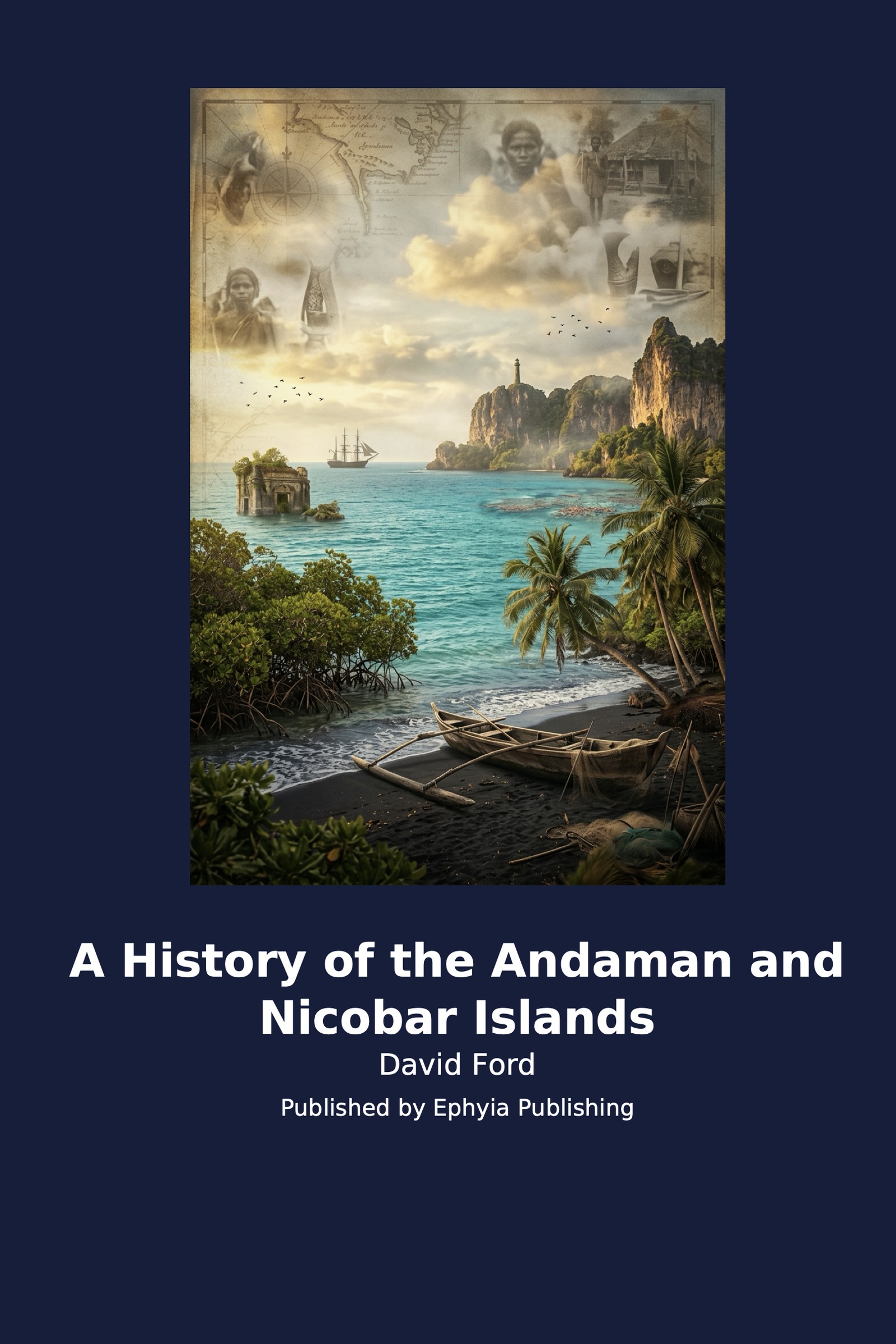
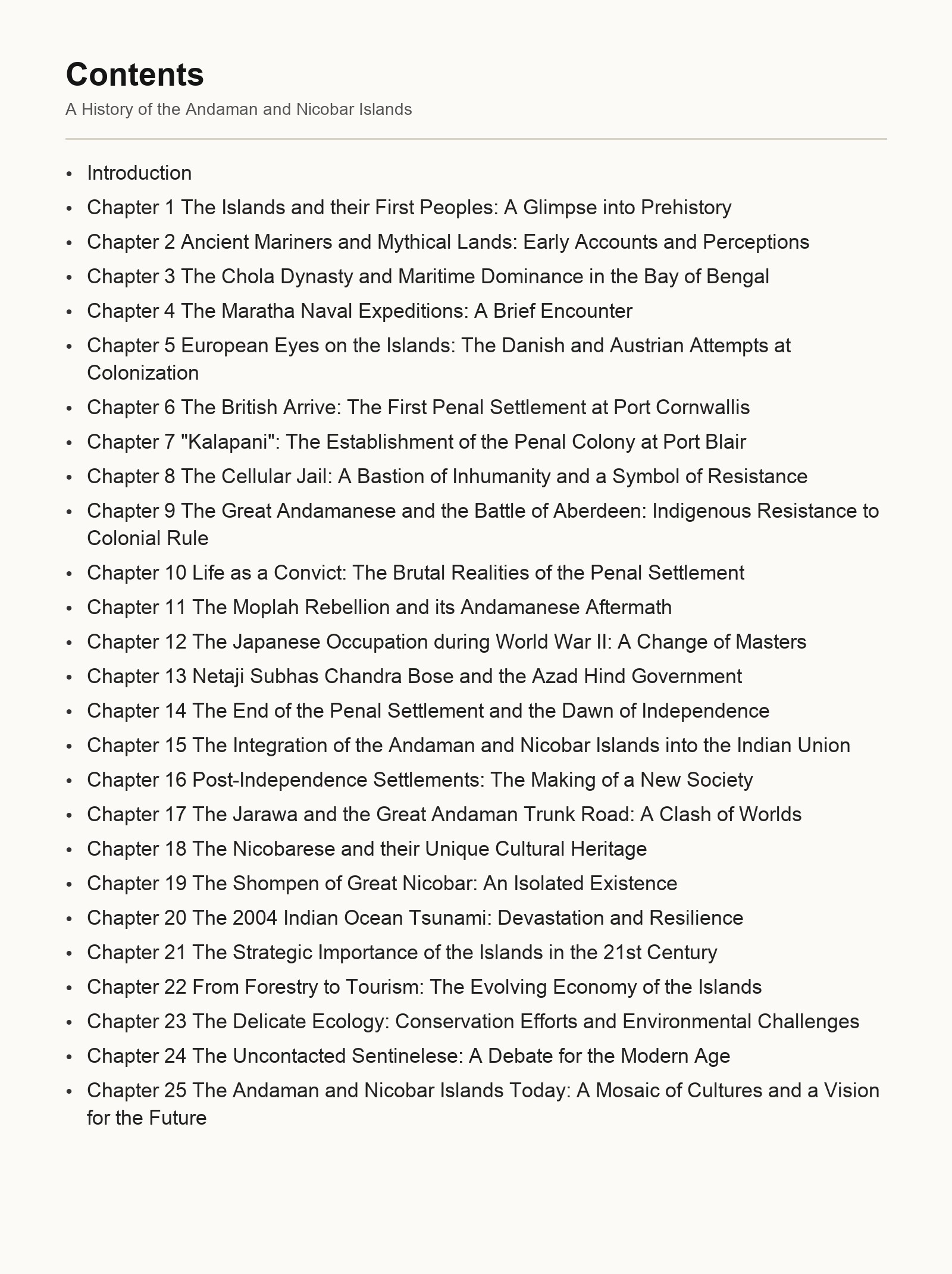
Embark on a sweeping voyage through one of the world’s most enigmatic archipelagos, where ancient isolation collides with empire, resistance, and rebirth. This book traces the Andaman and Nicobar Islands from their prehistoric roots as home to some of humanity’s oldest lineages—Negrito hunter‑gatherers who arrived tens of thousands of years ago and Mongoloid settlers who cultivated coconut groves—through the myths of early mariners who painted them as lands of dog‑headed cannibals and naked traders. Readers will discover how the Cholas used the Nicobars as a naval springboard, how the Maratha fleet briefly brushed their shores, and why European powers from Denmark to Austria stumbled against malaria and fierce islanders in their doomed colonization attempts.
The narrative then plunges into the dark era of British rule, revealing how the aftermath of the 1857 Rebellion turned the islands into the dreaded penal colony of Kalapani. You will walk the corridors of the Cellular Jail, grasp the brutal realities of convict life, and understand how political prisoners transformed this bastion of suffering into a crucible of revolutionary spirit. The story continues with the Japanese occupation of World War II, Netaji Subhas Chandra Bose’s symbolic flag‑raising, and the harrowing trials that followed liberation, shedding light on a chapter where the islands became a battlefield of shifting allegiances and unimaginable cruelty.
Post‑independence, the book explores the ambitious project of building a “Mini‑India” as refugees, ex‑servicemen, and repatriates poured onto the islands, forging a multicultural society that still echoes with Bengali Durga Puja, Punjabi fields, and Moplah mosques. It examines the ongoing tensions between development and tradition—from the Great Andaman Trunk Road’s impact on the Jarawa to the Nicobarese matrilineal villages and the Shompen’s secluded forest life—while confronting modern challenges such as the 2004 tsunami, rising strategic value in the Indo‑Pacific, tourism boom, and the fragile ecology that sustains endemic species like the Narcondam hornbill and giant leatherback turtles.
Finally, the work brings readers to the present day, where the islands stand at a crossroads between national ambition and the preservation of some of the planet’s last uncontacted peoples, the Sentinelese. You will gain insight into the ethical debates surrounding isolation, the legal shields protecting tribal reserves, and the looming Great Nicobar Development Project that promises economic growth but threatens ancient forests and indigenous ways of life. By the end, readers will have experienced a comprehensive, deeply human history that reveals how a remote chain of islands became a mirror for migration, colonialism, resistance, resilience, and the ever‑present struggle between progress and preservation.
What You'll Find Inside:
- The Andaman and Nicobar Islands host some of humanity's oldest isolated cultures, including Negrito tribes like the Sentinelese whose presence may date back 60,000 years.
- The British penal colony transformed the islands into 'Kalapani,' with the Cellular Jail becoming a notorious site of oppression and later a symbol of India's freedom struggle.
- Strategically positioned along vital sea lanes, the islands have served as a naval base for the Cholas, a wartime outpost for Japan, and now a key Indian maritime and surveillance hub.
- Post-independence settlement schemes created a multicultural 'Mini-India' by relocating Bengali refugees, ex-servicemen, and repatriates, dramatically reshaping the islands' demography.
- Today the islands face a critical tension between development ambitions (tourism, transshipment ports) and the need to protect fragile ecosystems and the rights of isolated indigenous peoples.
Who's It For:
This book is ideal for students and scholars of Indian history, colonialism, indigenous studies, and strategic affairs, as well as general readers interested in the unique interplay of isolation, empire, and nation-building. It will also benefit UPSC and civil service aspirants seeking a comprehensive understanding of the Andaman and Nicobar Islands' role in India's past, present, and future.
Author:
Published By:
Date Published:
May 29, 2026
Type:
Nonfiction
Language:
English
Also Available In:
Word Count:
39,177 words
Reading Time:
2 hours 45 minutes
Sample:
Order:
Order A History of the Andaman and Nicobar Islands (Hardcover) on MixCache.com:
Buy NowPrint copy is made to order and ships worldwide. Includes the ebook free, ready to read instantly.
$5 account credit for all new MixCache.com accounts, usable toward any ebook purchase!*