
Browse by Category
Fiction
- Action & Adventure
- African American
- Anthologies
- Children's Fiction
- Classics
- Comics & Graphic Novels
- Coming of Age
- Contemporary
- Cultural & Regional
- Drama
- Erotica
- Fantasy
- General
- Historical Fiction
- Horror
- Humor & Satire
- Literary Fiction
- Mystery, Thriller & Suspense
- Poetry
- Religious & Inspirational
- Romance
- Science Fiction
- Short Stories
- War & Military
- Westerns
- Women's Fiction
- Young Adult
Non-Fiction
- Antiques & Collectibles
- Arts & Photography
- Biographies & Memoirs
- Business & Money
- Children's Non-Fiction
-
Computers & Technology
- Artificial Intelligence
- Computer Science
- Cybersecurity & Cryptography
- Data Science & Analytics
- Databases & Big Data
- Game Development & Design
- General
- Hardware & DIY
- Mobile App Development
- Networking & Cloud Computing
- Operating Systems
- Programming
- Robotics
- Software
- Software Engineering
- User Experience (UX) & Design
- Web Development & Design
- Cooking, Food & Wine
- Crafts, Hobbies & Home
- Education & Teaching
- Engineering
- General
- Health, Fitness & Dieting
-
History
- African History
- African History - North Africa
- African History - Sub-Saharan Africa
- American History
- American History - 20th Century
- American History - Civil War
- American History - Colonial Period
- Ancient History
- Asian History
- Asian History - China
- Asian History - India
- Asian History - Japan
- Asian History - Southeast Asia
- European History
- European History - Ancient Greece
- European History - Ancient Rome
- European History - Medieval
- European History - Modern
- European History - Renaissance
- General
- Middle Eastern History
- Military History
- Military History - Aviation
- Military History - Naval
- Social & Cultural History
- World History
- Humor & Entertainment
- Industrial Technology
- Language Learning
- Law
- LGBTQ+ Non-Fiction
- Literary Criticism
- Medical Books
- Parenting & Relationships
- Philosophy
- Politics & Social Sciences
- Reference
- Religion & Spirituality
-
Science & Math
- Agricultural Sciences
- Astronomy & Space Science
- Behavioral Sciences
- Biological Sciences
- Botany & Plant Science
- Chemistry
- Earth Sciences
- Engineering - Chemical
- Engineering - Civil
- Engineering - Electrical
- Engineering - Mechanical
- Environment
- General
- Geology
- Mathematics
- Nature & Ecology
- Oceanography
- Paleontology
- Physics
- Statistics
- Self-Help
- Sports & Outdoors
- Study Aids
- Sustainability & Green Living
- Textbooks
- Transportation
- Travel
- True Crime
- Urban Planning & Development
- Veterinary Medicine
- Writing & Publishing
Jump to Section
MixCache.com Total Access
Unlimited reading and audiobooks for every book published by MixCache.com.
Included titles carry the MTA badge.
Learn more →
Floods
Humanity's Battle Against Rising Waters
About this book:
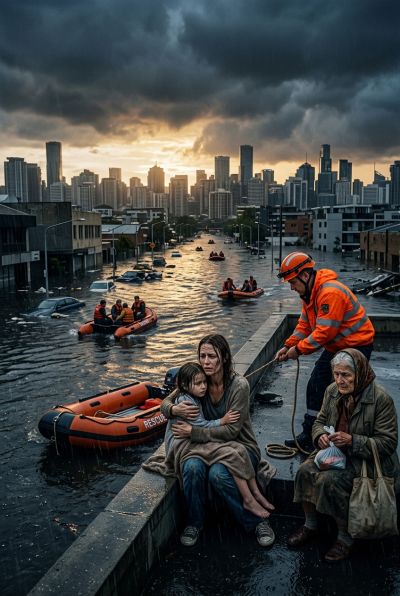
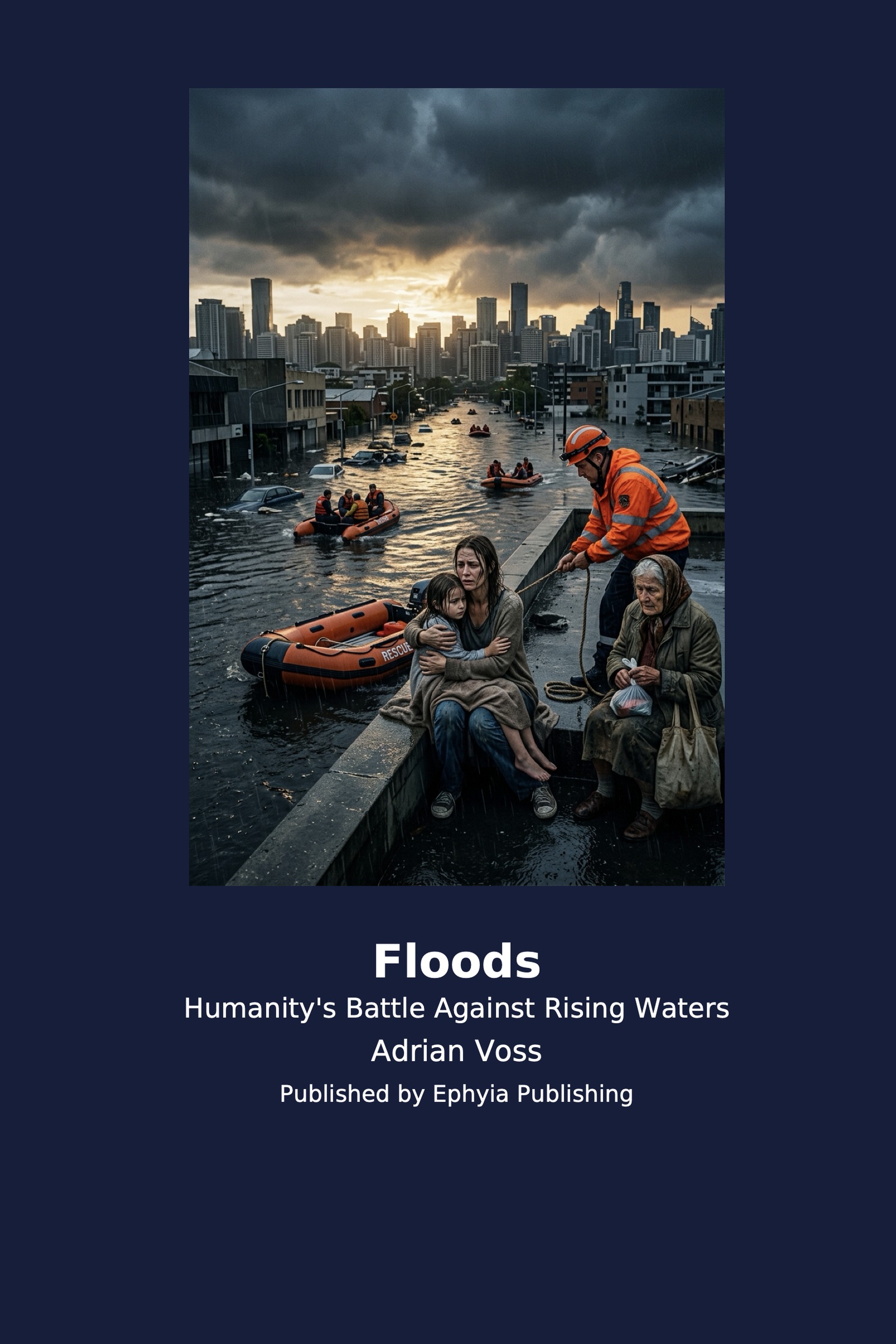
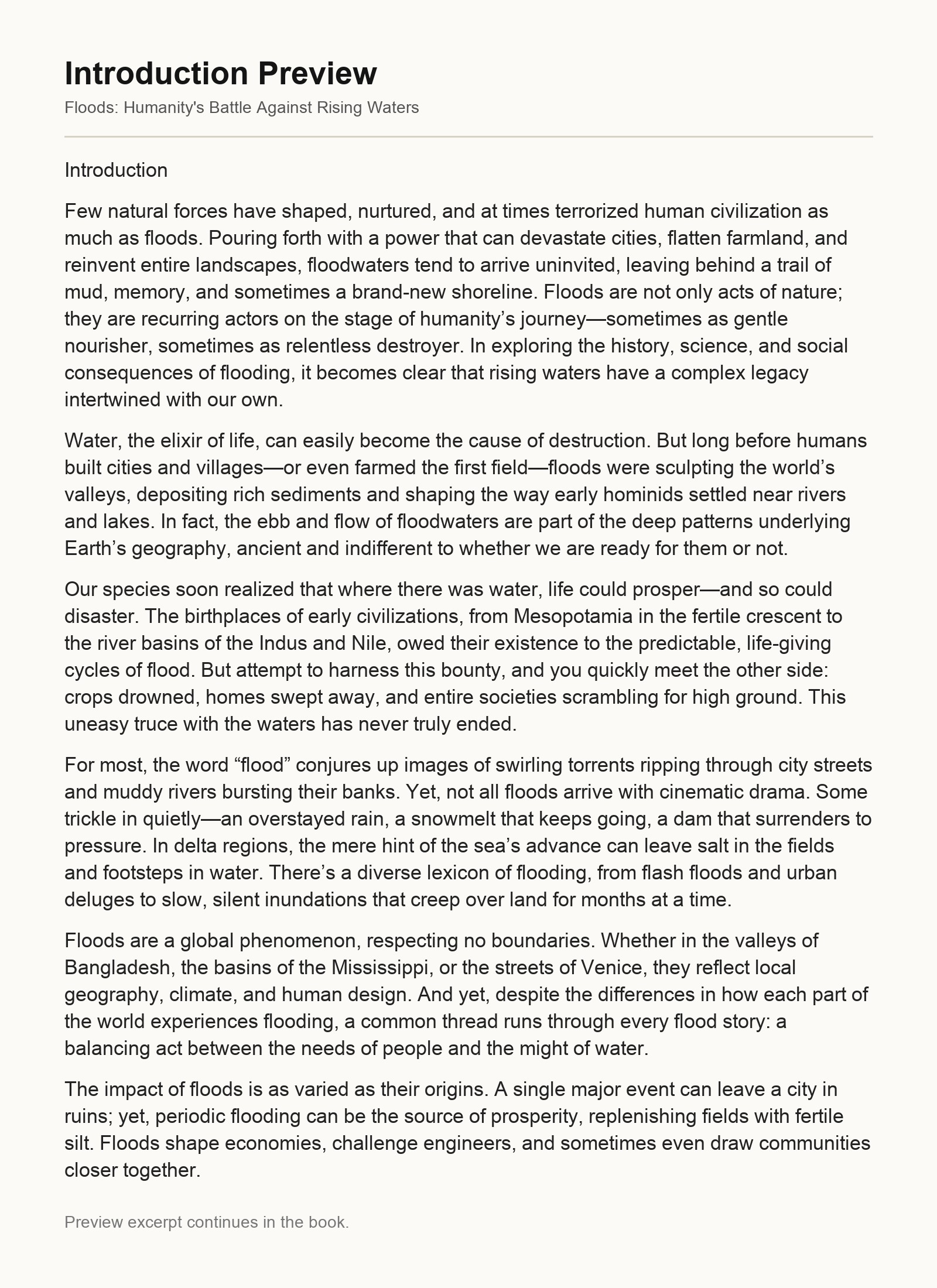
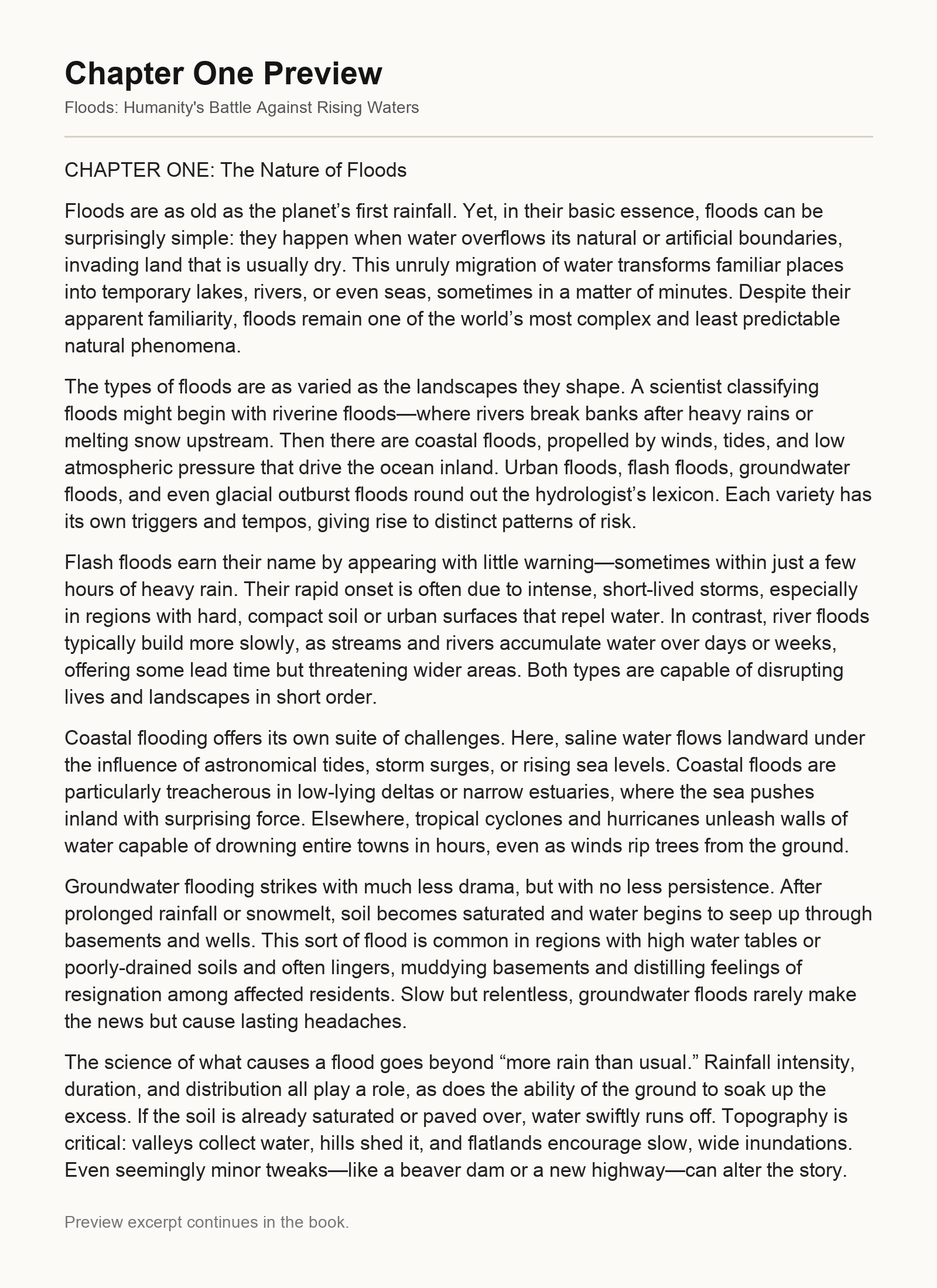
Floods offers a sweeping exploration of humanity’s enduring struggle with rising waters, taking readers from the earliest river‑valley civilizations to the cutting‑edge science of flood prediction. Through vivid narrative and rigorous research, the book explains how floods shape landscapes, influence cultures, and test our engineering ingenuity, while also revealing the hidden costs of infrastructure failure and the social inequities that amplify disaster impacts. Each chapter builds a layered understanding of the physical, ecological, and socioeconomic dimensions of flooding, equipping readers with a comprehensive grasp of why water can be both a life‑giver and a destroyer.
Readers will travel through detailed case studies such as the catastrophic 1931 China floods and Hurricane Katrina, seeing how meteorological extremes, neglected defenses, and human decisions combine to produce unprecedented devastation. The book also delves into the myths and cultural stories that have long framed our perception of deluges, showing how ancient narratives continue to inform modern attitudes toward risk and resilience. By examining the spread of disease after floodwaters recede, the strain on agriculture and food security, and the ways urbanization intensifies runoff, the text highlights the multifaceted challenges that communities face when water overwhelms their defenses.
Beyond analysis of past events, Floods looks forward, presenting the latest strategies for adaptation and mitigation. Chapters on nature‑based solutions, amphibious architecture, managed retreat, and urban sponge cities illustrate how working with natural processes can reduce risk while delivering co‑benefits for biodiversity and water quality. The role of insurance, economic incentives, and global cooperation is unpacked, offering insight into how financial tools and international agreements can help share the burden of flood risk and support recovery. Readers will finish with a clear picture of the emerging technologies—AI forecasting, digital twins, smart infrastructure—that are reshaping our ability to anticipate and respond to future floods.
Ultimately, the book serves as both a historical record and a practical guide, inviting readers to understand the complex dance between people and water. It underscores that while we may never fully control the planet’s hydrological cycles, we can learn to live with them more wisely, building resilient societies that respect the power of floods while protecting lives, livelihoods, and ecosystems. For anyone interested in environmental science, urban planning, public policy, or the human story of survival against natural forces, this volume provides the knowledge and perspective needed to engage meaningfully with one of the most pressing challenges of our time.
What You'll Find Inside:
- The diverse types and mechanisms of flooding, from riverine and coastal surges to flash floods and urban inundation
- Historical perspectives on humanity's relationship with floods, from ancient civilizations to modern case studies
- Scientific foundations of flood prediction, early warning systems, and monitoring technologies
- Engineering approaches to flood management, including structural defenses and nature-based solutions
- Social, economic, and health dimensions of flood vulnerability and resilience strategies
Who's It For:
This book is essential reading for students, researchers, and professionals in fields such as environmental science, hydrology, urban planning, civil engineering, and disaster management. It provides comprehensive insights for policymakers, emergency responders, and urban designers working on flood resilience strategies. Additionally, it offers valuable perspectives for those in insurance, public health, and economics seeking to understand the broader societal impacts of flooding.
Table of Contents:
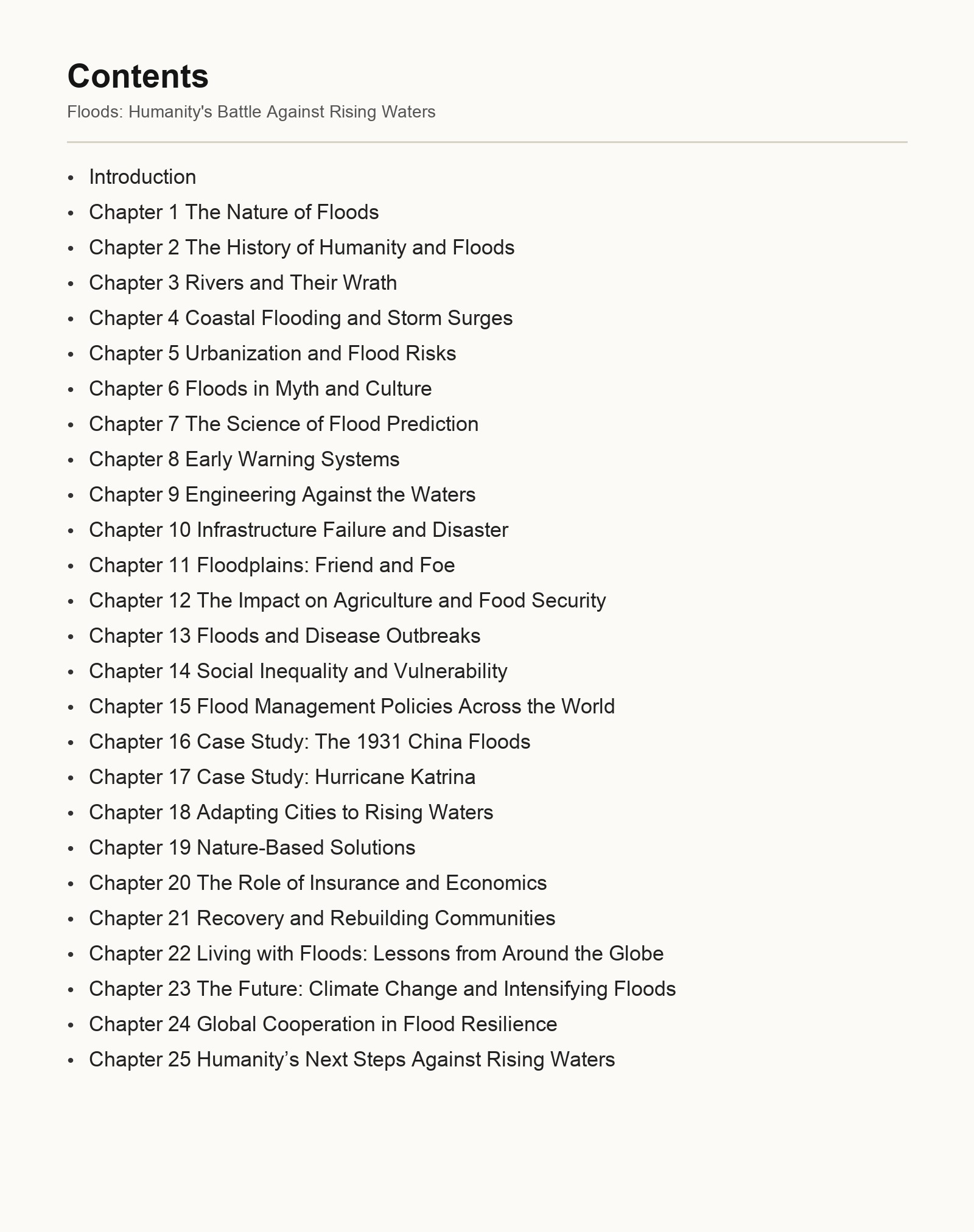
- Introduction
- Chapter 1 The Nature of Floods
- Chapter 2 The History of Humanity and Floods
- Chapter 3 Rivers and Their Wrath
- Chapter 4 Coastal Flooding and Storm Surges
- Chapter 5 Urbanization and Flood Risks
- Chapter 6 Floods in Myth and Culture
- Chapter 7 The Science of Flood Prediction
- Chapter 8 Early Warning Systems
- Chapter 9 Engineering Against the Waters
- Chapter 10 Infrastructure Failure and Disaster
- Chapter 11 Floodplains: Friend and Foe
- Chapter 12 The Impact on Agriculture and Food Security
- Chapter 13 Floods and Disease Outbreaks
- Chapter 14 Social Inequality and Vulnerability
- Chapter 15 Flood Management Policies Across the World
- Chapter 16 Case Study: The 1931 China Floods
- Chapter 17 Case Study: Hurricane Katrina
- Chapter 18 Adapting Cities to Rising Waters
- Chapter 19 Nature-Based Solutions
- Chapter 20 The Role of Insurance and Economics
- Chapter 21 Recovery and Rebuilding Communities
- Chapter 22 Living with Floods: Lessons from Around the Globe
- Chapter 23 The Future: Climate Change and Intensifying Floods
- Chapter 24 Global Cooperation in Flood Resilience
- Chapter 25 Humanity’s Next Steps Against Rising Waters
Author:
Published By:
Date Published:
May 28, 2026
Type:
Nonfiction
Language:
English
Also Available In:
Word Count:
50,728 words
Reading Time:
3 hours 33 minutes
Sample:
Order:
Buy the Floods ebook on MixCache.com:
Buy NowThe full ebook will be available immediately to read instantly on any device.
$5 account credit for all new MixCache.com accounts, usable toward any ebook purchase!*




Ratings & Reviews
Ask Questions About This Book
Have a question about the content? Ask our AI assistant!
Start by asking a question about "Floods"
Example: "Does this book mention William Shakespeare?"
Thinking...